Which Pakistani Rice Grade Works Best for the Indonesian Wholesale Market?
Pakistani 1509 Steam Basmati and 1121 Steam Basmati work best for the Indonesian wholesale market because Indonesian importers prioritize long grain appearance, moderate pricing, faster cooking, and stable container availability. Here is why: Indonesian distributors serve retail, horeca, and modern trade sectors that require consistent grain length, controlled moisture, and competitive CIF Jakarta pricing.
Indonesia imports premium and mid-premium rice grades for hotels, restaurants, supermarkets, and foodservice distributors. Pakistani exporters supply multiple rice grades to this market, but buyers usually compare 1509, 1121, Super Kernel, and IRRI varieties before procurement. Indonesian wholesalers focus on cooking expansion, break percentage, aroma retention, shelf stability, and container economics before selecting a supplier.
Importers comparing Pakistani rice grades often study processing methods, grain dimensions, and regional consumer preferences before finalizing contracts. Buyers researching Indonesian demand patterns can also review broader export and cultivation insights through this educational guide on Pakistani Basmati production trends from AHK Rice.
What Pakistani rice grades are commonly imported into Indonesia?
1509 Steam Basmati, 1121 Steam Basmati, Super Kernel Basmati, and IRRI-6 dominate Indonesian imports because each grade targets different wholesale channels, retail pricing levels, and foodservice applications. Indonesian buyers select grades according to grain length, cooking behavior, aroma intensity, and landed import cost.
Pakistani rice grades differ by cultivar, processing method, grain dimensions, and market positioning. Indonesian wholesalers usually separate procurement into premium aromatic rice and economical daily-consumption rice. This distinction affects container planning, branding strategy, and retail margins.
1509 Steam Basmati
1509 Steam Basmati has become one of the fastest-growing Pakistani exports to Southeast Asia. The variety cooks quickly, maintains uniform grain structure, and offers a lower CIF cost than 1121. Indonesian distributors use 1509 for supermarket shelves, horeca chains, and medium-premium retail packs.
1509 grains typically measure 8.10–8.30 mm before cooking. Steam processing preserves a natural white appearance and softer texture. Indonesian consumers prefer this texture for daily meals because the rice remains fluffy without excessive dryness.
1121 Steam Basmati
1121 Steam Basmati remains the premium long-grain option for Indonesian wholesalers. The variety delivers stronger aroma, superior elongation, and luxury positioning. High-end restaurants and imported rice brands prefer 1121 because cooked grain length can exceed 20 mm under controlled preparation.
1121 costs more per metric ton than 1509. However, Jakarta distributors targeting affluent urban consumers still procure 1121 because premium packaging creates higher retail margins.
Super Kernel Basmati
Super Kernel Basmati serves traditional aromatic rice demand. The variety has a shorter grain than 1121 but delivers strong fragrance. Indonesian wholesalers targeting ethnic food distributors often source Super Kernel for specialty retail channels.
Super Kernel performs well in low-moisture storage environments because the grain structure remains stable during long-distance shipping. Importers storing inventory for extended periods often consider this advantage important.
IRRI-6 and Non-Basmati Grades
IRRI-6 supports budget wholesale channels. Indonesian foodservice buyers serving institutional catering frequently import non-basmati grades because price sensitivity outweighs aroma requirements.
IRRI grades offer high volume efficiency and competitive pricing. However, premium retailers rarely position IRRI as a branded imported rice product.
Pakistani Rice Grade Comparison Table
| Attribute | 1509 Steam Basmati | 1121 Steam Basmati | Super Kernel Basmati | IRRI-6 |
|---|---|---|---|---|
| Average Grain Length | 8.10–8.30 mm | 8.40–8.50 mm | 7.20 mm | 6.20 mm |
| Aroma Level | Medium | High | High | Low |
| Cooking Expansion | High | Very High | Medium | Medium |
| Texture | Soft | Fluffy | Tender | Compact |
| Typical Market Position | Mid-premium | Premium | Traditional premium | Economy |
| Average Shelf Life | 18 months | 18 months | 16 months | 12 months |
| Indonesian Buyer Segment | Retail + horeca | Luxury retail | Ethnic retail | Institutional catering |
(source: REAP export trade analysis, 2025)
With the main Pakistani rice grades defined, the next question is how Indonesian buyers compare them during wholesale procurement.
How do Pakistani rice grades compare for Indonesian wholesale buyers?
1509 delivers the best balance between price and performance, while 1121 provides the strongest premium positioning. Super Kernel supports niche aromatic demand, and IRRI remains suitable for budget procurement contracts. Indonesian wholesalers compare grades through margin potential, logistics efficiency, and consumer acceptance.
Wholesale buyers in Indonesia evaluate rice through operational metrics rather than branding alone. Jakarta importers analyze cooked grain length, warehouse stability, break percentage, and retail turnover before placing annual contracts.
Price per Metric Ton Comparison
Pakistani rice prices fluctuate according to harvest size, freight rates, and exchange movements. Indonesian wholesalers typically compare grades using CIF Jakarta pricing because freight affects final retail margins.
Estimated CIF Jakarta Price Comparison
| Rice Grade | Estimated CIF Jakarta Price per MT |
|---|---|
| IRRI-6 | $540–$620 |
| Super Kernel Basmati | $850–$980 |
| 1509 Steam Basmati | $920–$1,050 |
| 1121 Steam Basmati | $1,080–$1,280 |
(source: Pakistan Bureau of Statistics FY2025, REAP export data December 2025)
1509 creates stronger volume opportunities because the grade sits between premium and economy positioning. Indonesian importers selling through supermarkets often prefer this balance.
1121 generates higher retail pricing power. However, wholesalers serving middle-income regions frequently avoid excessive premium positioning because inventory turnover slows when retail prices rise sharply.
Shelf Life Comparison
Shelf stability affects Indonesian procurement decisions because imported rice often remains in storage for several months before retail distribution.
Golden Sella grades maintain quality longer than Steam grades. In humid warehouse conditions near Surabaya, Golden Sella can maintain texture for 18–24 months, while Steam grades perform best within 12–18 months.
Steam rice offers fresher appearance and softer texture. Indonesian retailers targeting urban consumers usually prioritize appearance over extended storage duration.
Container Loading Efficiency
1121 and 1509 allow efficient container loading because the grains resist breakage during transit. Indonesian importers focusing on retail branding prefer low break percentages because visual consistency improves shelf presentation.
Pakistani exporters usually load:
- 25 kg PP bags
- 40 kg woven bags
- 50 kg bulk bags
- 5 kg retail packs
- 10 kg branded cartons
Modern Indonesian retailers increasingly demand private-label packaging because supermarkets prefer direct shelf-ready inventory.
Processing Method Differences
Steam rice undergoes controlled heat treatment after milling. The process maintains white grain appearance while improving grain stability.
Golden Sella rice undergoes parboiling before milling. The process increases hardness and shelf life.
Indonesian horeca distributors often select Steam rice because chefs prefer softer cooked texture. Institutional catering buyers choose Golden Sella because the rice tolerates extended holding times.
With comparison factors established, the next step is identifying which grades fit different Indonesian market regions.
Which Pakistani rice grade works best in different Indonesian regions?
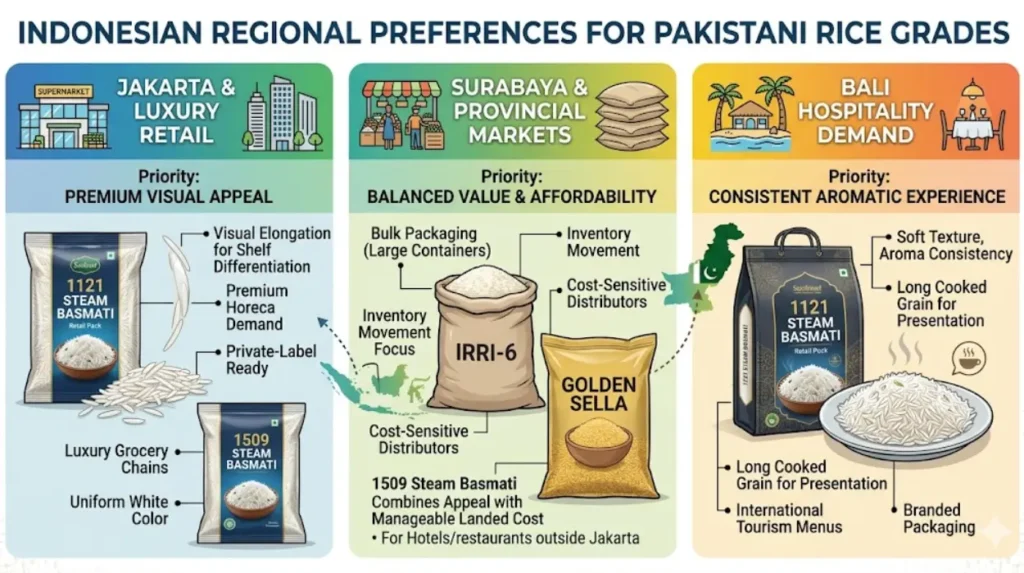
Jakarta and Bandung prefer premium Steam Basmati grades, while Surabaya and secondary wholesale regions favor balanced-value grades such as 1509 Steam and IRRI-6. Regional income levels and retail formats directly influence Indonesian rice grade preferences.
Indonesia operates as a multi-tier wholesale market. Rice import demand differs between luxury urban retail centers and cost-sensitive provincial distributors.
Jakarta Wholesale Market Preferences
Jakarta importers focus heavily on premium packaged rice. Supermarkets and horeca chains demand:
- 1121 Steam Basmati
- 1509 Steam Basmati
- Private-label retail packs
- Low break percentage
- Uniform white grain color
Premium retail chains in Jakarta position imported Basmati as a luxury category. Long grain appearance influences buying decisions more than fragrance intensity.
1121 performs strongly in luxury grocery channels because visual elongation creates premium shelf differentiation.
Surabaya and Provincial Market Preferences
Surabaya wholesalers prioritize affordability and inventory movement. Buyers in these regions usually procure:
- 1509 Steam Basmati
- IRRI-6
- Golden Sella grades
- Bulk packaging
- Large-volume containers
1509 works exceptionally well because the grade combines visual appeal with manageable landed cost. Indonesian wholesalers supplying hotels and restaurants outside Jakarta frequently prefer 1509 for this reason.
Bali Hospitality Demand
Bali hotels and resorts import premium aromatic rice for international tourism. Hospitality buyers usually prioritize:
- Aroma consistency
- Long cooked grain
- Soft texture
- Branded packaging
- Stable annual supply
1121 Steam Basmati fits this requirement because the cooked grain creates premium plate presentation.
Regional Preference Comparison
| Region | Preferred Grade | Main Buyer Type | Main Decision Factor |
|---|---|---|---|
| Jakarta | 1121 Steam | Retail chains | Premium appearance |
| Bandung | 1509 Steam | Supermarkets | Price-performance balance |
| Surabaya | 1509 + IRRI | Wholesalers | Fast inventory turnover |
| Bali | 1121 Steam | Hotels | Plate presentation |
| Provincial Markets | IRRI + Sella | Catering | Cost efficiency |
(source: Indonesian wholesale import trends, ASEAN rice trade review 2025)
Regional demand patterns now clarify why Indonesian wholesalers evaluate grades differently. The next question is how importers decide between those options operationally.
What decision factors matter most when choosing Pakistani rice grades?
Importers prioritize grain length, break percentage, moisture control, CIF pricing, and retail positioning because these factors directly affect profitability, storage stability, and customer retention in Indonesia’s competitive wholesale market.
Wholesale rice procurement requires operational evaluation rather than simple price comparison. Indonesian distributors calculate retail margin, inventory duration, and transportation efficiency before selecting a rice grade.
Grain Length and Appearance
Long grain appearance strongly influences Indonesian retail buyers. Premium shelves favor rice with consistent dimensions and bright white color.
1121 offers the strongest visual presentation. However, 1509 delivers better cost efficiency while maintaining attractive grain length.
Moisture Control
Moisture levels affect storage quality during tropical shipping conditions. Pakistani exporters usually maintain moisture between 12–14% before dispatch.
Lower moisture improves shelf stability. Excessive dryness reduces cooking softness.
Break Percentage
Indonesian wholesalers prefer rice with low broken content because uniform grain improves retail presentation. Premium import contracts usually specify:
- 1–2% broken
- Sortex-cleaned grains
- Silica-controlled storage
- Double-polished finish
- Fumigation certification
Documentation and Compliance
Rice imports into Indonesia require accurate export documentation. Pakistani suppliers generally prepare:
- Phytosanitary Certificate
- Certificate of Origin
- Fumigation Certificate
- Packing List
- Commercial Invoice
- Bill of Lading
- Quality Inspection Report
Complete documentation reduces customs delays at Jakarta and Surabaya ports.
Indonesian Rice Procurement Decision Framework
| Decision Factor | Best Choice | Reason |
|---|---|---|
| Lowest landed cost | IRRI-6 | Budget procurement |
| Best retail appearance | 1121 Steam | Premium shelf presentation |
| Best value balance | 1509 Steam | Mid-premium positioning |
| Longest storage life | Golden Sella | Humid climate durability |
| Fast horeca turnover | 1509 Steam | Soft texture and moderate pricing |
With procurement factors clarified, the final consideration is selecting the most commercially suitable grade for Indonesian wholesale growth.
Which Pakistani rice grade creates the best wholesale opportunity in Indonesia?
1509 Steam Basmati creates the strongest wholesale opportunity because it balances pricing, grain appearance, cooking performance, and scalable distribution across Indonesia’s retail and horeca sectors. 1121 remains the best premium option for luxury retail and hospitality distribution.
1509 fits Indonesia’s expanding middle-premium retail segment. Consumers receive long-grain appearance without the highest import cost. Distributors gain stronger inventory turnover because retail pricing remains accessible.
1121 works best for premium urban channels. Jakarta supermarkets and Bali hospitality buyers continue increasing demand for luxury imported rice. The grade supports higher retail margins but requires stronger consumer purchasing power.
Golden Sella performs best in extended-storage environments. Provincial distributors storing inventory for long periods often prioritize this specification.
IRRI remains important for budget institutional demand. However, premium retail growth increasingly favors Basmati categories.
Pakistani exporters supplying Indonesia must also manage:
- Consistent milling standards
- Moisture verification
- Container scheduling
- Retail packaging compliance
- Stable annual availability
AHK Rice, based in Punjab, Pakistan, supplies 1121, Super Kernel, and 1509 varieties with end-to-end milling, grading, packaging, and export handling for international wholesale markets. Buyers comparing detailed CIF Jakarta specifications, container configurations, and Indonesian import processes can review this decision-focused breakdown from AHK Rice Indonesia wholesale supply guide. bofu
Frequently Asked Questions
Which Pakistani rice grade sells most in Indonesia?
1509 Steam Basmati sells most in Indonesia because the grade balances premium appearance with competitive pricing. Indonesian wholesalers prefer 1509 for supermarkets, horeca supply, and medium-premium retail packaging. The variety also cooks quickly and maintains stable grain structure during storage and shipping.
Why do Indonesian importers choose 1121 Basmati rice?
Indonesian importers choose 1121 Basmati for premium retail and hospitality markets. The variety delivers extra-long cooked grains, strong aroma, and luxury shelf positioning. Hotels and upscale supermarkets in Jakarta and Bali usually prefer 1121 because presentation quality affects customer perception.
What packaging sizes work best for Indonesian rice wholesalers?
Indonesian wholesalers commonly import Pakistani rice in 25 kg, 40 kg, and 50 kg PP woven bags. Supermarkets also demand 5 kg and 10 kg private-label retail packs. Packaging selection depends on the target market, warehouse handling system, and retail distribution strategy.
How long can Pakistani Basmati rice stay in storage?
Pakistani Basmati rice usually maintains quality for 12 to 18 months under controlled storage conditions. Golden Sella grades often last longer because parboiling strengthens the grain structure. Proper moisture control and ventilated warehousing improve shelf stability in humid Indonesian climates.
Which Pakistani rice grade offers the best price-performance balance?
1509 Steam Basmati offers the strongest price-performance balance for Indonesian wholesale buyers. The variety provides long grain appearance, soft cooking texture, and competitive CIF Jakarta pricing. Indonesian distributors use 1509 for both horeca supply and branded supermarket distribution.