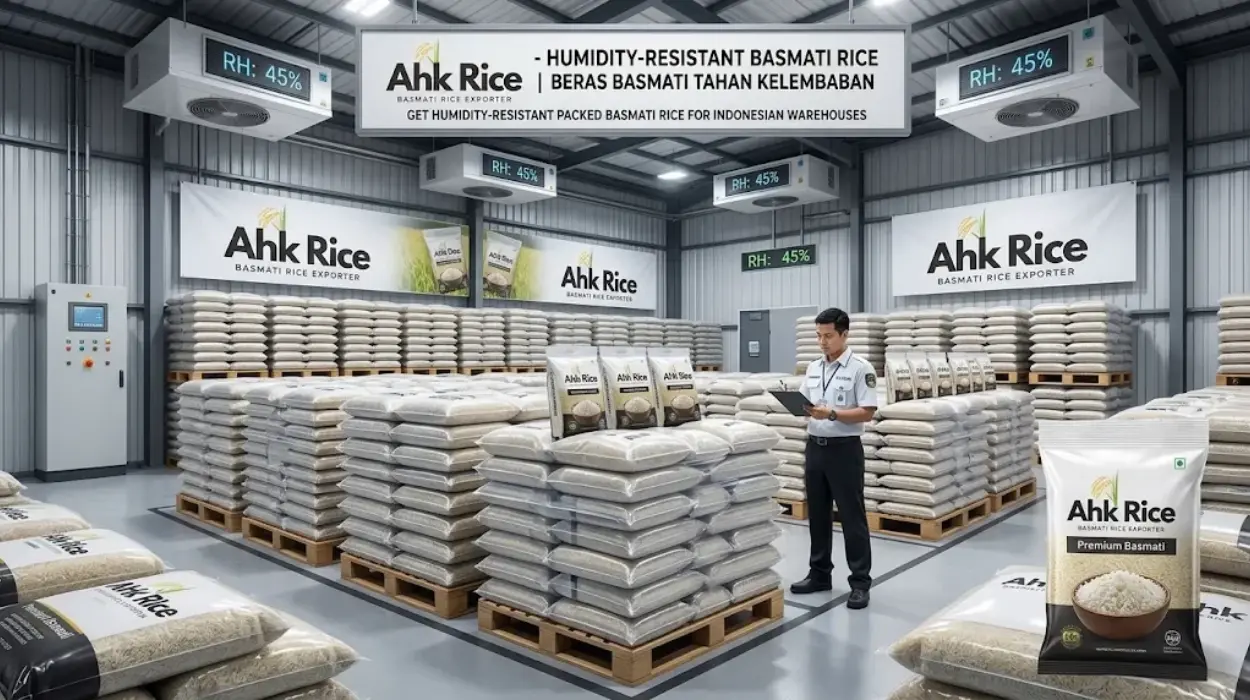
Get Humidity-Resistant Packed Basmati Rice for Indonesian Warehouses from AHK Rice
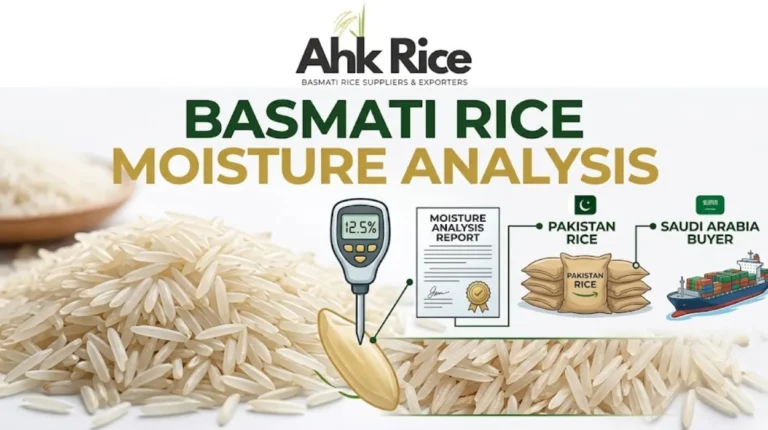
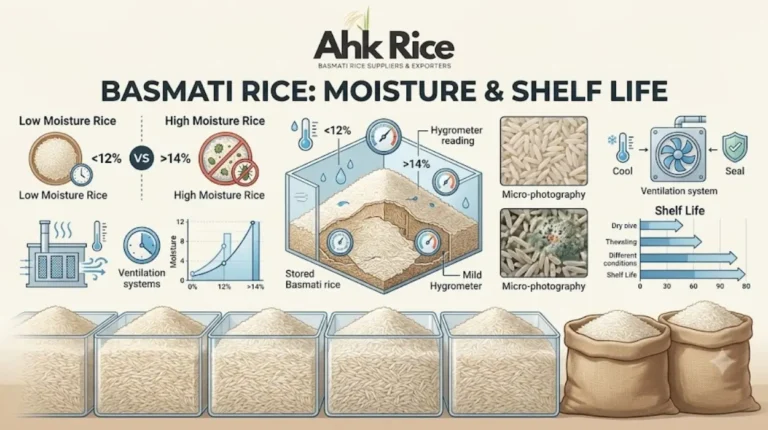
For Indonesian importers, distributors, wholesalers, and private-label rice buyers, humidity control starts before the container reaches the warehouse. Learn how Basmati rice should be stored in Indonesia’s tropical humidity to understand why packaging, moisture control, ventilation, pallet placement, and warehouse discipline directly affect rice quality after arrival.
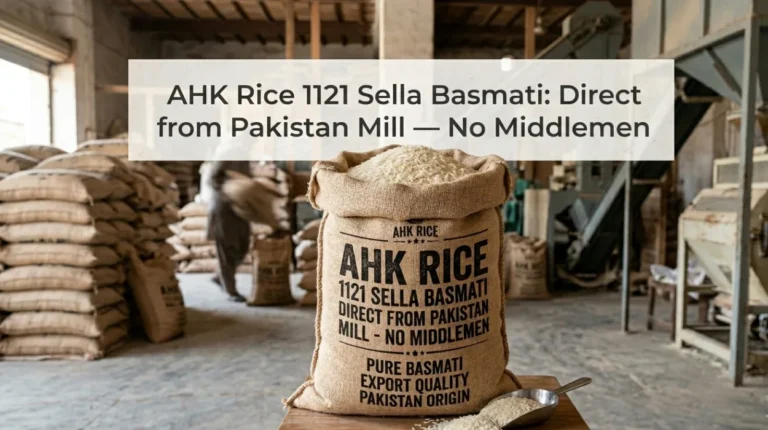
The practical solution is to source packed Basmati rice with controlled specifications, export-grade packaging, suitable moisture levels, and a documented shipment process. AHK Rice supplies Pakistani Basmati rice for international buyers and coordinates sourcing, processing, grading, packaging, export documentation, and shipment preparation from Pakistan.
What is the best solution for humidity-resistant packed Basmati rice in Indonesia?
The best solution is packed Basmati rice prepared for tropical warehouse conditions, with controlled moisture, protective packaging, secure palletization, and shipment specifications agreed before loading. This reduces moisture exposure, packaging damage, insect risk, quality deterioration, and warehouse losses after arrival.
Indonesian warehouses operate in a warm and humid environment, so the buyer should not evaluate rice only by grain appearance or FOB price. The commercial decision must include moisture control, packaging construction, container loading, transit duration, warehouse ventilation, and expected storage period.
AHK Rice can prepare Basmati rice according to the buyer’s agreed specification before shipment. The process covers product selection, grading, sorting, packaging, inspection, documentation, container loading, and export coordination.
For buyers comparing warehouse requirements, packaging methods, and moisture-management practices, the guide Moisture Control, Warehouse Conditions and Insect Prevention for Imported Rice provides the operational comparison needed before placing a commercial order.
A suitable packed shipment normally begins with the rice specification rather than the packaging artwork. Buyers should define variety, grain length, broken percentage, moisture limit, packing size, bag construction, quantity, destination port, and required documentation.
This approach gives the importer a measurable specification against which the shipment can be checked.
Why choose AHK Rice for Indonesian warehouse supply?
AHK Rice provides a controlled export workflow that connects Pakistani Basmati sourcing, processing, grading, packaging, documentation, and container shipment, allowing Indonesian buyers to approve commercial specifications before the rice is loaded for export.
AHK Rice is based in Punjab, Pakistan, a major production region for Pakistani Basmati rice. Its export workflow is designed for international buyers requiring consistent specifications rather than spot-market bags with uncertain processing history.
The first product discussion should identify the required Basmati variety. AHK Rice’s Basmati rice export service can support buyers evaluating 1121, Super Kernel, and 1509 Basmati rice according to market positioning, grain characteristics, packing requirements, and destination needs.
For Indonesian distribution, the selection can differ by commercial channel. Premium retail programs can prioritize long-grain appearance, aroma, purity, and cooking performance. Foodservice and wholesale buyers can place greater weight on cost per tonne, cooking consistency, pack size, and supply continuity.
AHK Rice also supports custom packaging requirements. This is important when an Indonesian importer wants its own private-label packaging rather than generic export bags.
Packaging specifications should be agreed before production. The buyer can define bag weight, printed information, material requirements, branding, and pallet configuration according to the intended distribution channel.
What results can Indonesian buyers expect?
A properly specified shipment gives Indonesian buyers greater control over moisture exposure, packaging integrity, product consistency, and warehouse handling while reducing avoidable quality problems caused by unsuitable packing, excessive humidity, poor ventilation, or weak shipment specifications.
The objective is not to make rice completely unaffected by humidity. No conventional rice bag eliminates environmental exposure indefinitely. The objective is to create a supply chain that controls moisture and protects the product during production, container transport, unloading, and warehouse storage.
A buyer receiving a container with controlled specifications can establish warehouse procedures around those specifications.
For example, an Indonesian wholesaler receiving 25 kg or 50 kg Basmati bags can store pallets above the warehouse floor, maintain air circulation between stacks, avoid direct wall contact, and inspect incoming bags for damage or condensation.
The importer should also separate newly arrived inventory from older stock and apply first-in, first-out inventory rotation. This prevents older rice from remaining in humid storage while newer shipments are distributed first.
AHK Rice can also provide the commercial documentation and product information required for the agreed shipment. The exact documents depend on the destination, product, buyer requirements, and applicable Indonesian import procedures.
A practical supply program therefore connects product specifications with warehouse procedures. The exporter controls the shipment before dispatch, while the importer controls storage after arrival.
How does the AHK Rice sample-to-order process work?
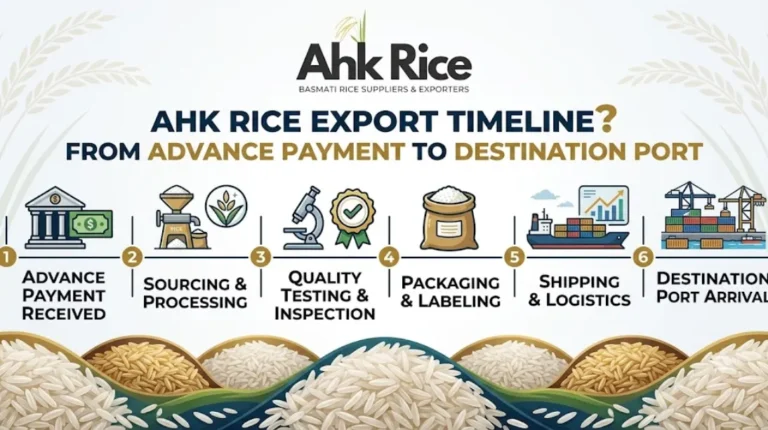
The commercial process starts with the buyer’s specification, followed by sample preparation, courier shipment, evaluation, final specification approval, quotation, packaging confirmation, production, inspection, container loading, and export documentation before shipment to Indonesia.
The first step is to send the required specification to AHK Rice. This should include the Basmati variety, preferred grade, packing size, estimated quantity, destination port, packaging requirements, and whether the shipment is for wholesale, foodservice, retail, or private label.
AHK Rice then confirms the available product specification and prepares a commercial sample where applicable.
The buyer can use the sample for visual inspection, cooking evaluation, grain-length assessment, aroma evaluation, and packaging review. A sample approval should be based on the commercial specification rather than appearance alone.
Courier costs are normally paid by the buyer. Any applicable sample-related charges, including courier and destination-side requirements, should be confirmed before dispatch.
For larger Super Kernel sampling requirements, AHK Rice has also used a sampling model where up to 20 kg can be supplied for product evaluation, while the buyer covers courier shipping and applicable phytosanitary charges. Availability and terms should be confirmed for the specific order.
Once the buyer approves the sample, AHK Rice moves toward the commercial quotation. The final price depends on the selected grade, grain specification, broken percentage, moisture requirement, packaging, order quantity, destination, and Incoterm.
After commercial approval, packaging and production specifications are confirmed. The shipment then proceeds through processing, sorting, packing, inspection, documentation, container loading, and export.
The buyer should receive the agreed commercial specifications before shipment so that the incoming container can be checked against the approved order.
What packaging is suitable for Indonesian warehouses?
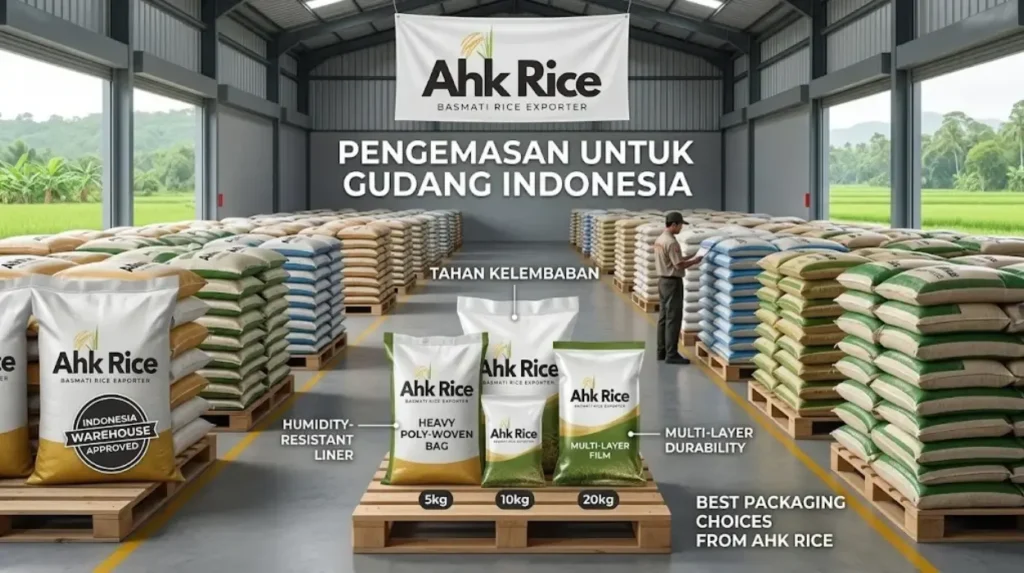
Suitable packaging protects rice from handling damage and limits direct environmental exposure, but warehouse conditions remain essential because packaging alone cannot compensate for condensation, poor ventilation, wet floors, wall contact, or prolonged uncontrolled humidity.
Common export pack sizes include 5 kg, 10 kg, 25 kg, and 50 kg, depending on the Indonesian market and buyer requirements.
Retail buyers may prefer smaller branded packs, while wholesalers and foodservice distributors often require larger commercial bags.
For private-label programs, packaging artwork should be finalized before production. The buyer should confirm the required product information, brand identity, pack weight, language requirements, importer information, and applicable Indonesian labeling requirements with its local compliance team.
AHK Rice can coordinate custom packaging as part of the export order rather than treating packaging as an afterthought.
The packaging decision should also consider warehouse movement. Larger bags can reduce packaging cost per tonne but require appropriate lifting and stacking procedures. Smaller packs can improve retail handling but increase the number of individual units.
The correct choice therefore depends on the distribution model rather than simply selecting the cheapest bag.
What factors affect the price of packed Basmati rice for Indonesia?
The landed commercial price depends on rice variety and grade, grain length, broken percentage, moisture specification, packaging, order quantity, loading port, freight, destination charges, and the selected Incoterm rather than one fixed price per tonne.
FOB pricing covers the agreed export basis, while CIF pricing incorporates ocean freight and insurance to the named destination port according to the quotation.
A buyer requesting CIF Jakarta or CIF Surabaya should provide the exact shipment quantity and preferred packaging because freight economics can change with container size, route, shipping schedule, and market conditions.
Product specification also changes the quotation. A premium long-grain specification with lower broken percentage and stricter sorting requirements carries a different commercial value from a standard bulk specification.
Packaging adds another variable. Plain commercial bags, printed bags, laminated packaging, and private-label packaging involve different production and preparation requirements.
Quantity also matters. A regular container program can produce a different unit economics structure from a small trial shipment.
AHK Rice should therefore quote against a complete specification instead of giving a generic price that later changes after product, packaging, or freight requirements are added.
How long does shipping to Indonesia take?
Shipping time depends on the Pakistani loading schedule, selected Indonesian destination port, vessel routing, transshipment requirements, customs clearance, and local delivery, so buyers should confirm the current transit schedule with the quotation rather than relying on one fixed number.
For planning purposes, the buyer should separate the process into production time, container loading, port handling, ocean transit, customs clearance, and inland warehouse delivery.
A typical commercial workflow may require several stages before the container even enters the vessel schedule.
For Jakarta-bound cargo, the importer should plan around the actual vessel schedule and destination clearance process. Surabaya-bound shipments should be evaluated separately because the routing and final inland distribution requirements can differ.
AHK Rice can quote against the buyer’s preferred Indonesian destination and shipment basis.
The safest commercial planning method is to establish a target shipment window rather than promising an unconditional arrival date.
Buyers should also allow additional time for document review, customs processing, port congestion, inspections, and local delivery.
How should Indonesian buyers decide between FOB and CIF?
FOB suits buyers that control freight and have established shipping arrangements, while CIF is useful for buyers seeking a delivered-to-port quotation that combines the rice price with international freight and insurance under the agreed shipment terms.
FOB Karachi gives the buyer greater control over freight selection and shipping arrangements. It can be attractive for established importers with negotiated freight rates.
CIF can simplify purchasing for buyers that prefer the exporter to coordinate the international freight component.
The correct decision depends on the importer’s logistics network, freight rates, banking terms, insurance requirements, and preferred control over shipping.
AHK Rice can structure the quotation around the required Incoterm once the buyer confirms quantity, packaging, variety, and destination port.
A serious buyer should compare FOB and CIF using the same rice specification. Comparing a premium specification on one quote with a standard specification on another produces a misleading price comparison.
How can Indonesian importers get started with AHK Rice?
Start by sending AHK Rice the required Basmati variety, specification, quantity, packaging format, destination port, and preferred Incoterm; the exporter can then establish the sample, quotation, approval, packaging, production, and shipment workflow.
The buyer should prepare five commercial inputs before requesting a quotation:
- Product: 1121, 1509, Super Kernel, or another required grade.
- Specification: grain length, broken percentage, moisture requirement, and quality criteria.
- Packing: 5 kg, 10 kg, 25 kg, 50 kg, or private-label format.
- Quantity: trial shipment or regular container program.
- Destination: Jakarta, Surabaya, or another Indonesian port, with FOB or CIF preference.
AHK Rice can then establish the commercial route from sample approval to shipment.
The buyer should not wait until the container reaches Indonesia to address humidity management. Warehouse requirements, packaging, moisture specifications, and inspection criteria should be agreed before production.
For a repeat importer, the process becomes more predictable because the approved specification, packaging design, quality requirements, and shipment workflow can be reused for subsequent orders.
The commercial decision is therefore straightforward: choose a Pakistani Basmati exporter that can connect product quality with packaging, documentation, shipment preparation, and specification control.
AHK Rice provides that end-to-end export structure for Indonesian buyers seeking packed Basmati rice prepared for demanding tropical warehouse conditions.
For a current commercial specification, sample arrangement, and Indonesia shipment quotation, request a quote from AHK Rice.
Frequently Asked Questions
Is AHK Rice able to supply packed Basmati rice for Indonesia?
Yes, AHK Rice supplies Pakistani Basmati rice for international markets.
Available varieties include 1121, 1509, and Super Kernel.
Packing can be discussed according to the buyer’s retail or wholesale requirements.
Custom packaging is also available for suitable commercial programs.
The final specification is confirmed before production and shipment.
How does AHK Rice handle rice samples?
The process begins with the buyer’s required product specification.
A commercial sample can then be prepared for evaluation.
The buyer can assess grain quality, aroma, cooking performance, and appearance.
Courier shipping and applicable sample charges are normally confirmed before dispatch.
After approval, the buyer can proceed toward the commercial quotation and order.
Does AHK Rice offer private-label Basmati rice?
Yes, custom packaging can be incorporated into suitable export orders.
The buyer provides the required brand and packaging specifications.
Pack weight and artwork requirements should be finalized before production.
The final packaging must comply with the applicable destination-market requirements.
AHK Rice then coordinates the packing process as part of the export workflow.
Can AHK Rice quote CIF Jakarta or Surabaya?
Yes, quotations can be structured around the buyer’s preferred destination port.
The buyer should provide quantity, product specification, packaging, and shipment requirements.
Freight and insurance form part of the CIF calculation.
FOB and CIF should be compared using the same product specification.
The final quotation should be based on the current shipping and commercial conditions.
How can humidity damage imported Basmati rice?
High humidity increases the importance of moisture control and warehouse management.
Poor ventilation can contribute to condensation and localized moisture exposure.
Wet floors and direct wall contact create additional storage risks.
Damaged or poorly sealed bags can also expose rice to environmental conditions.
Proper packaging combined with disciplined warehouse handling provides stronger protection.