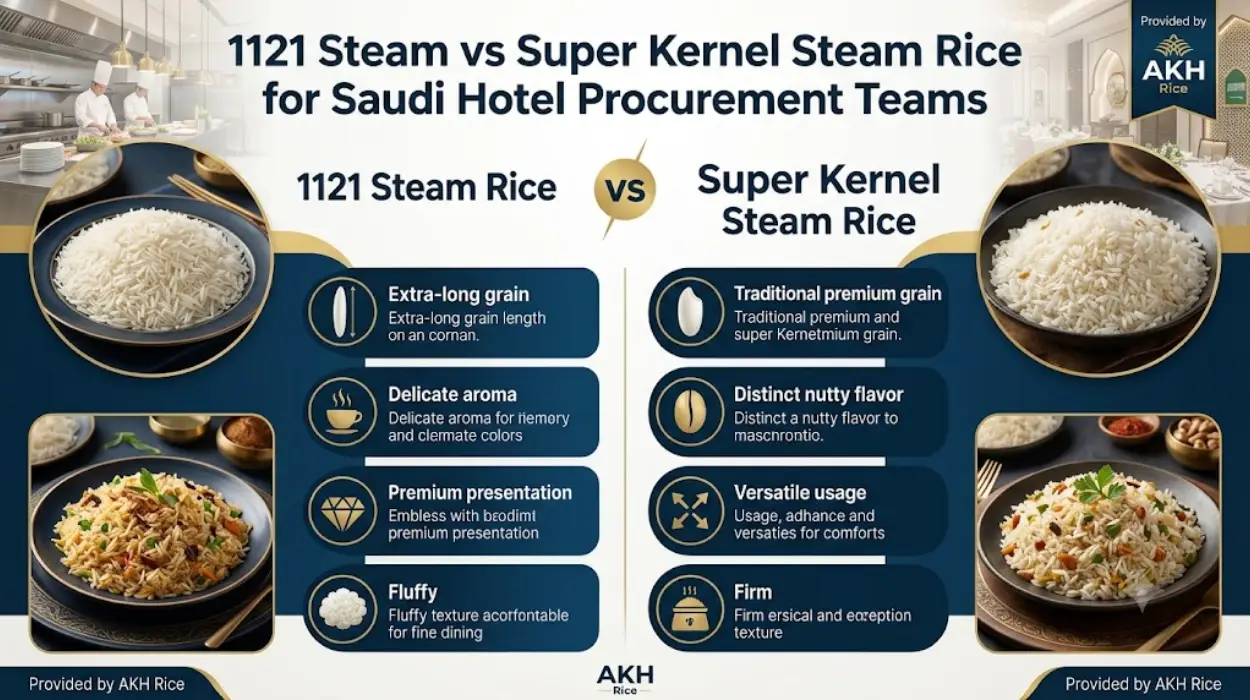
1121 Steam vs Super Kernel Steam Rice for Saudi Hotel Procurement Teams
1121 Steam Rice is the better choice for most Saudi hotel procurement teams because it delivers longer grain appearance, higher cooked volume, stronger plate presentation, and broader guest acceptance. Super Kernel Steam Rice remains valuable for traditional Gulf menus that prioritize aroma and established Basmati characteristics. Here is why: Saudi hospitality buyers increasingly prioritize visual appeal, yield, consistency, and buffet performance alongside procurement cost efficiency (source: REAP export data, December 2025).
Saudi Arabia remains one of the largest import destinations for Pakistani Basmati rice. Hotel groups, catering companies, resorts, and restaurant chains evaluate rice specifications differently than retail buyers. Procurement teams compare grain length, cooking expansion, shelf life, supply consistency, and landed cost before selecting a specification.
For a broader understanding of Saudi hotel rice preferences, readers can explore our guide on how premium Basmati varieties are selected for hospitality operations through the article discussing preferred rice choices among Saudi hotels.
When procurement managers evaluate steam-processed Basmati rice, two varieties dominate purchasing discussions: 1121 Steam Rice and Super Kernel Steam Rice. Both originate from Pakistan’s Basmati-growing regions of Punjab. Both undergo controlled steaming, milling, grading, sorting, and export preparation. However, their commercial performance differs significantly across hotel segments.
AHK Rice exports both varieties from Punjab, Pakistan, supplying hospitality buyers across the Gulf region with customized specifications, packaging formats, and export documentation.
What are the differences between 1121 Steam Rice and Super Kernel Steam Rice?
1121 Steam Rice delivers longer grain length, higher cooked expansion, and greater buffet presentation value, while Super Kernel Steam Rice offers stronger traditional aroma, familiar Gulf market acceptance, and competitive procurement costs for specific hospitality applications.
What is 1121 Steam Rice?
1121 Steam Rice is a premium Pakistani Basmati variety cultivated in Punjab. Farmers harvest mature paddy before mills clean, dehusk, steam, dry, polish, grade, and sort the grains.
1121 Steam Rice is recognized globally for exceptional grain length. The variety achieves some of the highest elongation rates among commercial Basmati grades.
Saudi hotels frequently select 1121 Steam Rice because guests visually associate long grains with premium dining experiences.
What is Super Kernel Steam Rice?
Super Kernel Steam Rice is a traditional Pakistani Basmati variety known for its aroma and balanced cooking performance.
Super Kernel originated as an improvement over classic Basmati lines. The variety maintains strong fragrance while delivering reliable cooking consistency.
Saudi restaurants serving traditional Gulf dishes often prefer Super Kernel Steam Rice because aroma remains a key purchasing factor.
Specification Comparison Table
| Attribute | 1121 Steam Rice | Super Kernel Steam Rice |
|---|---|---|
| Average Grain Length | 8.30–8.50 mm | 7.20–7.60 mm |
| Cooked Length | 18–22 mm | 14–17 mm |
| Aroma Strength | Medium to High | High |
| Cooking Expansion | Up to 2.5x | Up to 2.0x |
| Hotel Buffet Appearance | Excellent | Very Good |
| Typical Shelf Life | 18–24 Months | 18–24 Months |
| Export Demand in Saudi Hotels | Very High | High |
Why does grain length matter in hotels?
Grain length influences perceived quality. Guests notice rice appearance before tasting the meal.
1121 Steam Rice creates a premium visual presentation on buffet lines. Long grains separate clearly after cooking.
Super Kernel Steam Rice delivers a more traditional Basmati appearance. The shorter grain profile remains acceptable for many Gulf menu applications.
With the physical differences established, the next question is how available procurement solutions compare across hospitality requirements.
How do the available solutions compare for Saudi hotel procurement?
1121 Steam Rice performs best for luxury hotels and high-volume buffets, while Super Kernel Steam Rice performs best for aroma-focused dining operations and cost-controlled hospitality programs.
Performance Comparison by Hotel Application
Saudi hotels purchase rice according to menu style rather than variety popularity.
Luxury hotels prioritize presentation consistency. Business hotels focus on yield. Resort operators often balance both requirements.
Price per Metric Ton Comparison
Market prices fluctuate according to crop conditions, freight costs, and export demand. Typical 2026 export pricing ranges remain:
| Rice Type | Typical Export Price Range (USD/MT) |
|---|---|
| 1121 Steam Rice | $1,050–$1,300/MT |
| Super Kernel Steam Rice | $950–$1,150/MT |
(Source: REAP export market indications, Q1 2026)
1121 Steam Rice commands higher pricing because buyers pay for grain length and expansion performance.
Super Kernel Steam Rice remains attractive for procurement teams managing large food service budgets.
Cooking Yield Comparison
Cooking yield directly affects food cost calculations.
1121 Steam Rice expands significantly during cooking. Hotels can serve more portions from identical raw rice quantities.
A hotel preparing 100 kilograms of cooked rice daily benefits from improved yield efficiency when using premium long-grain specifications.
Super Kernel Steam Rice also performs well but generally produces lower elongation ratios.
Buffet Holding Performance
Buffet operations require rice that maintains texture during service.
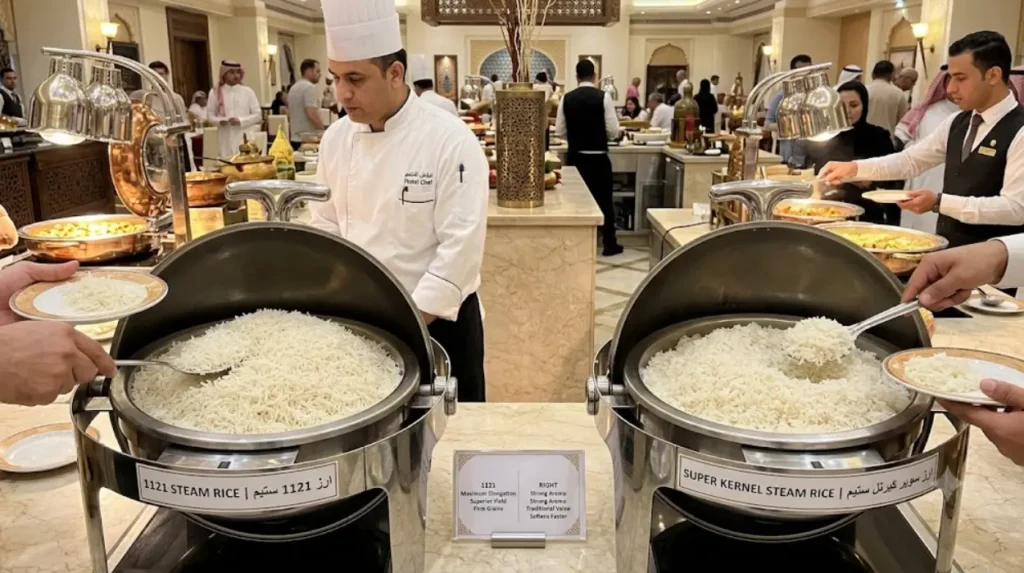
1121 Steam Rice maintains grain separation effectively during extended buffet periods.
In Saudi banquet operations serving several hundred guests, grain separation remains visible throughout service hours.
Super Kernel Steam Rice provides stable performance but softens slightly faster under prolonged heat holding conditions.
Pros and Cons
1121 Steam Rice
Advantages
- Longer grain appearance
- Higher cooking expansion
- Premium buffet presentation
- Strong international demand
- Excellent banquet suitability
Limitations
- Higher procurement cost
- Greater specification sensitivity
- Requires precise cooking control
Super Kernel Steam Rice
Advantages
- Strong traditional aroma
- Lower procurement cost
- Familiar Gulf market acceptance
- Reliable cooking performance
- Consistent year-round availability
Limitations
- Shorter grain appearance
- Lower elongation ratio
- Reduced visual premium positioning
Having compared operational performance, procurement teams must next determine which option aligns with specific market requirements.
Which rice works best for different Saudi hospitality segments?
1121 Steam Rice suits luxury hotels, resorts, and banquet operations, while Super Kernel Steam Rice suits traditional restaurants, mid-scale hotels, and cost-sensitive food service programs.
Luxury Hotels
Luxury hospitality brands prioritize guest perception.
1121 Steam Rice creates superior plate presentation. Long grains complement premium Arabic, Indian, and international menus.
Five-star properties frequently specify minimum grain lengths above 8.30 mm before milling.
Business Hotels
Business hotels balance quality and operating costs.
1121 Steam Rice remains attractive because cooking yield offsets higher procurement costs.
Food cost managers often calculate yield performance rather than purchase price alone.
Traditional Gulf Restaurants
Traditional dining venues frequently emphasize aroma.
Super Kernel Steam Rice performs well because fragrance remains a defining quality characteristic.
Many chefs preparing Kabsa and Mandi prefer aromatic rice profiles over extreme grain elongation.
Large Catering Operations
Large catering companies prioritize consistency and volume.
1121 Steam Rice often becomes the preferred specification because grain separation remains attractive in mass-service environments.
Super Kernel Steam Rice remains common for budget-sensitive contracts.
Market Preference Comparison
| Market Region | Preferred Grade | Primary Reason |
|---|---|---|
| Western Saudi Arabia | 1121 Steam Rice | Hospitality and tourism growth |
| Central Saudi Arabia | Super Kernel & 1121 Steam | Traditional dining demand |
Saudi hospitality growth continues under tourism expansion initiatives, increasing demand for premium imported food products (source: Saudi Vision 2030 hospitality sector reports, 2025).
With regional suitability clarified, procurement teams should evaluate shelf life and storage performance.
How do shelf life and storage performance compare?
Both varieties offer 18–24 months of shelf life, but 1121 Steam Rice maintains premium visual quality longer in large-scale storage environments used by hotel supply chains.
Shelf Life Comparison
| Attribute | 1121 Steam Rice | Super Kernel Steam Rice |
|---|---|---|
| Recommended Shelf Life | 18–24 Months | 18–24 Months |
| Humidity Resistance | High | High |
| Aroma Retention | Good | Excellent |
| Visual Stability | Excellent | Very Good |
Proper storage remains critical.
Store rice below recommended humidity levels. Maintain dry warehouse conditions. Rotate stock using first-in-first-out procedures.
Saudi Climate Considerations
Saudi Arabia experiences high temperatures throughout much of the year.
1121 Steam Rice maintains grain appearance effectively during prolonged storage. Visual consistency remains valuable for hotel procurement programs that order container quantities.
Super Kernel Steam Rice retains aroma particularly well during storage periods.
In Riyadh warehouse conditions, aroma preservation often influences purchasing decisions for traditional dining concepts.
With storage characteristics covered, the final step is selecting the right specification through a structured decision framework.
What decision factors should Saudi hotel procurement teams use?
Procurement decisions should prioritize guest expectations, menu style, cooking yield, presentation requirements, and budget targets rather than focusing only on purchase price per metric ton.
Five-Point Decision Framework
| Decision Factor | Choose 1121 Steam Rice | Choose Super Kernel Steam Rice |
|---|---|---|
| Premium Presentation | ✔ | |
| Maximum Grain Length | ✔ | |
| Traditional Aroma Focus | ✔ | |
| Lower Procurement Budget | ✔ | |
| Banquet Yield Optimization | ✔ |
Evaluate Guest Expectations
Luxury guests expect premium presentation. Long grains enhance perceived quality.
Evaluate Menu Requirements
Traditional Gulf menus often emphasize aroma. Super Kernel Steam Rice delivers strong fragrance characteristics.
Evaluate Yield Performance
Yield affects operating cost. Higher expansion improves serving efficiency.
Evaluate Procurement Budgets
Cost targets influence specification selection. Super Kernel Steam Rice generally offers lower acquisition costs.
Evaluate Supply Consistency
Reliable suppliers maintain quality standards through inspection, testing, grading, certification, and export documentation.
AHK Rice follows a complete export process including paddy sourcing, cleaning, dehusking, steaming, drying, polishing, grading, color sorting, quality testing, packaging, and shipment preparation.
For hospitality buyers moving toward supplier evaluation and procurement planning, detailed information on Pakistani Basmati sourcing programs for Saudi hotels and resorts provides the next stage of decision-making.
The comparison is now complete, and procurement teams can confidently match rice specifications to hospitality objectives.
Conclusion
1121 Steam Rice delivers the strongest value for most Saudi hotel procurement teams because it combines premium grain length, excellent cooking expansion, superior buffet presentation, and strong guest perception. Super Kernel Steam Rice remains an effective choice for hospitality operations prioritizing traditional Basmati aroma and controlled procurement budgets.
Luxury hotels, banquet operators, and resort groups generally achieve better operational results with 1121 Steam Rice. Traditional restaurants, mid-market hospitality brands, and cost-focused food service providers often benefit from Super Kernel Steam Rice.
The optimal specification depends on guest expectations, menu design, storage conditions, yield requirements, and procurement objectives. Saudi hospitality buyers that evaluate all five factors consistently make more profitable and operationally efficient purchasing decisions.
Frequently Asked Questions
Which rice is more popular among Saudi luxury hotels, 1121 Steam or Super Kernel Steam?
1121 Steam Rice is more popular among luxury hotels in Saudi Arabia. The variety offers longer grains, better cooked presentation, and higher expansion during cooking. Hotels serving premium buffets and banquet events often choose 1121 Steam Rice because guests associate extra-long grains with quality dining experiences.
Does Super Kernel Steam Rice have a stronger aroma than 1121 Steam Rice?
Yes, Super Kernel Steam Rice generally has a stronger traditional Basmati aroma. Many restaurants serving authentic Gulf, Pakistani, and Indian dishes prefer Super Kernel because fragrance is an important part of the dining experience. The variety retains its aroma well during cooking and storage.
Which rice provides better cooking yield for hotel kitchens?
1121 Steam Rice provides better cooking yield due to its superior grain elongation and expansion rate. Hotel kitchens can serve more portions from the same quantity of raw rice. This advantage helps improve food cost efficiency in large-scale hospitality operations.
How long can 1121 Steam Rice and Super Kernel Steam Rice be stored?
Both varieties typically offer a shelf life of 18 to 24 months when stored correctly. Rice should be kept in dry, cool warehouse conditions with controlled humidity. Proper storage helps preserve grain quality, aroma, and cooking performance throughout the product’s shelf life.
Which rice is more cost-effective for large catering contracts in Saudi Arabia?
The answer depends on the catering objective. Super Kernel Steam Rice usually has a lower procurement cost per metric ton, making it attractive for budget-focused contracts. However, 1121 Steam Rice often delivers greater overall value because its higher cooking yield can offset the higher purchase price.