Get Moisture-Controlled Basmati Rice Packed for Long-Term UAE Storage
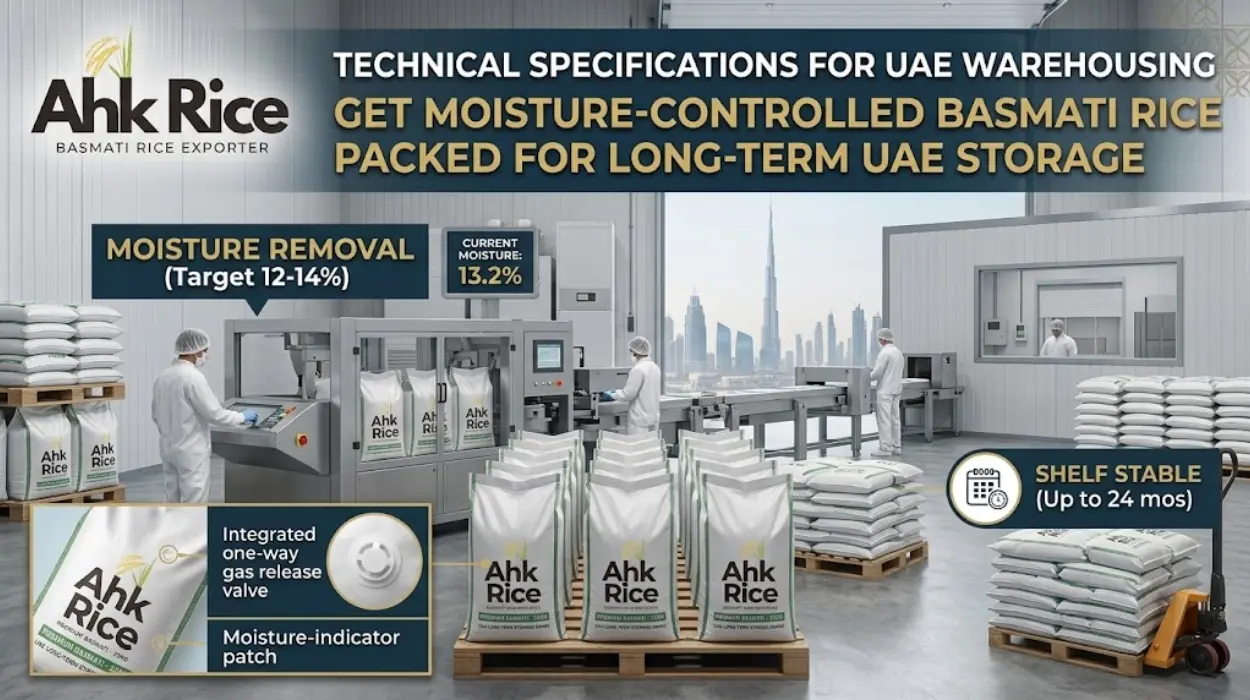
Moisture-controlled Basmati rice for long-term UAE storage requires verified moisture levels, suitable export packaging, hygienic handling, and a dry, temperature-managed warehouse. Importers need these controls to reduce spoilage risks, preserve grain quality, and maintain consistent stock for retail, wholesale, and foodservice distribution.
For buyers evaluating storage requirements before placing an order, the guide to storing imported Basmati rice in the UAE’s hot, humid climate provides the educational starting point for planning inventory protection. The final purchasing decision should also consider the rice variety, processing method, packaging specification, shipment schedule, and destination warehouse conditions.
What is the best solution for long-term Basmati rice storage in the UAE?
The best solution combines controlled grain moisture, clean processing, moisture-resistant packaging, and suitable warehouse conditions. Importers should approve product specifications before shipment and maintain dry storage after delivery. These measures reduce avoidable quality deterioration without relying on packaging alone to prevent spoilage.
The UAE presents specific storage challenges because high outdoor temperatures, seasonal humidity, air-conditioning differences, and condensation during handling can affect packaged food. Rice exposed to moisture may develop musty odours, discolouration, insect activity, or mould under favourable conditions. Even properly processed rice can deteriorate when warehouse management is inadequate.
A practical procurement specification should identify the rice variety, crop or production details where available, processing type, grain length, broken percentage, moisture content, packaging material, bag weight, and inspection requirements. These details give the buyer and supplier a shared quality standard.
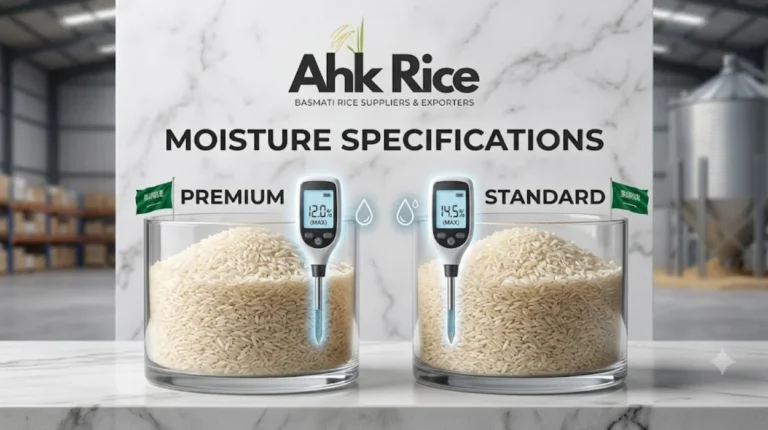
For commercial Basmati rice, a moisture target of approximately 12–13% is a useful starting point for specification discussions. The final acceptable limit must follow the agreed product standard and destination requirements. Buyers should confirm the measured moisture content through a documented quality check rather than relying on a general description such as dry or export quality.
Packaging must also match the expected storage period. Woven polypropylene bags may suit conventional wholesale distribution, while suitable inner liners or laminated packaging can provide additional protection against moisture exchange. Retail buyers may require sealed 1 kg, 5 kg, or 10 kg packs, while distributors often purchase 25 kg or 50 kg bags.
Why choose AHK Rice for moisture-controlled Basmati rice?
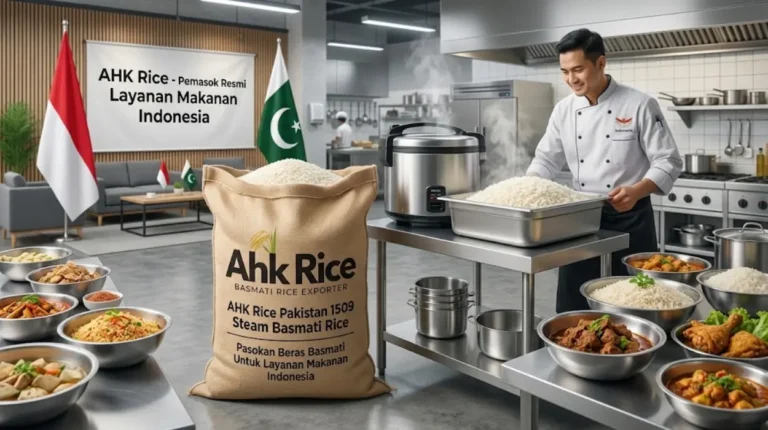
AHK Rice supports Pakistani Basmati rice sourcing, processing, grading, packaging, and export coordination for international buyers. Importers can define their moisture limits, grain specifications, bag sizes, and shipment requirements before order confirmation, helping align the delivered product with their storage and distribution plans.
AHK Rice is a Pakistani Basmati rice exporter based in Punjab, sourcing rice from a region known for aromatic Basmati cultivation. Its core varieties include 1121, Super Kernel, and 1509 Basmati rice, which serve different commercial requirements across retail, wholesale, catering, and institutional foodservice markets.
Buyers can review the AHK Rice export and product supply service when assessing sourcing, processing, packaging, and shipment coordination. The important step is to communicate the intended storage duration and destination conditions before approving the final specification.
Each variety offers a different commercial profile. 1121 Basmati suits premium retail and foodservice applications where long grain appearance and cooked elongation matter. Super Kernel provides traditional Basmati aroma for ethnic retail and wholesale distribution. 1509 Basmati supports buyers prioritising bulk supply and competitive purchasing economics.
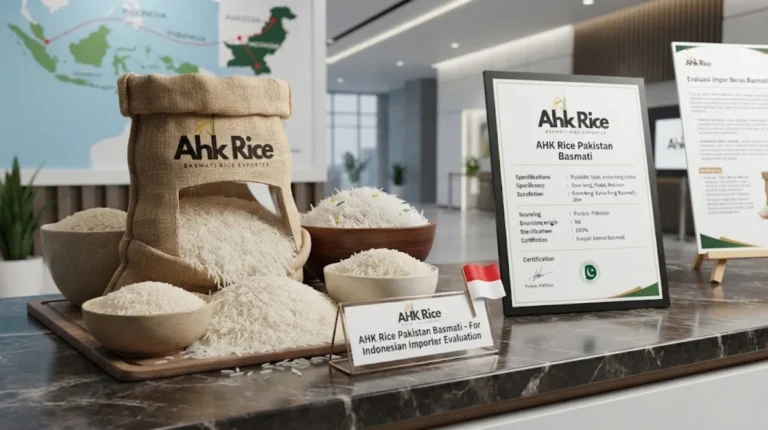
Processing and packaging requirements should be confirmed for the selected variety. Buyers should request the applicable specification sheet, moisture test results, broken percentage, packing details, and available inspection documentation. Any certification, laboratory test, or quality guarantee must be confirmed for the specific shipment rather than assumed to be included automatically.
AHK Rice can coordinate the buyer’s stated requirements with the commercial order and export process. The buyer remains responsible for confirming that the proposed packaging, storage plan, and documentation meet the applicable UAE import requirements.
Which moisture and packaging specifications should UAE importers approve?
UAE importers should approve measurable moisture limits, grain specifications, packaging construction, bag weights, and inspection arrangements before production or dispatch. Written acceptance criteria reduce disagreements at delivery and help warehouse teams identify non-conforming stock before it enters regular distribution.
The following specification framework provides a practical starting point for bulk purchasing.
| Attribute | Suggested purchasing requirement |
|---|---|
| Rice variety | 1121, Super Kernel, or 1509 Basmati |
| Moisture content | Target approximately 12–13%, subject to the agreed specification |
| Broken percentage | Define the contractual limit by grade |
| Grain length | Specify the selected variety and required grade |
| Packaging | Woven polypropylene, lined bags, or suitable laminated packs |
| Bag weights | Common options include 5 kg, 10 kg, 25 kg, and 50 kg |
| Quality verification | Moisture testing, visual inspection, and agreed laboratory checks |
| Storage instructions | Keep sealed, dry, clean, and protected from pests |
These are procurement guidelines, not a substitute for a shipment-specific certificate of analysis. The contract should state the applicable test method, sampling procedure, acceptable tolerances, and action required if results fall outside the agreed limits.
Packaging selection depends on the intended sales channel. Retail packs need effective sealing and clear labelling, while wholesale bags require sufficient strength for palletising, stacking, and repeated handling. A suitable liner can reduce exposure to ambient humidity, but it cannot correct rice that was packed at an unsuitable moisture level.
For further evaluation, buyers should compare Basmati rice moisture content, shelf life, and warehouse conditions in the Gulf. This comparison helps procurement teams connect the incoming product specification with the warehouse environment and expected inventory turnover.
What results can buyers expect from moisture-controlled rice?
A well-defined moisture and packaging programme helps preserve grain condition, reduce preventable handling losses, and support consistent inventory management. Actual results depend on incoming rice quality, packaging integrity, warehouse temperature, relative humidity, pest control, and stock rotation throughout the storage period.
The main benefit is greater control over quality risks. When the rice arrives within the agreed moisture specification and packaging remains intact, warehouse teams have a stronger basis for maintaining saleable stock. This is particularly important for importers supplying supermarkets, independent grocery stores, restaurants, and wholesale distributors.
Consider an importer receiving a container of 25 kg Basmati bags for distribution over several months. The purchasing team confirms the moisture test, packaging construction, bag count, and inspection requirements before dispatch. At arrival, the warehouse checks for wet cartons or bags, torn packaging, unusual odours, and visible contamination before accepting the stock.
The warehouse then stores the bags on clean pallets, away from walls and potential water sources. Staff maintain ventilation and temperature control appropriate for the facility, monitor condensation risks, and use first-in, first-out stock rotation. These steps make quality management more consistent than relying on the supplier’s packaging alone.
Shelf life should never be promised solely on the basis of moisture content. Rice variety, processing, packaging, storage conditions, and the manufacturer’s declared shelf life all influence the period for which the product remains suitable. Buyers should agree on the applicable shelf-life declaration and minimum remaining shelf life at delivery.
How much does moisture-controlled Basmati rice cost for UAE importers?
The final cost depends on rice variety, grade, moisture specification, packaging material, order quantity, inspection requirements, freight, insurance, and delivery terms. Importers should compare complete quotations on the same commercial basis instead of selecting a supplier using the rice price alone.
The main cost factors are:
- Rice variety and grade: Premium 1121 specifications may carry a different price from Super Kernel or 1509.
- Processing method: White, Steam, and Golden Sella products have different processing requirements and commercial values.
- Moisture verification: Additional laboratory testing or independent pre-shipment inspection can add costs.
- Packaging: Laminated bags, printed private-label packaging, and moisture-resistant liners can cost more than standard sacks.
- Order volume: Container quantity, recurring purchase commitments, and production requirements affect the quotation.
- Shipping terms: FOB, CFR, and CIF quotations allocate freight, insurance, and other responsibilities differently.
- Destination charges: Customs clearance, duties, port handling, local transport, and warehousing may affect the landed cost.
A reliable quotation should state the variety, grade, moisture limit, broken percentage, packing format, quantity, unit price, Incoterm, shipment window, payment terms, and documentation included. Buyers should request separate cost details for optional inspections, samples, and special packaging.
There is no single price for every moisture-controlled Basmati shipment. A valid offer must reflect current market conditions and the actual specification requested. Importers should obtain a shipment-specific quotation rather than treating an indicative price as a confirmed commercial offer.
How long does shipping take from Pakistan to the UAE?

Shipping time depends on vessel schedules, the Pakistani loading port, the UAE destination port, transshipment requirements, customs clearance, and local delivery arrangements. Buyers should obtain a current estimated transit window and separate it from production, booking, and destination clearance time.
For planning purposes, sea freight from Karachi to major UAE ports is commonly budgeted at approximately 3–10 days of port-to-port transit when suitable direct services are available. This is an indicative planning range, not a guaranteed schedule. Actual transit may be longer because of transshipment, vessel availability, congestion, or operational changes.
Dubai and Jebel Ali are common entry points for UAE distribution, while the appropriate destination depends on the buyer’s warehouse and onward transport arrangements. Importers should confirm the actual route and estimated arrival date with the shipping provider before finalising inventory commitments.
The full lead time also includes order approval, rice processing if required, packaging, inspection, export documentation, vessel booking, and delivery after customs clearance. Buyers should ask for the expected readiness date, estimated departure, transit time, and destination handling allowance as separate milestones.
For long-term storage planning, the arrival schedule should leave enough time for inspection and warehouse preparation. Receiving teams should have dry storage space, clean pallets, pest-control procedures, and suitable handling equipment ready before the container reaches the facility.
How does the sample process work, and what does it cost?
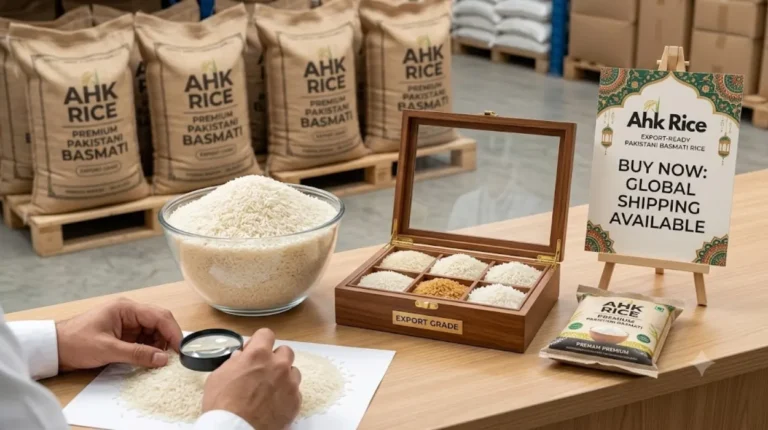
A pre-order sample allows buyers to evaluate aroma, grain appearance, cooking performance, and suitability for their intended market. Sample quantity, courier charges, testing expenses, and any phytosanitary requirements should be agreed before dispatch, with all costs confirmed in writing.
The sample process typically follows five steps.
- Define the product: Select 1121, Super Kernel, or 1509, together with the processing type and target specifications.
- Confirm availability: Ask AHK Rice whether the requested grade and sample quantity are available.
- Agree on charges: Confirm sample price, courier fee, packaging, laboratory testing, and any applicable phytosanitary or other official charges.
- Dispatch the sample: Agree on the courier, destination details, required documents, and expected delivery window.
- Approve the specification: Test the sample for appearance, aroma, cooking behaviour, and any required laboratory parameters before approving the bulk order.
AHK Rice has previously offered up to 20 kg of Super Kernel Basmati rice for sampling, with courier shipping and applicable phytosanitary charges payable by the buyer. Importers should reconfirm the current offer, eligibility, destination restrictions, and total charges before relying on it.
There is no universal sample-delivery cost. Courier rates vary by weight, destination, service level, and customs requirements. Laboratory analysis also depends on the requested tests. The supplier should provide the applicable cost breakdown and dispatch terms before the buyer commits.
Sample approval should cover the commercial specification, not only cooking quality. Buyers should document acceptable moisture, broken percentage, grain length, packaging, and inspection requirements so the approved sample can be linked to the final purchase order.
How can UAE importers start an order with AHK Rice?
Start by specifying the rice variety, quantity, moisture limit, packaging format, destination, and required arrival window. AHK Rice can then assess the requested supply details and provide a commercial quotation for review before sample approval, contract confirmation, and shipment planning.
Prepare the following information before requesting a quotation:
- Required variety: 1121, Super Kernel, or 1509 Basmati.
- Processing type: White, Steam, Golden Sella, or another available grade.
- Moisture limit, broken percentage, grain specifications, and inspection requirements.
- Quantity in metric tonnes and preferred bag size.
- Packaging requirements, including any retail branding or moisture-resistant liner.
- UAE destination port, delivery address where relevant, and target arrival date.
- Preferred Incoterm, payment arrangements, and required import documentation.
The supplier’s quotation should match the approved specification and identify any exclusions. Before payment or production approval, the buyer should confirm the contract terms, sample acceptance, inspection procedure, shipment schedule, and responsibility for destination costs.
For long-term storage, the final decision should combine product quality with warehouse readiness. Suitable moisture levels and packaging reduce exposure to avoidable risks, while proper warehouse management protects the shipment after arrival. Buyers who document both sides of the process have a clearer basis for purchasing and stock planning.
To request a shipment-specific price, packaging options, and sample arrangements, contact AHK Rice for a Basmati rice export quotation.
Frequently Asked Questions
What moisture content is suitable for long-term Basmati rice storage?
A target of approximately 12–13% is a useful starting point for commercial specifications. The exact limit depends on the product, agreed quality standard, and applicable regulations. Buyers should verify the actual moisture content through documented testing.
Which packaging is suitable for Basmati rice in the UAE?
Woven polypropylene bags, lined sacks, and laminated retail packs can suit different distribution needs. Buyers should select packaging based on storage duration, handling, bag size, and humidity exposure. Packaging does not replace correct drying and warehouse management.
How long can Basmati rice be stored?
Storage life depends on rice quality, processing, packaging, temperature, humidity, and pest control. Importers should follow the product’s declared shelf life and maintain documented stock rotation. No fixed storage period is guaranteed by moisture content alone.
How long does shipping from Pakistan to the UAE take?
Port-to-port sea transit may take approximately 3–10 days on suitable services, but routes and schedules vary. Production, booking, customs clearance, and local delivery add time. Buyers should confirm the current schedule before planning inventory.
Can AHK Rice provide samples before a bulk order?
Sample availability and terms should be confirmed for the requested variety and destination. Buyers should agree on sample quantity, courier charges, and any applicable testing or phytosanitary costs. Bulk specifications should be approved before shipment confirmation.