Shipping Rice from Pakistan to Qatar Hamad Port Transit Time 2026
Rice shipping Pakistan Qatar 2026 is the structured maritime export process that moves Pakistani basmati rice, mainly from Karachi Port to Hamad Port in Doha, using standardized sea freight containers with controlled documentation, customs clearance, and regulated transit schedules for commercial food supply chains.
Rice shipping between Pakistan and Qatar is a high-volume agricultural trade route in 2026. It connects Pakistani rice mills in Punjab and Sindh with importers in Doha. The process relies on containerized cargo shipping through sea freight corridors.
The primary export variety includes basmati rice types such as 1121, Super Kernel, and 1509. These varieties are processed, polished, graded, and packed before export.
The destination hub is Hamad Port in Qatar. It functions as a deep-water maritime logistics center that handles bulk food imports, including staple grains like rice.
The route supports commercial distributors, wholesalers, and food supply companies in Qatar. Demand remains stable due to population consumption patterns and hospitality sector requirements.
How does sea freight from Pakistan to Hamad Port work?
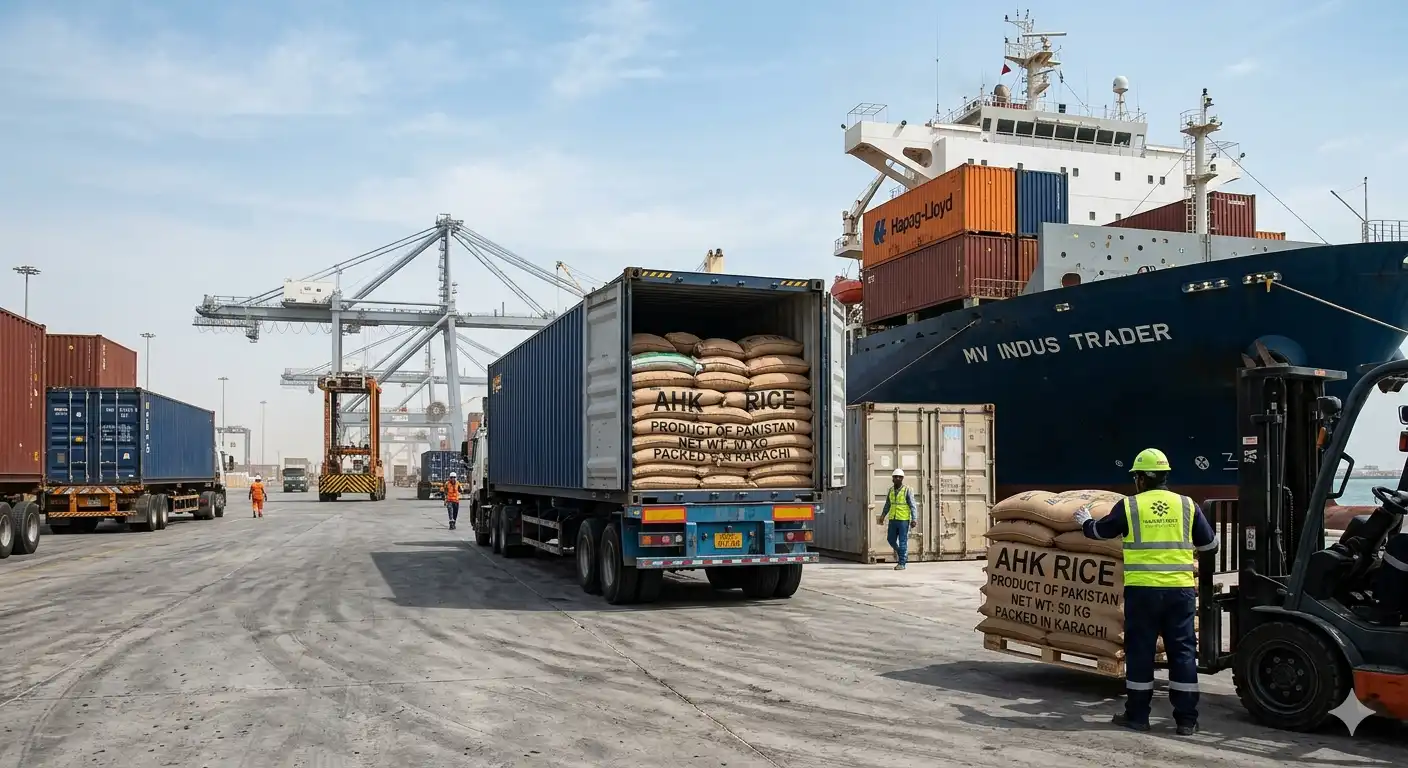
Sea freight from Pakistan to Hamad Port operates through container booking, cargo stuffing at origin mills, export clearance at Karachi terminals, vessel loading, ocean transit across Arabian Sea routes, and final customs inspection at Doha before cargo release to importers.
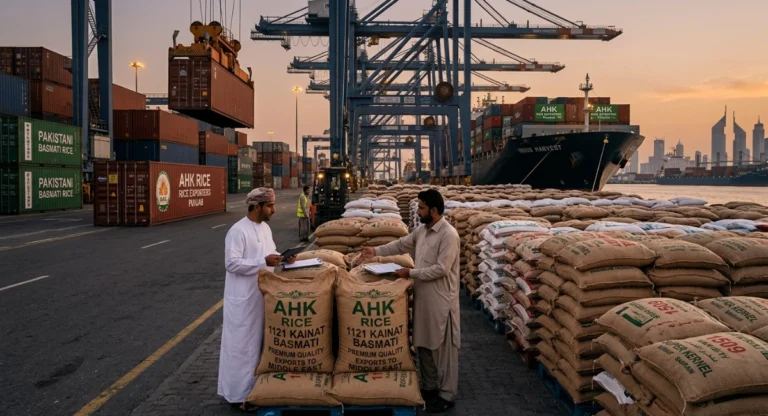
The shipping workflow starts at rice mills in Punjab and Sindh. The rice undergoes cleaning, polishing, grading, and packaging into export-grade bags, typically 5 kg, 10 kg, 25 kg, or 50 kg units.
Containers are then transported by road to Karachi Port or Port Qasim. These ports serve as primary export gateways for Pakistani agricultural commodities.
Export documentation is processed before loading. This includes phytosanitary certificates, commercial invoices, packing lists, and origin certificates.
Containers are loaded onto feeder or mainline vessels bound for Qatar. The vessels follow established Arabian Sea maritime corridors.
Upon arrival at Hamad Port, containers undergo customs inspection and food safety checks before release to importers or distributors.
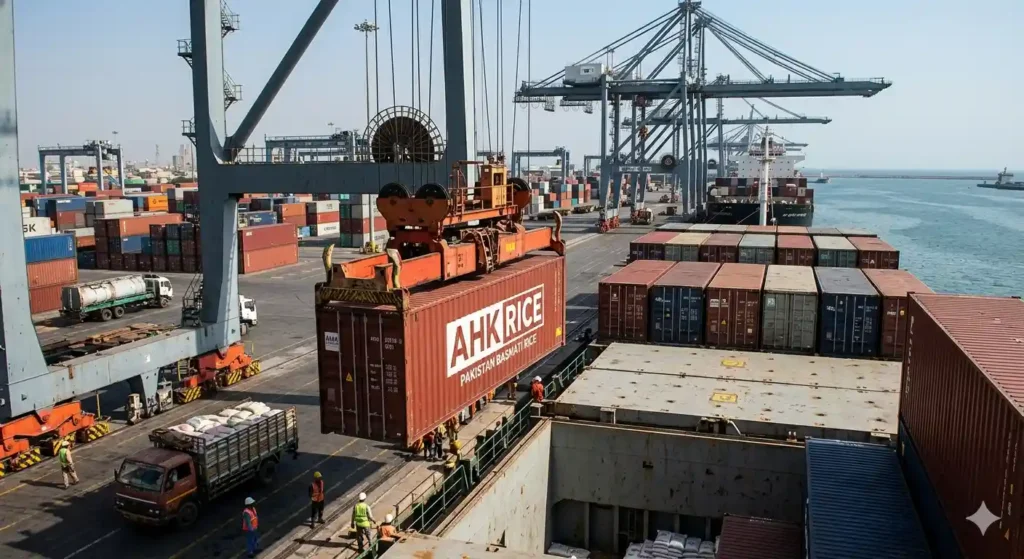
What is the average shipping duration from Karachi to Doha via Hamad Port?
The average shipping duration from Karachi to Hamad Port in Doha ranges from 7 days to 14 days depending on vessel type, direct routing availability, port congestion levels, and container handling schedules at both origin and destination ports.
Direct sailings from Karachi to Hamad Port complete the transit in approximately 7 to 10 days. These routes operate with fewer stops and faster discharge schedules.
Indirect routes that include transshipment at regional hubs such as Jebel Ali extend the timeline to 10 to 14 days. These routes involve container offloading and reloading.
Karachi Port efficiency affects departure timing. Container rollovers and vessel scheduling gaps extend the total shipment cycle.
Hamad Port customs processing adds 1 to 3 days depending on inspection load and import documentation accuracy.
Seasonal demand peaks, especially during Ramadan and major hospitality procurement cycles, increase vessel utilization and extend scheduling intervals.
What are key components affecting rice transit time?
Key components affecting rice transit time include port congestion at Karachi, vessel routing selection, container availability, customs clearance speed, weather conditions in the Arabian Sea, and inspection time at Hamad Port on arrival.
Port congestion at Karachi Port and Port Qasim directly impacts vessel loading schedules. Delays in berth allocation increase container waiting time.
Vessel routing defines transit efficiency. Direct shipping routes reduce time, while transshipment routes increase handling stages and delay delivery.
Container availability affects booking speed. High export demand periods create shortages of 20-foot and 40-foot containers.
Customs clearance efficiency in Pakistan determines how quickly cargo is released for loading. Incomplete documentation extends processing time.
Weather conditions in the Arabian Sea, especially during monsoon winds, influence sailing speed and schedule reliability.
Inspection protocols at Hamad Port include food safety checks and documentation verification. These procedures regulate final release timing.
What are benefits of sea freight Pakistan Qatar rice trade?
Sea freight between Pakistan and Qatar provides cost-efficient bulk transport, stable temperature-controlled container storage, high cargo capacity per vessel, and predictable supply chain scheduling for large-scale rice distribution in Qatar’s food import market.
Sea freight reduces per-ton transport cost compared to air freight. This makes it suitable for bulk rice exports in commercial quantities.
Container shipping preserves rice quality during transit. Sealed containers protect against humidity, pests, and contamination.
Large vessels transport thousands of tons per voyage. This supports continuous supply for wholesalers and distributors in Qatar.
Scheduled maritime routes provide predictable delivery cycles. Importers plan inventory based on fixed shipping windows.
The trade route supports food security requirements in Qatar, which relies heavily on imported staple grains due to limited agricultural production capacity.
Exporters such as Pakistani rice processors in Punjab operate integrated milling and packaging systems aligned with international shipping standards, including structured exporters like AHK Rice operating in global basmati supply chains.
What are common use cases of rice imports into Qatar?
Rice imports into Qatar are primarily used in retail food supply chains, hospitality sector consumption, institutional catering, and wholesale distribution networks serving supermarkets, hotels, and labor accommodation facilities across Doha and surrounding regions.
Retail distribution uses packaged rice units ranging from 1 kg to 10 kg for household consumption. Supermarkets stock multiple basmati grades.
Hospitality consumption includes hotels and restaurants that require consistent basmati rice supply for Middle Eastern and South Asian cuisine.
Institutional catering serves large labor camps and corporate facilities. These operations require bulk rice shipments in 25 kg and 50 kg bags.
Wholesale distribution networks manage import storage and redistribution across Qatar’s urban centers.
Food service providers rely on steady import cycles from Pakistan to maintain menu consistency and pricing stability.
What problems or delays occur in rice shipping to Hamad Port?
Common delays in rice shipping to Hamad Port include container shortage at Karachi, documentation errors in export paperwork, vessel schedule disruptions, port congestion in peak seasons, and extended customs inspection times at destination due to food safety verification protocols.
Container imbalance at Karachi Port creates shipment backlog. Export demand spikes reduce availability of empty containers.
Documentation inconsistencies, such as mismatched packing lists or incorrect HS codes, delay customs clearance and vessel loading.
Vessel schedule disruptions occur due to global shipping rerouting or operational delays at transshipment hubs.
Port congestion increases waiting time for berth allocation. This directly affects vessel departure schedules.
Hamad Port inspection procedures extend processing time when cargo volumes increase during high-demand import cycles.
Weather disturbances in the Arabian Sea also disrupt sailing schedules and extend transit windows.
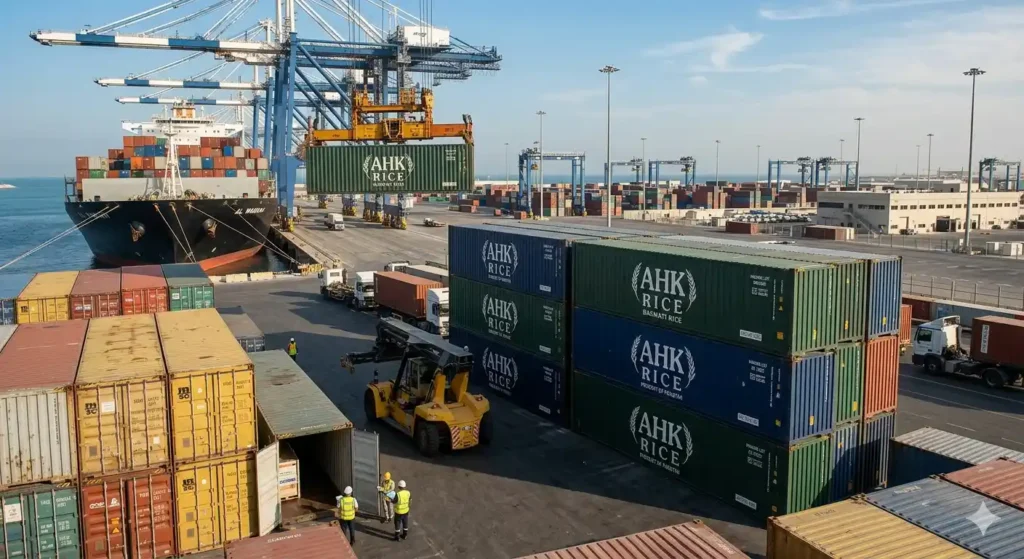
How do certifications and processing standards affect rice shipping Pakistan Qatar 2026?
Certifications and processing standards regulate rice export quality through phytosanitary compliance, ISO-certified milling systems, HACCP-based food safety controls, and government-issued export documentation that ensures eligibility for entry into Qatar’s regulated food import system.
Phytosanitary certification confirms that rice shipments are free from pests and agricultural contaminants. This is mandatory for entry into Qatar.
ISO certification applies to milling and processing facilities. It standardizes quality control across production batches.
HACCP systems regulate food safety during processing, packaging, and storage. This reduces contamination risks in export cargo.
Export documentation includes certificates of origin, commercial invoices, and packing specifications required by customs authorities.
These systems ensure that Pakistani basmati rice varieties such as 1121, Super Kernel, and 1509 meet Gulf import compliance standards.