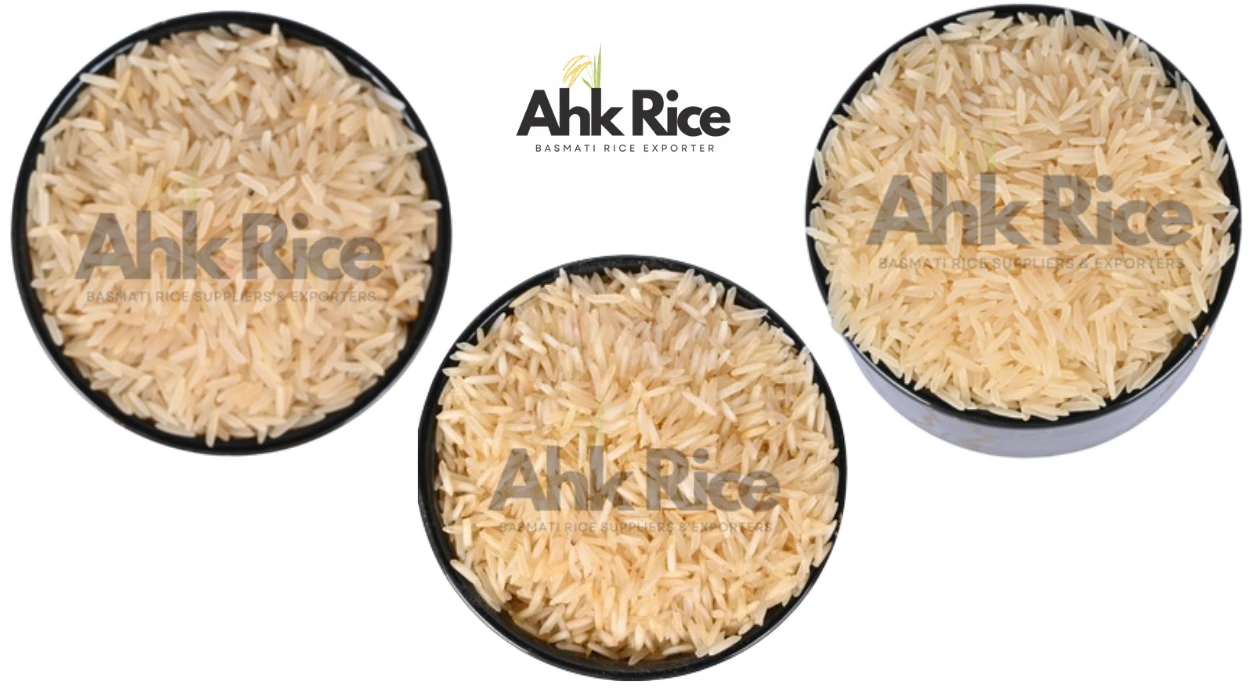
Golden Sella vs Creamy Sella vs Steam 1121 Basmati: Which to Order?
Golden Sella is the most stable and export-preferred grade, Creamy Sella balances appearance and softness, and Steam 1121 delivers premium texture but shorter shelf life. Here is why: processing method directly impacts grain strength, color, cooking behavior, and storage performance across markets.
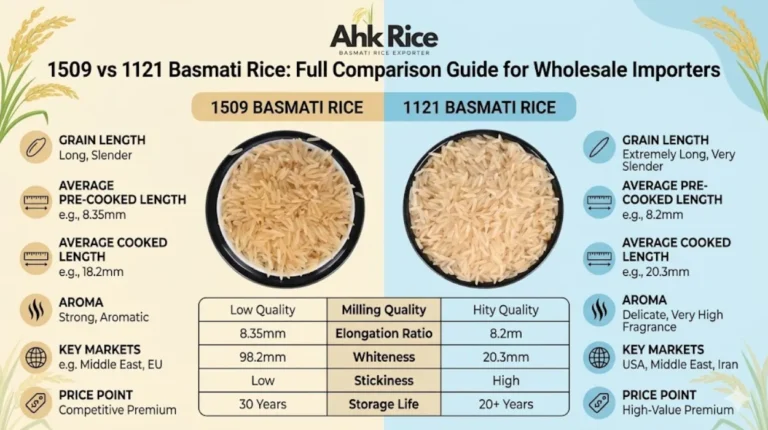
1121 Basmati rice dominates global trade because of its extra-long grain length (8.2–8.5 mm) and elongation ratio above 2.5x after cooking. However, buyers often face confusion when selecting between Golden Sella, Creamy Sella, and Steam grades because each serves a different commercial purpose.
This guide breaks down processing differences, specification data, market demand, pricing, and use-case decisions so importers, wholesalers, and distributors can select the correct grade without trial-and-error.
For foundational understanding, read the educational guide on basmati processing methods here: Understanding Golden Basmati Processing & Grades.
What are the available solutions in 1121 basmati grades?
Three primary solutions exist: Golden Sella for durability, Creamy Sella for balanced quality, and Steam for premium softness—each defined by its processing method and final grain behavior.
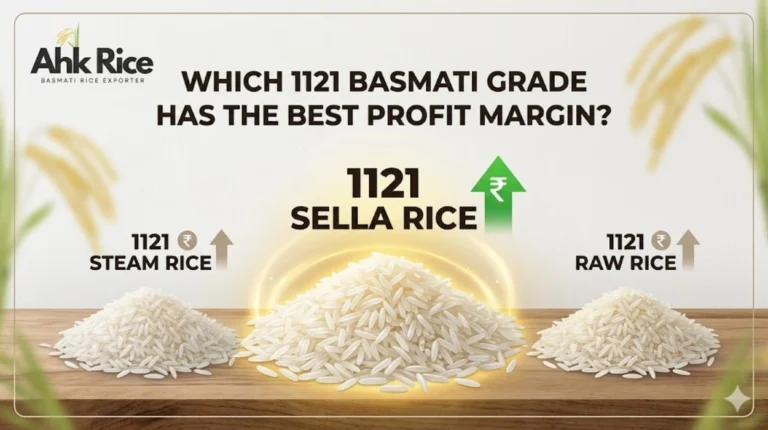
1121 Golden Sella Basmati
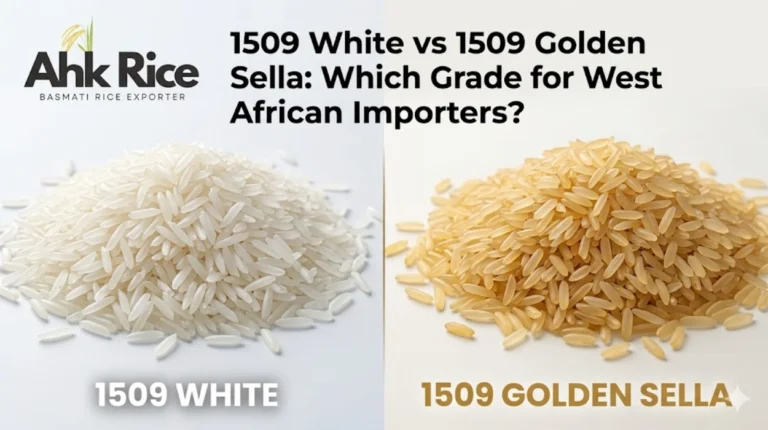
Golden Sella undergoes intense parboiling and controlled drying, which locks nutrients into the grain and strengthens structure.
- Colour: Deep golden yellow
- Texture: Firm and non-sticky
- Broken ratio: 1–2%
- Moisture: 12–13%
- Cooking result: Separate, long grains
Golden Sella dominates exports to Gulf and African markets because high temperatures demand longer shelf stability. In a 40°C warehouse in UAE, Golden Sella maintains quality for 18–24 months, while other grades degrade faster.
1121 Creamy Sella Basmati
Creamy Sella uses a milder parboiling process, resulting in a lighter tone and softer texture.
- Colour: Off-white / creamy
- Texture: Moderately soft
- Broken ratio: 2–3%
- Moisture: 12–13%
- Cooking result: Slightly softer elongation
Creamy Sella fits Middle East retail and premium wholesale buyers who want visual appeal without sacrificing too much shelf life.
1121 Steam Basmati
Steam rice skips parboiling and uses direct steaming after milling, preserving natural grain color.
- Colour: Pure white
- Texture: Soft and fluffy
- Broken ratio: 3–5%
- Moisture: 11–12%
- Cooking result: Light, aromatic, delicate
Steam rice performs best in EU and UK markets, where consumers prioritize taste and appearance over storage durability.
With the three solutions defined, the next step is to compare them directly across measurable specifications.
How do Golden Sella, Creamy Sella, and Steam compare?
Golden Sella leads in durability, Creamy Sella balances texture and color, and Steam excels in softness and visual purity—each with measurable differences in shelf life, price, and usage.
Specification Comparison Table
| Attribute | Golden Sella 1121 | Creamy Sella 1121 | Steam 1121 |
|---|---|---|---|
| Processing Method | Heavy parboiling | Mild parboiling | Steam only |
| Grain Strength | Very high | Medium-high | Medium |
| Colour | Golden yellow | Creamy off-white | Bright white |
| Shelf Life | 18–24 months | 15–18 months | 10–12 months |
| Cooking Texture | Firm, separate | Balanced soft | Soft, fluffy |
| Broken Ratio | 1–2% | 2–3% | 3–5% |
| Average FOB Price (USD/MT) | $950–$1,050 | $900–$1,000 | $880–$980 |
(source: REAP export data, December 2025)
Key Comparison Insights
Golden Sella performs best under logistics stress. High heat and long shipping routes do not damage grain integrity. For African bulk buyers storing rice without climate control, Golden Sella is the correct specification.
Creamy Sella offers a visual upgrade over Golden Sella. Buyers targeting supermarkets in Saudi Arabia prefer Creamy Sella because it appears closer to white rice while retaining strength.
Steam rice delivers maximum consumer appeal. European buyers demand Steam because aroma and softness define retail quality. However, shorter shelf life requires faster turnover.
With direct comparisons established, the next question is which grade works best for specific markets and use cases.

Which method works best for different markets?
Golden Sella dominates Gulf and Africa, Creamy Sella fits hybrid retail markets, and Steam leads in Europe and premium segments—driven by climate, storage, and consumer preference.
Gulf & Iraq Market Preferences
- Preferred grade: Golden Sella
- Reason: High heat storage conditions
- Use case: Catering, bulk supply
- Packaging: 40–50 kg PP bags
Golden Sella maintains grain strength during long shipping cycles of 25–35 days. Iraqi buyers prefer Golden Sella because storage facilities often lack temperature control.
European & UK Market Preferences
- Preferred grade: Steam
- Reason: Premium quality demand
- Use case: Retail packaging (1–10 kg)
- Regulation: Strict EU compliance
Steam rice meets low pesticide and high appearance standards required in Europe (source: EU food import regulations 2025).
Hybrid Markets (Saudi Arabia, UAE Retail)
- Preferred grade: Creamy Sella
- Reason: Balanced quality and appearance
- Use case: Supermarket distribution
Creamy Sella offers consumer-friendly color without compromising too much shelf life.
With market alignment clear, the next step is evaluating advantages and trade-offs.
What are the pros and cons of each grade?
Golden Sella offers durability, Creamy Sella offers balance, and Steam offers premium eating quality—each with clear trade-offs in cost, storage, and usage.
Golden Sella
Pros
- High durability
- Low breakage
- Long shelf life
- Stable under heat
Cons
- Strong yellow color limits retail appeal
- Slightly firmer texture
Creamy Sella
Pros
- Balanced color and strength
- Moderate shelf life
- Better visual appeal
Cons
- Slightly higher breakage than Golden
- Less durable in extreme climates
Steam
Pros
- Best aroma and softness
- Premium white appearance
- High consumer acceptance
Cons
- Short shelf life
- Higher breakage
Golden Sella lasts longer than Steam. In a UAE warehouse at 40°C, Golden Sella maintains quality for 18 months, while Steam requires consumption within 12 months. For fast-moving European retail, Steam is ideal. For long storage in Iraq, Golden Sella is the correct choice.
With advantages and limitations defined, the next section provides a structured decision framework.
What factors should buyers use to decide?
Buyers should evaluate storage conditions, market demand, price sensitivity, turnover speed, and packaging format to select the correct grade.
Decision Framework Table
| Decision Factor | Golden Sella | Creamy Sella | Steam |
|---|---|---|---|
| Storage Temperature | High heat | Moderate | Controlled only |
| Market Type | Bulk/export | Mixed retail | Premium retail |
| Shelf Life Need | Long-term | Medium-term | Short-term |
| Price Sensitivity | Medium | Medium-low | Low |
| Consumer Preference | Durability | Balanced | Soft texture |
Practical Decision Examples
Select Golden Sella for Iraq imports because storage conditions demand durability.
Select Creamy Sella for Saudi supermarkets because buyers prefer lighter color.
Select Steam for UK retail because consumers demand softness and aroma.
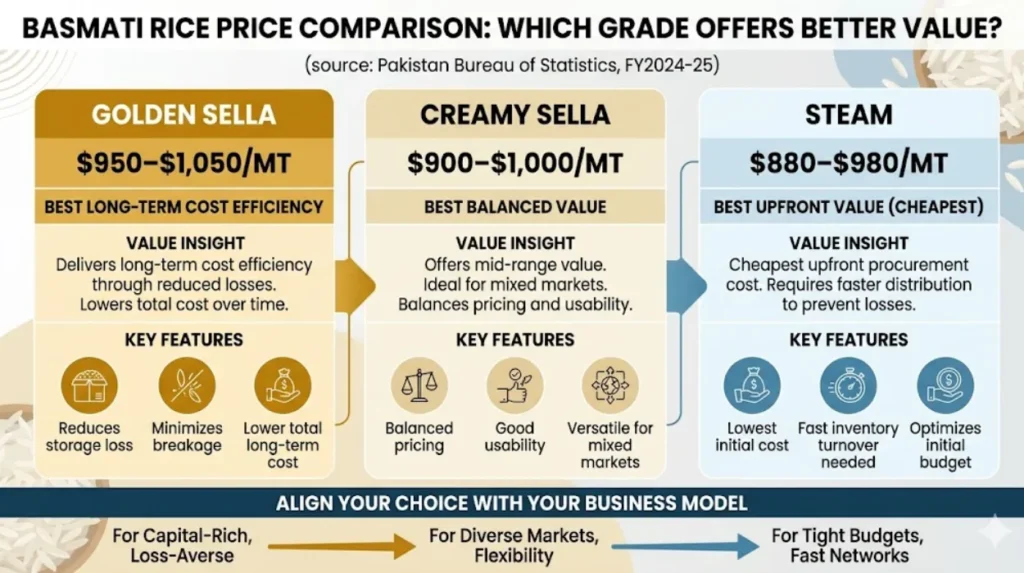
Price comparison: which grade offers better value?
Steam is the cheapest upfront, Creamy Sella offers mid-range value, and Golden Sella delivers long-term cost efficiency through reduced losses.
- Golden Sella: $950–$1,050/MT
- Creamy Sella: $900–$1,000/MT
- Steam: $880–$980/MT
(source: Pakistan Bureau of Statistics, FY2024-25)
Cost vs Value Insight
Golden Sella reduces storage loss and breakage, which lowers total cost over time.
Steam reduces initial procurement cost, but requires faster distribution.
Creamy Sella balances pricing and usability, making it ideal for mixed markets.
With pricing clarified, the final step is selecting the right grade based on your business model.
Final decision: which 1121 basmati should you order?
Golden Sella for durability, Creamy Sella for balance, and Steam for premium markets—selection depends on storage, distribution speed, and customer expectations.
Golden Sella suits bulk importers and hot climates.
Creamy Sella suits retail distributors needing flexibility.
Steam suits high-end retail and fast-moving markets.
Each grade solves a different supply chain problem. Selecting the wrong grade increases losses, reduces customer satisfaction, and impacts repeat orders.
For buyers evaluating export-ready specifications, review the detailed trade-focused guide here: AHK Rice 1121 golden sella FOB Karachi Gulf Iraq.
Frequently Asked Questions
What is the main difference between Golden Sella, Creamy Sella, and Steam 1121 basmati?
Golden Sella uses heavy parboiling for durability, Creamy Sella uses mild parboiling for balance, and Steam skips parboiling for softness and white color. Processing directly controls grain strength, shelf life, and cooking texture, which defines their market use.
Which 1121 basmati grade has the longest shelf life?
Golden Sella offers the longest shelf life at 18–24 months under proper storage conditions. Parboiling hardens the grain structure, which prevents breakage and moisture damage during long shipping and high-temperature storage.
Which grade is best for Gulf and Iraq markets?
Golden Sella is the preferred grade for Gulf and Iraq due to its heat resistance and durability. High ambient temperatures require rice that maintains quality without climate-controlled storage, making Golden Sella the safest specification.
Is Steam 1121 basmati better than Sella rice?
Steam 1121 is better for taste and appearance, while Sella rice is better for storage and logistics. Steam suits retail markets with fast turnover, while Sella grades perform better in bulk export conditions.
How do I choose between Creamy Sella and Golden Sella?
Choose Creamy Sella for better color and retail appeal, and Golden Sella for maximum durability and longer storage. Creamy Sella works in supermarkets, while Golden Sella fits bulk supply chains with longer storage cycles.