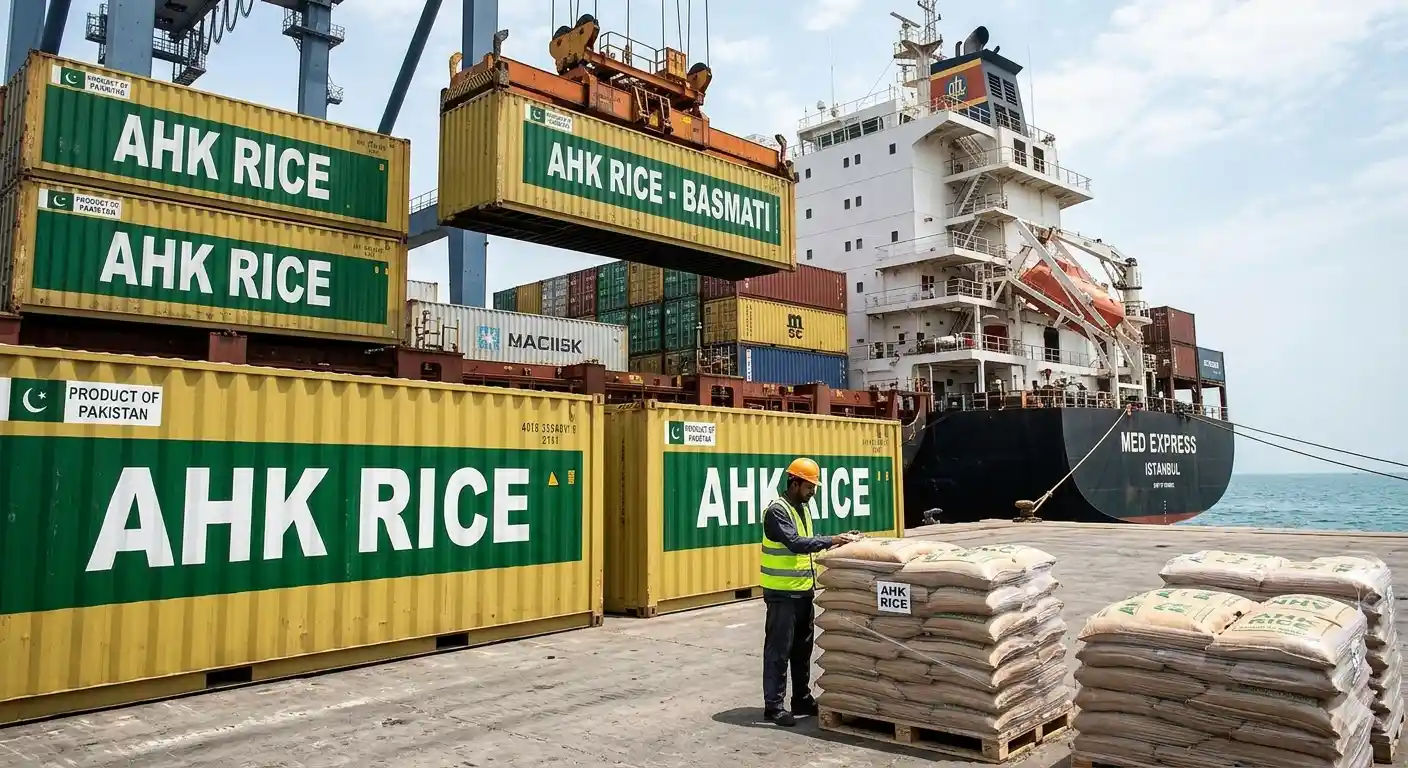
Shipping Rice from Pakistan to Turkey Mersin Port Transit Time 2026
Rice shipping Pakistan Turkey 2026 route is a maritime trade corridor that moves basmati rice from Pakistani ports, mainly Karachi, to Turkish import hubs, especially Mersin Port, using containerized sea freight through the Arabian Sea and Mediterranean transshipment networks with standardized logistics handling.
This route connects South Asia’s agricultural export system with Turkey’s import distribution network. The flow starts in Punjab rice mills, where paddy is processed into milled basmati varieties such as 1121, Super Kernel, and 1509. After processing, rice is packed into export-grade bags or private-label packaging.
Containers are then transported to Karachi Port or Port Qasim. From there, vessels sail toward Middle Eastern or Mediterranean hubs depending on the carrier line. The Mediterranean rice route is a structured logistics corridor that supports bulk food commodities moving between Asia and Europe-linked markets.
Karachi to Mersin shipping depends on vessel schedules, port congestion, and transshipment points. The route is fully containerized, typically using 20-foot and 40-foot dry containers. This system ensures controlled humidity, pest protection, and compliance with Turkish food import regulations.
How does sea freight Pakistan Turkey route work?
Sea freight Pakistan Turkey route operates through container booking, inland transport to Karachi, customs clearance, ocean vessel loading, transshipment at hub ports, and final delivery unloading at Mersin Port, following regulated international shipping protocols for agricultural commodities like rice.
The process starts with export documentation in Pakistan. The exporter prepares a commercial invoice, packing list, phytosanitary certificate, and certificate of origin. These documents are required for rice shipping Pakistan Turkey 2026 compliance.
Next, containers are stuffed at rice mills or warehouses. Each container carries a fixed weight, usually 24–26 metric tons for 40-foot units. Moisture control is critical to maintain rice quality during long sea transit.
After stuffing, containers move by truck to Karachi Port. Customs inspection confirms classification under HS Code 1006 for rice. Once cleared, containers are loaded onto feeder vessels or mainline ships.
Shipping lines route cargo through regional hubs such as Jebel Ali or Port Said depending on carrier selection. These transshipment points consolidate cargo for Mediterranean distribution.
Final discharge occurs at Mersin Port, a major Turkish import hub on the Mediterranean coast. Containers are offloaded, inspected by Turkish customs, and released for inland distribution.
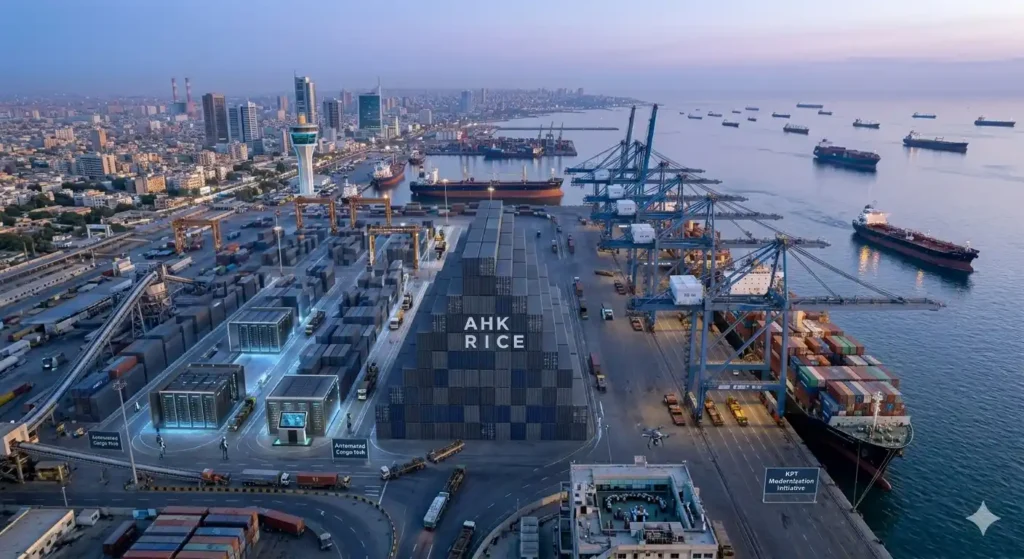
What are key components of Karachi to Mersin shipping process?
Key components of Karachi to Mersin shipping process include rice processing standards, export documentation, container logistics, ocean freight routing, port handling at Karachi, transshipment operations, and customs clearance at Mersin Port for regulated food import entry.
Rice processing defines export quality. Milling removes husk and bran layers, producing long grain basmati rice with defined length ratios. Grades like 1121 basmati rice maintain extra-long grain characteristics, while 1509 provides higher yield and cost efficiency.
Packaging is another critical component. Export rice uses 5 kg, 10 kg, 20 kg, or 50 kg polypropylene or woven bags. Bulk institutional packaging is also used for foodservice importers in Turkey.
Logistics planning includes vessel selection and transit scheduling. Direct services reduce transit time, while indirect routes via Mediterranean hubs extend shipping duration but improve container availability.
At Karachi Port, container handling follows ISO standards. At Mersin Port, customs applies food safety inspection aligned with Turkish import regulations and international phytosanitary requirements.
What is average transit time and shipping duration?
Average transit time for rice shipping Pakistan Turkey 2026 ranges from 18 to 32 days depending on direct or transshipment routes, carrier schedules, port congestion, and Mediterranean routing through hub ports before arrival at Mersin Port.
Direct sea freight Pakistan Turkey services take approximately 18 to 22 days. These routes are limited but provide faster delivery cycles for commercial buyers requiring stable supply chains.
Transshipment-based Mediterranean rice route shipments take 24 to 32 days. Cargo is first moved to Middle Eastern hubs such as Jebel Ali or European Mediterranean ports before reaching Turkey.
Karachi to Mersin shipping duration depends on four measurable factors. Vessel speed averages 16–22 knots. Port dwell time in Karachi ranges from 2 to 5 days. Transshipment adds 3 to 7 days. Mersin port clearance adds 1 to 3 days.
Seasonal demand also affects shipping duration. Peak export seasons extend vessel waiting times due to container shortages. Off-peak periods reduce scheduling delays and stabilize transit time.
For rice exporters, predictable shipping duration ensures stable supply contracts with Turkish importers, wholesalers, and retail distributors.
What are benefits of Mediterranean rice route?
Mediterranean rice route provides cost-efficient bulk transport, stable container availability, diversified shipping schedules, access to Turkish import hubs, and scalable logistics for large-volume rice trade between Pakistan and Turkey through established international maritime infrastructure.
The first benefit is cost optimization. Sea freight reduces per-ton transport cost compared to air freight, making it suitable for agricultural commodities like basmati rice.
The second benefit is scalability. Large container volumes allow exporters to ship multiple rice grades in one consolidated logistics cycle. This supports demand from Turkish wholesalers and food processors.
The third benefit is route flexibility. The Mediterranean network connects multiple transshipment ports, allowing rerouting when congestion occurs in Karachi or Mersin.
The fourth benefit is regulatory compliance efficiency. Standardized maritime documentation supports smoother customs clearance under international food import regulations.
The fifth benefit is supply chain stability. Continuous vessel schedules maintain consistent rice flow from Pakistan’s Punjab region to Turkish distribution centers.
What are use cases for rice shipments to Mersin port?
Rice shipments to Mersin Port serve importers, wholesalers, retail distributors, food manufacturing units, hospitality suppliers, and government procurement programs requiring consistent basmati rice supply across Turkish domestic and re-export markets.
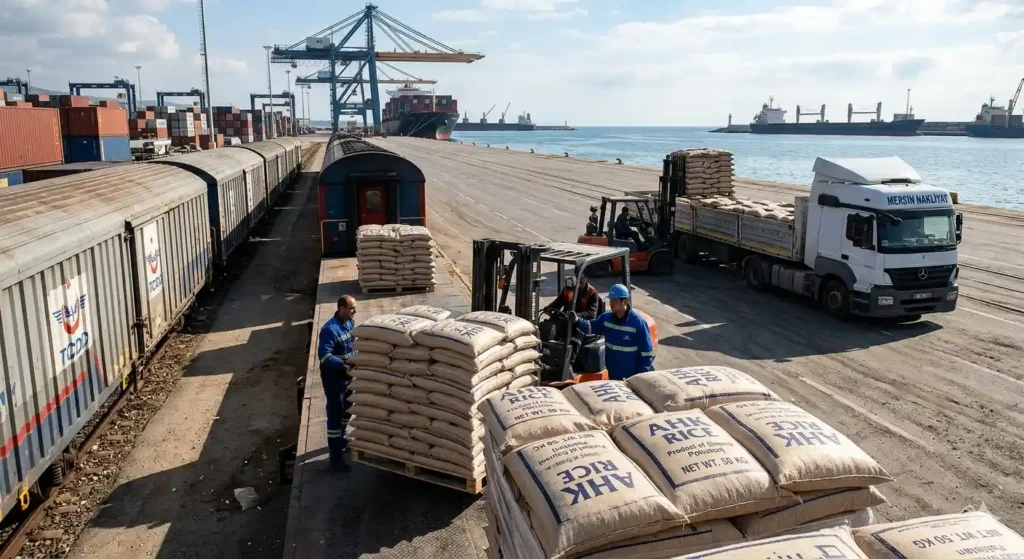
Importers use Mersin Port as a consolidation hub for nationwide distribution across Turkey. From Mersin, rice moves by rail and truck to Istanbul, Ankara, and Izmir.
Wholesalers purchase bulk shipments for repackaging into retail units. Common examples include 1 kg and 5 kg consumer packs distributed in supermarkets.
Food manufacturing companies use basmati rice for processed meals, frozen food products, and institutional catering services.
Hospitality suppliers distribute rice to hotels and restaurants serving Middle Eastern and South Asian cuisine. Demand is consistent in urban tourism zones.
Re-export traders also use Mersin as a redistribution hub for nearby markets in Eastern Europe and the Balkans.
What are common problems or misconceptions?
Common problems in rice shipping Pakistan Turkey 2026 include container delays, miscalculated transit time expectations, documentation errors, and misconceptions that direct shipping always exists without transshipment in the Mediterranean rice route system.
One misconception is that all shipments are direct. In reality, most Karachi to Mersin shipping moves through transshipment hubs due to carrier consolidation strategies.
Another issue is underestimating port congestion. Karachi Port experiences peak container backlog during harvest seasons, increasing loading time by several days.
Documentation errors also create delays. Missing phytosanitary certificates or incorrect HS classification leads to customs holds at both origin and destination.
Another misconception is fixed transit time. Sea freight Pakistan Turkey duration changes based on vessel rotation schedules and global shipping demand.
Moisture control issues during transport can also affect rice quality. Improper container sealing increases humidity exposure, impacting grain texture and export grade compliance.