Rice Packaging Sizes and Turkish Labelling Laws for Export in 2026
Rice packaging sizes and Turkish labeling laws for export in 2026 define the standardized weight formats, packaging materials, and mandatory label information required for rice products entering Turkey’s retail and wholesale markets. These rules control consumer safety, traceability, and trade compliance under Turkey’s food regulation system.
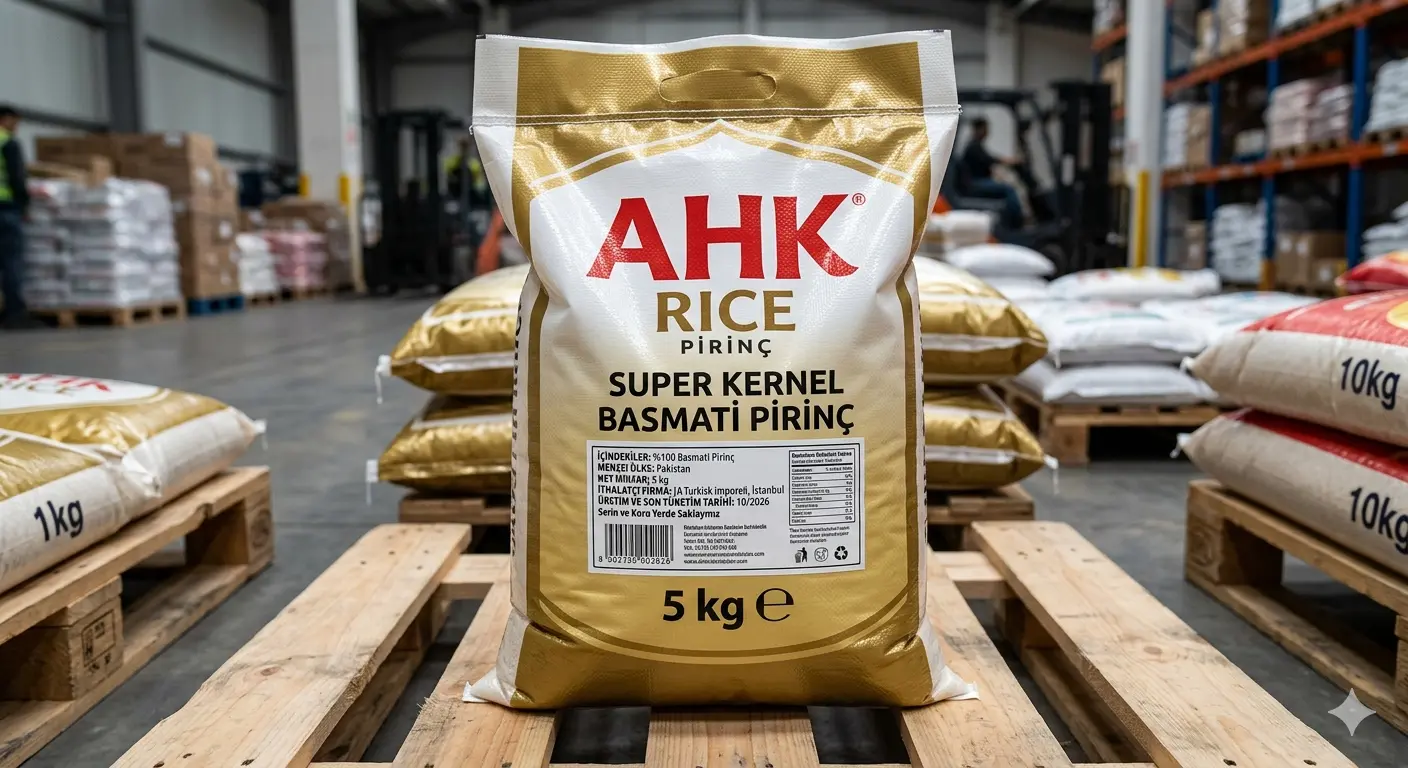
Rice packaging sizes refer to fixed weight units used in distribution and retail sales. These include 1 kg, 2 kg, 5 kg, 10 kg, 20 kg, and 25 kg bags for rice products such as Basmati 1121, Super Kernel, and 1509 varieties. Each size serves a specific market segment.
Turkish labeling laws regulate how information appears on rice packaging. These laws require Turkish language usage, ingredient disclosure, origin declaration, net weight accuracy, and importer identification.
The keyword rice packaging Turkey Turkish label 2026 reflects the updated compliance environment where packaging is directly tied to legal entry into Turkish retail chains and import clearance systems.
How does rice packaging for Turkey export work?
Rice packaging for Turkey export works through a controlled process that includes size selection, food-grade packaging material preparation, automated filling, sealing, and mandatory labeling before customs clearance and retail distribution approval in Turkey.
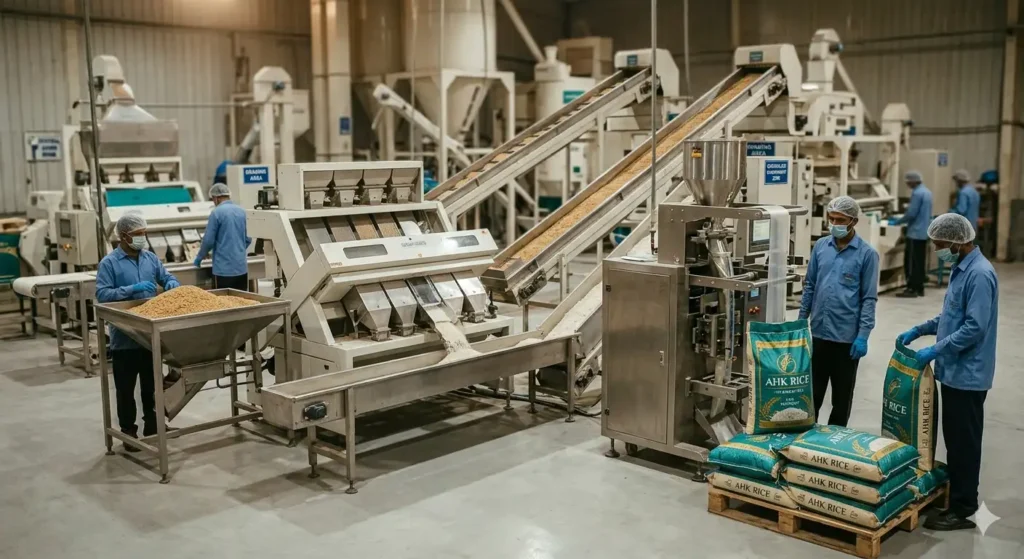
The process starts at milling facilities where rice is cleaned, sorted, and graded. After grading, rice is allocated into export batches based on quality specifications such as grain length, broken percentage, and moisture level.
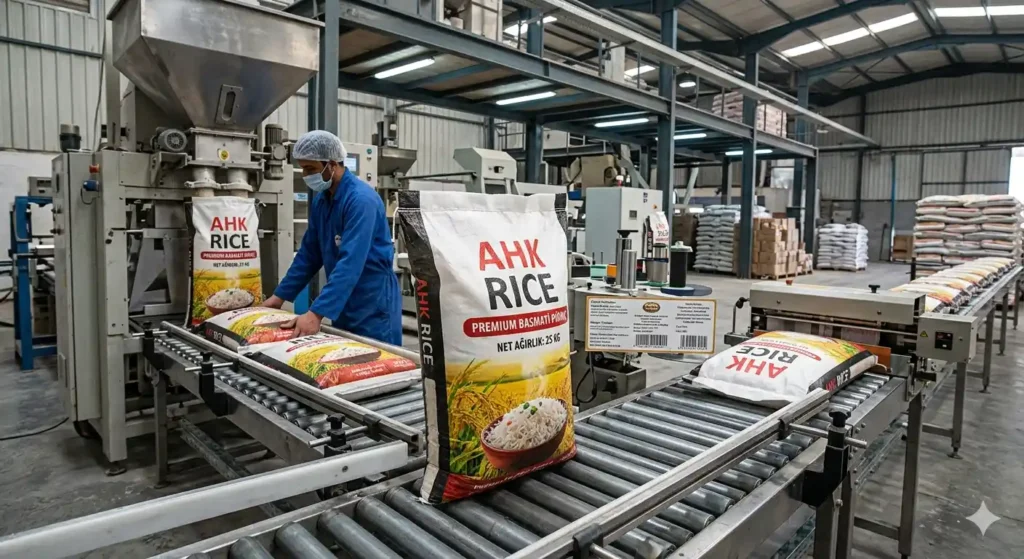
Packaging lines then fill rice into predefined weights such as 5 kg and 25 kg bags. Each bag uses polypropylene, laminated woven sacks, or vacuum packaging depending on retail or bulk demand.
Labeling is applied during or after sealing. Turkish importers require labels that match Turkey Food Codex standards. The system ensures that every unit can be traced back to origin farms in Punjab, Pakistan.
Custom inspection in Turkey verifies label accuracy, packaging integrity, and declared net weight before retail distribution begins.
What are standard Turkish rice packaging sizes used in retail and wholesale?
Standard Turkish rice packaging sizes include 1 kg, 2 kg, 5 kg, 10 kg, 20 kg, and 25 kg units for retail and wholesale distribution, with 5 kg and 25 kg being the most widely used formats in supermarkets and bulk trade.
Retail packaging focuses on consumer convenience. Common sizes include 1 kg and 2 kg pouches for household consumption. These are often used in urban Turkish supermarkets where small families prefer frequent purchases.
Mid-range packaging includes 5 kg bags. This size dominates supermarket shelves and balances affordability with storage efficiency.
Wholesale packaging uses 10 kg, 20 kg, and 25 kg bags. These formats serve restaurants, catering services, and food distributors.
Packaging size selection depends on consumption patterns, storage conditions, and import contract terms between exporters and Turkish distributors.
Turkish retail systems prefer uniform bag dimensions for shelf stacking efficiency and barcode scanning compatibility.
What are the key components of Turkish rice bag labeling rules in 2026?
Turkish rice bag labeling rules in 2026 require mandatory Turkish language labeling, product identity, net weight, origin country, importer details, batch number, expiration date, and storage instructions on every retail and wholesale rice package.
Labels must be written in Turkish without exceptions for retail distribution. The product name must clearly state “Basmati Rice” or “Pirinç” depending on classification.
Origin labeling must specify Pakistan as the country of origin. This ensures compliance with import transparency regulations.
Net weight must be displayed in kilograms using standardized metric units. Mislabeling or weight deviation results in customs rejection.
Batch or lot numbers enable traceability through the supply chain. This is essential for food safety audits and recall systems.
Expiration dates or best-before dates must be printed based on milling and packaging dates. Storage instructions must indicate dry, cool conditions.
Barcode integration is required for supermarket scanning systems in Turkey’s retail networks.
The keyword Turkish label rice export reflects these mandatory compliance elements.
What certifications are required for rice export to Turkey?
Rice export to Turkey requires phytosanitary certification, ISO food safety certification, HACCP compliance, and conformity with Turkish Food Codex standards to ensure legal import approval and retail distribution clearance.
Phytosanitary certificates confirm that rice is free from pests, insects, and plant diseases. This certificate is issued by Pakistan’s quarantine authorities before shipment.
HACCP certification ensures hazard control during processing and packaging stages. It focuses on contamination prevention in milling facilities.
ISO 22000 certification provides a global food safety management framework. It confirms that production systems follow standardized hygiene controls.
Turkish Food Codex compliance ensures that rice meets Turkey’s specific food safety, labeling, and packaging requirements.
Importers in Turkey often demand additional laboratory testing reports for pesticide residues and moisture levels before accepting shipments.
These certifications work together to ensure smooth customs clearance and uninterrupted retail distribution.
What are benefits of correct rice packaging and labeling compliance?
Correct rice packaging and labeling compliance ensures faster customs clearance, reduced shipment rejection, improved retail acceptance, higher consumer trust, and consistent product traceability across Turkish supply chains.
Compliance eliminates delays at Turkish ports. Incorrect labeling results in immediate quarantine or shipment return.
Proper packaging protects rice quality during long-distance transport. It reduces moisture absorption and physical damage.
Accurate labeling improves shelf acceptance in Turkish supermarkets. Retail chains reject non-compliant packaging due to legal risk.
Traceability systems allow importers to track rice back to milling origin in Pakistan, improving accountability.
Standardized packaging also increases brand consistency across international markets, including Europe and the Middle East.
For exporters, compliance reduces financial loss from rejected shipments and strengthens long-term trade relationships.
What are common problems in Turkish rice packaging and labeling?
Common problems include incorrect Turkish translation, wrong net weight declaration, missing importer details, non-compliant packaging materials, and failure to match Turkey Food Codex labeling requirements during customs inspection.
Translation errors occur when labels are not professionally adapted into Turkish. This leads to rejection at inspection points.
Weight discrepancies happen when filling machines are not calibrated. Even small deviations trigger compliance penalties.
Missing importer information creates legal gaps in traceability systems. Turkish authorities require full importer identification.
Packaging material failures include non-food-grade plastic usage or weak sealing, which affects rice safety during shipping.
Another issue is outdated labeling formats that do not match 2026 regulatory updates, especially in barcode and batch coding systems.
These problems create shipment delays, increased costs, and loss of buyer confidence in Turkish retail markets.
How is rice processed and prepared for export packaging?
Rice is processed for export packaging through cleaning, husking, polishing, grading, sorting, and moisture control before being packed into standardized export-grade bags under controlled food safety environments.
The process begins with raw paddy cleaning to remove dust, stones, and foreign particles. This ensures purity before milling.
Husking removes the outer shell to produce brown rice. Polishing further refines the grain into white Basmati rice.
Grading separates rice by length and quality. Premium grades like 1121 Basmati are sorted for long grain uniformity.
Moisture control ensures rice stays within safe storage limits, typically below 14 percent moisture content.
After processing, rice is packed in controlled environments to avoid contamination. Automated packaging systems reduce human contact.
This ensures that rice exported to Turkey maintains consistent quality from Punjab farms to Turkish retail shelves.
Which markets import Pakistani basmati rice with Turkish-style packaging standards?
Markets such as Turkey, Saudi Arabia, UAE, Qatar, and parts of Europe import Pakistani basmati rice using packaging standards aligned with Turkish-style labeling, retail sizing, and international food safety compliance systems.
Turkey acts as a regulatory benchmark for labeling compliance due to strict retail food laws. Many exporters align packaging formats with Turkish requirements.
Middle Eastern markets follow similar retail packaging structures, especially 5 kg and 10 kg family packs.
European markets require multilingual labeling systems, often combining Turkish-style compliance with EU food regulations.
Saudi Arabia and UAE demand strong traceability and barcode integration, similar to Turkish retail systems.
These shared standards create a unified export packaging strategy for Pakistani basmati rice varieties like 1121, Super Kernel, and 1509.
Exporters optimize packaging lines to meet multiple market regulations without changing core product quality.