1121 Golden Sella vs 1121 Steam Basmati: Which Grade for UAE Catering Buyers?
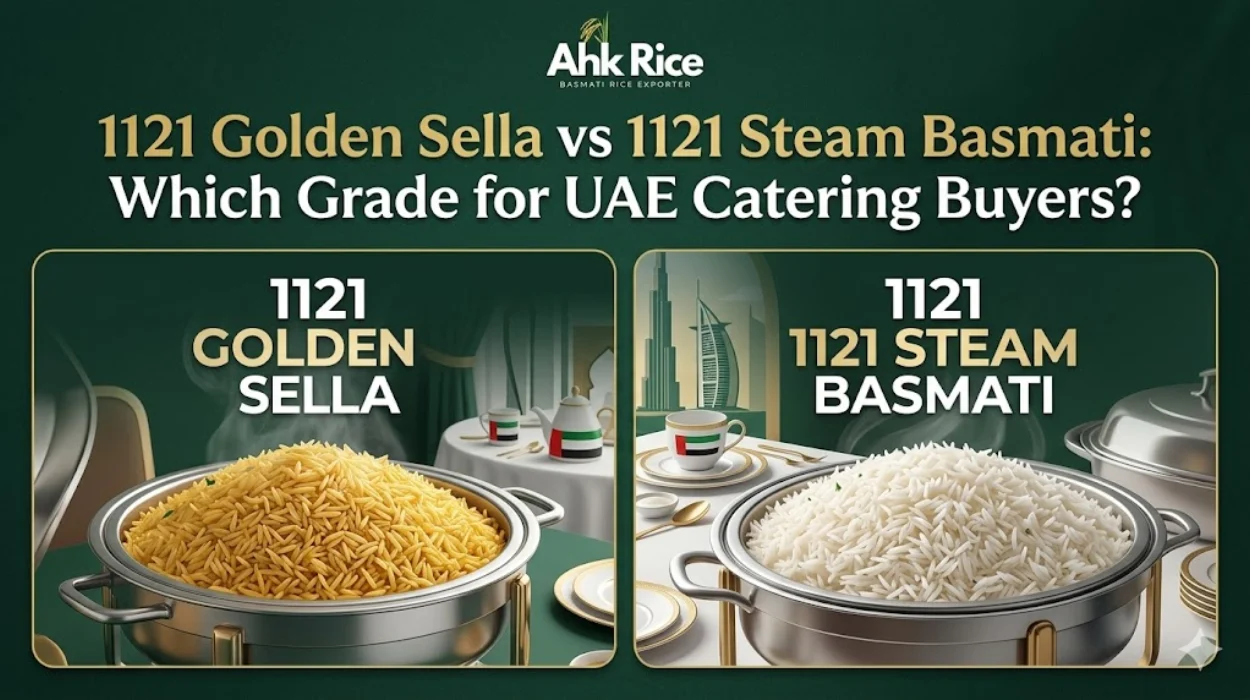
1121 Golden Sella is the correct grade for most UAE catering buyers because it delivers longer holding time, stronger grain structure, and higher yield after cooking. Here is why: parboiling locks nutrients and starch, which reduces breakage and extends shelf life in hot Gulf storage conditions.
UAE catering operations require rice that performs under pressure. High-volume kitchens demand consistency, long holding time, and minimal waste. Buyers comparing grades must understand how processing affects performance. For a foundational overview of basmati classifications and processing logic, review this detailed guide on basmati rice grading systems before evaluating specific grades.
The comparison between Golden Sella and Steam Basmati defines procurement strategy for bulk buyers. Both grades originate from 1121 basmati paddy. Processing method creates functional differences that directly impact catering outcomes.
What are the available solutions for UAE catering buyers?
1121 Golden Sella and 1121 Steam Basmati are the two primary solutions, with Golden Sella offering higher durability and Steam offering softer texture. Both grades serve distinct catering formats across UAE foodservice operations.
1121 Golden Sella Basmati
1121 Golden Sella is parboiled rice. The process steams paddy before milling. This step gelatinizes starch inside the grain. The grain becomes harder and more resilient.
Golden Sella grains measure 8.30–8.50 mm after cooking. The rice expands significantly. The grain remains separate after cooking. Catering kitchens prefer this trait for buffet service.
Processing steps define Golden Sella performance:
- Clean the paddy
- Soak the grain
- Parboil under controlled pressure
- Dry the paddy
- Dehusk the grain
- Polish the rice
- Sort by length and color
Golden Sella withstands long holding periods. In UAE banquet setups, rice stays warm for 4–6 hours without breaking. This durability reduces food waste.
On first mention, buyers often source through exporters like AHK Rice that manage processing and export compliance for Gulf markets.
1121 Steam Basmati
1121 Steam Basmati skips the soaking stage. The process applies steam directly to raw paddy. This preserves the natural white color.
Steam rice measures 8.00–8.30 mm after cooking. The grain remains softer. The texture suits plated dishes rather than buffet trays.
Processing steps define Steam Basmati:
- Clean the paddy
- Steam the grain
- Dry the paddy
- Dehusk the grain
- Polish the rice
- Grade by size
- Sort for uniformity
Steam Basmati cooks faster. Kitchens use it for quick service formats. However, it breaks more under pressure.
With both solutions defined, the next step is a direct comparison of specifications and performance.
How do different approaches compare in specifications and performance?
Golden Sella outperforms Steam Basmati in durability, shelf life, and yield, while Steam Basmati leads in softness and natural aroma. The difference comes directly from parboiling versus steaming processes.
Specification Comparison Table
Core Attribute Comparison
| Attribute | 1121 Golden Sella | 1121 Steam Basmati |
|---|---|---|
| Grain Length (Cooked) | 8.30–8.50 mm | 8.00–8.30 mm |
| Processing Method | Parboiled | Steamed |
| Grain Strength | High | Medium |
| Color | Golden Yellow | Natural White |
| Cooking Time | 18–22 minutes | 12–15 minutes |
| Breakage Rate | <2% | 3–5% |
| Holding Capacity | 4–6 hours | 2–3 hours |
Golden Sella maintains structural integrity during cooking. Steam Basmati prioritizes texture and aroma.
Price Per MT Comparison (UAE Import Context)
Golden Sella costs more due to additional processing. Market data shows:
- Golden Sella: $950–$1100 per MT CIF Dubai
- Steam Basmati: $850–$1000 per MT CIF Dubai
Price variation depends on crop quality and freight rates (source: REAP export data, December 2025).
Golden Sella delivers higher cooked yield. A 1 MT batch produces more servings. This offsets higher upfront cost.
Shelf Life Comparison
Golden Sella offers superior storage stability. The parboiling process reduces moisture penetration.
- Golden Sella: 18–24 months shelf life
- Steam Basmati: 10–12 months shelf life
In UAE warehouses at 40°C, Golden Sella maintains grain integrity for 18 months. Steam rice degrades faster. Catering buyers storing rice in non-climate facilities must select Golden Sella.
This performance difference leads directly into use-case decisions across catering formats.
Which method works best for different UAE catering cases?
Golden Sella works best for bulk catering and buffet service, while Steam Basmati suits premium restaurants requiring softer texture and aroma. Each method aligns with specific operational needs.
UAE Catering Segments and Preferences
GCC Market Preferences
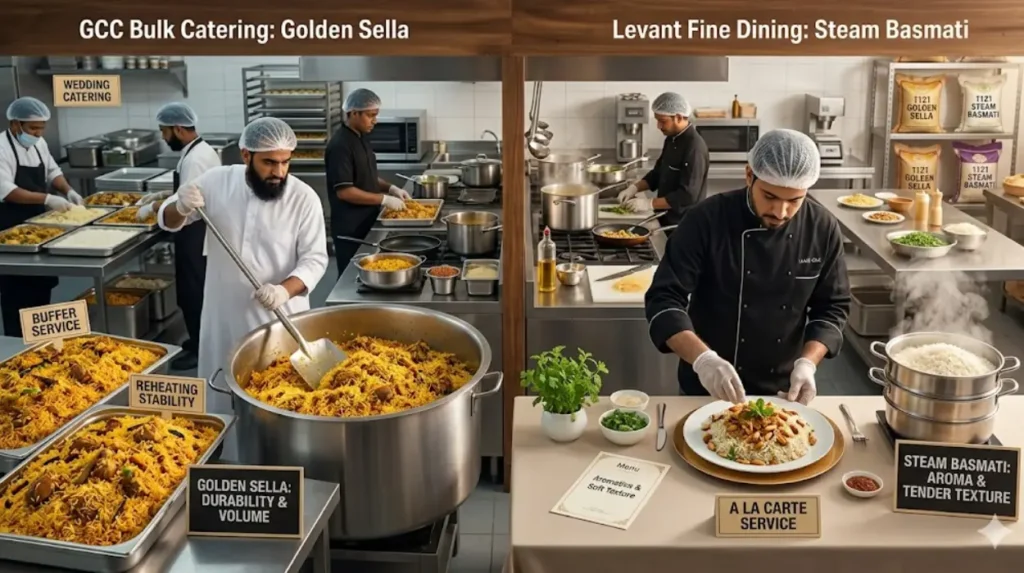
UAE and Saudi catering buyers prefer Golden Sella. Large-scale operations demand durability.
- Wedding catering uses Golden Sella for biryani trays
- Airline catering uses Golden Sella for reheating stability
- Labor camps use Golden Sella for cost efficiency
Golden Sella handles reheating cycles. The grain does not break during bulk mixing.
Levant Market Preferences
Jordan and Lebanon buyers prefer Steam Basmati. Texture matters more than holding time.
- Fine dining restaurants choose Steam for plated dishes
- Arabic cuisine uses Steam for softer rice textures
- Premium hotels prioritize aroma over durability
Steam rice absorbs flavors better. Chefs prefer it for delicate dishes.
UAE Restaurant Supply Context
Dubai restaurants sourcing 1121 Dubai restaurant supply must match rice type with cuisine.
Golden Sella suits:
- Biryani kitchens
- Buffet restaurants
- Catering companies
Steam Basmati suits:
- Fine dining outlets
- Arabic cuisine kitchens
- Boutique hotels
With use cases clarified, evaluating pros and cons strengthens the decision process.
What are the pros and cons of each basmati grade?
Golden Sella offers durability and yield advantages, while Steam Basmati delivers texture and aroma benefits. Each grade involves trade-offs that impact cost, performance, and customer satisfaction.
Golden Sella Pros and Cons
Advantages
- Higher cooked yield
- Longer shelf life
- Lower breakage rate
- Strong grain structure
- Better reheating performance
Golden Sella reduces waste. A catering company serving 1000 meals saves 5–8% rice volume due to lower breakage.
Limitations
- Slightly higher cost
- Less natural aroma
- Yellow color not preferred in all cuisines
Golden Sella may not suit premium white rice presentations.
Steam Basmati Pros and Cons
Advantages
- Natural white appearance
- Softer texture
- Better aroma retention
- Faster cooking time
Steam rice enhances plated dishes. Restaurants use it for visual appeal.
Limitations
- Shorter shelf life
- Higher breakage under pressure
- Lower holding capacity
Steam rice loses quality after 2–3 hours in hot trays. Buffet operators avoid this risk.
These trade-offs lead directly into structured decision-making criteria.
What decision factors should UAE catering buyers evaluate?
Buyers must evaluate five key factors: usage type, storage conditions, cost efficiency, customer preference, and cooking method. These factors determine the correct basmati grade selection.
Decision Framework Table
Buyer Decision Matrix
| Factor | Golden Sella | Steam Basmati | Best Choice |
|---|---|---|---|
| Bulk Catering | High performance | Moderate | Golden Sella |
| Fine Dining | Moderate | High | Steam |
| Storage Conditions | Non-climate safe | Requires control | Golden Sella |
| Cost Efficiency | Higher yield | Lower yield | Golden Sella |
| Presentation | Yellow tone | White tone | Steam |
Golden Sella dominates operational efficiency. Steam dominates presentation quality.
Practical Decision Examples
Large catering companies in UAE select Golden Sella. The rice holds structure in 100 kg batch cooking. The yield improves profitability.
Fine dining restaurants select Steam Basmati. The grain appearance enhances plating. The softer texture matches premium dishes.
Importers balancing both segments often procure both grades. They allocate based on customer demand.
Final Recommendation for UAE Catering Buyers
Golden Sella remains the primary grade for UAE catering due to durability, yield, and storage advantages, while Steam Basmati complements premium restaurant segments requiring texture and aroma.
Golden Sella solves operational challenges. Steam Basmati solves presentation requirements.
Procurement teams must align rice grade with end use. This alignment ensures cost efficiency and customer satisfaction.
For buyers evaluating direct sourcing options, explore supplier capabilities, certifications, and export logistics. A detailed breakdown of sourcing Pakistani basmati into Dubai explains CIF structures, documentation, and supplier selection criteria.
Frequently Asked Questions
What is the main difference between Golden Sella and Steam Basmati?
Golden Sella uses a parboiling process that strengthens the grain and extends shelf life. Steam Basmati uses direct steaming, which preserves softness and natural color. The difference impacts durability, cooking behavior, and storage performance in UAE conditions.
Which basmati grade is better for UAE catering businesses?
Golden Sella is better for UAE catering businesses because it handles bulk cooking, reheating, and long holding times. Steam Basmati works better for restaurants that focus on presentation, texture, and aroma in plated dishes.
Why does Golden Sella last longer than Steam Basmati?
Golden Sella lasts longer because parboiling reduces internal moisture and hardens the grain structure. This process prevents spoilage in high temperatures. Steam Basmati retains more moisture, which shortens its shelf life in hot storage environments.
Is Steam Basmati cheaper than Golden Sella?
Steam Basmati is generally cheaper per metric ton because it requires less processing. However, Golden Sella provides higher cooked yield and lower breakage, which improves cost efficiency in large-scale catering operations.
Can UAE buyers use both Golden Sella and Steam Basmati together?
UAE buyers can use both grades by segmenting usage. Catering companies use Golden Sella for bulk service and Steam Basmati for premium dishes. This approach balances operational efficiency with customer experience.