1121 Parboiled Basmati vs Sella Grades: What Buyers in Asia Prefer
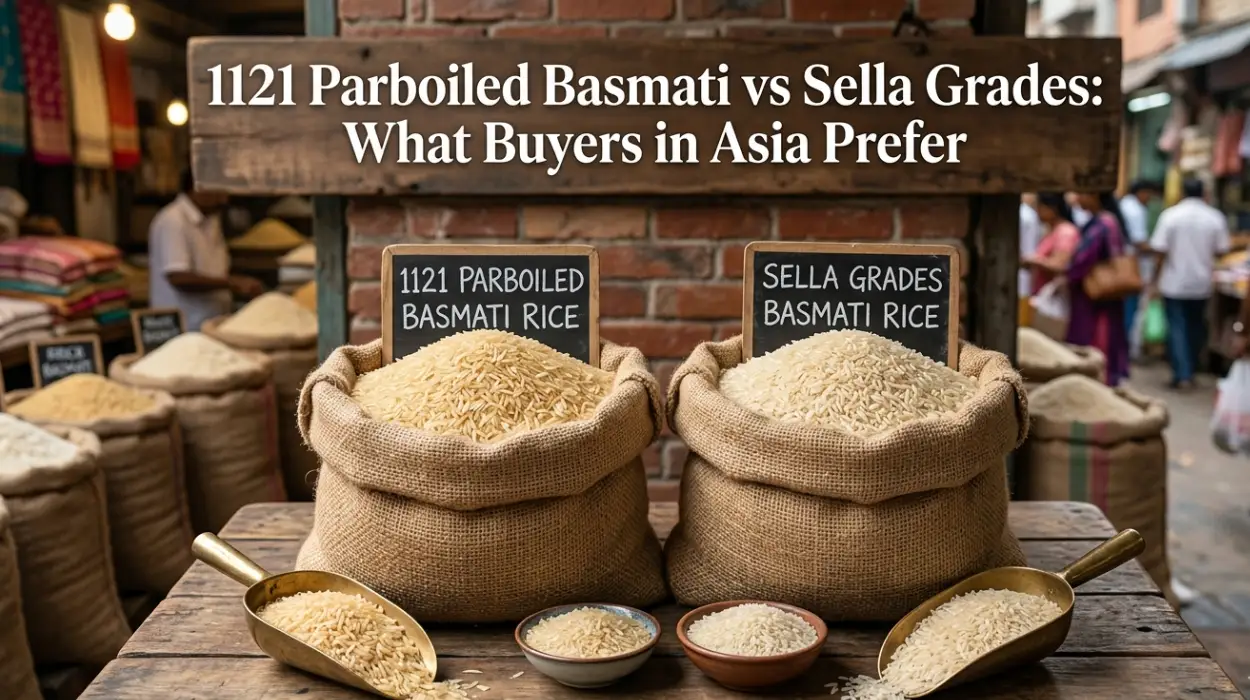
For buyers in Asia, 1121 parboiled basmati works best when the priority is modern logistics, shelf life, and cooking stability, while 1121 Sella grades work better when the market expects a traditional golden, parboiled identity with strong brand recognition. The commercial decision is not about which grain is “better” but which format fits the retail channel, price band, and stock‑age profile.
If the buyer wants the technical background behind the parboiling effect, the raw basmati rice for importers explains how processing changes the grain structure before the product reaches the Asian market. That context is useful before the buyer compares parboiled and Sella‑style grades.
What are the available solutions for Asian buyers?
The main solutions are 1121 parboiled basmati, 1121 Sella grades, or a mixed sourcing model that uses parboiled rice for modern retail and Sella for traditional or value‑oriented channels.

1121 parboiled basmati is the non‑branded, technical‑spec route. The rice is soaked, steamed, dried, and milled in a controlled parboiled line that produces a long‑grain, export‑ready product. The 1121 label signals the variety, and the “parboiled” label signals the process. AHK Rice supplies this grade from Punjab, Pakistan, through full end‑to‑end processing, so buyers can align it with large‑volume retail, wholesale, and catering lines.
1121 Sella grades are the branded parboiled formats. The term “Sella” carries stronger consumer recognition in many Asian markets. The Sella rice is also parboiled but often presented with a more defined golden colour, specific pack design, and stronger heritage messaging. That makes it attractive for traditional grocery channels and value‑oriented supermarkets.
The third option is a mixed strategy. Importers can use 1121 parboiled basmati for private‑label and modern‑format retail, where the buyer wants clean specs and neutral branding. They can use 1121 Sella for local‑brand SKUs, corner‑store packs, and value‑driven families. AHK Rice supports both through the same export base, which keeps the sourcing model simple but flexible.
How do 1121 parboiled and Sella grades compare in Asia?
1121 parboiled basmati and 1121 Sella grades differ in branding, market positioning, and consumer perception, while sharing the same parboiled core and similar technical performance.
| Attribute | 1121 Parboiled Basmati | 1121 Sella Grade |
|---|---|---|
| Processing | Same parboiled line, clean spec | Same parboiled line, branded finish |
| Grain appearance | Light golden, uniform | Golden to amber, more visual identity |
| Aroma and texture | Strong, stable, separate grains | Strong, stable, separate grains |
| Branding | Neutral, technical | Strong Sella brand recognition |
| Shelf life | 14–18 months | 14–18 months |
| Packing style | Bulk or private label | Retail‑oriented, branded packs |
| Asian market fit | Modern retail, wholesalers, catering | Traditional retail, value‑driven households |
In practice, the technical difference is small. Both are parboiled. Both are long‑grain. Both suit long‑haul logistics and storage. The real difference is in how each product is positioned in‑market. Parboiled basmati works as a technical rice line. Sella works as a branded rice line. That distinction changes how the buyer prices it, which shelf it sits on, and how fast the stock turns.
Which solution works best for different Asian channels?
1121 parboiled basmati works best for modern supermarkets, wholesalers, and catering, while 1121 Sella grades work best for traditional grocery stores, value‑driven families, and brand‑led SKUs.
For modern retail chains and hypermarkets, parboiled basmati often fits better. The packaging is usually neutral or private‑label‑ready, which suits large‑format stores that want to control the brand story. The rice performs well under mixed‑channel distribution and supports long shelf life, which matches the retail calendar in many Asian markets.
For wholesale distributors and cash‑and‑carry operations, parboiled basmati also works well. The buyer can repack or rebrand the same product for different sub‑channels. The focus remains on yield, consistency, and logistics efficiency rather than on the original pack design. AHK Rice can supply this in bulk 25 kg or 50 kg bags that are easy to rebag and redistribute.
For traditional grocery stores, neighbourhood shops, and local markets, Sella grades usually have the stronger pull. The Sella brand carries a long‑established identity. Buyers in these channels recognise the golden colour and the parboiled label. The product is often positioned as a value‑premium or family‑value rice, which supports higher volume at lower price points than white Basmati.
Food‑service and catering buyers may use both. Parboiled basmati is attractive when the operator wants controlled, predictable cooking across large volumes. Sella is attractive when the restaurant wants to signal “traditional parboiled rice” through the menu or tray presentation. The choice depends on whether the buyer wants to lean on spec or brand.
What are the pros and cons of each grade in Asia?
1121 parboiled basmati offers stronger logistics tolerance and neutral branding, while 1121 Sella grades offer stronger brand recognition and better shelf‑level positioning in traditional channels.
Advantages of 1121 parboiled basmati
- Maintain 14–18 month shelf life, which suits slow‑moving or bulk‑pack SKUs.
- Handle long‑haul transport and multiple handling points more reliably than raw basmati.
- Support private‑label and neutral‑brand formats that fit modern retail and wholesalers.
- Allow the buyer to control the pack design, pricing, and category position.
Trade‑offs of 1121 parboiled basmati
- Carry less built‑in brand equity than Sella‑style packs in many Asian markets.
- Need more education at shelf when buyers are used to golden‑label Sella formats.
- Compete more on price and spec than on emotional or heritage signals.
Advantages of 1121 Sella grades
- Use strong Sella brand recognition in grocery and value‑oriented channels.
- Present a clearly golden, parboiled‑style look that reassures price‑sensitive buyers.
- Fit family‑pack SKUs and staple‑rice positions where the rice is a core product.
Trade‑offs of 1121 Sella grades
- Tend to sit in a more crowded, price‑sensitive category because of the strong brand association.
- Limit the buyer’s ability to control the pack design if the exporter’s branding is fixed.
- Depend on brand loyalty, which can be harder to shift when the retailer wants to change SKUs.
These trade‑offs matter because Asian buyers lose money in different ways. Parboiled basmati protects the buyer through logistics and shelf life. Sella protects the buyer through brand recognition and channel familiarity. The best choice aligns with the retailer’s profile and the buyer’s margin model.
How do price and shelf life compare across Asian markets?
In most Asian markets, 1121 parboiled basmati and 1121 Sella grades sit in similar price bands, but Sella often carries a stronger brand lift, while both formats offer roughly 14–18 months of shelf life under standard export conditions.
Price per metric tonne is usually driven by the underlying 1121 grade, packing format, and freight terms, not by the parboiled vs Sella label alone. A bulk 25 kg or 50 kg bag of 1121 parboiled basmati usually has a similar landed‑cost profile to a bulk Sella bag from the same exporter. The main difference appears at the retail pack level, where branding and pack design add cost.
Shelf life is comparable. Both parboiled basmati and Sella grades are heat‑processed before milling, which stabilises the grain and improves storage behaviour. For importers in Southeast Asia, South Asia, and East Asia, that shared shelf life is more important than the brand label because many markets have long supply chains and mixed storage conditions.
For buyers who want a clear cost structure, the free sample connects the technical spec to the commercial order. It explains how the exporter structures the sample‑approval and pricing process so the buyer can lock in the right grade and terms before committing to a container. The link should go after the price‑and‑shelf‑life section, where the buyer is ready to move from comparison to concrete order terms.
What decision factors should Asian buyers use?
The most important decision factors are channel type, brand‑strategy, shelf life requirement, packaging flexibility, and the buyer’s ability to control retailer positioning.
Decision framework table
| Factor | Choose 1121 Parboiled when | Choose 1121 Sella when |
|---|---|---|
| Channel type | Modern supermarkets, wholesalers, cash‑and‑carry | Traditional grocery, local shops, family‑packs |
| Brand strategy | Private‑label or neutral brand focus | Brand‑led or Sella‑heritage line |
| Shelf life | Needs 14–18 month stability | Needs 14–18 month stability |
| Packaging | Wants custom private‑label design | Accepts pre‑branded or semi‑branded packs |
| Retail positioning | Value‑efficiency and logistics focus | Value‑heritage and brand recognition |
Channel type is the first factor. A modern retail chain in a large city usually prefers a clean, spec‑driven parboiled line. A traditional grocer in a smaller town often prefers the Sella brand because customers recognise it and associate it with stable parboiled rice.
Brand strategy is the second factor. If the buyer wants to control the brand story through private‑label development, parboiled basmati is stronger. If the buyer wants to rely on Sella’s established image, Sella is stronger. The choice reflects whether the buyer wants to build their own brand equity or borrow an existing one.
Shelf life is the same for both, but the buyer’s stocking pattern can differ. Long‑haul, multi‑warehouse channels suit the parboiled format regardless of branding. Short‑haul, fast‑turnover channels suit Sella when the buyer wants to move stock quickly and keep the brand visible.
Packaging flexibility is the fourth factor. Parboiled basmati gives more control over pack design and labelling. Sella‑style grades often come with more fixed branding, which limits the buyer’s ability to change SKUs quickly. That matters for buyers that rotate promotions or rework ranges often.
Retail positioning is the final factor. If the retailer wants to highlight Basmati quality, freshness, and cook‑ability, parboiled basmati fits. If the retailer wants to signal value, durability, and traditional parboiled use, Sella fits. The choice depends on which message the buyer wants to push to the final consumer without changing the underlying grain performance.
How do two key Asian regions differ in grade preference?
In Southeast Asia, buyers often prefer 1121 parboiled basmati for modern trade and catering, while in South Asia, Sella‑style grades often win in family‑volume and traditional retail channels.
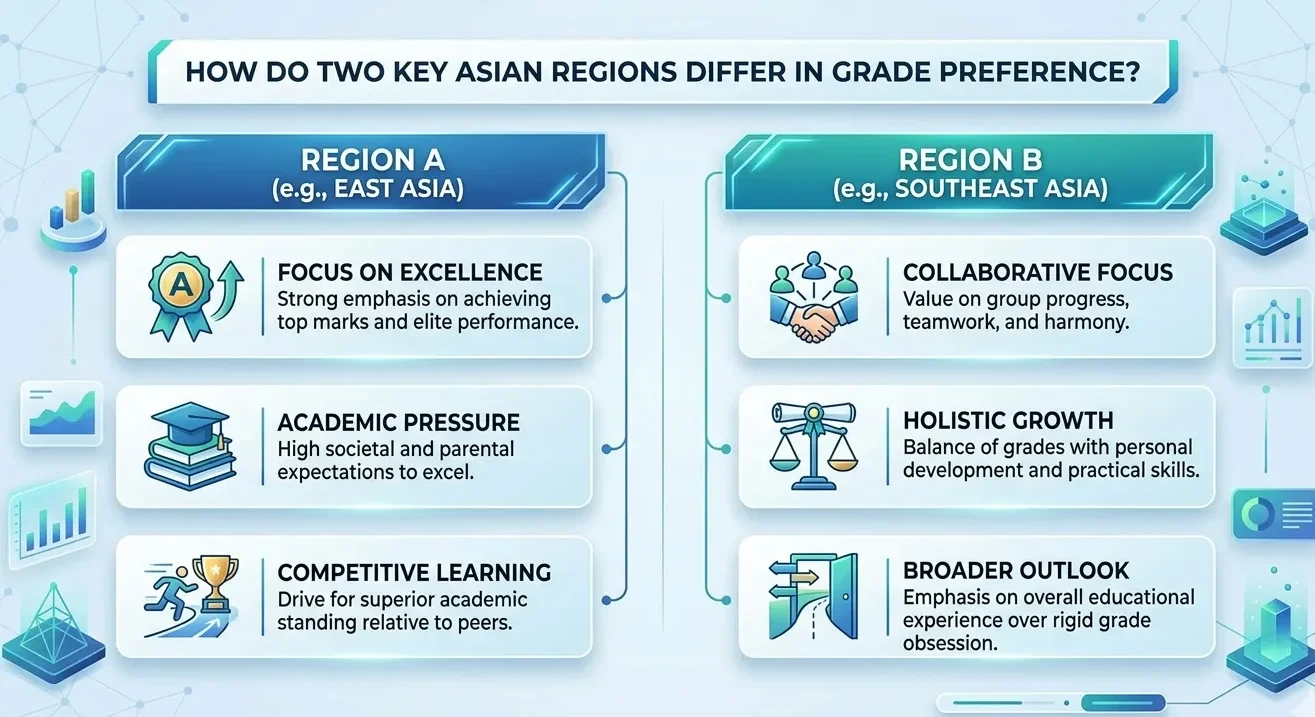
In Southeast Asian markets such as Thailand, Vietnam, Malaysia, and Singapore, large supermarkets and wholesale distributors tend to use 1121 parboiled basmati in private‑label lines. The rice fits the need for stable, long‑shelf‑life products in mixed‑channel systems. The neutral branding also works well with retailer‑brand development. Sella is present but usually in smaller, value‑oriented SKUs.
In South Asian markets such as India, Bangladesh, and parts of the Middle East, Sella‑style 1121 often dominates the parboiled segment. The brand carries strong heritage, and families recognise the golden colour as a signal of durability and value. The rice sits in household and catering bags and supports high‑volume, low‑margin business.
That regional split does not remove the need for spec‑based control. In both regions, the 1121 parboiled core is the same. The difference is in how the brand is presented and how the buyer uses the rice in‑market. AHK Rice can supply both formats from its Punjab base, so the buyer can match the product to the regional strategy without changing the export partner.
What is the clearest buying conclusion?
1121 parboiled basmati is the stronger technical choice for modern, spec‑driven Asian channels, while 1121 Sella grades are the stronger brand‑driven choice for traditional and value‑oriented channels, and the best buyers use both where the retail mix justifies it.
If the buyer runs modern retail, wholesales, or catering with a focus on logistics and private‑label branding, parboiled basmati is usually the right choice. If the buyer sells in traditional grocery, family‑pack, or heritage‑focused channels, Sella is usually the right choice. The difference is not about quality. It is about channel strategy and brand positioning.
AHK Rice supports both routes from the same origin and processing line, which keeps the sourcing model simple and the spec‑management consistent. That makes it easier for Asian buyers to move from comparison to container‑level contracts once the grade choice is clear.