Pakistan Rice in Vietnam: Growing Trade Opportunities for Basmati Distributors
Pakistan rice Vietnam growing trade basmati distributors is a structured export corridor where Pakistani basmati rice varieties such as 1121, 1509, and Super Kernel are supplied to Vietnam through licensed importers, wholesalers, and foodservice distributors operating under Vietnam’s regulated rice import framework and ASEAN trade alignment rules. Here is why: Vietnam imports rice through quota-based licensing, phytosanitary inspection, and commercial distribution networks that connect Pakistani mills, exporters, and Vietnamese trading houses.
Pakistan rice trade into Vietnam operates through a defined agro-commodity chain. Pakistani basmati rice is cultivated in Punjab irrigated plains using controlled water channels and seasonal harvesting cycles. Farmers cultivate varieties like 1121 basmati and harvest them at 20–22% moisture content before drying and milling.
Vietnam functions as both a rice producer and importer. Import demand focuses on aromatic rice segments for hospitality, catering, and premium retail. Pakistani basmati fills this niche because of grain length, aroma intensity, and cooking elongation.
Trade distributors in Vietnam act as consolidation points. They import bulk shipments, store in bonded warehouses, and distribute to Ho Chi Minh City, Hanoi, and industrial catering clusters. This structure creates predictable demand flow for Pakistani exporters.
With the trade definition established, the next focus shifts to the operational export mechanism between Pakistan and Vietnam.
How does Pakistan rice export to Vietnam work?
Pakistan rice export to Vietnam works through a five-stage logistics and compliance chain involving cultivation, milling, certification, customs clearance, and shipment under FOB or CIF contracts coordinated between Pakistani exporters and Vietnamese licensed importers. Here is why: Vietnam enforces strict phytosanitary inspection, moisture limits, and quality grading before release into domestic distribution channels.
Pakistan rice export process begins at cultivation stage in Punjab. Farmers irrigate basmati fields using canal-fed systems. Harvesting occurs at full grain maturity to maximize elongation ratio and aroma retention.
Processing follows a strict industrial flow.
Clean the paddy and remove field impurities.
De-husk the grain using rubber roll shellers.
Parboil selected grades like Golden Sella 1121 for durability.
Polish rice to controlled whiteness levels.
Grade rice by length using optical sorters.
Test moisture content at 12–13% standard export range.
Fumigate storage batches for pest control compliance.
Certification systems govern export eligibility. Exporters inspect and certify batches under HACCP and ISO 22000 systems. Halal certification applies for Muslim-majority import channels in Vietnam’s hospitality sector.
Logistics execution follows port dispatch. Rice is loaded in 25–50 kg bags or bulk containers. Shipments depart from Karachi or Port Qasim and arrive at Vietnamese ports such as Cat Lai and Hai Phong.
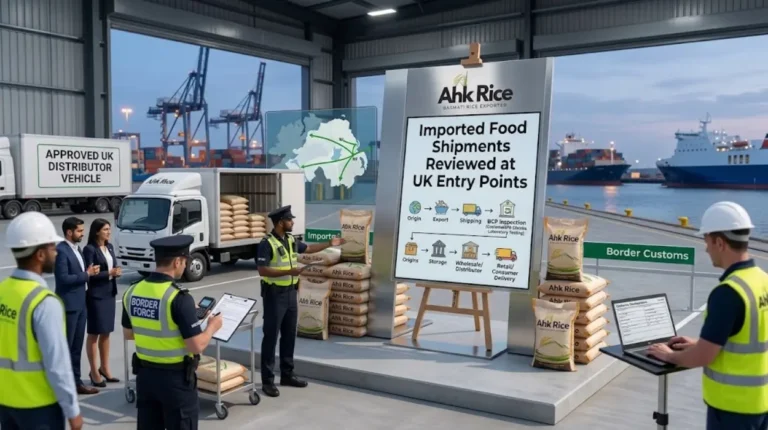
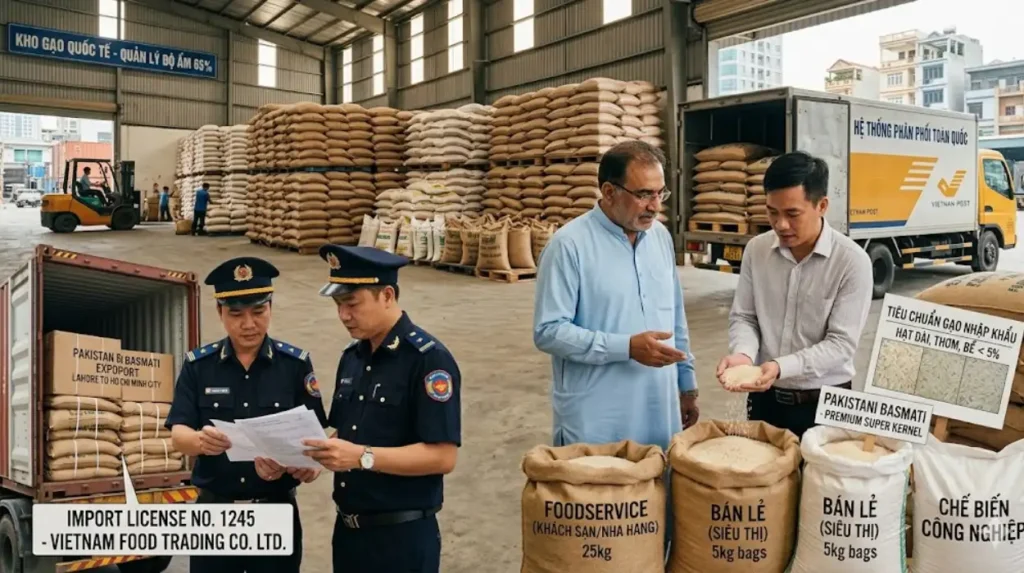
Custom clearance in Vietnam includes phytosanitary inspection and quality sampling. Importers verify grain length, broken percentage, and aroma classification.
With export mechanics established, the next layer focuses on structural components shaping the Vietnam rice trade ecosystem.
What are key components of Vietnam rice trade Pakistan?
Key components of Vietnam rice trade Pakistan include import licensing systems, distributor networks, grading standards, storage infrastructure, and demand segmentation across retail, wholesale, and foodservice channels. Here is why: Vietnam regulates rice imports through structured quotas and quality compliance systems that directly influence Pakistani basmati positioning.
Import licensing defines who can import rice into Vietnam. Licensed traders manage quotas and coordinate shipments with Pakistani exporters.
Distributor networks operate in tiered layers. National distributors handle container imports. Regional wholesalers supply provinces. Retail distributors serve supermarkets and hotels.
Grading standards determine market acceptance. Vietnamese buyers classify rice by grain length, aroma intensity, and broken percentage. Pakistani basmati grades meet premium thresholds due to long grain structure.
Storage infrastructure controls rice stability. Warehouses in Vietnam maintain controlled humidity conditions between 60–70% to preserve grain quality during distribution cycles.
Demand segmentation divides usage into three groups.
Retail consumption focuses on packaged 1–5 kg bags.
Foodservice consumption uses 25–50 kg catering sacks.
Industrial consumption supplies processed food manufacturers.
Pakistani rice grade Vietnam import market structure 2026
This link connects structural understanding with grade-level import classification used in Vietnam’s procurement system.
With structural components defined, the next section evaluates benefits of Pakistani basmati in the Vietnamese market.
What benefits does basmati rice bring to Vietnam market?
Basmati rice brings high aroma intensity, long grain elongation, stable cooking performance, and premium positioning advantages to Vietnam’s imported rice segment. Here is why: Vietnamese consumers and hospitality buyers prioritize aromatic rice with consistent texture and export-grade quality assurance for international cuisine standards.
Basmati rice delivers grain elongation ratios exceeding 2.2:1 after cooking, which supports high-end plating in restaurants.
Aroma compounds in basmati originate from natural cultivation and aging processes. Storage aging of 6–12 months increases fragrance concentration.
Cooking stability ensures uniform expansion without grain breakage. This property supports buffet and catering operations in hotels.
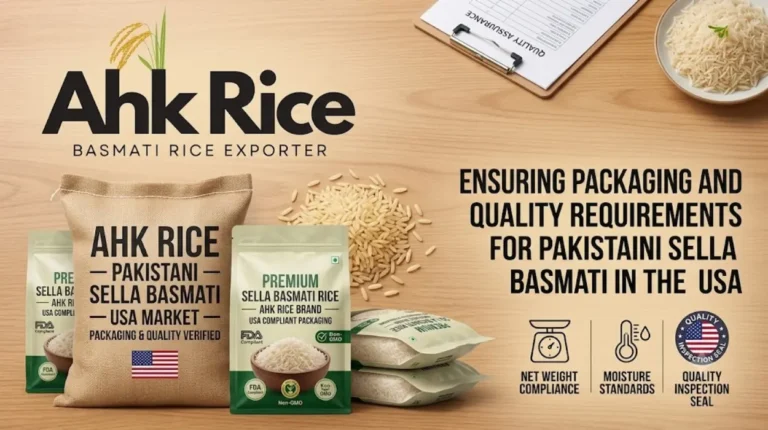
Packaging flexibility allows multiple market formats.
Bulk packaging supports restaurant supply chains.
Retail packaging supports supermarket branding.
Vacuum packaging supports premium export positioning.
Certification compliance strengthens buyer trust. Halal and ISO certifications support Vietnam’s import regulatory framework and food safety standards.
Economic benefit arises from segmentation. Premium basmati rice achieves higher per-ton pricing compared to standard long grain rice varieties in Vietnam’s import basket.
With benefits established, the next section examines real-world use cases across Vietnam’s consumption ecosystem.
What use cases exist for basmati rice in Vietnam?
Basmati rice in Vietnam is used in hospitality catering, premium retail consumption, ethnic cuisine preparation, and processed food manufacturing requiring long grain aromatic rice with stable cooking structure. Here is why: Vietnam’s foodservice sector integrates international cuisines that depend on aromatic rice consistency and presentation quality.
Hospitality use dominates demand in hotels and restaurants. Basmati rice serves buffet rice trays, banquet dishes, and international menus.
Retail use includes packaged consumer goods. Vietnamese households purchase imported basmati for festive cooking and premium meals.
Ethnic cuisine preparation supports Indian, Middle Eastern, and fusion restaurants. Basmati rice forms the base ingredient for biryani, pilaf, and grilled meat accompaniments.
Food manufacturing use integrates basmati into ready-to-eat meals and frozen rice products.
Processing compatibility supports multiple cooking methods.
Boiling maintains grain integrity in large-scale kitchens.
Steaming enhances aroma retention in sealed systems.
Parboiling increases shelf stability for export storage cycles.
These applications demonstrate structured demand across Vietnam’s food economy.
With use cases established, the next section addresses operational challenges and misconceptions in the trade flow.
What common problems and misconceptions exist?
Common problems in Pakistan rice Vietnam trade include misunderstanding of grade classifications, incorrect moisture expectations, inconsistent supplier certification awareness, and misalignment between Vietnamese import requirements and Pakistani export specifications. Here is why: rice trade depends on strict measurable parameters rather than informal quality assumptions.
Grade confusion occurs when buyers mix 1121, 1509, and Super Kernel basmati without understanding grain length and elongation differences.
Moisture misunderstanding leads to storage failures. Export rice requires 12–13% moisture control, while higher levels cause spoilage in humid Vietnamese conditions.
Certification gaps create import delays. Lack of phytosanitary documentation results in customs rejection or extended inspection cycles.
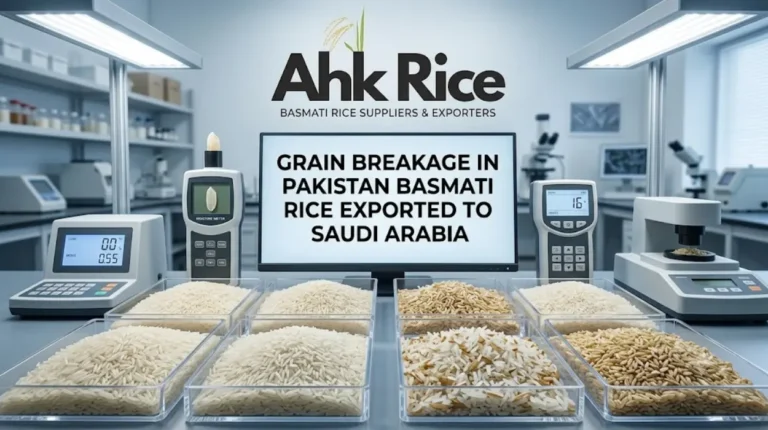
Packaging mismatch affects logistics efficiency. Inappropriate packaging leads to grain breakage during container transport.
Misconception exists around uniform rice quality. Pakistani basmati includes multiple grades designed for different market tiers.
1121 basmati delivers extra-long grain performance.
1509 basmati provides faster cooking efficiency.
Super Kernel offers balanced aroma and texture stability.
Trade success depends on aligning specification with end-use demand rather than assuming one universal rice standard.
With misconceptions clarified, the overall trade structure becomes more predictable for distributors and importers.
Frequently Asked Questions
What makes Pakistan rice important in Vietnam trade?
Pakistan rice is important in Vietnam trade because it supplies long grain basmati varieties like 1121 and 1509 for premium hospitality and retail demand. Vietnamese importers use it for aromatic rice categories in restaurants, hotels, and packaged consumer goods across major cities.
Which basmati rice grades are exported to Vietnam?
Pakistan exports 1121 Basmati, 1509 Basmati, and Super Kernel Basmati to Vietnam. These grades differ in grain length, aroma strength, and cooking expansion. 1121 delivers extra-long grain structure, while 1509 supports faster cooking and balanced texture for foodservice buyers.
How does Vietnam import rice from Pakistan?
Vietnam imports rice through licensed traders who handle customs clearance, phytosanitary inspection, and quota compliance. Pakistani exporters ship via Karachi ports, and Vietnamese distributors receive shipments at Cat Lai or Hai Phong for warehouse distribution and retail supply chains.
Why do Vietnamese buyers prefer basmati rice?
Vietnamese buyers prefer basmati rice because it offers strong aroma, long grain elongation, and stable cooking performance. These properties support premium dining standards in hotels, international restaurants, and household consumption requiring consistent texture and fragrance.
What challenges exist in Pakistan rice Vietnam trade?
Challenges include strict import inspections, moisture control requirements, and grading mismatches. Rice must maintain 12–13% moisture and meet Vietnamese phytosanitary standards. Incorrect grading or missing certifications causes shipment delays or rejection at customs checkpoints.