Rice Import Regulations and MOIAT Standards in UAE for Exporters 2026
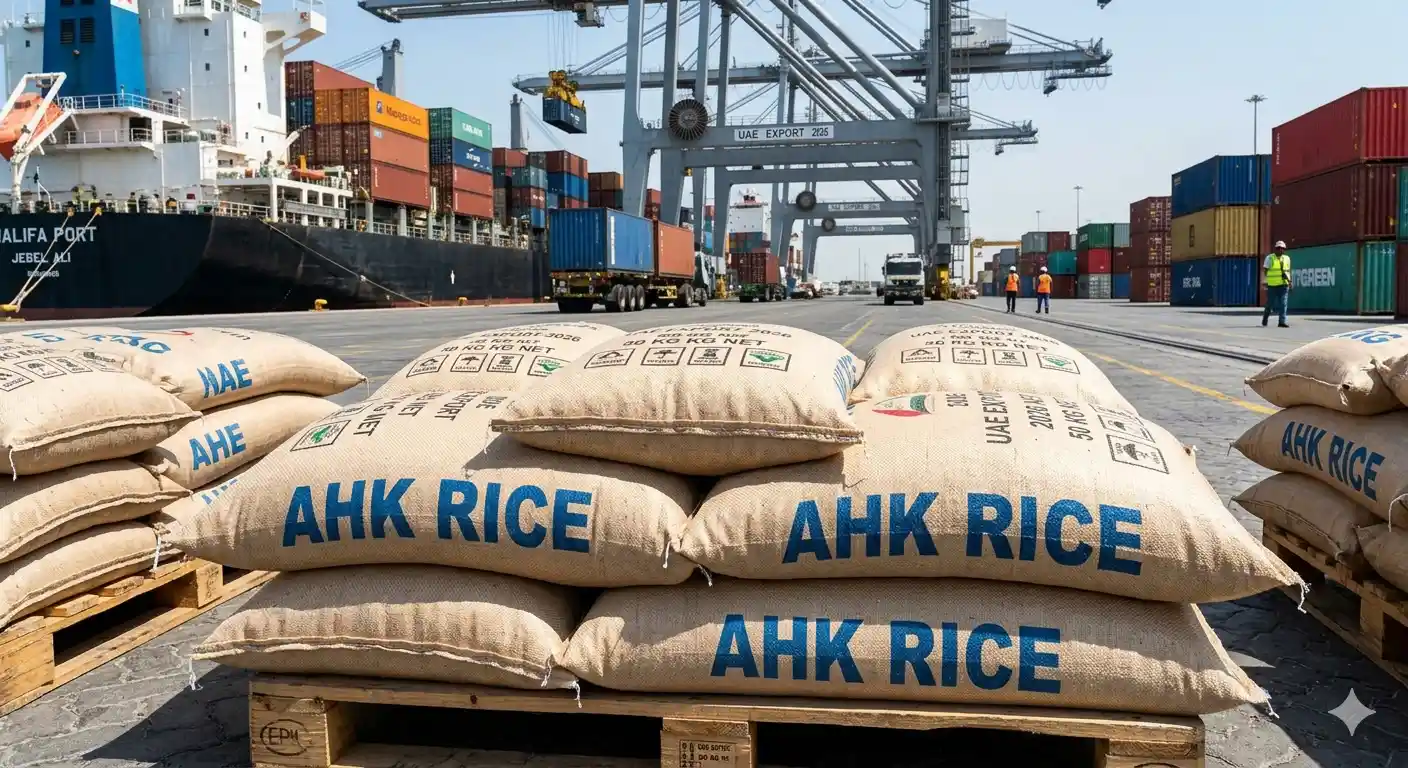
Rice import regulations UAE 2026 define the legal, safety, labeling, and customs requirements set by MOIAT and UAE authorities to control rice imports, ensure food safety, and standardize trade procedures across ports such as Jebel Ali and Khalifa Port.
Rice import regulations in the United Arab Emirates establish a structured framework for all imported food products, including Basmati and non-Basmati rice. These rules are enforced by the Ministry of Industry and Advanced Technology (MOIAT), UAE Customs, and municipal food safety authorities.
The regulatory system ensures that imported rice meets strict safety, hygiene, and quality benchmarks before entering the UAE market. Every shipment must comply with documentation, inspection, and labeling standards.
The 2026 framework reflects updated GCC harmonized standards, stricter traceability requirements, and digital import clearance systems. Exporters must understand these changes to avoid shipment rejection, fines, or delays.
How do MOIAT food safety standards for rice UAE work?
MOIAT food safety standards for rice UAE work through a multi-layer system involving certification, laboratory testing, shipment inspection, and digital conformity assessment to ensure rice meets UAE-approved safety and quality benchmarks before market entry.
The system begins at the origin country. Exporters must prepare rice according to UAE-approved Maximum Residue Limits (MRLs), pesticide controls, and hygiene standards.
Each shipment requires a Certificate of Conformity (CoC). This certificate confirms that the rice meets UAE technical regulations. Approved conformity assessment bodies issue the CoC after reviewing documents and test reports.
At UAE ports, authorities conduct risk-based inspections. High-risk shipments undergo laboratory testing. Low-risk shipments pass through faster digital clearance.
Food safety authorities in emirates such as Dubai Municipality and Abu Dhabi Agriculture and Food Safety Authority verify labeling, packaging, and shelf-life compliance.
The system operates digitally through platforms such as the UAE Food Import Re-export System (FIRS), which integrates customs, inspection, and approval workflows.

What are the key components of UAE rice customs regulations?
UAE rice customs regulations include import permits, HS code classification, customs duty structure, certificate of origin, Halal certification, labeling compliance, and port-specific clearance procedures such as those used in Jebel Ali.
Import permit and registration
Importers must hold a valid food import license issued by local authorities. Exporters must coordinate with registered UAE importers to ensure compliance.
HS code classification
Rice imports fall under HS Code 1006. This classification determines duty rates and documentation requirements.
Customs duties
The UAE applies a standard 5% customs duty on most rice imports. Certain trade agreements reduce or eliminate this duty for specific countries.
Certificate of Origin
This document verifies the country where the rice was produced. It is mandatory for customs clearance and tariff calculation.
Halal certificate rice Dubai
Halal certification confirms that the rice handling process complies with Islamic dietary laws. While rice is plant-based, certification ensures no contamination during processing, storage, or transportation.
Labeling compliance
All rice packaging must include:
- Product name (example: Basmati Rice, Parboiled Rice)
- Country of origin (example: Pakistan, India, Thailand)
- Net weight in metric units
- Production and expiry dates
- Storage instructions
- Batch or lot number
Arabic labeling is mandatory. English labeling supports it.
Port clearance systems
Major ports such as Jebel Ali operate advanced digital customs systems. Importers submit documents electronically. Authorities approve, inspect, or reject shipments based on compliance data.
How does rice import Jebel Ali process work step by step?
Rice import Jebel Ali process follows a structured sequence including shipment pre-registration, document submission, customs declaration, inspection, duty payment, and final clearance through Dubai Customs digital systems.
Step 1: Pre-shipment preparation
Exporters prepare documentation, including invoice, packing list, certificate of origin, and CoC.
Step 2: Shipment registration
The UAE importer registers the shipment in the FIRS system before arrival.
Step 3: Customs declaration
The importer submits a customs declaration through Dubai Customs using the HS code and shipment details.
Step 4: Inspection and testing
Authorities inspect the shipment. They verify labeling, packaging, and documentation. Selected shipments undergo laboratory testing for pesticide residues and contaminants.
Step 5: Duty payment
The importer pays customs duty and applicable fees.
Step 6: Release and distribution
Authorities release the shipment. The rice moves to warehouses, distributors, or retail markets.
This structured process reduces delays and ensures traceability across the supply chain.
What certifications are required for exporting rice to UAE?
Exporting rice to UAE requires a Certificate of Conformity, Halal certification, phytosanitary certificate, certificate of origin, and laboratory test reports verifying compliance with UAE food safety standards.
Certificate of Conformity (CoC)
This confirms compliance with UAE technical regulations. It is mandatory for all food imports.
Phytosanitary certificate
Issued by the exporting country’s agricultural authority. It confirms that the rice is free from pests and diseases.
Laboratory testing reports
These reports verify that pesticide residues and contaminants remain within UAE limits.
Halal certification
This ensures that handling, storage, and transportation follow Islamic guidelines.
Certificate of origin
This confirms the production country. It supports tariff calculation and trade verification.
Each certification plays a role in ensuring safety, traceability, and regulatory compliance.
What are the benefits of UAE rice import regulations for exporters?
UAE rice import regulations provide structured market access, ensure product credibility, reduce unsafe competition, and enable exporters to build long-term trade relationships through compliance with standardized quality and safety frameworks.
Regulations create a transparent system. Exporters understand exact requirements and avoid uncertainty.
Compliance increases buyer trust. Importers prefer suppliers who meet all documentation and safety standards.
Standardization reduces disputes. Clear labeling and testing rules eliminate confusion about quality.
The UAE market rewards consistent exporters. Suppliers who meet regulations gain repeat business and long-term contracts.
Digital systems improve efficiency. Faster clearance reduces storage costs and delays.
What are common use cases of rice import regulations in UAE trade?
Rice import regulations UAE apply in multiple use cases including bulk commercial imports, retail packaging distribution, private label branding, and re-export operations through UAE free zones such as Jebel Ali Free Zone.
Bulk imports
Large shipments of 20–25 metric tons per container enter the UAE for wholesale distribution.
Retail packaging
Rice is imported in bulk and repackaged into smaller units such as 5 kg, 10 kg, and 20 kg bags for supermarkets.
Private label brands
Importers create their own rice brands using imported bulk rice. Packaging must still comply with UAE labeling laws.
Re-export operations
The UAE acts as a trade hub. Imported rice is re-exported to GCC countries, Africa, and Europe.
These use cases show how regulations support different business models.
What are common problems and misconceptions about UAE rice import rules?
Common problems include incorrect labeling, missing certificates, misunderstanding Halal requirements, and assuming all rice shipments require the same inspection level, while misconceptions often relate to duty exemptions and documentation flexibility.
Incorrect labeling
Exporters often fail to include Arabic labels. This leads to shipment rejection or relabeling costs.
Missing documentation
Incomplete documentation delays customs clearance. Every document must match shipment details exactly.
Misunderstanding Halal requirements
Some exporters assume plant-based products do not require Halal certification. UAE regulations still require process verification.
Inspection misconceptions
Not all shipments undergo full testing. Authorities use risk-based inspection systems.
Duty confusion
Exporters assume zero duty for all shipments. The standard rate is 5%, unless trade agreements apply.
Understanding these issues prevents costly mistakes.

How does the UAE regulatory framework evolve for rice imports in 2026?
The UAE regulatory framework in 2026 evolves through digitalization, stricter traceability requirements, updated pesticide limits, and enhanced coordination between MOIAT and local food safety authorities.
The UAE continues to adopt smart systems. Digital platforms handle documentation, approvals, and inspections.
Traceability becomes stricter. Authorities require detailed batch tracking from farm to port.
Pesticide regulations align with international standards. Exporters must adjust farming and processing practices.
Coordination improves between federal and emirate-level authorities. This reduces duplication and speeds up approvals.
Exporters must stay updated to maintain compliance and avoid disruptions.