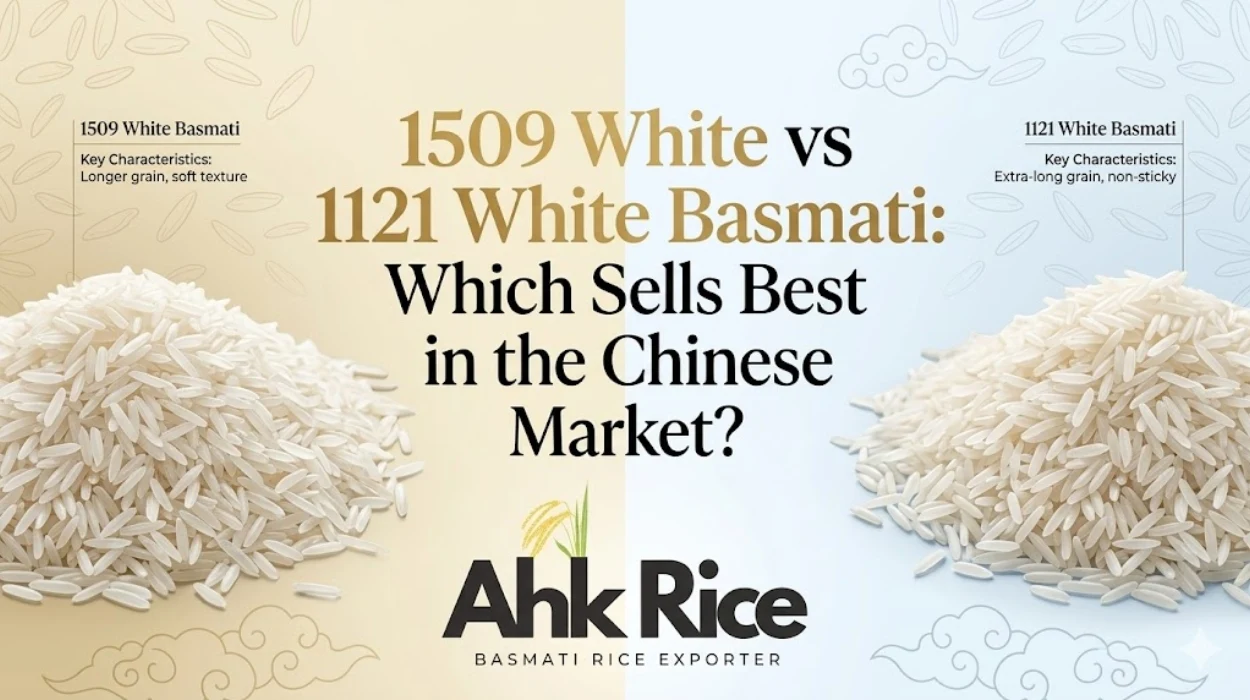
1509 White vs 1121 White Basmati: Which Sells Best in the Chinese Market?
1121 white basmati dominates premium retail segmentation in China due to grain elongation, aroma retention, and higher consumer recognition, while 1509 basmati performs better in cost-sensitive institutional supply chains requiring stable cooking yield and export price efficiency across bulk contracts.
Read foundational processing overview in ToFu article: Basmati processing and export quality guide to understand grade formation.
The Chinese basmati market selects rice based on aroma strength, grain length, and cooking consistency. The two dominant solutions are 1121 white basmati and 1509 white basmati.
1121 basmati represents a premium long-grain aromatic category. It is widely used in retail packaging, specialty food importers, and urban supermarket chains in China.
1509 basmati represents a cost-efficient high-yield variety. It is preferred in bulk import contracts, catering supply chains, and institutional kitchens requiring stable procurement volumes.
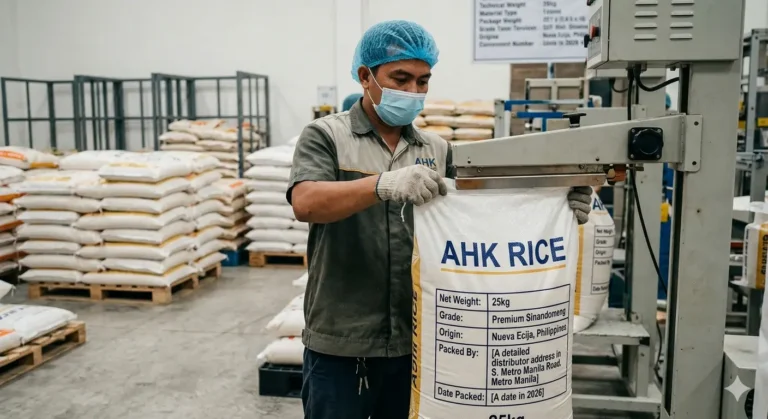
AHK Rice processes both grades through cleaning, dehusking, polishing, grading, and export packing systems designed for SPS-compliant shipment workflows.
1121 white basmati is cultivated for aroma concentration and elongation after cooking. It is harvested under controlled irrigation cycles in Punjab, Pakistan, then milled and polished for export uniformity.
1509 white basmati is cultivated for higher yield stability and shorter crop duration. It is processed for consistency, higher head rice recovery, and price-sensitive export markets.
The solution split exists because Chinese buyers segment demand into premium retail consumption and institutional bulk procurement. Each grade aligns with a different commercial objective.
With solution types defined, the next step is understanding how these two basmati grades compare across measurable export and culinary parameters.
How do different approaches compare?
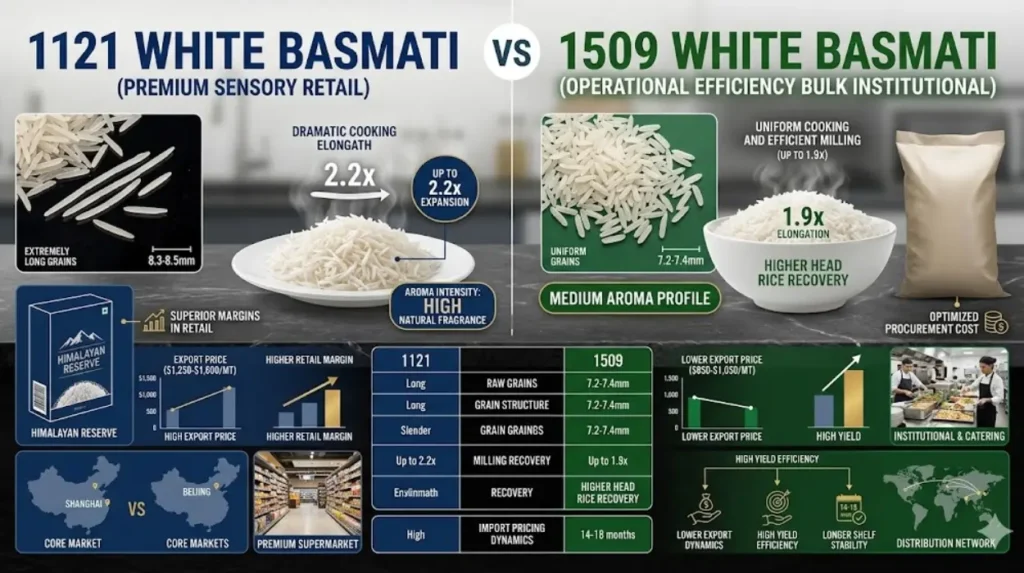
1121 white basmati delivers higher aroma intensity, longer cooked grain elongation, and stronger retail branding value, while 1509 white basmati provides higher yield efficiency, lower landed cost per MT, and improved cooking stability for institutional food service operations in China’s import channels.
The comparison between 1121 and 1509 basmati is based on grain structure, aroma compounds, milling recovery, and import pricing dynamics.
Below is a specification-level comparison used by Chinese importers evaluating sourcing contracts.
Specification Comparison Table (7 Attributes)
| Attribute | 1121 White Basmati | 1509 White Basmati |
|---|---|---|
| Grain Length (Raw) | 8.3–8.5 mm | 7.2–7.4 mm |
| Aroma Intensity | High natural fragrance | Medium aroma profile |
| Cooking Elongation | Up to 2.2x expansion | Up to 1.9x expansion |
| Head Rice Recovery | Lower (premium milling loss) | Higher (efficient milling yield) |
| Market Position | Retail premium segment | Bulk institutional segment |
| Export Price per MT | $1,250–$1,600 | $850–$1,050 |
| Shelf Stability | 12–16 months | 14–18 months |
1121 basmati is positioned for sensory superiority. It is sorted, polished, and graded to maximize aroma retention and grain length visibility after cooking.
1509 basmati is positioned for operational efficiency. It is milled and graded for uniform cooking yield and reduced procurement cost per metric ton.
Price difference between both grades creates a clear segmentation in Chinese import planning. Retail importers prioritize quality perception. Institutional buyers prioritize cost per serving.
1121 basmati generates higher retail margins in urban supermarkets across Shanghai and Beijing. 1509 basmati dominates large-scale procurement in catering networks and food processors.
Shelf stability differs due to grain structure density. 1509 basmati retains structural integrity longer in warehouse storage conditions.
With comparison metrics established, the next step is identifying which method works best for each market application.
Which method works best for different cases?
1121 white basmati performs best in China’s premium retail and specialty food sectors, while 1509 white basmati performs best in institutional catering, bulk import trading, and price-sensitive procurement environments requiring stable supply continuity and predictable cooking output.
Market segmentation determines optimal grade selection across import channels.
China Premium Retail Segment
1121 white basmati dominates premium retail shelves in China urban markets.
Retail buyers prioritize fragrance, elongation, and packaging aesthetics. 1121 satisfies these conditions through controlled polishing and grading.
Supermarket importers prefer 1121 in 1 kg and 5 kg retail packs for branded distribution.
China Institutional Segment
1509 white basmati dominates institutional procurement contracts in China.
Catering companies prefer 1509 due to predictable cooking yield and lower per-plate cost structure.
Food processors use 1509 for rice bowls, ready meals, and bulk catering distribution.
GCC Parallel Benchmark
In Gulf markets, 1509 performs strongly in catering demand due to storage resilience. In comparison, 1121 performs better in hospitality premium dining.
Price-sensitive importers select 1509 for volume stability. Brand-sensitive importers select 1121 for menu positioning.
Market Decision Pattern
1121 is selected when aroma and presentation define value. 1509 is selected when cost per serving defines value.
With application-specific usage defined, the next focus is understanding advantages and disadvantages of each grade.
What are the pros and cons?
1121 white basmati offers superior aroma, premium retail acceptance, and higher export margins, but lower yield efficiency and higher procurement cost, while 1509 white basmati offers stronger cost efficiency, higher milling recovery, and stable supply volumes but reduced aroma intensity and retail premium positioning.
Pros and cons determine import strategy alignment across China’s segmented rice economy.
1121 White Basmati Advantages
Aroma strength drives strong consumer preference in urban retail environments.
Grain elongation increases visual appeal after cooking in plated food service.
Retail pricing supports higher margins for importers and distributors.
1121 White Basmati Limitations
Milling yield reduction increases export cost per ton.
Storage sensitivity requires controlled warehouse conditions for quality retention.
High price limits adoption in institutional procurement contracts.
1509 White Basmati Advantages
Yield efficiency reduces export cost per metric ton.
Cooking stability supports large-scale catering operations.
Storage resilience supports long-duration shipping cycles.
1509 White Basmati Limitations
Aroma intensity remains lower than premium basmati categories.
Retail positioning is weaker in luxury supermarket channels.
Brand differentiation is limited in premium consumer segments.
AHK Rice processes both grades through controlled polishing, grading, and export certification systems to maintain consistent international quality benchmarks for both retail and bulk supply chains.
With advantages and disadvantages clarified, the next step is identifying the key decision factors influencing Chinese import selection.
What are the decision factors?
Chinese importers choose between 1121 and 1509 basmati based on aroma preference, procurement budget, storage capacity, retail positioning strategy, and end-user consumption format, with each factor directly influencing import profitability, logistics efficiency, and retail performance outcomes across segmented distribution channels.
Decision-making in basmati sourcing depends on measurable commercial constraints rather than subjective quality alone.
Decision Framework Table (5 Factors)
| Factor | 1121 White Basmati Impact | 1509 White Basmati Impact |
|---|---|---|
| Aroma Requirement | High sensory demand met | Moderate aroma acceptable |
| Budget Constraint | High import cost impact | Low cost optimization |
| Storage Duration | Shorter optimal storage cycle | Longer warehouse stability |
| Retail Positioning | Premium branding advantage | Value segment positioning |
| Consumption Type | Fine dining & retail packs | Bulk catering & processing |
Price sensitivity remains the strongest determinant in China’s institutional procurement channels. 1509 consistently wins where cost efficiency defines purchasing behavior.
Aroma sensitivity dominates retail urban markets where consumers associate fragrance with quality authenticity. 1121 consistently wins in these segments.
Storage infrastructure also influences choice. Climate-controlled warehouses support 1121. Non-controlled storage favors 1509.
Packaging strategy determines final selection. Smaller branded packs support 1121. Bulk sacks and industrial packaging support 1509.
AHK Rice integrates both grades into export programs designed for segmented buyer profiles across Asia and the Middle East.
With decision factors established, the final step is aligning procurement strategy with export execution models and pricing structures.
Final Integration and Market Strategy Insight
1121 and 1509 basmati operate as complementary rather than competing export products in China’s rice import structure.
1121 dominates value creation in premium retail ecosystems. 1509 dominates volume efficiency in institutional procurement systems.
Exporters align both grades to maximize market coverage. Importers use segmentation to optimize profit per ton and cost per serving.
China’s basmati demand continues to expand in both retail and food service sectors, creating dual demand for premium aroma and cost-efficient supply stability.
FAQ
Which is better for the Chinese market, 1121 or 1509 basmati?
1121 white basmati performs better in China’s premium retail market due to its strong aroma and long grain elongation. 1509 white basmati performs better in bulk institutional demand where cost efficiency and cooking stability are more important than fragrance intensity.
Why do Chinese importers prefer different basmati grades?
Chinese importers separate demand into two segments. Retail buyers prioritize aroma and presentation, which supports 1121. Institutional buyers prioritize price per serving and storage efficiency, which supports 1509.
What is the main price difference between 1121 and 1509?
1121 white basmati is generally priced between $1,250–$1,600 per metric ton, while 1509 white basmati ranges from $850–$1,050 per metric ton. The difference reflects aroma quality, milling recovery, and market positioning.
Which basmati rice lasts longer in storage?
1509 white basmati typically lasts longer in warehouse storage, around 14–18 months under standard conditions. 1121 white basmati maintains best quality for 12–16 months due to higher aroma sensitivity and premium grain structure.
Can both 1121 and 1509 be used in the same import strategy?
Yes, many importers use both grades together. 1121 is allocated to premium retail packaging, while 1509 is used for catering and bulk supply, creating a balanced portfolio for China’s segmented rice market.