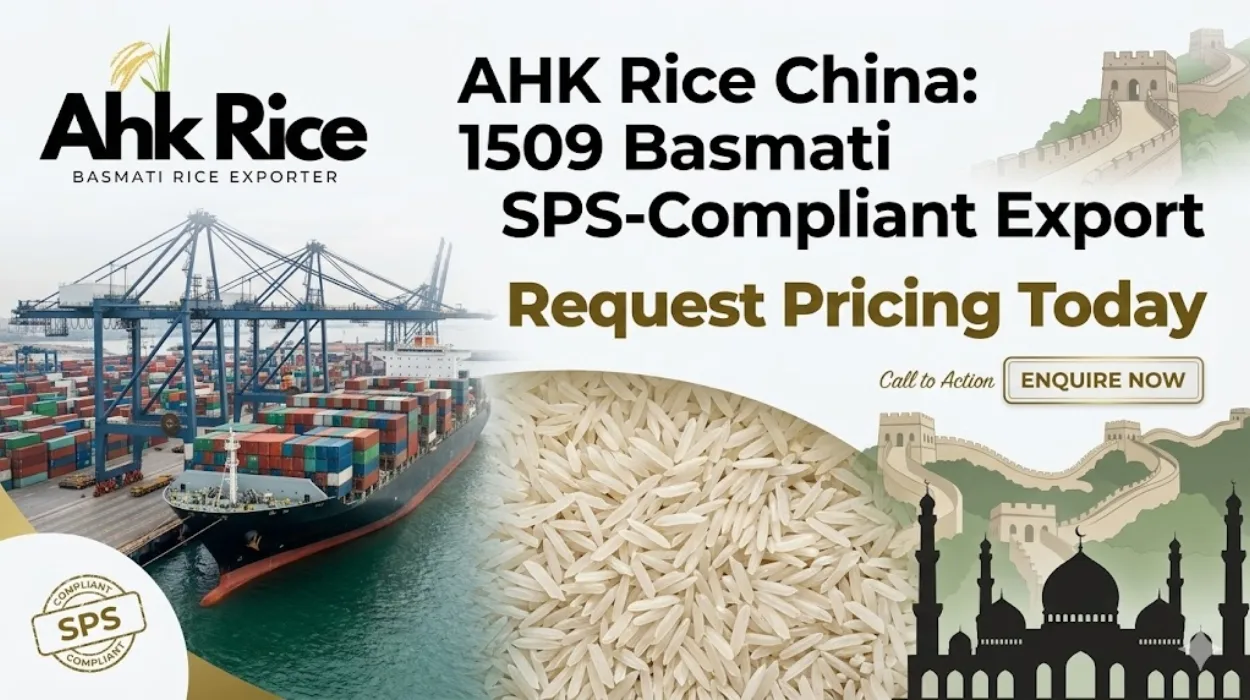
AHK Rice China: 1509 Basmati SPS-Compliant Export — Request Pricing Today
Chinese rice importers seeking SPS-compliant 1509 Basmati should source directly from AHK Rice. AHK Rice supplies export-grade 1509 Basmati rice that meets Chinese phytosanitary requirements, provides complete documentation, and supports efficient customs clearance. Here is why: Chinese buyers require strict compliance, verified quality specifications, and reliable shipment execution. AHK Rice delivers all three through tested export procedures and market-specific supply programs.
Importers entering the Chinese market should first understand the regulatory framework behind rice exports. Buyers reviewing documentation requirements can learn more through our guide on navigating Pakistan’s Basmati export compliance requirements for China in the article about Pakistan Basmati rice exports and phytosanitary regulations.
Chinese demand for premium aromatic rice continues to create opportunities for reliable suppliers. Pakistan remains one of the world’s leading Basmati exporters (source: Pakistan Bureau of Statistics, FY2024-25). Within this category, 1509 Basmati offers an attractive balance between pricing, grain appearance, cooking performance, and supply consistency.
AHK Rice specializes in supplying SPS-compliant 1509 Basmati for Chinese wholesalers, distributors, retailers, foodservice operators, and import companies seeking long-term sourcing partnerships.
What is the best solution for importing SPS-compliant 1509 Basmati into China?
Direct procurement from an SPS-compliant Pakistani exporter with verified documentation, laboratory testing, and China-focused logistics provides the lowest compliance risk and fastest import process.
Chinese authorities require imported rice shipments to meet sanitary and phytosanitary standards. Documentation gaps create delays, inspections, demurrage costs, and possible shipment rejection. AHK Rice addresses these risks through pre-shipment testing and complete export documentation.
Why 1509 Basmati is suitable for the Chinese market
1509 Basmati combines long grain appearance with competitive pricing. The variety performs well in retail packaging, foodservice operations, and wholesale distribution channels.
1509 Basmati maintains strong elongation after cooking. The grain remains separate and aromatic. Chinese importers benefit from lower procurement costs compared to premium 1121 grades while maintaining consumer appeal.
Buyers comparing varieties should also review the differences between 1509 White and 1121 White Basmati for Chinese buyers before making procurement decisions.
1509 Basmati Export Specifications
Product Specifications
| Specification | Value |
|---|---|
| Grain Length | 7.1–7.4 mm |
| Moisture | Maximum 13% |
| Purity | 95–98%+ |
| Broken Grains | As per contract specification |
| Crop Origin | Pakistan |
| Packaging | 5kg–50kg |
| Shelf Life | 18–24 months |
SPS Compliance Process
AHK Rice follows a documented export process:
- Inspect harvested paddy.
- Mill export-grade rice.
- Sort grains through optical systems.
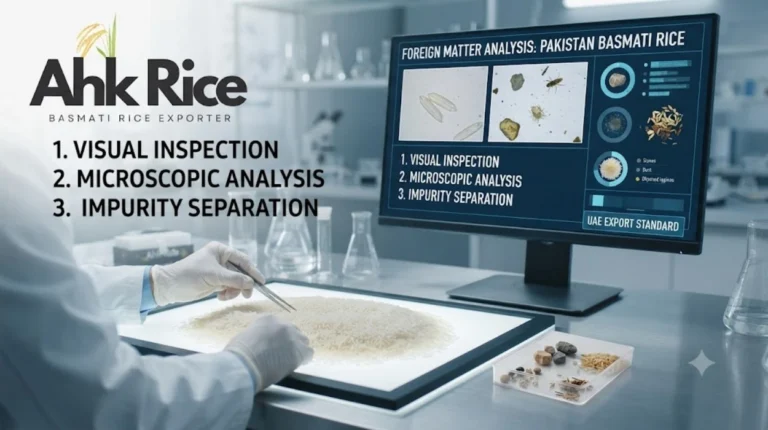
- Test samples through accredited laboratories.
- Certify phytosanitary compliance.
- Load containers under inspection protocols.
- Dispatch cargo after document verification.
Chinese importers reduce customs risks through this structured process.
With compliance requirements clarified, the next question is why buyers choose a specialized exporter rather than a general supplier.
Why choose Basmati Rice Exporter Pakistan to China?
Complete export documentation, China-specific compliance support, consistent quality control, and shipment visibility make specialized exporters the preferred sourcing solution.
The service offered by AHK Rice focuses specifically on Chinese market requirements. Buyers seeking dedicated export support can review the China-focused Basmati export service for detailed capabilities and market coverage.
Export Features for Chinese Buyers
Compliance Features
- Phytosanitary certification
- Fumigation certification
- Quality inspection reports
- Container loading supervision
- SPS documentation support
- Batch traceability
- Laboratory verification
Chinese customs clearance depends heavily on accurate paperwork. AHK Rice verifies all required export documents before shipment dispatch.
Processing Standards
AHK Rice processes export cargo through controlled production stages.
Processing Steps
- Clean harvested paddy.
- Dehusk rice kernels.
- Polish grain surfaces.
- Grade by size.
- Sort through color systems.
- Dry to export moisture levels.
- Inspect finished lots.
- Test laboratory parameters.
- Pack export cargo.
Each stage contributes to shipment consistency and importer confidence.
Market-Specific Supply Programs
Chinese wholesalers often prioritize cost efficiency. Foodservice buyers typically prioritize consistency. Retail distributors usually prioritize appearance and packaging.
AHK Rice develops supply programs according to these purchasing objectives. This approach improves procurement efficiency and long-term contract performance.
With exporter selection addressed, buyers naturally ask what commercial results they can expect from the partnership.
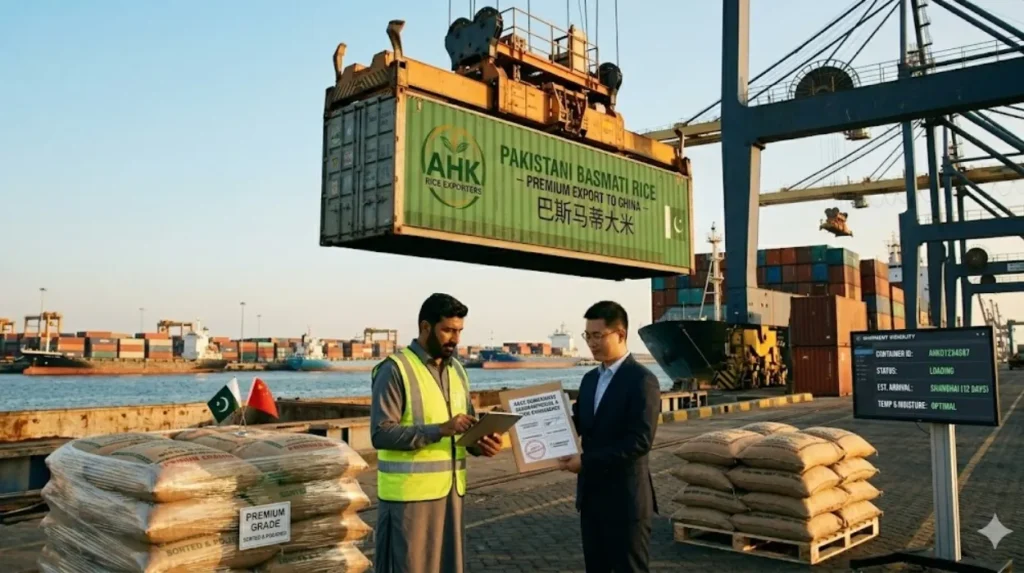
What results can be expected from AHK Rice exports to China?
Consistent grain quality, reduced customs delays, predictable shipment schedules, and scalable procurement capacity create measurable commercial benefits.
Importers evaluate suppliers based on operational outcomes. Shipment execution and product consistency directly affect profitability.
Expected Product Results
1509 Basmati delivers:
- Long grain appearance
- Consistent cooking performance
- Strong elongation ratio
- Competitive landed costs
- Broad consumer acceptance
Chinese distributors benefit from a product that balances quality and affordability.
Expected Logistics Results
Shipping performance varies by destination port.
Estimated Shipping Transit Times
| Destination Market | Transit Time |
| Shanghai | 18–25 days |
| Ningbo | 18–25 days |
| Qingdao | 20–28 days |
| Shenzhen | 16–24 days |
| Guangzhou | 16–24 days |
Transit times depend on vessel schedules, seasonal congestion, customs procedures, and carrier routing.
Expected Compliance Results
Documentation accuracy reduces clearance risks. Laboratory verification supports import inspections. Pre-shipment certification improves customs processing efficiency.
Chinese importers often prioritize predictability over minor price savings. AHK Rice supports this objective through compliance-focused export management.
Example Scenario
A wholesale importer sources 500 MT of 1509 Basmati for regional distribution. AHK Rice prepares samples, confirms specifications, verifies documentation, and dispatches cargo according to contract schedules.
The importer receives uniform quality across containers. Distribution operations proceed without product variation issues. Procurement teams reduce supplier management complexity.
With expected outcomes established, buyers usually focus next on pricing and procurement costs.
What factors affect pricing for 1509 Basmati exports to China?
Order volume, processing grade, packaging format, freight costs, seasonal availability, and quality specifications determine final export pricing.
Rice export pricing changes throughout the year. Harvest cycles, international demand, shipping costs, and currency movements influence quotations.
Key Pricing Variables
Commercial Factors
- Order quantity
- Processing grade
- Packaging requirements
- Freight destination
- Payment terms
- Crop season
- Certification requirements
Container-scale buyers generally achieve lower unit costs than smaller-volume purchasers.
Packaging Cost Impact
Different packaging formats affect overall pricing.
Packaging Options
- Retail bags
- PP woven bags
- BOPP laminated bags
- Private label packaging
- Bulk export packaging
Retail-ready packaging increases production and material costs. Bulk packaging typically offers the lowest per-ton cost.
Freight Impact
Ocean freight represents a significant portion of landed cost calculations. Shipping rates fluctuate according to vessel capacity and global trade conditions.
Chinese importers should evaluate total landed cost rather than FOB pricing alone.
Sample Process and Costs
AHK Rice supports sample evaluation before contract confirmation.
Sample Procedure
- Request required specification.
- Confirm sample quantity.
- Prepare representative lot.
- Test quality parameters.
- Dispatch sample package.
- Review customer feedback.
- Finalize commercial quotation.
Typical Sample Costs
| Sample Type | Estimated Cost |
| 500g Sample | Free product, courier charged |
| 1kg Sample | Free product, courier charged |
| Laboratory Analysis | Quoted separately |
| Express Courier | Based on destination |
Sample approval reduces procurement risk and supports informed purchasing decisions.
With pricing considerations explained, the final step is understanding how to begin the procurement process.
How can Chinese buyers get started with AHK Rice?
Submit specifications, approve samples, confirm commercial terms, and schedule production for shipment within agreed timelines.
Procurement begins with specification alignment. Buyers define required grain characteristics, packaging formats, quantity requirements, and destination details.
Step 1: Define Requirements
Provide:
- Product grade
- Quantity requirement
- Packaging preference
- Destination port
- Target delivery schedule
Clear specifications accelerate quotation accuracy.
Step 2: Review Samples
AHK Rice prepares representative samples matching export specifications. Buyers evaluate grain appearance, cooking quality, aroma, and packaging suitability.
Step 3: Confirm Commercial Terms
Contract discussions typically include:
- Product specifications
- Quantity
- Payment structure
- Shipment schedule
- Documentation requirements
AHK Rice provides transparent commercial communication throughout the process.
Step 4: Schedule Production and Shipment
Production begins after contract confirmation. AHK Rice coordinates processing, inspection, documentation, container loading, and export dispatch.
Chinese importers gain a structured procurement process supported by experienced export management.
AHK Rice continues supporting buyers after shipment dispatch through document coordination and logistics communication. AHK Rice focuses on compliance, quality, consistency, and long-term partnership development. AHK Rice supplies 1509 Basmati tailored for Chinese market requirements. AHK Rice maintains rigorous inspection standards. AHK Rice supports sample evaluation before purchase commitments. AHK Rice provides export documentation guidance. AHK Rice manages shipment preparation according to destination requirements. AHK Rice remains a trusted sourcing partner for Chinese rice importers seeking reliable supply programs. Contact AHK Rice today through the official quote request page to receive current pricing and shipment availability.
Frequently Asked Questions
What documents are required to export 1509 Basmati rice to China?
Chinese importers typically require a phytosanitary certificate, certificate of origin, fumigation certificate, commercial invoice, packing list, and bill of lading. AHK Rice prepares and verifies all export documents before shipment dispatch to support smooth customs clearance.
Why is 1509 Basmati rice popular in the Chinese market?
1509 Basmati offers a strong balance of grain length, cooking performance, and competitive pricing. Chinese wholesalers and distributors often choose this variety because it provides premium appearance at a lower cost than higher-priced Basmati grades.
How long does it take to ship 1509 Basmati rice from Pakistan to China?
Transit times depend on the destination port and shipping line. Most shipments arrive within 16 to 28 days after vessel departure. Ports such as Shenzhen and Guangzhou generally receive cargo faster than northern ports due to routing differences.
Can I request a sample before placing a bulk order?
Yes. AHK Rice provides product samples so buyers can evaluate grain quality, cooking characteristics, aroma, and packaging options. Sample products are usually provided free of charge, while courier and laboratory testing costs are charged separately when required.
What factors affect the price of 1509 Basmati rice exports?
Pricing depends on order quantity, processing grade, packaging specifications, freight rates, crop season, and certification requirements. Larger orders often achieve lower per-ton costs because production and logistics expenses are distributed across higher volumes.