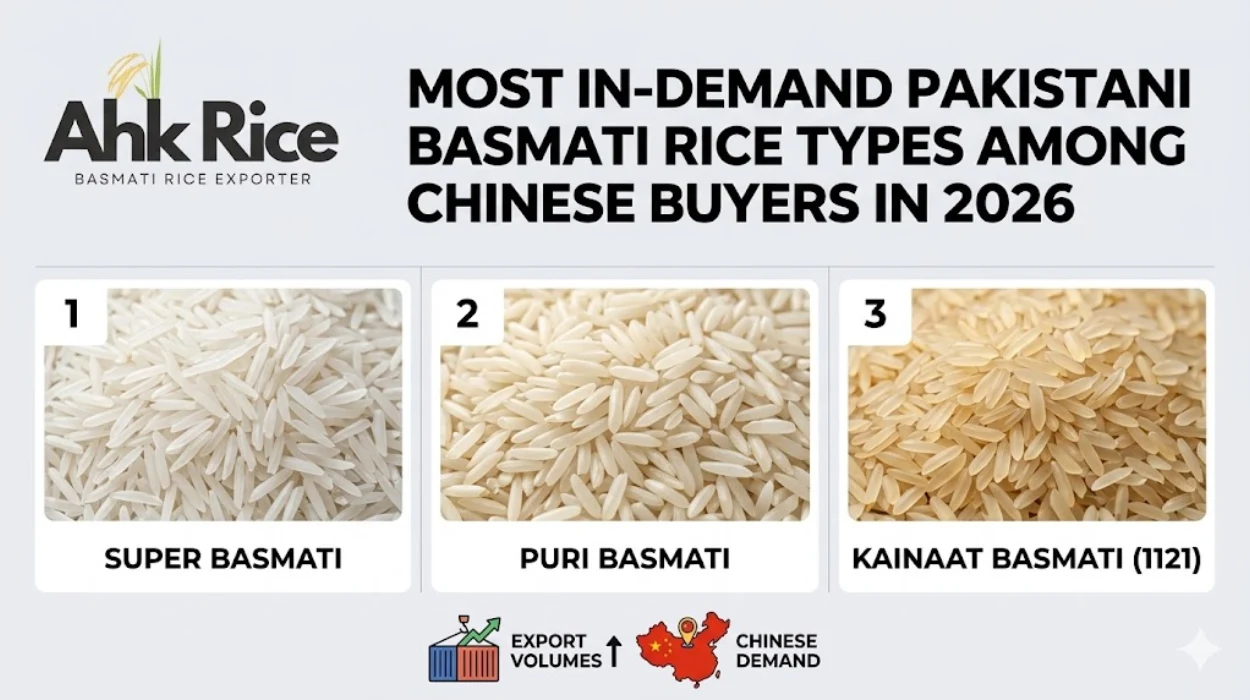
Most In-Demand Pakistani Basmati Rice Types Among Chinese Buyers in 2026
Chinese buyers increasingly prefer 1121 Steam, 1121 Golden Sella, and 1509 Basmati rice because these grades provide high cooked elongation, consistent grain appearance, competitive pricing, and suitability for retail and foodservice channels. Here is why: Chinese rice importers continue diversifying premium rice sourcing while focusing on quality consistency, value, and reliable supply chains from Pakistan .
China’s demand for imported premium rice has evolved beyond simple volume procurement. Importers now evaluate grain length, cooking performance, shelf life, packaging flexibility, and export certifications before selecting suppliers. Buyers seeking a broader understanding of trade developments can also explore how Pakistan’s rice exports have expanded into Asian markets through this guide on Pakistan’s growing rice export relationships with China.
AHK Rice is a trusted Pakistani Basmati rice exporter based in Punjab, supplying 1121, Super Kernel, and 1509 varieties to more than 15 countries. AHK Rice manages cultivation support, milling, grading, quality inspection, packaging, export documentation, and international shipment under one supply chain.
What Pakistani Basmati Rice Types Are Most Popular Among Chinese Buyers?
1121 Steam, 1121 Golden Sella, 1509 Steam, Super Kernel Steam, and Super Kernel White represent the highest-demand Pakistani Basmati grades among Chinese importers because they balance appearance, cooking quality, and landed cost for different distribution channels.
Chinese importers evaluate rice based on end-use applications. Retail distributors prioritize grain appearance and premium positioning. Foodservice distributors prioritize yield after cooking. Catering companies prioritize storage stability and procurement costs.
Specification Comparison of Popular Pakistani Basmati Grades
Technical Comparison Table
| Attribute | 1121 Steam | 1121 Golden Sella | 1509 Steam | Super Kernel Steam |
|---|---|---|---|---|
| Average Grain Length | 8.30–8.50 mm | 8.30–8.50 mm | 8.10–8.30 mm | 7.20–7.50 mm |
| Cooked Length | 16–18 mm | 17–19 mm | 14–16 mm | 13–15 mm |
| Processing Method | Steam | Parboiled | Steam | Steam |
| Shelf Life | 12–18 months | 18–24 months | 12–18 months | 12–18 months |
| Market Position | Premium | Premium Catering | Value Premium | Traditional Premium |
| Color | Bright White | Golden Amber | White | Creamy White |
| Price Range (FOB/MT) | Higher | Highest | Moderate | Moderate |
1121 Steam Basmati dominates premium retail segments because consumers prefer its bright appearance and strong elongation during cooking. Chinese supermarkets frequently position this grade as a premium imported rice product.
1121 Golden Sella Basmati serves catering buyers because the parboiling process strengthens grain structure and extends storage performance. Large foodservice operators benefit from reduced breakage during transportation and cooking.
1509 Steam Basmati attracts importers seeking premium characteristics at a more competitive price point. This grade combines long grain appearance with strong affordability.
Super Kernel Steam Basmati remains relevant because many traditional rice distributors value its aroma and established market recognition.
With the leading rice grades defined, the next question becomes how these options compare in terms of performance and commercial value.
How Do Different Pakistani Basmati Rice Grades Compare for Chinese Importers?
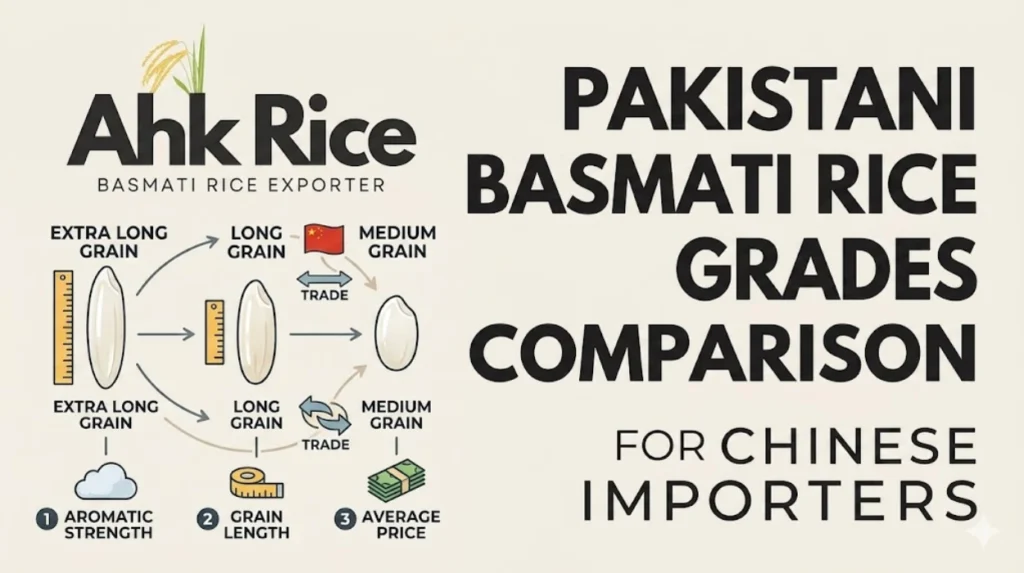
1121 Golden Sella offers the strongest storage performance, 1121 Steam delivers the most premium appearance, and 1509 Steam provides the best value-to-price ratio for growing distribution networks.
Chinese importers rarely evaluate rice solely on grain length. Procurement decisions combine quality, shelf life, customer preferences, and inventory management requirements.
Price per Metric Ton Comparison
Estimated Market Positioning
| Grade | Relative Price Level | Typical Buyer Type |
|---|---|---|
| 1121 Golden Sella | Highest | Catering Importers |
| 1121 Steam | High | Retail Importers |
| Super Kernel Steam | Medium | Traditional Distributors |
| 1509 Steam | Medium-Low | Value Retailers |
| Super Kernel White | Medium | Wholesale Markets |
1121 Golden Sella commands premium pricing because parboiling increases processing complexity. The grain also survives longer storage periods without significant quality degradation.
1121 Steam achieves strong margins in premium supermarkets because consumers associate long grain appearance with quality. Chinese retailers often market imported Basmati as a premium alternative to domestic varieties.
1509 Steam provides cost efficiency. Importers expanding distribution networks frequently choose this grade because it allows competitive retail pricing while maintaining Basmati characteristics.
Super Kernel Steam occupies a middle position. Importers targeting established South Asian and Middle Eastern consumer communities continue sourcing this grade because of its recognized aroma profile.
Shelf Life Comparison
Storage Performance Table
| Grade | Recommended Shelf Life |
|---|---|
| 1121 Golden Sella | 18–24 Months |
| 1121 Steam | 12–18 Months |
| 1509 Steam | 12–18 Months |
| Super Kernel Steam | 12–18 Months |
1121 Golden Sella lasts longer than Steam grades. In warehouse environments reaching 35–40°C, Golden Sella maintains structural integrity for extended periods. Foodservice buyers benefit from reduced inventory risk.
1121 Steam provides superior visual appeal. Retail distributors benefit from attractive shelf presentation and strong consumer perception.
With commercial differences established, buyers must determine which grade fits their specific business model.
Which Pakistani Basmati Rice Grade Works Best for Different Chinese Buyer Types?
1121 Steam suits premium retailers, 1121 Golden Sella suits catering operations, 1509 Steam suits value-focused distributors, and Super Kernel suits traditional specialty rice markets.
Different distribution channels require different specifications.
Buyer Application Matrix
Decision Framework Table
| Buyer Scenario | Recommended Grade | Primary Reason |
|---|---|---|
| Premium Supermarkets | 1121 Steam | Premium appearance |
| Hotel Supply Chains | 1121 Golden Sella | Long storage life |
| Restaurant Distributors | 1121 Golden Sella | Cooking stability |
| Growing Retail Networks | 1509 Steam | Cost efficiency |
| Ethnic Food Importers | Super Kernel Steam | Traditional aroma |
1121 Steam performs best in premium retail environments. Long grains and bright appearance increase consumer appeal.
1121 Golden Sella performs best in foodservice channels. High-volume kitchens benefit from reduced grain breakage and consistent cooking performance.
1509 Steam performs best for importers entering new regions. Lower procurement costs create stronger pricing flexibility.
Super Kernel Steam performs best among buyers serving consumers already familiar with traditional Pakistani Basmati varieties.
Understanding buyer fit naturally leads to evaluating the advantages and disadvantages of each solution.
What Are the Pros and Cons of Each Pakistani Basmati Rice Option?
1121 Steam offers premium appearance, 1121 Golden Sella offers durability, 1509 offers affordability, and Super Kernel offers traditional aromatic characteristics. Each grade serves a distinct commercial objective.
1121 Steam Basmati
Pros
- Premium grain appearance
- Strong elongation after cooking
- High retail acceptance
- Premium brand positioning
Cons
- Higher procurement cost
- Shorter storage life than Golden Sella
1121 Golden Sella Basmati
Pros
- Extended shelf life
- Strong cooking stability
- Lower breakage rates
- Suitable for large inventories
Cons
- Higher purchase price
- Golden color may not suit all retail programs
1509 Steam Basmati
Pros
- Competitive pricing
- Long grain appearance
- Strong importer margins
- Growing demand
Cons
- Lower premium perception than 1121
Super Kernel Steam Basmati
Pros
- Traditional aroma
- Established reputation
- Broad market familiarity
Cons
- Shorter grain length than 1121
With strengths and weaknesses clarified, buyers can focus on selecting the most appropriate procurement criteria.
What Decision Factors Should Chinese Rice Importers Evaluate Before Purchasing?
Grain length, cooking performance, shelf life, certifications, packaging options, price stability, and supply reliability are the most important procurement criteria for Chinese buyers in 2026.
Importers should inspect grain length specifications before sourcing. Longer grains generally command higher market acceptance in premium channels.
Importers should test cooking performance before approving contracts. Elongation ratios influence consumer satisfaction and repeat purchases.
Importers should verify certifications before shipment. Common requirements include phytosanitary certification, fumigation compliance, and quality inspection documentation.
Importers should evaluate packaging formats. Retail distributors often require consumer packs. Foodservice buyers often prefer bulk packaging.
Importers should review supply chain consistency. Stable sourcing reduces procurement disruptions and inventory shortages.
AHK Rice supports these requirements through cultivation partnerships, milling operations, grading systems, quality inspections, custom packaging programs, export documentation, and international logistics management. Buyers evaluating supplier selection criteria and future sourcing opportunities can further review the analysis presented in the article covering Pakistan-China rice trade growth and procurement opportunities in 2026.
Chinese rice imports continue expanding into premium segments. The most successful importers align grade selection with channel requirements rather than focusing exclusively on price.
Frequently Asked Questions
Which Pakistani Basmati rice is most imported by Chinese buyers in 2026?
1121 Steam and 1121 Golden Sella are the most imported Pakistani Basmati rice grades because they combine premium grain length, strong cooking performance, and broad market acceptance.
Why do Chinese foodservice companies prefer Golden Sella Basmati?
1121 Golden Sella offers longer shelf life, stronger grain structure, lower breakage rates, and consistent performance in high-volume kitchens.
Is 1509 Basmati suitable for retail distribution?
1509 Steam Basmati is suitable for retail distribution because it provides long grain appearance and competitive pricing for value-focused consumers.
What certifications are commonly required for rice exports to China?
Chinese importers commonly require phytosanitary certificates, fumigation documents, quality inspection reports, and export compliance documentation.
Which Basmati rice grade has the longest shelf life?
1121 Golden Sella typically offers the longest shelf life, ranging from 18 to 24 months under appropriate storage conditions.