1509 Steam Basmati Rice FOB Pakistan and CIF UAE Cost Analysis for Bulk Purchases
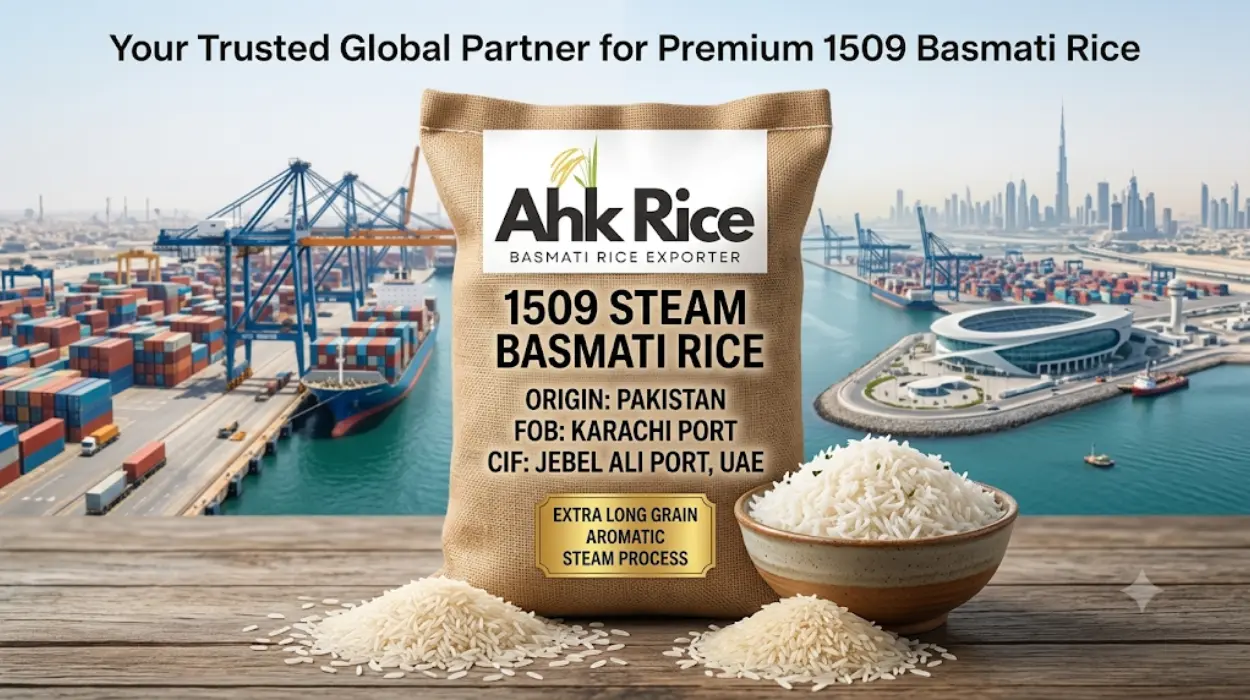
1509 Steam Basmati Rice FOB Pakistan remains the most cost-efficient procurement model for experienced importers, while CIF UAE provides better budgeting certainty for new buyers. Here is why: FOB offers greater freight control and supplier flexibility, while CIF simplifies logistics and landed cost calculations for UAE importers purchasing container volumes.
1509 Steam Basmati Rice continues gaining market share because it delivers long grain length, strong cooking performance, and competitive pricing compared to premium Basmati grades. Buyers researching procurement costs should first understand the fundamentals of rice export pricing. A useful starting point is our guide explaining how Pakistani Basmati export pricing works across international markets: understanding how rice export pricing changes across global destinations.
AHK Rice supplies 1509 Steam Basmati Rice through its export service for importers requiring customized packaging, inspection support, documentation, and container loading. The company processes, grades, inspects, and exports rice directly from Punjab, Pakistan to buyers across the Gulf region, Africa, and Europe through its specialized rice export and supply solutions.
What Are FOB Pakistan and CIF UAE Pricing Models?
FOB gives buyers freight control, while CIF includes freight and insurance within one export quotation.
FOB means Free On Board. The exporter loads cargo onto the vessel at a Pakistani port. The buyer pays ocean freight, marine insurance, destination handling, customs clearance, and inland delivery after loading.
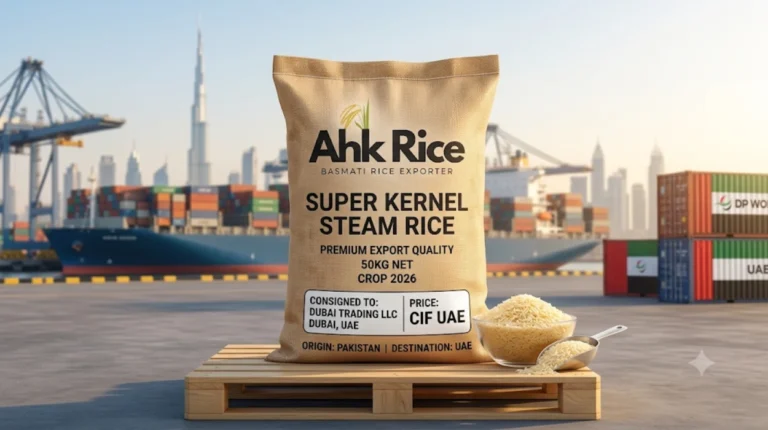
CIF means Cost, Insurance, and Freight. The exporter arranges freight and insurance until the cargo reaches the UAE destination port. The buyer manages customs clearance and inland transportation after arrival.
FOB vs CIF Specification Comparison
| Attribute | FOB Pakistan | CIF UAE |
|---|---|---|
| Freight Included | No | Yes |
| Marine Insurance | No | Yes |
| Export Clearance | Included | Included |
| Port Loading | Included | Included |
| Freight Negotiation | Buyer Controls | Exporter Controls |
| Cost Visibility | Moderate | High |
| Importer Experience Required | Higher | Lower |
FOB pricing benefits importers managing multiple suppliers. UAE distributors often consolidate shipments from several exporters and negotiate shipping directly.
CIF pricing benefits first-time importers. UAE wholesalers frequently choose CIF quotations because budgeting becomes easier before purchase orders are finalized.
FOB and CIF determine total procurement strategy. The next question involves available sourcing solutions for bulk buyers.
What Are the Available Solutions for Bulk 1509 Steam Basmati Rice Purchases?
Three common solutions exist: FOB procurement, CIF procurement, and distributor sourcing.
Bulk rice buyers generally select one procurement method based on logistics capability and purchasing volume.
FOB Procurement Direct from Pakistan
FOB procurement provides direct access to Pakistani millers and exporters. Buyers negotiate freight independently and optimize shipping costs across multiple suppliers.
FOB procurement suits traders importing more than ten containers annually. Larger volumes improve freight bargaining power.
CIF Procurement Direct from Exporters
CIF procurement combines product sourcing and logistics into one transaction. Importers receive a single landed quotation.
CIF procurement suits wholesalers requiring predictable budgets. UAE food distributors frequently prefer this method for annual contracts.
H3: Purchasing Through Local UAE Distributors
Distributor sourcing eliminates import procedures. Buyers purchase stock already available inside the UAE market.
Distributor sourcing provides faster availability. Distributor sourcing also includes additional margin layers that increase procurement costs.
Available Solution Comparison
| Solution | Cost Advantage | Logistics Control | Speed | Complexity |
|---|---|---|---|---|
| FOB Direct | Highest | Highest | Medium | High |
| CIF Direct | Medium | Moderate | Medium | Moderate |
| UAE Distributor | Lowest | None | Highest | Low |
Available sourcing methods influence final costs. The next step is comparing actual pricing structures.
How Do FOB Pakistan and CIF UAE Costs Compare?
FOB prices are usually lower by freight value, while CIF prices provide complete landed-cost visibility.
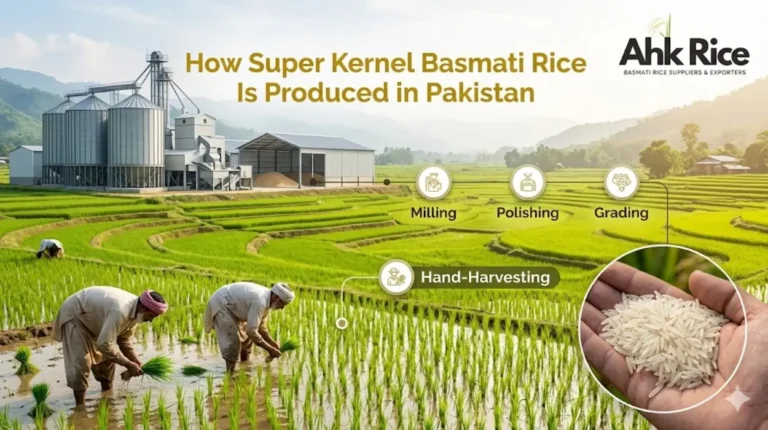
1509 Steam Basmati Rice FOB pricing typically includes cultivation, harvesting, milling, grading, packaging, inland transport, export clearance, and port handling.
CIF pricing adds ocean freight and marine insurance to the FOB value.
Example Cost Comparison per Metric Ton
| Cost Component | FOB Pakistan | CIF UAE |
|---|---|---|
| Rice Product Cost | $920–$1,020 | Included |
| Packaging | Included | Included |
| Export Documentation | Included | Included |
| Port Handling | Included | Included |
| Ocean Freight | Buyer Pays | Included |
| Marine Insurance | Buyer Pays | Included |
| Estimated Total | $920–$1,020 | $980–$1,120 |
Prices vary according to harvest season, container availability, fuel costs, and exchange rates.
Freight fluctuations affect CIF quotations more directly. Container shortages can increase Gulf shipping rates within weeks.
FOB and CIF differ in cost structure. Regional buying preferences create another important comparison.
Which Grades Do UAE and African Markets Prefer?

UAE buyers prefer premium sorted grades, while African buyers prioritize value-focused specifications.
1509 Steam Basmati Rice offers several export grades based on grain length, purity, broken percentage, and sorting quality.
UAE Market Preferences
UAE importers generally procure:
- Double Sortex Grade
- Premium Steam Grade
- 5% Broken Grade
- Retail Packaging Grade
Retail chains prioritize appearance consistency. Premium sorting improves shelf presentation and consumer acceptance.
Foodservice distributors prioritize cooking performance. Long grain elongation supports restaurant requirements.
African Market Preferences
African importers commonly procure:
- Standard Steam Grade
- 10% Broken Grade
- Bulk Packaging Grade
- Economy Commercial Grade
Commercial buyers prioritize cost efficiency. Value-focused specifications support wholesale distribution.
Grade Preference Comparison
| Region | Preferred Grade | Focus |
|---|---|---|
| UAE Retail | Double Sortex | Appearance |
| UAE Catering | Premium Steam | Cooking Performance |
| East Africa | Standard Steam | Cost Efficiency |
| West Africa | Economy Grade | Price Competitiveness |
Regional grade selection affects both pricing and storage performance. Shelf life becomes the next consideration.
How Does Shelf Life Affect Procurement Decisions?
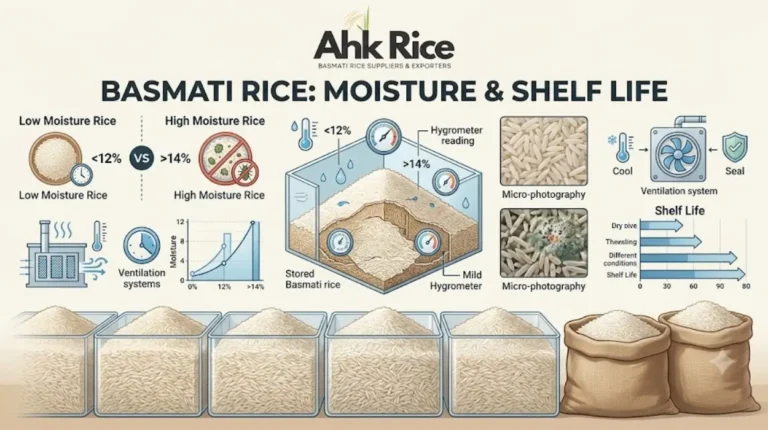
1509 Steam Basmati Rice maintains quality for approximately 12–18 months under proper storage conditions.
Shelf life influences inventory turnover, financing costs, and warehouse planning.
Shelf Life Comparison
| Product Type | Shelf Life |
|---|---|
| 1509 Steam Rice | 12–18 Months |
| 1509 Sella Rice | 18–24 Months |
| White Rice | 12 Months |
| Vacuum Packed Retail Rice | Up to 24 Months |
1509 Sella Rice lasts longer than Steam Rice. Parboiling strengthens grain structure and improves storage performance.
UAE warehouse operators frequently maintain temperatures above 35°C during summer. Controlled storage preserves aroma and grain integrity more effectively.
African importers storing inventory in non-climate-controlled warehouses often choose Sella grades for extended storage periods.
Shelf life directly affects inventory strategy. Buyers should next evaluate advantages and disadvantages.
What Are the Pros and Cons of FOB and CIF Purchasing?
FOB provides flexibility and savings, while CIF provides simplicity and budgeting accuracy.
FOB Advantages
- Lower initial quoted price
- Freight negotiation flexibility
- Multiple supplier consolidation
- Greater logistics control
- Better scalability
FOB Disadvantages
- Freight management required
- Insurance arranged separately
- More documentation oversight
- Higher operational complexity
- Greater logistics responsibility
CIF Advantages
- Single quotation structure
- Freight included
- Insurance included
- Easier budgeting
- Simplified procurement
CIF Disadvantages
- Less freight transparency
- Reduced carrier selection
- Limited shipping flexibility
- Higher quoted value
- Less negotiation leverage
Procurement advantages vary by importer experience. Decision factors provide the clearest selection framework.
Which Method Works Best for Different Buyer Types?
FOB suits experienced importers, while CIF suits buyers prioritizing convenience and predictable landed costs.
Decision Framework
| Buyer Situation | Recommended Method | Reason |
|---|---|---|
| First UAE Import | CIF | Easier logistics |
| Retail Distributor | CIF | Budget certainty |
| Trading Company | FOB | Freight control |
| Multi-Origin Importer | FOB | Consolidation benefits |
| High-Volume Buyer | FOB | Cost optimization |
New importers benefit from operational simplicity. Experienced procurement teams benefit from freight flexibility.
Large trading organizations often maintain shipping agreements with carriers. Existing freight contracts improve FOB purchasing economics.
Smaller distributors typically prioritize predictable costs. CIF procurement reduces operational workload.
With procurement methods evaluated, buyers can make a data-driven sourcing decision.
Frequently Asked Questions
What is FOB pricing for 1509 Steam Basmati Rice?
FOB pricing includes product cost, packaging, export clearance, inland transportation, port handling, and vessel loading at the Pakistani port. Freight and insurance remain the buyer’s responsibility.
What is included in CIF UAE pricing?
CIF pricing includes FOB costs plus marine insurance and ocean freight to the UAE destination port.
Which option is cheaper, FOB or CIF?
FOB quotations are lower because freight and insurance are excluded. Total landed costs depend on freight contracts and shipment volume.
Why do UAE importers buy 1509 Steam Basmati Rice?
UAE buyers value long grain appearance, strong cooking performance, competitive pricing, and consumer acceptance across retail and foodservice channels.
How many containers can be loaded with 1509 Steam Basmati Rice?
A 20-foot container generally loads approximately 24–27 metric tons depending on packaging specifications and destination requirements.