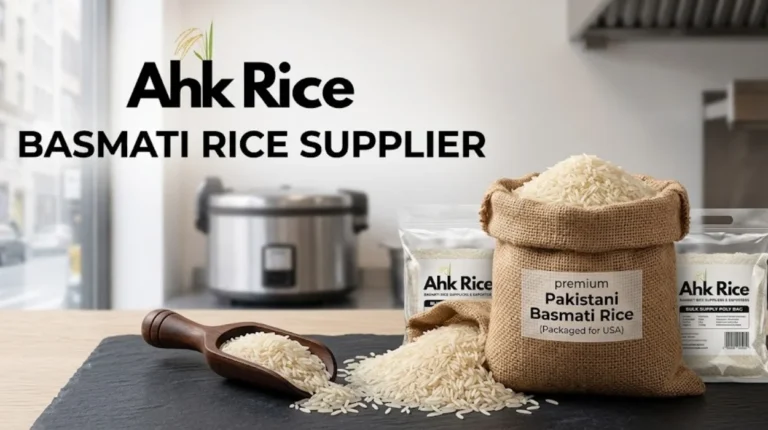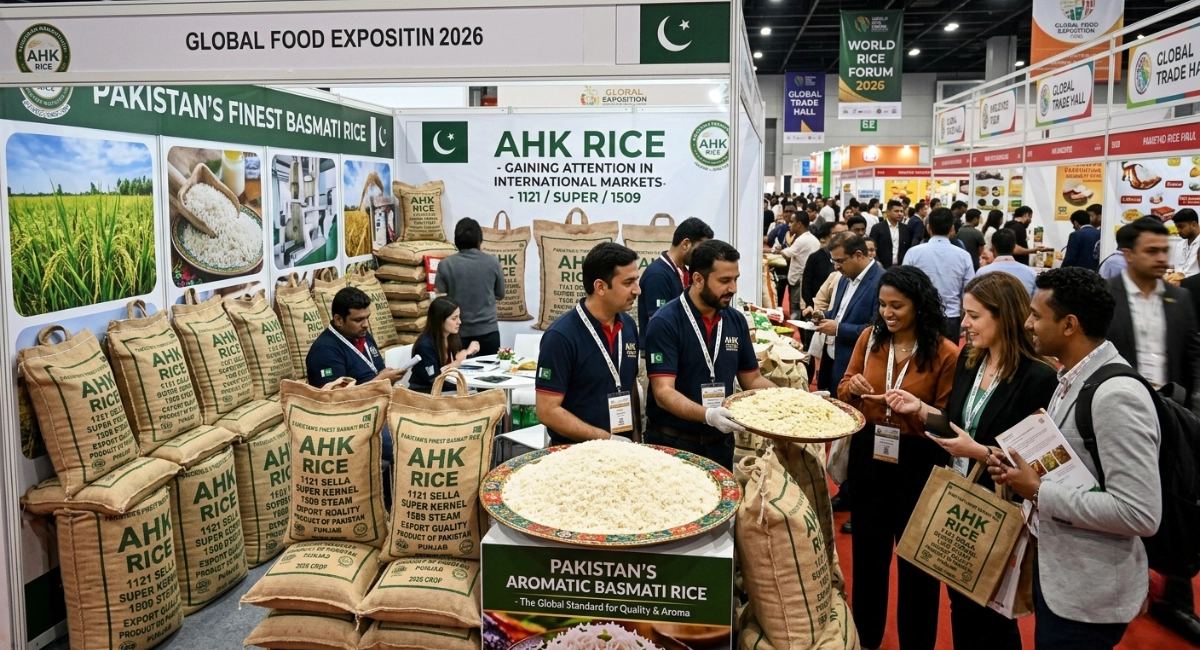
Pakistan’s Basmati Rice Gains Attention in International Markets
The global agricultural trade is experiencing a clear structural shift as premium long-grain aromatic rice from South Asia captures historically high transaction volumes. International purchasing agents, commercial food service corporations, and global commodity brokers are focusing procurement strategies on the Indus River basin. Macroeconomic policy changes, regional trade re-alignments, and automated milling infrastructure upgrades position Pakistani aromatic grains as the primary choice for global supply chains.
Statistical indicators from the first half of 2026 confirm that aggregate outbound shipments of premium long-grain varieties from Pakistan are projected to reach 4,700,000 metric tons for the 2025/2026 market year. This baseline expands further toward a forecast of 5,000,000 metric tons for the 2026/2027 cycle due to increased surface area cultivation and improved irrigation water availability across agricultural zones. The premium long-grain sector demonstrates strong resilience despite global container shipping bottlenecks, volatile freight rates, and changing regional import tariffs.
Sourcing agents require deep visibility into cultivation origins, varietal taxonomy, multi-stage processing systems, and international trade compliance structures to optimize import pipelines. This operational blueprint analyzes the technical, structural, and regulatory frameworks governing Pakistani long-grain aromatic rice within the contemporary 2026 trade landscape.
What is Pakistan Basmati Rice?
Pakistan Basmati rice is a geographically protected, highly aromatic, long-grain cultivar grown exclusively in the fertile, mineral-rich alluvial soils of the Punjab region, characterized by distinct elongation upon cooking, a delicate texture, and specific chemical amylose parameters.
Scientific Identification and Botanical Characteristics
The botanical classification identifies this premium grain as an explicit subspecies of Oryza sativa. The genetic profile dictates a specific starch composition, where the amylose content ranges strictly between 20% and 24%. This specific chemical ratio ensures that the cooked grains remain completely separate, non-sticky, and firm.
The natural aroma is driven by the high concentration of the volatile chemical compound 2-acetyl-1-pyrroline. This compound develops organically within the plant tissue during the grain-filling stage, facilitated by the specific microclimatic temperatures of the Punjab plains.
Geographic Sourcing and Agronomic Conditions
The cultivation of authentic long-grain aromatic rice is restricted to the traditional rice belt of the Punjab province. The key producing districts include Gujranwala, Sialkot, Sheikhupura, Nankana Sahib, Hafizabad, and Narowal. These zones feature deep, nutrient-dense alluvial soils deposited over millennia by the Indus River system.
The microclimate requires specific seasonal parameters, including ambient summer temperatures ranging from 35°C to 45°C during vegetative growth, followed by cooler nocturnal temperatures dropping below 20°C during the grain elongation phase. Natural glacial meltwater from the northern mountain ranges feeds the regional canal networks, supplying the critical micronutrients required for the grain to develop its sensory properties.
Varietal Taxonomy
International trade categorizes Pakistani long-grain aromatic shipments into three primary commercial varieties based on genetic origin and physical grain specifications:
- 1121 Long Grain: This variety features an exceptional average pre-cooked grain length ranging from 8.35 millimeters to 8.40 millimeters. It possesses an extreme elongation ratio, stretching to over 20 millimeters when fully cooked.
- Super Kernel: This variety represents the traditional, historic benchmark for premium aroma and soft texture. It has an average kernel length of 7.20 millimeters to 7.40 millimeters and is highly valued in high-end culinary markets.
- 1509 Long Grain: This early-maturing, high-yielding cultivar features an average pre-cooked length of 8.20 millimeters. It serves as a cost-effective, premium-length alternative with a shorter cultivation cycle.
How it Works: The End-to-End Export Supply Chain
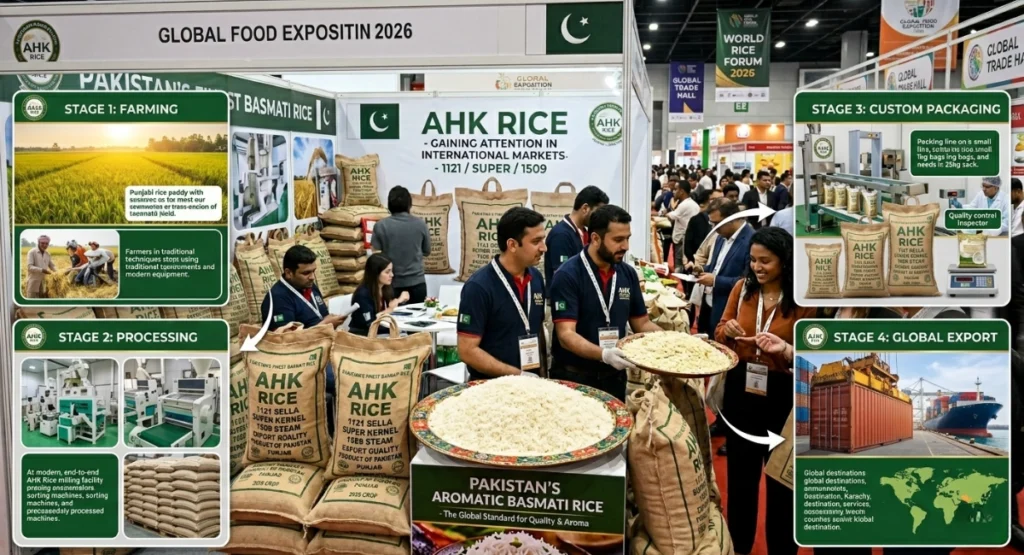
The export supply chain operates through an integrated network of contract farming, localized regional procurement, automated industrial milling, multi-stage quality grading, customized packaging execution, and complex maritime customs clearance protocols designed to preserve grain integrity.
Primary Farm Procurement and Raw Storage
The supply chain begins at the farm level during the autumn harvesting months of October and November. Automated combine harvesters or manual harvesting teams extract the paddy from the fields when kernel moisture content reaches exactly 20% to 22%. The raw paddy is instantly transported to regional collection centers or modern milling facilities to undergo immediate mechanical drying.
Industrial cross-flow hot air dryers reduce the moisture content from 22% down to a stable storage baseline of 12% to 13% within a 24-hour window. This rapid moisture reduction prevents grain discoloration, yellowing, and aflatoxin development. The dried paddy is then transferred into temperature-controlled concrete silos or ventilated warehouses for stabilization.
Industrial Milling and Refinement
The stabilized paddy enters the automated milling stream via mechanical intake systems. The primary processing sequence executes the following industrial steps:
- Pre-Cleaning and Destoning: Vibratory sieves, magnetic separators, and high-capacity destoners remove foreign matter, straw, field dust, and metallic debris.
- Paddy De-Husking: Rubber-roll hulling machinery applies physical pressure to shear the outer fibrous husk away from the kernel, producing raw brown rice. The separated husks are sucked out by pneumatic aspiration systems.
- Paddy Separation: Reciprocating compartments separate un-husked paddy kernels from the brown rice stream, routing un-husked grains back to the huller.
- Whitening and Abrasion: Vertical friction whiteners peel away the nutrient-rich bran layers from the brown rice kernel, transforming it into white, polished rice.
- Water Polishing: High-pressure mist polishers spray minute amounts of atomized water into the polishing chamber, where friction smoothens the outer starch surface to create a translucent glass finish.
Automated Grading and Optical Sorting
The polished white grains pass into mechanical length graders consisting of rotating indented cylinders. These cylinders separate broken grains, fragments, and short tips from whole grains based on precise spatial sizing. Whole grains are then dropped into high-speed monochromatic or trichromatic optical color sorters.
Computerized charge-coupled device cameras inspect every single grain in freefall, utilizing specific light wavelengths to identify chalky, yellow, damaged, or red-streaked kernels. High-pressure compressed air valves release localized micro-blasts to eject defective grains from the premium product stream, achieving a final purity level exceeding 99.8%.
Global Maritime Logistics Execution
The sorted grains move into automated packaging lines where they are packed into specified materials, including woven polypropylene bags, multi-wall paper sacks, or high-density polyethylene pouches. Sacks are loaded into ocean freight containers, typically standard 20-foot dry vans that carry a net payload of 24 to 26 metric tons.
Containers pass through strict phytosanitary treatments, including phosphine fumigation over a continuous 72-hour period, to eliminate insect larvae. Export documentation is then compiled, including commercial invoices, ocean bills of lading, phytosanitary certificates, certificates of origin, and weight verification certificates, allowing vessels to clear the Port of Karachi for international destination ports.
Key Components and Available Product Grades
The commercial classification relies on specific processing treatments and precise grain length ratios that divide the commodity into Raw, Parboiled, and Steam variants across strict industrial broken-percentage tolerances.
Commercial Rice Formats
Processing technologies alter the physical structure, starch layout, and cooking behavior of the kernel. International markets purchase three main formats:
Raw White Rice
This standard format undergoes traditional milling directly from dried paddy without thermal water treatment. The grains retain a bright, pearly white color and a high concentration of native starches. It requires a brief pre-soaking period of 30 minutes before cooking to maximize length elongation.
Parboiled (Sella) Rice
This format undergoes a hydro-thermal process while still in the husk. The raw paddy is soaked in warm water under pressure, steamed for a specific duration, and dried before milling. This process forces water-soluble vitamins from the bran layer directly into the starchy endosperm, gelatinizing the starches.
The resulting grain has a yellowish tint, matches the nutritional profile of brown rice, resists overcooking, and stays firm during long holding times in commercial food service warmers.
Steam Rice
This format is produced through a modified steaming process where dry steam is applied to the paddy without a long initial soaking stage. The steam treatment hardens the outer starch layers of the kernel while maintaining a creamy white color.
This format offers the easy-cooking, non-sticky benefits of parboiled rice while keeping the traditional appearance and quick water absorption of raw white rice.
Technical Grading Standards
The international trading value of a shipment is directly determined by its physical grading profile. The standard parameters used in commercial contracts are detailed below:
| Technical Parameter | Premium Export Grade | Standard Commercial Grade | Discounted Utility Grade |
| Average Grain Length | 8.30 mm – 8.40 mm | 7.40 mm – 8.20 mm | 6.80 mm – 7.30 mm |
| Broken Grain Percentage | Less than 1.00% Max | 2.00% to 5.00% Max | 10.00% to 15.00% Max |
| Moisture Content Baseline | 12.50% Max | 13.00% Max | 14.00% Max |
| Chalky Kernels Allowance | Less than 2.00% Max | 4.00% to 6.00% Max | Greater than 8.00% Max |
| Damaged / Discolored Grains | Less than 0.50% Max | 1.00% to 1.50% Max | Greater than 2.00% Max |
Benefits of Premium Long-Grain Cultivars
The distinct advantage of premium long-grain cultivars stems from an exceptional culinary presentation, superior volume yield during cooking, high nutritional value, and broad versatility across global culinary traditions.
Culinary Presentation and Grain Elongation
The primary benefit to food service operators is the distinct physical expansion of the grain during cooking. Premium 1121 and Super Kernel varieties expand exclusively along their longitudinal axis, doubling or tripling in length without increasing in width.
This unique structural behavior produces long, slender, individual grains that enhance the visual presentation of premium dishes, such as biryani, pilaf, and Mediterranean rice bowls.
High Volume Yield and Commercial Value
Commercial kitchens benefit significantly from high water absorption and volume yield. One kilogram of high-grade raw aromatic rice absorbs up to 2.5 liters of water during cooking, expanding into a significantly larger volume of fluffy, ready-to-serve food compared to standard short-grain or medium-grain varieties.
This high yield lowers the cost per portion for restaurants and commercial caterers, maximizing profitability margins while using less raw dry inventory.
Nutritional Profiles and Glycemic Behavior
The specific starch matrix of aged long-grain aromatic rice provides distinct health benefits:
- Low to Moderate Glycemic Index: The high ratio of amylose starch slows digestion compared to standard soft white rice, causing a gradual release of glucose into the bloodstream and preventing rapid insulin spikes.
- Essential Micronutrients: The grain naturally contains essential minerals, including iron, thiamine, niacin, and magnesium, which are preserved through careful milling and parboiling processes.
- Gluten-Free Purity: The natural grain is completely free of gluten proteins, making it an excellent carbohydrate foundation for individuals managing celiac disease or non-celiac gluten sensitivities.
Global Use Cases and Import Markets
Global import markets use premium long-grain aromatic rice across specific consumer sectors, including high-end Middle Eastern retail distribution, European health food packaging, and high-volume industrial food service platforms.
Primary Import Markets and Trade Demands
Outbound shipments are distributed across highly diverse geographical economic zones, each requiring specific varietal and processing formats:
The Middle East and Gulf Cooperation Council (GCC)
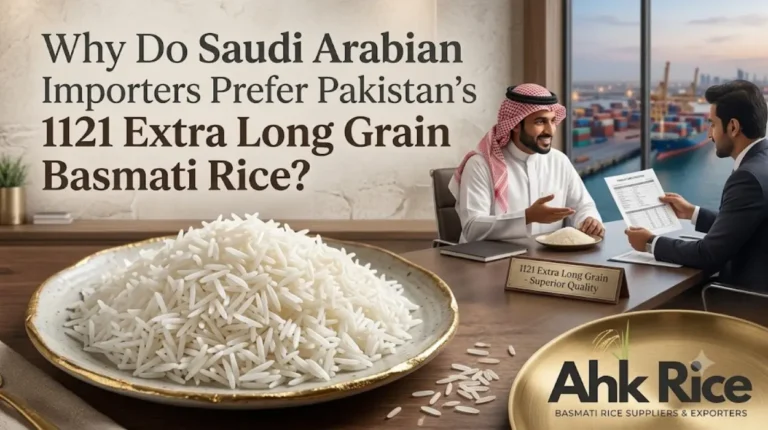
The Middle East represents the largest geographic consumer base, purchasing over 65% of Pakistan’s total premium aromatic rice exports. Sourcing entities in Saudi Arabia, the United Arab Emirates, Oman, Qatar, and Kuwait import large volumes of 1121 Parboiled (Sella) and Golden Sella rice.
These variants are essential for traditional large-scale dishes, such as Mandi, Kabsa, and Majboos, which require durable grains that can withstand intense commercial cooking processes.
The European Union and United Kingdom
Western European nations require premium Raw White and Super Kernel varieties for retail packaging and high-end consumer brands. Importers in the United Kingdom, Germany, the Netherlands, and Italy enforce strict import regulations on chemical residues.
These markets pay premium prices for shipments that comply with stringent pesticide Maximum Residue Limits (MRLs).
The Greater China Region
Agricultural trade data from the General Administration of Customs of China (GACC) confirms a sharp 511% increase in Pakistani rice imports during the first quarter of 2026, exceeding $45.19 million in value.
Chinese procurement managers import both whole premium milled rice for retail and broken grains for industrial processing, utilizing established bilateral trade pathways under the China-Pakistan Free Trade Agreement (CPFTA).
Functional Use Cases by Industry Segment
The physical properties of the grain satisfy specific operational needs across diverse commercial sectors:
- Premium Hospitality and Fine Dining: Five-star hotels and specialty restaurants use aged Super Kernel and 1121 varieties to ensure authentic texture, distinct grain separation, and maximum aroma for upscale culinary dishes.
- Industrial Ready-Meal Manufacturing: Automated food production facilities use parboiled format rice within frozen or pre-packaged microwaveable meals because the starch structure remains firm through industrial freezing, thawing, and reheating cycles.
- Consumer Retail Brands: Global supermarket chains distribute uniform 1-kilogram, 5-kilogram, and 10-kilogram consumer packs with custom branding, requiring consistent grain lengths, minimal broken pieces, and high purity to maintain brand equity.
Common Problems and Misconceptions
Common challenges in the international rice trade include misidentifying aged versus new crop grains, confusion regarding grain chalkiness, and risks associated with varietal blending or mixing.
The Misconception of Freshness vs. Aging
A common misconception among new procurement agents is that fresh, recently harvested rice is superior to older inventory. Freshly harvested rice contains high moisture and active, un-stabilized starches, causing the grains to break easily, release excess moisture, and become mushy or sticky during cooking.
Premium long-grain aromatic rice must undergo a controlled aging process for 12 to 24 months in well-ventilated warehouses. This extended storage dries the moisture uniformly and cures the internal starches, allowing the grain to cook to maximum length while remaining separate and firm.
Understanding Chalkiness
Buyers often mistakenly classify chalky grains as permanent mold or chemical damage. Chalkiness refers to an opaque, white, milky region within the starch endosperm of the kernel, caused by loose starch structures during unexpected microclimatic temperature fluctuations during the farm growth cycle.
While chalky grains are completely safe and nutritionally sound, they have lower physical density and are more prone to breaking during high-speed milling. High-end export specifications restrict chalkiness to less than 2.00% to ensure optimal structural strength and a uniform look.
Varietal Adulteration and Detection
The premium price of genuine 1121 and Super Kernel varieties creates an economic incentive for lower-tier suppliers to blend them with cheaper non-aromatic long-grain hybrid varieties. This practice damages cooking consistency, as the hybrid grains soften at different temperatures, leaving some grains overcooked and others undercooked within the same batch.
To prevent this quality issue, reliable exporters use modern digital DNA testing and grain analyzer machinery to verify genetic purity before loading containers, ensuring every batch meets the required varietal standards.
Compliance Frameworks and Global Certifications
Global trade requires full compliance with international food safety standards, phytosanitary protocols, and verified country-of-origin documentation checked by recognized testing agencies.
Food Safety Management Systems
Milling and processing infrastructure must maintain certified international management systems to ensure product safety for global supermarket distribution:
- ISO 22000:2018: This standard defines the requirements for an enterprise food safety management system, covering interactive communication, systematic trace-back management, and prerequisite operational hazard control programs.
- HACCP (Hazard Analysis Critical Control Point): This framework systematically monitors critical points along the processing stream—from initial destoning to final automated metal detection—preventing physical, chemical, or biological contamination.
- BRCGS (British Retail Consortium Global Standard): This standard is mandatory for entering primary supermarket supply networks in the United Kingdom and Europe, requiring rigorous verification of plant hygiene, structural maintenance, and product inspection systems.
Trade Documentation and Official Compliance
Lawful export operations require mandatory registration and verification through national and international regulatory bodies:
- REAP (Rice Exporters Association of Pakistan): The central governing trade organization that validates the financial standing, ethical trade compliance, and official registration of legitimate exporters.
- Phytosanitary Certification: Issued directly by the Department of Plant Protection after testing and container fumigation, confirming the shipment is entirely free from agricultural pests, regulated insects, and dangerous fungal spores.
- GACC Registration: Mandatory approval from the General Administration of Customs of China, requiring strict audit compliance for processing facilities exporting food products into mainland China.
Specialty Market Certifications
To enter specific cultural and religious demographics, shipments must carry verified dietary certifications:
- Halal Certification: Confirms that the processing plant cleans, processes, and packages the rice under strict Islamic dietary laws, completely free from cross-contamination with prohibited substances.
- Kosher Certification: Validates that the processing facility undergoes seasonal inspections by authorized rabbinical authorities, certifying the product complies with kosher dietary regulations.