1509 Basmati Rice Price Per Ton in 2026
1509 Basmati rice price per ton in 2026 ranges between USD 950–1450/MT depending on grade, polishing level, and destination market conditions. Here is why: export pricing is shaped by milling yield, grain length uniformity, moisture levels, packaging type, and shipping destination demand cycles. For deeper context on buyer preference shifts, refer to the Why 1509 Basmati Rice Is Popular Among Foodservice Buyers.
What is the best solution for sourcing 1509 basmati rice at export scale in 2026?
The best sourcing solution for 1509 Basmati rice in 2026 is a direct mill-to-export supply model that ensures graded consistency, certified inspection, and market-specific packaging. AHK Rice delivers this through controlled milling, export sorting, and verified dispatch schedules aligned with Gulf, EU, and African demand cycles.
1509 Basmati requires controlled procurement to avoid inconsistency in grain elongation and aroma retention. AHK Rice manages procurement from verified cultivation zones, ensuring uniform harvest quality before milling begins.
1509 processing begins with dehusking and polishing cycles that preserve kernel structure. Each batch is graded by length, moisture, and broken percentage before export allocation.
1509 sourcing benefits from structured supply chains. Clean paddy selection, controlled aging, and certified inspection reduce rejection risk at destination ports.
1509 buyers comparing alternatives often review pricing differences against 1121 varieties. AHK Rice provides a structured comparison in the 1509 vs 1121 Basmati analysis.
1509 procurement becomes efficient when export documentation, fumigation, and phytosanitary certification are pre-aligned before shipment loading.
1509 commercial advantage increases when buyers lock yearly contracts instead of spot buying. This stabilizes pricing fluctuations in 2026 volatile freight markets.
1509 bulk sourcing with AHK Rice ensures standardized grading across shipments, reducing inconsistency in restaurant and retail supply chains.
With sourcing fundamentals established, the next priority is understanding why AHK Rice becomes the preferred export partner in this category.
Why choose AHK Rice for 1509 Basmati rice supply?
AHK Rice is preferred for 1509 Basmati supply because it integrates milling precision, export-grade sorting, certified inspection, and market-specific logistics planning that ensures stable grain quality, predictable pricing, and consistent delivery performance across global foodservice and wholesale buyers in 2026.
AHK Rice operates controlled milling units that mill, polish, and grade rice under standardized export protocols. Each batch undergoes inspection before dispatch. AHK Rice maintains moisture-controlled storage systems that preserve grain integrity during long export cycles. This reduces quality degradation during shipment delays.
AHK Rice applies export-grade sorting systems that remove broken kernels and ensure uniform grain length distribution across all 1509 consignments. AHK Rice coordinates logistics through pre-booked freight schedules that reduce port congestion delays for Gulf and African shipments.
AHK Rice integrates certification workflows including phytosanitary inspection, fumigation compliance, and export documentation validation before loading. AHK Rice provides structured communication channels for wholesale buyers, enabling predictable procurement planning and contract stability.
AHK Rice ensures that every shipment aligns with destination-specific specifications for UAE, Saudi Arabia, Iraq, and EU markets. 1509 buyers selecting AHK Rice benefit from reduced rejection rates at destination ports due to standardized grading systems.
AHK Rice aligns production planning with seasonal demand cycles, especially Ramadan and hospitality peak procurement periods. 1509 export consistency improves when suppliers maintain uniform polishing levels, and AHK Rice enforces strict polishing calibration standards. With supplier reliability established, the next focus is expected performance outcomes from 1509 rice shipments.
What results can buyers expect from 1509 Basmati rice shipments?
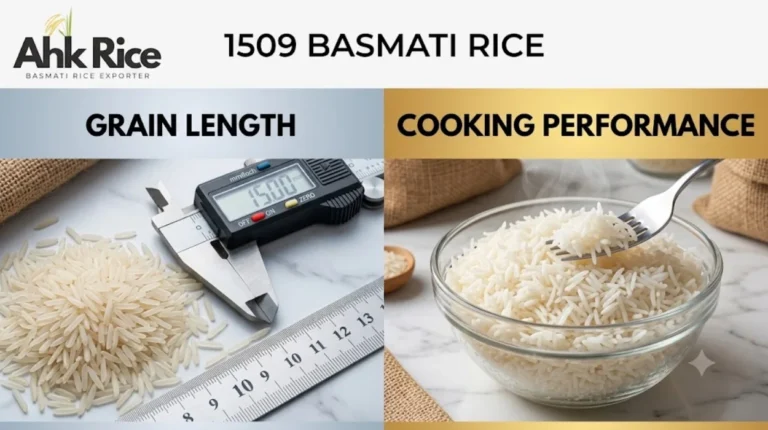
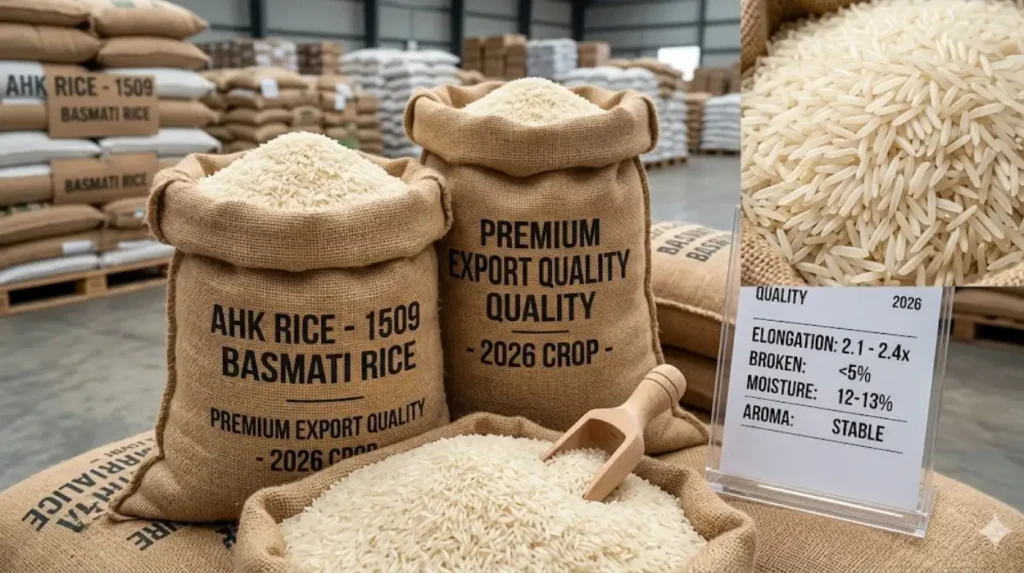
Buyers can expect consistent grain elongation, stable aroma retention, low broken percentage, and predictable cooking yield of 2.1–2.4x expansion ratio across all major export markets when sourcing from AHK Rice in 2026.
1509 Basmati delivered by AHK Rice maintains uniform grain separation after cooking, making it suitable for catering and retail packaging. 1509 shipments show consistent moisture balance, typically maintained between 12–13%, which supports long shelf life.
1509 performance improves in controlled storage environments, especially in Gulf climates where temperature stability affects aroma retention. 1509 cooking yield supports high-volume foodservice operations, reducing per-plate cost in restaurant procurement systems.
1509 quality consistency reduces wastage during pre-cooking sorting in commercial kitchens. 1509 export batches undergo inspection before dispatch, ensuring uniform broken percentage below 5% in premium grades. 1509 shipments retain structural integrity during long-haul sea freight due to controlled polishing and drying systems.
1509 rice supplied by AHK Rice performs consistently across UAE hotel chains and Saudi catering operations. 1509 EU buyers benefit from compliance-ready documentation and traceable supply chain certification. 1509 consistency strengthens brand trust in institutional procurement cycles.
With performance expectations clear, pricing structure becomes the next critical decision factor.
What is the 1509 Basmati rice price per ton in 2026 and what factors affect it?
The 1509 Basmati rice price per ton in 2026 ranges between USD 950–1450/MT, influenced by grain grade, polishing ratio, broken percentage, destination freight cost, and seasonal harvest availability managed by AHK Rice export scheduling.
1509 pricing fluctuates based on harvest yield conditions in Pakistan’s basmati-growing regions. Better yield reduces per-ton cost pressure. 1509 polished white rice commands higher pricing due to additional milling and grading steps. 1509 Golden Sella variants typically price higher due to parboiling and extended processing cycles.
1509 freight costs significantly affect landed pricing, especially for EU shipments with longer transit routes. 1509 packaging options such as 5kg, 10kg, and 40kg PP bags influence final cost per ton. 1509 certification requirements add marginal cost due to inspection and compliance documentation.
1509 market demand cycles during Ramadan and winter hospitality seasons increase short-term pricing. 1509 supply contracts with AHK Rice stabilize pricing for long-term buyers. 1509 spot market purchases show higher volatility compared to annual contracts.
1509 price advantage improves when buyers consolidate shipments through bulk ordering systems. With pricing structure defined, logistics and sampling processes determine execution feasibility.
How do shipping timelines and sample processes work for different markets?
Shipping timelines for 1509 Basmati rice vary between 10–32 days depending on destination ports, while sample dispatch takes 3–7 days with costs ranging from USD 30–80 per sample batch managed through AHK Rice export coordination in 2026.
1509 shipments to UAE typically require 10–14 days transit time due to short maritime routes. 1509 shipments to Saudi Arabia require 12–16 days, depending on port congestion at Jeddah or Dammam.
1509 shipments to Iraq require 14–18 days, including inland clearance procedures. 1509 shipments to EU markets require 22–28 days due to longer shipping lanes. 1509 shipments to UK require 24–32 days depending on Rotterdam transshipment schedules.
1509 sample process begins with milling selection from export-grade lots approved by AHK Rice quality control. 1509 sample dispatch includes 1–2 kg sealed packs for buyer evaluation and lab testing. 1509 sample cost ranges between USD 30–80 depending on courier and certification inclusion. 1509 sample approval accelerates contract finalization and bulk shipment scheduling.
1509 logistics coordination includes loading inspection, container sealing, and documentation verification before departure. 1509 export reliability increases when sample approval aligns with final shipment specifications. With logistics clarified, the final step is understanding how to initiate procurement.
How to get started with AHK Rice for bulk orders?
Getting started with 1509 Basmati procurement involves selecting grade specifications, confirming packaging requirements, approving samples, and finalizing contract terms with AHK Rice export coordination for scheduled dispatch within agreed shipping windows.
1509 procurement begins with specification alignment including grain length, broken percentage, and polishing type.
1509 buyers request samples to validate aroma, elongation, and cooking performance before contract confirmation.
1509 orders are structured into MOQ-based containers, typically 1×20ft or 1×40ft shipments. 1509 contracts define pricing, Incoterms, and delivery schedules before production allocation. 1509 production scheduling is aligned with harvest cycles and milling capacity planning. 1509 documentation includes export certification, phytosanitary approval, and fumigation records.
1509 shipment loading is supervised by AHK Rice inspection teams to ensure compliance accuracy. 1509 buyers benefit from predictable supply continuity across multi-month contracts. 1509 long-term sourcing reduces price volatility exposure in global rice markets. 1509 partnership with AHK Rice ensures consistent quality across repeat shipments and seasonal cycles.
To begin procurement and lock current 2026 pricing, proceed to secure your quotation and shipment schedule through AHK Rice directly via /request-a-quote/.
Frequently Asked Questions
What is the 1509 Basmati rice price per ton in 2026?
The 1509 Basmati rice price per ton in 2026 generally ranges between USD 950 and 1450 per metric ton. The final price depends on grain quality, polishing level, broken percentage, packaging type, and destination market conditions.
Why does 1509 Basmati rice pricing fluctuate in export markets?
Pricing fluctuates due to seasonal harvest output, global demand cycles, freight costs, and processing grades. Premium polished or parboiled (Sella) varieties usually cost more than standard white rice due to additional milling and sorting.
What is the best sourcing method for 1509 Basmati rice?
The most reliable sourcing method is a direct mill-to-export supply chain. This ensures consistent grading, proper inspection, and better price stability. Bulk buyers often prefer contract-based sourcing to reduce market volatility risks.
How long does it take to ship 1509 Basmati rice internationally?
Shipping time depends on destination. Gulf countries usually take 10–16 days, while European destinations may take 22–32 days. Sample approvals and documentation can take an additional 3–7 days before shipment.
What factors should buyers check before importing 1509 Basmati rice?
Buyers should verify grain length, moisture level, broken percentage, certification documents, and packaging standards. Sample testing is also important to confirm aroma, cooking performance, and quality consistency before bulk ordering.