Why Do Saudi Arabian Mandi Restaurants Choose Pakistan’s Longest Grain Basmati Rice?
Saudi Arabian Mandi restaurants choose Pakistan’s longest grain Basmati rice because 1121 Basmati delivers cooked grain lengths of 20–24 mm, maintains grain separation after cooking, absorbs meat stock efficiently, and creates the traditional presentation expected in Saudi Mandi service. Here is why: 1121 Basmati combines exceptional elongation, aroma, texture stability, and large-scale export availability, making it the preferred specification for commercial Mandi operations across Saudi Arabia.
Mandi is one of Saudi Arabia’s most consumed rice-based dishes. Rice serves as the foundation of the meal, not a side component. Restaurant operators evaluate rice based on cooked appearance, yield, holding performance, and customer expectations. Pakistan’s 1121 Basmati consistently satisfies these requirements.
Saudi Arabia remains one of the largest import markets for Pakistani Basmati rice, with strong demand from restaurants, catering companies, wholesalers, and foodservice distributors (source: Pakistan Bureau of Statistics, FY2024-25).
What Is Pakistan’s Longest Grain Basmati Rice?
1121 Basmati rice measures approximately 8.20–8.40 mm before cooking and reaches 20–24 mm after cooking, making it one of the longest commercially traded Basmati varieties in the world.
1121 Basmati is a premium aromatic rice variety cultivated in Punjab, Pakistan. Punjab provides fertile alluvial soil, canal irrigation networks, and climatic conditions suitable for producing long-grain aromatic rice.
1121 Basmati belongs to the Basmati rice family. Basmati refers to aromatic long-grain rice varieties traditionally cultivated in specific regions of Pakistan and India. The variety is distinguished by grain length, fragrance, elongation ratio, and cooking quality.
Saudi Arabian restaurants prefer 1121 because visual presentation influences customer satisfaction. Long, separate grains create the traditional appearance associated with authentic Mandi dishes.
Which Forms of 1121 Basmati Are Used in Saudi Arabia?
Saudi importers source several processing grades depending on operational requirements.
- Steam Rice
- White Rice
- Golden Sella Rice
- Creamy Sella Rice
- Extra Long Grain Premium Grades
- Sortex Clean Grades
- Double Polished Grades
Golden Sella dominates foodservice purchasing because parboiling increases grain strength and reduces breakage during commercial cooking.
Pakistan exports these grades through standardized milling and grading systems designed for large-volume international markets.
With the definition of Pakistan’s longest grain Basmati established, the next question is how this rice reaches Saudi Arabian restaurants.
How Does Pakistan’s Longest Grain Basmati Reach Saudi Arabian Mandi Restaurants?
Nine major processing and export stages transform harvested paddy into export-ready Basmati rice for Saudi Arabian foodservice operations.
Rice quality depends on every stage between cultivation and delivery. Export-grade Basmati follows a structured supply chain.
How Is 1121 Basmati Processed?
Commercial processors follow specific production stages.
- Harvest the mature paddy.
- Clean the incoming raw material.
- Dry the paddy to target moisture levels.
- Store under controlled conditions.
- De-husk the grain.
- Mill the rice.
- Grade by length and quality.
- Sort using optical color sorters.
- Pack and dispatch for export.
Each stage influences grain appearance, cooking performance, and export compliance.
How Is 1121 Basmati Exported to Saudi Arabia?
Exporters complete several logistics and compliance steps before shipment.
- Quality inspection
- Phytosanitary certification
- Fumigation certification
- Certificate of origin
- Packing verification
- Container loading
- Customs clearance
- Sea freight dispatch
- Saudi import clearance
Transit times generally range from 10 to 20 days depending on departure port and destination port schedules.
Consistent processing explains why Saudi restaurants trust Pakistani Basmati, and understanding its characteristics requires examining its key components.
What Key Components Make 1121 Basmati Suitable for Saudi Mandi?
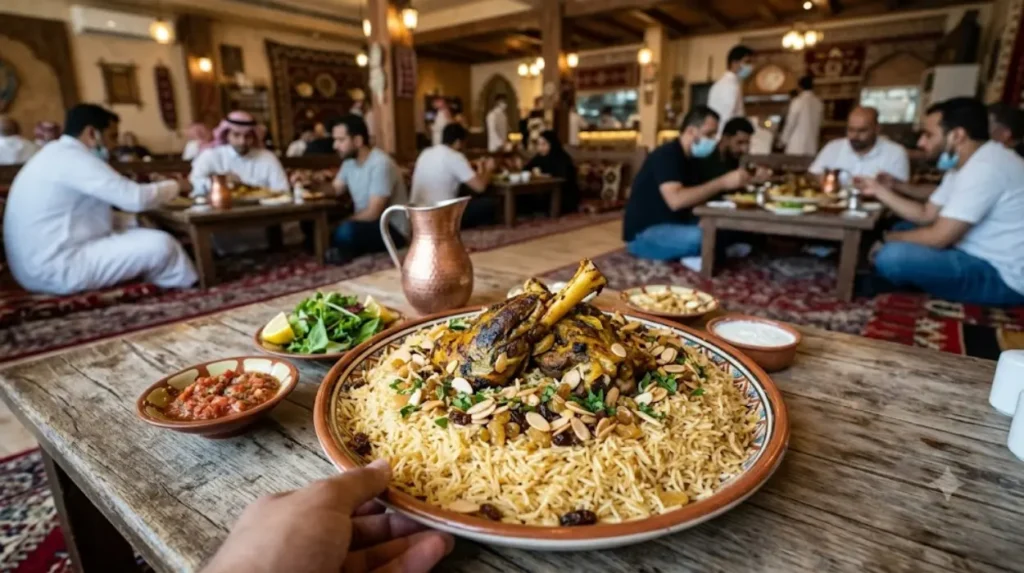
Extra-long grain structure, natural aroma, high elongation ratio, low breakage levels, and efficient stock absorption make 1121 Basmati ideal for Mandi preparation.
Mandi cooking requires rice to absorb flavored broth while maintaining grain separation. Many rice varieties absorb stock effectively but lose structure during cooking.
1121 Basmati achieves both objectives. The grain expands primarily in length rather than width. This characteristic creates the elegant appearance associated with premium Mandi service.
Why Is Grain Length Important?
Grain length directly influences plate presentation.
Restaurants serve Mandi on large communal platters. Customers visually assess rice quality before tasting. Longer grains create a premium appearance and increase perceived value.
A grain measuring 8.30 mm before cooking can exceed 21 mm after cooking. This elongation creates the distinctive look expected in Saudi restaurants.
Why Does Aroma Matter?
Natural aroma contributes to product identity.
Basmati rice contains aromatic compounds generated during cultivation and maturation. These compounds create the recognizable fragrance associated with authentic Basmati meals.
Mandi preparation combines rice, meat stock, spices, and aromatics. Basmati aroma complements these ingredients without overpowering them.
Why Is Grain Separation Important?
Separate grains improve texture and presentation.
Restaurant kitchens prepare large batches. Grain separation prevents clumping and maintains serving quality during holding periods.
Golden Sella grades demonstrate particularly strong grain integrity during extended foodservice operations.
These characteristics explain the technical suitability of 1121 Basmati, and the next section examines the operational benefits restaurants gain from using it.
What Benefits Does Pakistan’s Longest Grain Basmati Provide to Mandi Restaurants?
Higher visual appeal, stronger cooking performance, better holding stability, improved customer perception, and consistent batch results make 1121 Basmati valuable for commercial Mandi operations.
Restaurant operators evaluate ingredients according to operational efficiency and customer satisfaction.
How Does 1121 Improve Presentation?
Long grains create a premium appearance.
Saudi diners associate long, separate grains with quality Mandi. Consistent grain length supports uniform presentation across every serving.
Presentation influences repeat purchases in competitive restaurant markets.
How Does 1121 Improve Cooking Performance?
1121 performs consistently under large-scale cooking conditions.
Commercial kitchens prepare hundreds of servings daily. Consistency reduces operational variation and simplifies kitchen management.
Golden Sella performs particularly well under intensive cooking conditions because parboiling strengthens grain structure.
How Does 1121 Improve Holding Performance?
Foodservice operations often hold rice before service.
1121 maintains grain separation during controlled holding periods. Reduced clumping supports serving quality throughout peak business hours.
How Does 1121 Improve Yield?
Long-grain Basmati expands significantly during cooking.
Higher expansion rates increase cooked volume from each batch. Foodservice buyers evaluate this characteristic carefully because yield directly affects operating costs.
The operational benefits are clear, and the next question is where these advantages are applied throughout Saudi Arabia.
Where Is Pakistan’s Longest Grain Basmati Used in Saudi Arabia?
Mandi restaurants, catering companies, banquet operations, hotel kitchens, airline catering facilities, and institutional foodservice providers use 1121 Basmati extensively.
Saudi Arabia consumes large volumes of rice through both retail and foodservice channels.
Mandi Restaurants
Mandi restaurants represent one of the largest users of long-grain Basmati.
Traditional Mandi preparation depends on rice quality. Grain appearance remains a central purchasing criterion.
Catering Companies
Large catering operations require consistency.
Corporate events, weddings, and public gatherings demand rice that performs reliably across large production volumes.
Hotels and Resorts
Hotels serve guests from multiple countries.
Premium Basmati supports high-quality buffet and banquet presentations.
Institutional Foodservice
Hospitals, universities, and workforce accommodation facilities purchase rice in large quantities.
These operations prioritize consistency, availability, and cooking performance.
The widespread adoption of 1121 Basmati raises questions about common assumptions and misunderstandings surrounding this rice category.
What Common Misconceptions Exist About Pakistan’s Longest Grain Basmati?
The most common misconceptions are that all long-grain rice is identical, all Basmati grades perform equally, and longer grains automatically guarantee better cooking performance.
Rice buyers often compare products using incomplete specifications.
Is All Long-Grain Rice the Same?
No. Long-grain rice includes multiple varieties with different characteristics.
American long-grain rice, Thai rice, and Pakistani Basmati differ in aroma, elongation, texture, and cooking behavior.
1121 Basmati combines aroma and elongation. Many non-Basmati varieties provide only one of these attributes.
Do All 1121 Grades Perform Equally?
No. Processing methods influence cooking results.
Steam rice, white rice, and Golden Sella demonstrate different performance characteristics.
Golden Sella lasts longer than Steam. In a 40°C warehouse environment common in Gulf markets, Golden Sella maintains quality for approximately 18–24 months, while Steam rice performs best within approximately 12 months under proper storage conditions. For Saudi foodservice operators maintaining inventory reserves, Golden Sella provides stronger storage stability.
Readers seeking a detailed comparison between processing methods should review our analysis of how different 1121 processing styles affect grain performance in Saudi foodservice environments: comparing steam-processed and parboiled 1121 rice for commercial Mandi kitchens.
Does Longer Grain Always Mean Better Quality?
No. Grain length represents one quality factor.
Quality assessment also includes aroma, purity, moisture level, broken percentage, milling quality, color sorting, and cooking consistency.
Professional buyers evaluate complete specifications rather than grain length alone.
Understanding these misconceptions provides a complete picture of why Saudi Arabian restaurants continue choosing Pakistan’s longest grain Basmati rice.
Why Does Pakistan Continue Supplying Saudi Arabia’s Mandi Industry?
1121 Basmati combines exceptional grain length, strong cooking performance, natural aroma, efficient stock absorption, and commercial-scale availability, making it the benchmark rice specification for Saudi Arabian Mandi operations.
Saudi diners expect long, separate grains in traditional Mandi service. Pakistan’s 1121 Basmati consistently delivers that expectation. Punjab’s cultivation conditions support the production of export-quality aromatic rice, while modern milling systems ensure standardized grades for international foodservice markets.
Restaurant operators prioritize consistency, presentation, and operational reliability. 1121 Basmati satisfies all three requirements. Its combination of elongation, aroma, texture stability, and foodservice performance explains why it remains the preferred choice across Saudi Arabia’s Mandi restaurant sector.
Frequently Asked Questions
Why is 1121 Basmati rice preferred for Saudi Arabian Mandi?
1121 Basmati rice is preferred because it produces extra-long cooked grains, maintains grain separation, absorbs meat stock effectively, and delivers the traditional appearance expected in Saudi Arabian Mandi dishes. Its aroma and texture also match consumer expectations in the Saudi foodservice market.
What is the cooked grain length of Pakistani 1121 Basmati rice?
Pakistani 1121 Basmati rice typically measures 8.20–8.40 mm before cooking and reaches approximately 20–24 mm after cooking. This exceptional elongation makes it one of the longest grain Basmati varieties used in commercial foodservice operations.
Which 1121 Basmati grade is most commonly used by Saudi restaurants?
1121 Golden Sella Basmati rice is the most commonly used grade in Saudi restaurants. The parboiling process strengthens the grain, reduces breakage, improves holding performance, and supports large-scale cooking required by Mandi restaurants and catering companies.
Where is Pakistan’s 1121 Basmati rice cultivated?
Pakistan’s 1121 Basmati rice is cultivated primarily in Punjab. The region provides fertile soil, suitable temperatures, canal irrigation systems, and traditional rice-growing expertise that support the production of premium aromatic Basmati rice.
How long does it take to export Pakistani Basmati rice to Saudi Arabia?
Export shipments from Pakistan to Saudi Arabia generally take between 10 and 20 days, depending on the shipping route, port schedules, customs procedures, and final destination within the Kingdom.