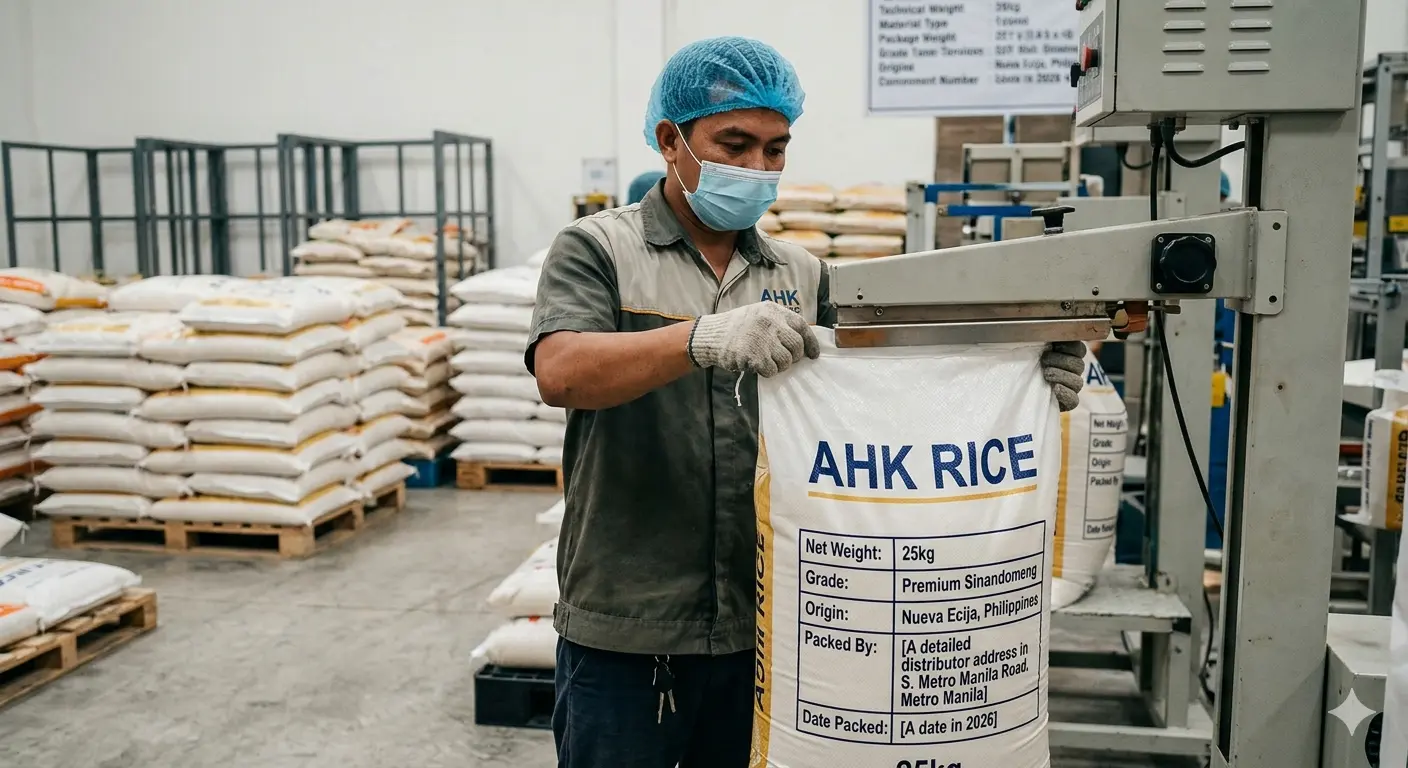
Rice Packaging Standards and DA Labelling Requirements for Philippines 2026
Rice packaging standards and DA labelling requirements in the Philippines for 2026 define the exact bag sizes, material types, and mandatory label information required by the Department of Agriculture to ensure traceability, food safety, and transparent retail distribution across all rice categories.
Rice packaging standards in the Philippines refer to the legally defined structure of how rice is packed, measured, sealed, and presented in the market. The Department of Agriculture (DA) enforces these rules to regulate both imported and locally distributed rice. The system ensures that every rice bag communicates accurate, verifiable information to consumers and regulators.
The DA labelling requirement is a compliance framework. It mandates that each rice package contains specific data fields. These include product classification, origin, net weight, importer or distributor identity, and quality grade. This framework supports food safety audits and price monitoring systems.
In 2026, the Philippines maintains strict control over packaging formats due to increasing import volumes and retail diversification. The regulatory focus includes standardization of bag sizes, prevention of misleading labels, and enforcement of proper weight declarations.
How do rice packaging and DA labelling systems work in the Philippines?
The rice packaging and DA labelling system in the Philippines works through standardized bag sizes, approved packaging materials, and mandatory printed information verified by the Department of Agriculture before distribution into wholesale and retail channels.
The system begins at the processing or import stage. Rice exporters or importers prepare rice in predefined packaging sizes. These sizes align with Philippine retail and wholesale distribution patterns.
Each package undergoes labelling before shipment or local distribution. The label must include accurate product classification such as well-milled rice, regular milled rice, or premium rice. The DA verifies compliance through documentation and random inspection.
At the port of entry, customs authorities and DA inspectors check packaging and labels. Non-compliant shipments face delays or rejection. After clearance, rice enters the distribution chain through wholesalers, retailers, and supermarkets.
Retailers rely on standardized packaging for pricing transparency. For example, 5 kg, 10 kg, and 25 kg bags allow easy price comparison. This structure protects consumers and stabilizes the market.
What are the standard rice packaging sizes used in the Philippines?
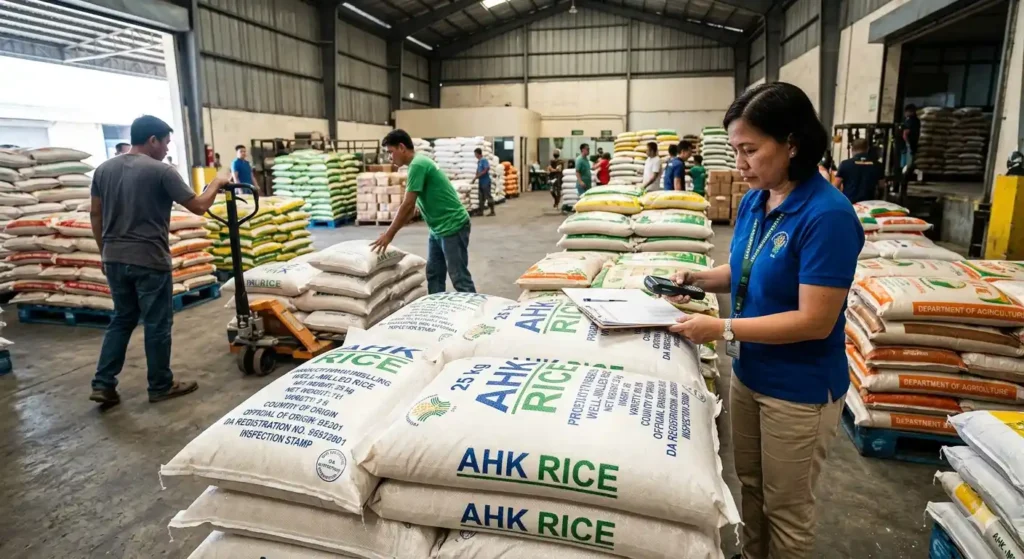
Standard rice packaging sizes in the Philippines include 1 kg, 2 kg, 5 kg, 10 kg, 25 kg, and 50 kg bags, with smaller packs used for retail convenience and larger sacks used for wholesale and institutional distribution.
Packaging sizes directly reflect consumption patterns and distribution channels. Smaller sizes target urban consumers. Larger sizes serve bulk buyers such as restaurants and government programs.
Retail Packaging Sizes
Retail packaging focuses on convenience and affordability. Common examples include:
- 1 kg packs for single households
- 2 kg packs for small families
- 5 kg packs for weekly consumption
- 10 kg packs for monthly consumption
These formats dominate supermarkets and convenience stores.
Wholesale and Institutional Packaging
Wholesale packaging targets bulk buyers. Examples include:
- 25 kg sacks for retailers and food vendors
- 50 kg sacks for large-scale distributors and institutional kitchens
These sacks use durable woven polypropylene material to handle transportation and storage.
Export-Oriented Packaging Adjustments
Exporters adapt packaging based on Philippine requirements. For example:
- Reinforced stitching for long-distance shipping
- Moisture-resistant lining for tropical climate
- Custom labeling panels for DA compliance
These adjustments ensure product integrity from origin to destination.
What information must be included in DA rice labels in 2026?
DA rice labels in 2026 must include product name, rice classification, net weight, country of origin, importer or distributor details, date of packing, and batch identification to ensure traceability and regulatory compliance.
Labelling is not optional. Every rice package must display specific information fields in a clear and readable format. The purpose is to eliminate ambiguity in product identity.
Mandatory Label Components
Each rice package must include:
- Product name (example: White Rice, Jasmine Rice, Basmati Rice)
- Rice classification (example: well-milled, premium, regular milled)
- Net weight in kilograms
- Country of origin (example: Pakistan, Vietnam, Thailand)
- Importer or distributor name and address
- Date of packing or milling
- Batch or lot number for traceability
These elements allow regulators to trace the product back to its source in case of quality issues.
Label Formatting Rules
The DA enforces formatting consistency. Labels must:
- Use legible font sizes
- Avoid misleading claims
- Display information in English or Filipino
- Place critical details on the front or primary panel
Clear formatting ensures that consumers can quickly understand product details.
What are the key components of rice packaging materials used for the Philippine market?
Key components of rice packaging materials for the Philippine market include woven polypropylene bags, laminated plastic packs, inner liners for moisture protection, and secure sealing systems designed to maintain grain quality during transport and storage.
Packaging materials directly affect rice quality. The Philippines requires materials that protect rice from humidity, contamination, and physical damage.
Primary Packaging Materials
The most common materials include:
- Woven polypropylene (PP) bags for durability
- Laminated plastic for retail packaging
- Kraft paper bags with inner liners for eco-friendly options
Each material serves a specific purpose depending on distribution level.
Protective Components
Packaging includes additional protective elements:
- Inner polyethylene liners to prevent moisture absorption
- Anti-slip coatings for stacking stability
- UV-resistant layers to reduce sunlight damage
These features are essential in tropical climates with high humidity.
Sealing and Handling Features
Sealing systems ensure product integrity:
- Heat sealing for retail packs
- Stitching for large sacks
- Tamper-evident closures for safety
These systems prevent contamination and product loss.
What are the benefits of standardized rice packaging and labelling systems?
Standardized rice packaging and labelling systems provide accurate product information, ensure food safety compliance, enable efficient logistics, and support consumer trust through consistent quality and transparent pricing structures.
Standardization reduces confusion in the market. Consumers understand exactly what they are buying based on uniform packaging sizes and labels.
From a logistics perspective, standardized sizes simplify transportation and storage. For example, stacking 25 kg sacks in containers follows predictable patterns, improving efficiency.
Regulators benefit from traceability. Batch numbers and origin details allow quick identification of issues. This reduces the impact of defective or contaminated products.
Retailers benefit from consistent pricing units. A 5 kg pack across different brands allows direct comparison, improving competition and fairness.
How are rice packaging standards applied in real market use cases in the Philippines?
Rice packaging standards are applied in retail supermarkets, traditional wet markets, government distribution programs, and import channels where standardized sizes and compliant labels ensure smooth trade operations and consumer protection.
In supermarkets, pre-packed rice dominates. Consumers choose based on brand, size, and price. Labels guide purchasing decisions.
In wet markets, bulk rice is often repacked into smaller quantities. However, original packaging must still comply with DA requirements before redistribution.
Government programs use standardized sacks, typically 25 kg or 50 kg. These are distributed through controlled channels to ensure food security.
Importers follow strict packaging compliance before shipment. Non-compliant packaging leads to delays at ports, increasing costs and disrupting supply chains.
What common problems and misconceptions exist about rice packaging and DA labelling in the Philippines?
Common problems and misconceptions include incorrect weight declarations, missing origin details, misunderstanding of rice classifications, and the assumption that packaging size flexibility is allowed without regulatory approval.
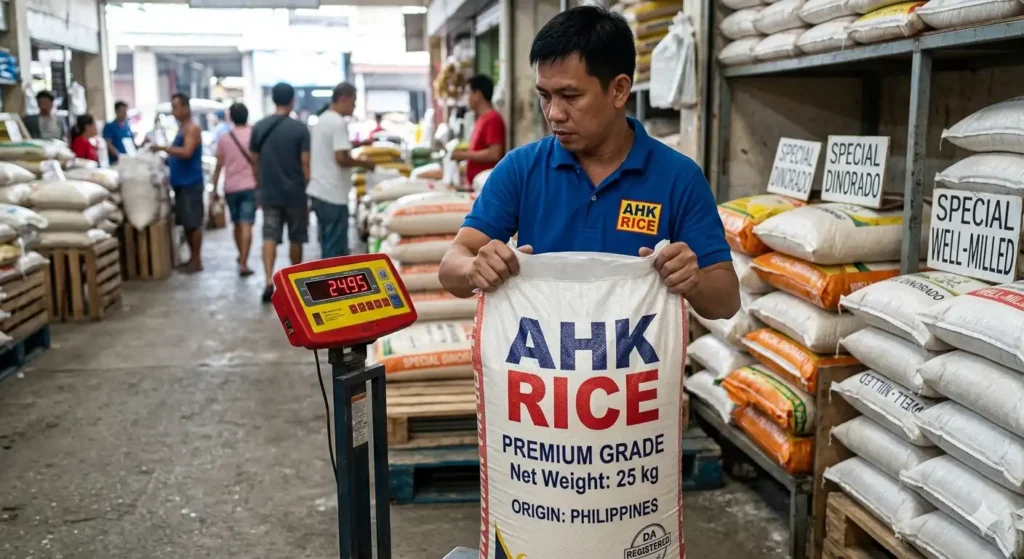
One major issue is inaccurate weight labelling. Some suppliers declare 25 kg but deliver less. This violates regulations and results in penalties.
Another issue is missing or unclear country of origin. Consumers rely on origin to assess quality. Lack of transparency reduces trust.
Misclassification of rice is also common. For example, labeling regular milled rice as premium creates misleading expectations. This practice is strictly regulated.
A frequent misconception is that packaging sizes can vary freely. In reality, the Philippine market follows standardized sizes to maintain consistency. Custom sizes require approval and are rarely accepted in mainstream retail.
How does rice packaging integrate with export processes for the Philippine market?
Rice packaging integrates with export processes by aligning bag sizes, materials, and label requirements with Philippine regulations before shipment, ensuring compliance at port entry and seamless distribution into retail and wholesale markets.
Exporters must prepare packaging before shipment. This includes printing compliant labels and selecting approved materials.
Documentation accompanies the shipment. It verifies that packaging meets DA requirements. Inspectors cross-check this information at the port.
Packaging also supports logistics. For example, 50 kg sacks optimize container space, while 5 kg retail packs are palletized for distribution.
Consistency between packaging and documentation is critical. Any mismatch leads to inspection delays and additional costs.