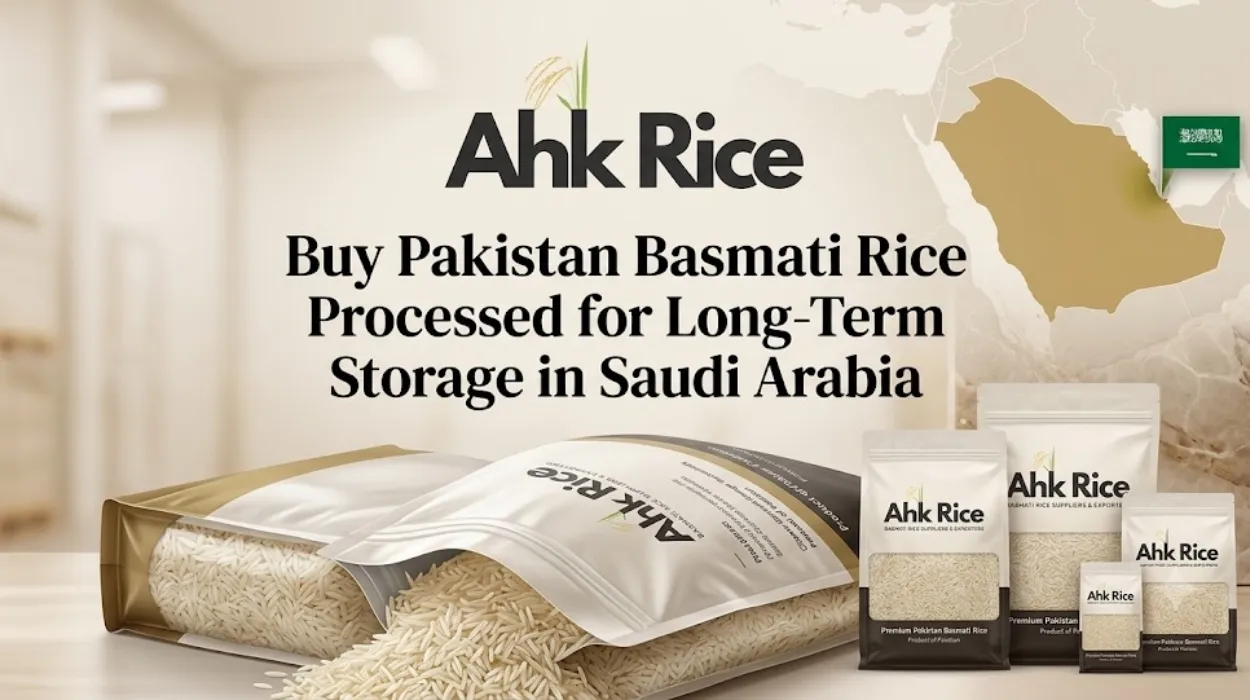
Buy Pakistan Basmati Rice Processed for Long-Term Storage in Saudi Arabia
Businesses importing Pakistan Basmati rice into Saudi Arabia need more than competitive pricing. They need export-grade rice that maintains aroma, grain length, colour, and cooking quality throughout transportation, warehousing, and retail distribution. If you are evaluating suppliers, understanding how moisture control affects storage performance is essential. Before choosing an exporter, read our guide on:
How Does Moisture Content Affect the Shelf Life of Pakistan Basmati Rice in Saudi Arabia? to understand why processing standards directly influence product quality over time.
Importers serving supermarkets, wholesalers, catering companies, and foodservice distributors require consistent shipments that comply with Saudi food import requirements. AHK Rice provides export-grade Pakistani Basmati rice processed specifically for long-term storage, with controlled moisture, international quality certifications, and customised packaging for the Saudi market. If you are comparing processing methods before making a purchase decision, our guide on:
1121 Steam vs 1121 Golden Sella Rice: Moisture Stability During Export to Saudi Arabia explains which option best suits different commercial applications.
What is the best solution for buying Pakistan Basmati rice processed for long-term storage in Saudi Arabia?
The most reliable solution is sourcing export-grade Pakistan Basmati rice from an experienced exporter that controls moisture levels, ageing, milling, packaging, quality inspection, and logistics under one integrated process. This approach reduces storage risks, maintains product consistency, and protects importers from quality losses throughout the Saudi supply chain.
Long-term storage begins long before rice reaches a warehouse. Every stage from paddy selection to final container loading affects how well the rice performs after several months of storage.
AHK Rice manages every critical stage using export-focused quality standards. The company supplies premium Pakistani Basmati rice suitable for Saudi distributors, supermarket chains, food manufacturers, and hospitality buyers looking for dependable inventory over extended storage periods.
Importers typically require:
- Controlled moisture content
- Uniform grain size
- Low broken percentage
- Clean milling
- Proper ageing
- Secure export packaging
- Stable cooking performance
These specifications reduce the likelihood of moisture migration, insect activity, colour changes, and aroma deterioration during warehousing.
For buyers looking for dependable supply, the Saudi Arabia service page explains how AHK Rice supports commercial importers with tailored export programmes and market-specific product specifications.
Why choose Saudi Arabia export services from AHK Rice?
Choosing an exporter with experience in Saudi Arabia means receiving rice processed according to regional buyer expectations, food regulations, packaging preferences, and shipping requirements while maintaining consistent quality across repeat orders and large commercial contracts throughout the year without unnecessary supply chain disruption.
Saudi Arabia remains one of the largest importers of Pakistani Basmati rice. Importers typically require consistency rather than occasional premium shipments.
AHK Rice supplies several export grades including:
- 1121 Steam Basmati Rice
- 1121 Golden Sella Rice
- Super Kernel Basmati Rice
- PK 385 Rice
- IRRI-6 Rice
- IRRI-9 Rice
Every shipment is prepared according to customer specifications regarding:
- Moisture percentage
- Grain length
- Broken ratio
- Colour sorting
- Packaging weight
- Private labelling
- Palletisation
This flexibility allows wholesalers and retailers to maintain consistent product presentation across different sales channels.
The company also supports OEM and private-label programmes for Saudi distributors building their own retail brands.
How is Pakistan Basmati rice processed for long-term storage?
Long-term storage depends on controlled processing rather than packaging alone. Proper ageing, cleaning, milling, drying, grading, colour sorting, laboratory testing, and moisture management work together to preserve rice quality throughout transportation and warehouse storage under commercial conditions.
The processing sequence generally includes:
Paddy Selection
Only mature, high-quality paddy is selected from recognised growing regions of Punjab.
Natural Ageing
Basmati rice is aged to improve:
- Aroma
- Cooking performance
- Grain elongation
- Texture
Ageing also contributes to better storage stability.
Cleaning
Modern cleaning systems remove:
- Dust
- Stones
- Foreign materials
- Immature grains
Milling
Professional milling removes husk while protecting grain integrity.
Colour Sorting
Optical sorters remove:
- Discoloured kernels
- Damaged grains
- Foreign particles
Moisture Adjustment
Moisture is maintained within export specifications suitable for long-distance transportation and extended storage.
Laboratory Testing
Each lot is checked for:
- Moisture
- Broken percentage
- Chalkiness
- Purity
- Grain length
- Cooking quality
Packaging
Final packaging protects the product during international logistics and warehouse storage.
AHK Rice follows internationally recognised export procedures to ensure consistency across every shipment.
What shipping times can Saudi importers expect?
Shipping schedules vary according to destination port, production planning, vessel availability, and customs processing. Working with an experienced exporter helps buyers receive realistic production timelines, accurate documentation, and predictable delivery schedules for commercial inventory planning across Saudi Arabia.
Typical 2026 shipping estimates from Pakistan are:
| Saudi Destination | Estimated Sea Transit |
|---|---|
| Jeddah Islamic Port | 8–12 days |
| Dammam (King Abdulaziz Port) | 10–15 days |
| Riyadh (via Dammam inland transport) | 14–18 days |
| Jubail | 11–15 days |
| Yanbu | 10–14 days |
Production time before shipment generally ranges from 7–15 working days, depending on:
- Order quantity
- Packaging requirements
- Private label printing
- Seasonal demand
- Container availability
For repeat customers, AHK Rice can often coordinate scheduled production to support regular monthly shipments.
What sample process should buyers follow before placing a commercial order?
Professional sampling protects both buyer and supplier by confirming product quality before large-scale procurement. Laboratory verification, cooking evaluation, packaging approval, and specification confirmation reduce purchasing risks and create clear expectations for future commercial shipments between both parties.
A standard commercial sampling process typically includes:
Step 1: Requirement Discussion
The buyer shares:
- Product type
- Quantity
- Packaging
- Destination
- Quality specifications
Step 2: Sample Preparation
The exporter prepares representative samples matching production specifications.
Step 3: Courier Dispatch
Samples are usually sent through international courier services.
Typical courier cost:
US$40–80, depending on destination, package weight, and courier provider.
Step 4: Product Evaluation
The importer checks:
- Grain length
- Aroma
- Cooking quality
- Texture
- Moisture
- Appearance
Some buyers also perform independent laboratory testing.
Step 5: Packaging Approval
Private-label buyers approve:
- Bag design
- Printing
- Barcode
- Carton artwork
Step 6: Commercial Contract
Specifications are confirmed before production begins.
This structured process helps reduce misunderstandings and ensures production matches approved samples.
What results can importers expect from professionally processed long-storage Basmati rice?
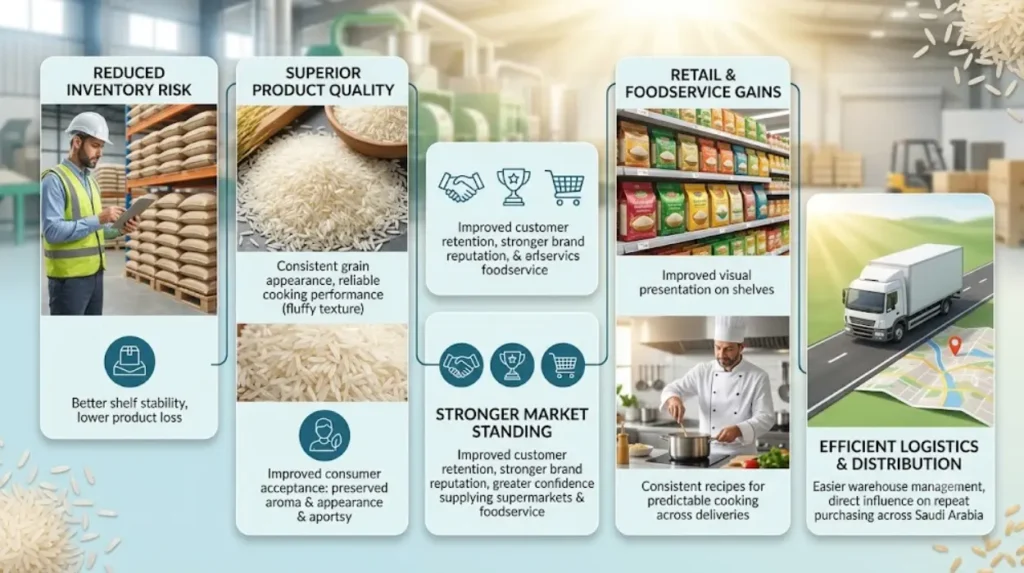
Consistent processing improves inventory performance by preserving grain appearance, aroma, cooking quality, and consumer acceptance during warehouse storage. Importers experience fewer quality complaints, better retail presentation, improved customer satisfaction, and greater confidence when supplying supermarkets and foodservice businesses.
When rice is processed correctly, buyers typically benefit from:
- Better shelf stability
- Lower product loss
- Consistent grain appearance
- Reliable cooking performance
- Improved customer retention
- Stronger brand reputation
- Easier warehouse management
Retailers also benefit from improved visual presentation on shelves.
Foodservice operators appreciate consistency because recipes remain predictable across multiple deliveries.
For distributors handling nationwide logistics across Saudi Arabia, these factors directly influence repeat purchasing behaviour.
What affects the price of Pakistan Basmati rice for Saudi Arabia?
Rice pricing depends on several commercial variables including variety, ageing period, milling quality, packaging, certifications, shipment volume, freight rates, and seasonal market conditions rather than a single fixed export price for every buyer.
Major pricing factors include:
| Cost Factor | Impact |
|---|---|
| Rice variety | Premium varieties command higher prices |
| Crop season | New crop and aged stock differ in value |
| Packaging | Custom bags increase costs |
| Private labelling | Printing and design affect pricing |
| Certifications | Additional compliance may increase cost |
| Container quantity | Larger orders often improve pricing efficiency |
| Ocean freight | Shipping rates fluctuate throughout the year |
As of 2026, export pricing continues to fluctuate with:
- International freight markets
- Exchange rates
- Paddy availability
- Global demand
- Seasonal production
For this reason, commercial buyers generally request updated quotations before confirming contracts.
AHK Rice provides quotations based on current market conditions and buyer specifications instead of using generic price lists.
Which certifications support exports to Saudi Arabia?
Commercial importers should purchase rice supported by recognised quality management systems and export documentation that facilitates customs clearance, food safety compliance, and buyer confidence throughout international trade and long-term commercial partnerships with reliable Pakistani exporters.
Common export documentation may include:
- Phytosanitary Certificate
- Certificate of Origin
- Fumigation Certificate (where required)
- Packing List
- Commercial Invoice
- Bill of Lading
Quality systems commonly requested include:
- ISO certification
- HACCP
- Food safety management standards
Documentation requirements may vary according to importer needs and Saudi regulatory updates.
AHK Rice assists buyers with export documentation required for international shipments.
How do you get started with AHK Rice?
The purchasing process becomes straightforward when specifications are clearly defined before production. Buyers who communicate product requirements, packaging preferences, shipping destination, and quality expectations receive accurate quotations, representative samples, and production schedules that support efficient commercial procurement decisions.
The process typically follows these stages:
- Submit your product requirements.
- Receive a commercial quotation.
- Approve product samples.
- Confirm packaging artwork if required.
- Finalise commercial agreement.
- Begin production.
- Complete quality inspection.
- Arrange shipment.
- Receive export documentation.
- Dispatch the container.
This structured approach helps importers avoid delays while ensuring the delivered rice matches approved specifications.
With extensive export experience, AHK Rice supports wholesalers, distributors, supermarket suppliers, private-label brands, and hospitality buyers seeking dependable Pakistan Basmati rice for long-term storage in Saudi Arabia.
If you are ready to discuss your specifications, request current pricing, or begin the sample approval process, submit your enquiry to receive a tailored commercial proposal from AHK Rice.
Frequently Asked Questions
How is Pakistan Basmati rice processed for long-term storage?
Pakistan Basmati rice is processed through cleaning, milling, grading, colour sorting, moisture control, laboratory testing, and secure packaging to maintain quality during storage and export to Saudi Arabia.
What is the ideal moisture content for export-quality Basmati rice?
Export-quality Basmati rice is typically processed within internationally accepted moisture levels to help preserve aroma, texture, and shelf life during shipping and warehouse storage.
How long does it take to ship Basmati rice from Pakistan to Saudi Arabia?
Sea shipments from Pakistan to Saudi Arabia generally take between 8 and 15 days, depending on the destination port, shipping schedule, and customs clearance process.
Does AHK Rice provide samples before bulk orders?
Yes. AHK Rice provides representative product samples so buyers can evaluate grain quality, aroma, cooking performance, and packaging before confirming a commercial order.
What packaging options are available for Saudi Arabian importers?
AHK Rice offers various packaging options, including retail bags, bulk sacks, private-label packaging, customised printing, and export-ready palletised shipments.
Which Pakistan Basmati rice varieties are suitable for the Saudi market?
Popular choices include 1121 Steam Basmati Rice, 1121 Golden Sella Rice, and Super Kernel Basmati Rice, depending on the buyer’s market segment and customer preferences.
What documents are provided with export shipments?
Export shipments usually include a commercial invoice, packing list, certificate of origin, phytosanitary certificate, bill of lading, and other documents required for Saudi imports.
Why should importers choose AHK Rice for Saudi Arabia?
AHK Rice offers export-grade Pakistani Basmati rice, strict quality control, customised packaging, competitive pricing, reliable shipping schedules, and dedicated support for Saudi importers.