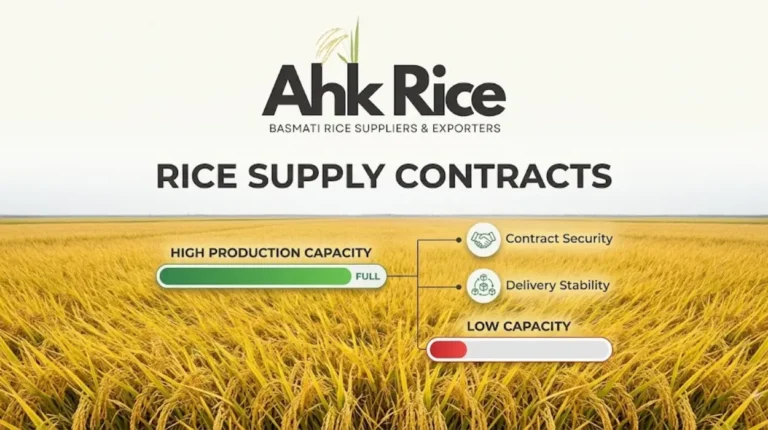
Why Is Supply Reliability Important for Northern Ireland Rice Buyers?
Supply reliability is essential because it protects stock availability, stabilises purchasing costs, supports food safety compliance, and maintains uninterrupted retail and foodservice operations. Here is why: Northern Ireland rice buyers depend on consistent import schedules, verified product quality, and documented supply chains to meet customer demand throughout the year.
Northern Ireland imports most of its rice because commercial rice cultivation does not exist within the United Kingdom. Importers, wholesalers, retailers, food manufacturers, and catering distributors depend on overseas producers to maintain regular inventory. A reliable supply chain reduces shortages, protects contractual commitments, and supports long-term business planning.
Rice buyers evaluate more than price before selecting an overseas supplier. Shipment consistency, production capacity, quality management, export documentation, and logistics performance influence purchasing decisions. Every stage affects whether rice reaches warehouses on schedule and matches agreed specifications.
Supply reliability covers the entire export process. It begins with cultivation, continues through milling and quality inspection, and ends when shipments arrive according to the agreed delivery schedule. Each stage contributes to predictable product availability.
What Does Supply Reliability Mean for Northern Ireland Rice Buyers?
Supply reliability means receiving the correct rice grade, agreed quantity, verified quality, complete documentation, and scheduled shipment every time. Reliable suppliers maintain consistent production, controlled processing, organised logistics, and documented quality systems across multiple export cycles.
Supply reliability describes the ability of an exporter to fulfil every purchase order without interruption. Buyers expect shipments to match the contract specification in every delivery. Consistency creates operational stability across the entire food supply chain.
Northern Ireland businesses purchase rice for several commercial sectors. Examples include supermarket chains, independent grocery stores, restaurants, catering companies, wholesalers, and food manufacturers. Every sector depends on continuous inventory to avoid stock shortages.
Reliable supply differs from occasional successful deliveries. Long-term consistency matters because buyers place repeated purchase orders throughout the year. Every shipment must maintain identical quality standards.
Which Rice Products Depend on Reliable Supply?
Imported Basmati rice represents one of the most important premium rice categories in Northern Ireland. Pakistani Basmati remains recognised for long grain length, aroma, and cooking performance.
Pakistan cultivates several commercial Basmati varieties for export.
- 1121 Basmati Rice
- Super Kernel Basmati Rice
- 1509 Basmati Rice
Each variety serves different commercial requirements. Supermarkets often require premium retail packaging. Restaurants frequently purchase larger foodservice packs. Food manufacturers specify consistent grain characteristics for production processes.
Where Is Pakistani Basmati Rice Grown?
Pakistani Basmati grows mainly in Punjab. Productive cultivation regions include Gujranwala, Hafizabad, Sheikhupura, Narowal, Sialkot, and surrounding districts. These regions provide fertile soil, irrigation systems, and climate conditions suitable for aromatic rice production.
Cultivation follows an annual agricultural cycle. Farmers prepare fields, transplant seedlings, irrigate crops, monitor plant health, and harvest mature paddy during the season. Each farming stage contributes to export quality.
Reliable cultivation supports reliable exports because predictable harvest volumes allow exporters to plan milling schedules and international shipments.
With the meaning of supply reliability established, the next question explains how reliable rice supply operates from farm to importer.
How Does Reliable Rice Supply Work from Farm to Northern Ireland?
Reliable rice supply follows a controlled sequence of cultivation, harvesting, milling, grading, inspection, packaging, documentation, shipping, and delivery. Every stage follows defined procedures that maintain product consistency and shipment schedules.
Rice exports depend on organised production rather than individual transactions. Each processing stage influences the final shipment.
How Is Rice Processed Step by Step?
Commercial Basmati processing follows a structured workflow.
- Clean harvested paddy.
- Dry the grain to target moisture.
- De-husk the paddy.
- Mill the rice.
- Polish the kernels where required.
- Grade by grain size.
- Sort using colour sorters.
- Inspect quality specifications.
- Package according to customer requirements.
Each processing stage removes defects and improves uniformity. Consistent procedures produce identical specifications across multiple export shipments.
How Is Quality Verified?
Quality inspection measures objective characteristics before export.
Inspection commonly includes:
- Grain length
- Moisture percentage
- Broken percentage
- Foreign matter
- Damaged kernels
- Colour consistency
- Purity
- Aroma
Laboratories verify these measurements before shipment. Buyers receive documented specifications instead of relying on visual appearance alone.
How Does Export Logistics Maintain Supply?
Reliable logistics connects production with international buyers through scheduled transport operations.
Exporters prepare commercial documentation before dispatch.
Required export documents commonly include:
- Commercial Invoice
- Packing List
- Bill of Lading
- Certificate of Origin
- Phytosanitary Certificate
- Fumigation Certificate
- Health Certificate where required
Shipping companies load containers according to vessel schedules. Customs authorities clear export documentation before international transport begins. Import procedures continue after arrival in the United Kingdom.
Reliable logistics reduces delivery interruptions because every shipment follows documented procedures from loading through customs clearance.
After understanding the export process, the next section explains the components that determine whether supply remains dependable over many years.
What Components Create Long-Term Supply Reliability?
Production capacity, quality control, inventory management, export documentation, certifications, logistics planning, and communication form the foundation of reliable international rice supply. These components support consistent deliveries across changing market conditions.
Reliable supply results from interconnected operational systems rather than one successful shipment. Every component strengthens overall export performance.
Production Capacity
Production capacity determines how much rice an exporter processes during each season. Large-scale milling operations handle multiple purchase orders while maintaining processing schedules.
Consistent capacity supports repeat contracts because production planning matches expected customer demand.
Quality Management
Quality management establishes repeatable inspection procedures. Every shipment undergoes testing before export. Standardised inspection reduces variation between deliveries.
Objective measurements replace subjective judgement during procurement.
Inventory Planning
Inventory planning balances harvested stock with future shipment schedules. Exporters organise storage according to crop availability and contractual commitments.
Planned inventory prevents avoidable shipping delays during peak export periods.
International Certifications
Certifications verify that processing follows recognised food safety and quality management systems.
Common certifications include:
- ISO 22000 Food Safety Management
- HACCP
- BRCGS Food Safety
- Halal Certification
- Phytosanitary Compliance
- Country-specific import requirements
Certification demonstrates documented operational procedures instead of informal production practices.
Communication Systems
Clear communication supports reliable procurement. Buyers receive shipment schedules, production updates, documentation status, and logistics information throughout the export cycle.
Documented communication reduces misunderstandings during international trade.
Understanding these operational components provides the foundation for examining the practical business advantages of dependable rice supply.
What Benefits Does Supply Reliability Provide to Northern Ireland Rice Buyers?
Reliable rice supply delivers continuous stock availability, predictable purchasing schedules, consistent product quality, lower operational risk, and stronger customer satisfaction. These measurable advantages help importers, wholesalers, retailers, and foodservice businesses maintain stable operations throughout the year.
Supply reliability affects every stage of the commercial food chain. Consistent deliveries prevent inventory shortages that interrupt sales and distribution. Businesses maintain planned stock levels instead of reacting to unexpected supply disruptions.
How Does Reliable Supply Improve Inventory Management?
Inventory management controls product availability between incoming shipments and customer demand. Reliable exporters dispatch orders according to agreed schedules. Buyers organise warehouse space, distribution planning, and replenishment without emergency purchasing.
Stable inventory reduces unnecessary storage costs. Excess stock occupies warehouse capacity, while insufficient stock creates lost sales opportunities. Reliable deliveries maintain balanced inventory throughout the year.
Retail chains benefit from continuous shelf availability. Foodservice distributors maintain uninterrupted deliveries to restaurants, hotels, hospitals, and educational institutions. Food manufacturers sustain production schedules without raw material shortages.
How Does Supply Reliability Protect Product Consistency?
Product consistency means every shipment matches the agreed specification. Buyers expect identical grain length, moisture level, colour, aroma, and broken percentage across multiple deliveries.
Consistent quality protects customer confidence. Retail customers expect the same cooking performance every time they purchase a preferred rice brand. Restaurants require uniform grain expansion and appearance across every menu item.
Objective quality testing supports consistency through measurable specifications instead of visual judgement alone. Standard inspection procedures verify each shipment before export.
How Does Reliable Supply Support Financial Planning?
Reliable supply improves purchasing predictability. Importers prepare procurement schedules according to expected shipment dates rather than responding to unexpected shortages.
Planned procurement reduces emergency freight costs. Scheduled purchasing also supports warehouse planning and distribution efficiency.
Businesses allocate working capital more effectively because shipment schedules remain organised throughout the procurement cycle.
How Does Reliable Supply Strengthen Customer Relationships?
Consistent product availability builds customer trust. Supermarkets maintain stocked shelves. Catering suppliers fulfil scheduled deliveries. Food manufacturers complete production without interruption.
Long-term customer relationships depend on dependable supply performance. Businesses value suppliers that consistently meet agreed delivery schedules.
Reliable supply creates operational confidence across the entire commercial chain.
The operational benefits explain why buyers prioritise reliable suppliers. The next section examines where dependable rice supply creates the greatest value across different industries.
Where Do Northern Ireland Rice Buyers Use Reliable Rice Supply?
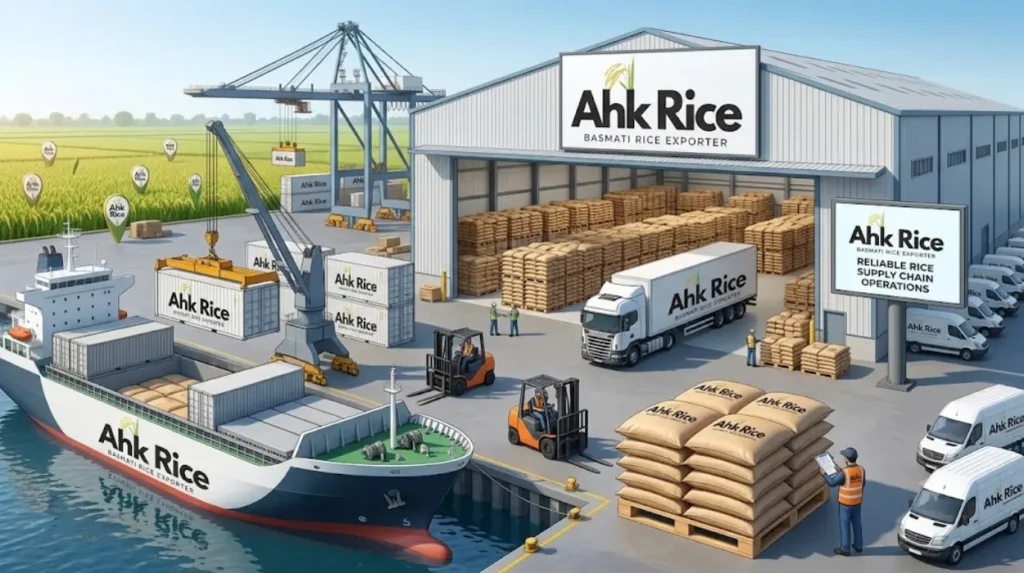
Reliable rice supply supports retail distribution, wholesale trade, food manufacturing, hospitality, public catering, and private-label packaging. Every commercial sector depends on uninterrupted product availability to maintain normal business operations.
Northern Ireland imports rice for many different industries. Each sector requires consistent deliveries because customer demand continues throughout the year.
Retail Supermarkets
Retail supermarkets purchase packaged rice for daily consumer sales. Continuous supply prevents empty shelves and protects customer confidence.
Consumers expect familiar rice varieties throughout every season. Reliable procurement supports that expectation by maintaining regular inventory.
Wholesale Distribution
Wholesale businesses purchase large quantities before supplying independent retailers, restaurants, and regional distributors.
Wholesale operations depend on scheduled container arrivals because delayed shipments affect multiple downstream customers simultaneously.
Reliable procurement enables wholesalers to maintain organised distribution schedules across Northern Ireland.
Restaurants and Hospitality
Restaurants prepare rice every day for diverse cuisines. Examples include Indian restaurants, Pakistani restaurants, Middle Eastern restaurants, and international hotels.
Foodservice kitchens require consistent cooking performance. Uniform grain length and predictable cooking characteristics support standardised menu preparation.
Reliable supply prevents ingredient shortages during busy trading periods.
Food Manufacturing
Food manufacturers use rice in packaged meals, frozen products, ready-to-cook foods, and processed food ingredients.
Manufacturing lines operate according to production schedules. Reliable ingredient availability maintains continuous manufacturing efficiency.
Public Sector Catering
Schools, hospitals, universities, and institutional kitchens purchase rice through structured procurement systems.
Public catering organisations require dependable deliveries because meal production follows fixed service schedules throughout the year.
Reliable supply supports uninterrupted food preparation across public institutions.
Understanding these commercial applications prepares the discussion of common misconceptions surrounding supply reliability in international rice procurement.
What Misconceptions Exist About Rice Supply Reliability?
Supply reliability does not depend only on low prices, large harvests, or shipment frequency. Reliable supply results from documented production systems, verified quality control, organised logistics, and consistent operational performance across repeated export cycles.
Many procurement decisions focus heavily on price. Price represents only one element of international purchasing. Long-term supply performance depends on operational capability rather than individual quotations.
Is the Lowest Price Always the Best Choice?
Lower pricing does not define reliable supply. Export capability depends on production planning, quality systems, logistics coordination, and documented export procedures.
Buyers evaluate overall supply performance rather than selecting suppliers solely by purchase price.
Does a Large Harvest Guarantee Reliable Supply?
Harvest volume alone does not guarantee dependable exports. Rice still passes through drying, milling, grading, inspection, packaging, documentation, and shipping before reaching international buyers.
Organised processing determines whether harvested rice becomes export-ready according to agreed schedules.
Does One Successful Shipment Prove Reliability?
One completed shipment demonstrates successful execution of one order. Long-term reliability requires consistent performance across repeated deliveries over multiple purchasing cycles.
Importers evaluate sustained operational consistency instead of isolated transactions.
Are Certifications Alone Enough?
Food safety certifications verify documented management systems. Certifications do not replace production planning, logistics management, inventory control, or communication.
Reliable supply combines certification with operational execution.
Why Do Buyers Review Supply History?
Historical performance provides measurable evidence of consistency. Buyers examine shipment punctuality, specification compliance, documentation accuracy, and communication standards across previous export contracts.
Reliable procurement decisions rely on documented performance rather than assumptions.
Reliable supply becomes easier to evaluate after understanding these misconceptions. The next stage of the buyer journey explores how importers measure supplier performance over time.
Suggested Internal Link Placement (MOFU)
Insert the MOFU article naturally in the final paragraph above using this contextual anchor:
“Businesses seeking a deeper understanding of supplier assessment can continue by exploring how experienced importers measure long-term export performance and consistency throughout international procurement relationships.”
Link this sentence to:
How Do Importers Evaluate Long-Term Rice Supply Performance?
Frequently Asked Questions
What is supply reliability in rice imports?
Supply reliability means receiving the correct rice grade, agreed quantity, verified quality, complete documentation, and scheduled shipment consistently across every purchase order.
Why do Northern Ireland rice buyers prioritise reliable suppliers?
Reliable suppliers reduce stock shortages, maintain consistent product quality, support inventory planning, and improve operational efficiency throughout the supply chain.
Which Pakistani Basmati varieties are commonly imported?
The most recognised export varieties include 1121 Basmati Rice, Super Kernel Basmati Rice, and 1509 Basmati Rice, each serving different retail and foodservice requirements.
Which certifications support reliable rice exports?
Common certifications include ISO 22000, HACCP, BRCGS Food Safety, Halal Certification, and Phytosanitary Certification, depending on market requirements.
What factors determine long-term rice supply performance?
Production capacity, quality inspection, inventory planning, documentation accuracy, logistics management, communication, and consistent shipment performance determine long-term supply reliability.