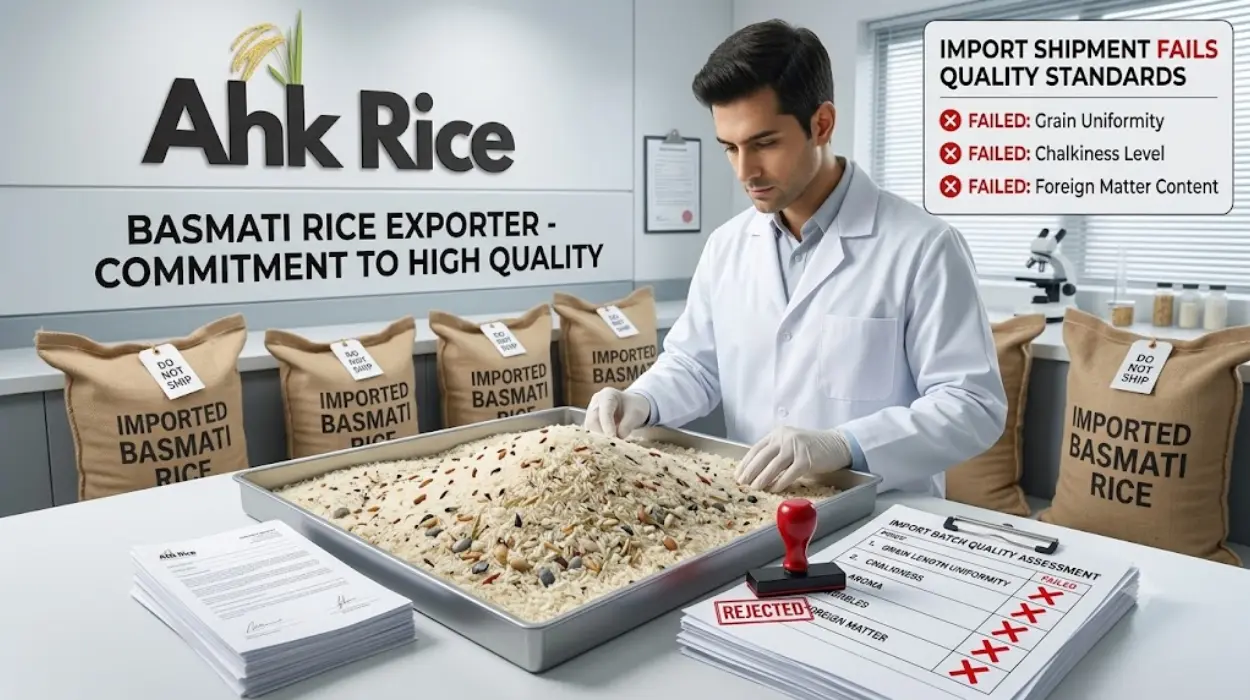
What Happens When Imported Basmati Rice Fails Quality Standards?
Imported Basmati rice that fails quality standards faces inspection holds, corrective actions, claims, price adjustments, reprocessing requirements, or shipment rejection. Here is why: importing countries verify compliance through laboratory testing, physical inspection, and certification checks before rice enters commercial distribution.
International rice trade depends on quality consistency. Governments, importers, retailers, and food manufacturers require rice to meet documented specifications. Basmati rice follows strict standards related to grain length, moisture content, purity, broken percentage, foreign matter, pesticide residues, and food safety compliance.
When a shipment does not meet the agreed specifications, commercial and regulatory consequences follow immediately. Understanding the process helps importers, distributors, and food businesses manage risks and maintain supply chain reliability.
What Are Quality Standards for Imported Basmati Rice?
Quality standards define grain specifications, food safety limits, certification requirements, and contractual obligations that imported rice must satisfy before commercial acceptance.
Basmati rice quality standards are measurable requirements used during inspection and trade transactions. These standards establish objective criteria that exporters and importers use to evaluate product conformity.
International buyers typically assess:
- Grain length
- Moisture content
- Broken percentage
- Foreign matter
- Chalky grains
- Damaged kernels
- Color consistency
- Aroma retention
- Purity percentage
- Packaging integrity
Government agencies also test food safety parameters. These include pesticide residues, heavy metals, mycotoxins, and microbiological contamination.
Major importing markets include Saudi Arabia, United Arab Emirates, United Kingdom, Canada, United States, Australia, Qatar, Kuwait, and Oman. These countries apply different inspection procedures while maintaining strict food safety requirements.
Quality verification forms the foundation of international rice trade. Understanding those standards leads directly to understanding how inspections occur.
How Does Imported Basmati Rice Inspection Work?
Inspection follows a structured process involving documentation review, sample collection, laboratory testing, physical examination, and compliance verification.
Import authorities inspect rice before market release. Inspection begins with document verification and continues through laboratory analysis.
What Documents Are Reviewed?
Import officials verify:
- Certificate of Origin
- Phytosanitary Certificate
- Fumigation Certificate
- Health Certificate
- Packing List
- Commercial Invoice
- Bill of Lading
- Laboratory Test Reports
Documentation establishes product identity and regulatory compliance before physical testing begins.
What Physical Checks Are Performed?
Inspectors examine visible characteristics. They inspect grain size, appearance, color, cleanliness, packaging condition, and labeling accuracy.
Sampling follows standardized procedures. Inspectors collect representative samples from multiple bags or containers. Random sampling prevents biased results.
What Laboratory Tests Are Conducted?
Laboratories test:
- Moisture percentage
- Broken grain ratio
- Purity percentage
- Pesticide residues
- Heavy metals
- Microbiological contamination
- Adulteration indicators
Laboratory analysis provides objective evidence of compliance. These results determine shipment acceptance or rejection.
With inspection procedures established, the next question concerns the reasons shipments fail.
Why Does Imported Basmati Rice Fail Quality Standards?
Moisture issues, contamination, excessive broken grains, specification mismatches, labeling errors, and food safety violations account for most quality failures.
Quality failures occur when rice does not match contractual or regulatory requirements.
Excessive Moisture Content
Moisture affects storage stability and shelf life. Most importers require moisture levels around 12–14%, depending on contract specifications.
Higher moisture accelerates mold growth and grain deterioration. Import authorities often reject shipments exceeding established limits.
High Percentage of Broken Rice
Broken grain percentages influence market value and product classification.
A premium Basmati specification differs significantly from an economy-grade specification. Contract violations occur when actual results exceed agreed broken percentages.
Presence of Foreign Matter
Foreign matter includes stones, husks, dust, metal fragments, and plant residues.
Quality inspectors classify foreign matter as a serious compliance issue because it directly impacts food safety and consumer acceptance.
Chemical Residue Violations
Pesticide residues receive strict regulatory scrutiny.
European and North American markets enforce maximum residue limits. Laboratory findings above permitted levels trigger immediate compliance actions.
Packaging and Labeling Problems
Packaging failures damage product integrity.
Incorrect labeling, missing origin information, inaccurate weight declarations, or damaged bags can cause regulatory holds and commercial disputes.
These failure causes explain why shipments encounter problems. The next issue concerns what happens after failure is confirmed.
What Happens After Imported Basmati Rice Fails Inspection?
Authorities place shipments on hold, require corrective action, negotiate commercial claims, or order rejection depending on the severity of non-compliance.
Regulatory response depends on the nature of the violation.
Administrative Hold
Administrative holds prevent distribution.
Importers cannot release rice into the market until authorities complete investigations and approve corrective measures.
Additional Testing
Authorities often require secondary testing.
Independent laboratories verify results before final decisions. Additional testing reduces the risk of false findings.
Reprocessing Requirements
Reprocessing addresses certain quality defects.
Importers can:
- Reclean the rice
- Resort the grains
- Repackage the shipment
- Remove foreign matter
- Improve grading consistency
Reprocessing applies only when regulations permit corrective action.
Shipment Rejection
Severe violations result in rejection.
Rejected shipments remain under customs control. Authorities prohibit market distribution until final resolution.
Inspection outcomes determine the next stage of commercial action. Understanding those actions helps explain the economic consequences.
How Do Quality Failures Affect Importers and Exporters?
Quality failures increase costs, delay delivery schedules, reduce profitability, and create contractual disputes between trading partners.
Financial consequences begin immediately after non-compliance findings.
Increased Inspection Costs
Additional laboratory testing creates unexpected expenses.
Importers pay storage fees, demurrage charges, handling costs, and testing expenses while shipments remain under review.
Supply Chain Delays
Delayed shipments disrupt inventory planning.
Food manufacturers, distributors, wholesalers, and retailers depend on predictable delivery schedules. Delays create operational inefficiencies.
Contractual Claims
Commercial contracts define quality obligations.
Importers submit claims when delivered rice differs from agreed specifications. Claims commonly involve:
- Price reductions
- Quantity adjustments
- Replacement shipments
- Compensation payments
Readers seeking a deeper understanding of dispute management can review the article discussing structured procedures for resolving quantity and quality disagreements between rice trading partners.
Reputation Impact
Repeated quality failures damage supplier credibility.
Importers prioritize suppliers with documented quality consistency and reliable certification records.
Commercial consequences highlight the importance of preventive quality systems. The next section explains those systems.
How Is Basmati Rice Quality Controlled Before Export?

Quality control combines farm management, processing inspections, laboratory testing, certification audits, and shipment verification before export.
Quality assurance begins long before international shipping.
How Is Rice Cultivated and Harvested?
Basmati rice grows primarily in Punjab regions of Pakistan and India.
Farmers cultivate rice using controlled irrigation practices. Harvesting occurs after grain maturity reaches export requirements.
How Is Rice Processed?
Rice processing follows defined stages:
- Clean the paddy
- Dry the grain
- Dehusk the rice
- Polish the kernels
- Grade by size
- Sort by color
- Inspect quality
- Test laboratory samples
- Pack for shipment
Each step removes defects and improves consistency.
How Is Quality Verified?
Quality teams inspect every production batch.
Verification procedures include:
- Moisture testing
- Length measurement
- Purity analysis
- Broken grain evaluation
- Residue screening
- Packaging inspection
These controls reduce export risks and improve compliance rates.
Quality control systems explain prevention. The next question addresses certifications that support compliance.
Which Certifications Apply to Imported Basmati Rice?
ISO, HACCP, BRCGS, FSSC 22000, phytosanitary certifications, and country-specific compliance documents support international rice trade.
Certification provides documented evidence of quality management and food safety controls.
Food Safety Certifications
Common certifications include:
- HACCP
- ISO 22000
- FSSC 22000
- BRCGS
These systems establish preventive controls throughout production and processing.
Export Compliance Documents
Export shipments frequently require:
- Phytosanitary Certificates
- Health Certificates
- Fumigation Certificates
- Certificate of Origin
Government authorities review these documents during customs clearance.
Market-Specific Requirements
European markets emphasize residue compliance.
Gulf markets focus on specification consistency.
North American markets prioritize traceability and food safety documentation.
Certification frameworks support quality assurance across international supply chains. Understanding certifications helps address common misconceptions.
What Are Common Misconceptions About Basmati Rice Quality Failures?
Quality failures do not automatically indicate unsafe rice, total shipment loss, or supplier negligence. Inspection findings require technical evaluation.
Several misconceptions create confusion in international rice trade.
Does Every Failure Lead to Rejection?
No. Many failures involve specification deviations rather than safety risks.
Authorities often permit corrective action when regulations allow reprocessing.
Does Certification Eliminate Risk?
Certification reduces risk but does not eliminate it.
Transportation conditions, storage practices, and handling errors affect shipment quality after production.
Is Quality Failure Always an Exporter Problem?
Supply chain conditions influence outcomes.
Storage humidity, container conditions, port delays, and logistics handling affect rice quality during transit.
Understanding these misconceptions provides a complete view of quality compliance and international rice trade management.
Imported Basmati rice fails quality standards when laboratory results, physical inspections, or certification reviews reveal non-compliance. Authorities respond through shipment holds, corrective actions, reprocessing requirements, claims procedures, or rejection decisions. Strong cultivation practices, controlled processing, documented certifications, and comprehensive testing systems reduce failure rates and support reliable international trade.
Frequently Asked Questions
What is the most common reason imported Basmati rice fails inspection?
Excessive moisture content, high broken grain percentages, and foreign matter contamination are the most common inspection failures.
Can rejected Basmati rice be reprocessed?
Yes. Authorities often permit recleaning, resorting, or repackaging when regulations allow corrective action.
Who performs quality testing on imported rice?
Government inspection agencies, accredited laboratories, customs authorities, and independent testing organizations perform quality assessments.
What happens to rejected rice shipments?
Rejected shipments can be reprocessed, re-exported, returned to origin, or disposed of according to local regulations.
Which countries have strict Basmati rice import standards?
The European Union, United Kingdom, United States, Canada, Australia, Saudi Arabia, and the United Arab Emirates maintain strict import standards.
How do importers reduce quality dispute risks?
Importers reduce risks through pre-shipment inspections, third-party testing, detailed specifications, and documented quality agreements.