Health Benefits of 1121 Basmati Rice You Should Know
1121 Basmati rice provides carbohydrates, plant protein, minerals, and a distinctive long-grain structure. Its moderate glycemic response also makes basmati different from many higher-GI rice types. Here is why: research identifies Pakistani basmati as a medium-GI rice, while cooking method changes its glycemic response.
1121 is an extra-long aromatic rice variety known for exceptional grain elongation after cooking. Research on Pusa Basmati 1121 records milled grain length around 9 mm and cooked kernel length up to 22 mm.
What Is 1121 Basmati Rice?
1121 Basmati rice is an extra-long aromatic rice variety with slender grains, strong elongation, and high cooked volume expansion. It belongs to the Basmati rice category and is cultivated across recognized Basmati-growing areas.
Pakistan’s Punjab province is a major Basmati-growing region. The Punjab Agriculture Department lists PK 1121 Aromatic among rice varieties cultivated across Punjab, with a fine aromatic classification.
The 1121 designation identifies a specific rice variety. It does not describe a cooking method or packaging format. Exporters process 1121 into forms such as white rice, steam rice, and Sella rice.
1121 develops its most visible characteristic during cooking. Its slender kernel elongates substantially while retaining a relatively narrow shape. Research reports a cooked kernel length reaching 22 mm and a kernel elongation ratio of about 2.5.
This structure creates large cooked portions from a measured quantity of raw rice. The characteristic also supports dishes where separated, elongated grains are important, such as biryani, pulao, and rice-based meals.
With the variety defined, its nutritional characteristics explain where its health benefits come from.
How Does 1121 Basmati Rice Affect the Body?
1121 Basmati rice supplies digestible carbohydrate for energy while its basmati characteristics produce a moderate glycemic response under tested cooking conditions. Portion size and preparation method still determine the overall dietary effect.
Carbohydrates represent the main energy-producing component of white rice. The body digests rice starch into glucose, which enters the bloodstream and supports cellular energy production.
Basmati rice has a lower glycemic response than many rice varieties. One clinical study found Pakistani basmati had a GI of 64 after rice-cooker preparation and 56 after microwave preparation. Both results fell within the study’s medium-GI classification.
The glycemic index measures blood-glucose response after consuming a standardized amount of digestible carbohydrate. It does not measure the total nutritional quality of a complete meal.
Cooking changes starch gelatinization and therefore changes glycemic response. Research on basmati rice also found that refrigeration after cooking increased resistant starch under specific preparation conditions.
A balanced meal changes the practical effect further. Pairing rice with vegetables, legumes, lean protein, or other fiber-containing foods changes the carbohydrate composition of the complete meal.
The way 1121 is processed also determines which nutritional components remain in the finished grain.
What Nutrients Does 1121 Basmati Rice Provide?
1121 Basmati rice provides starch-based energy, plant protein, small amounts of dietary fiber, and naturally occurring minerals. Brown processing retains more bran components than fully polished white rice.
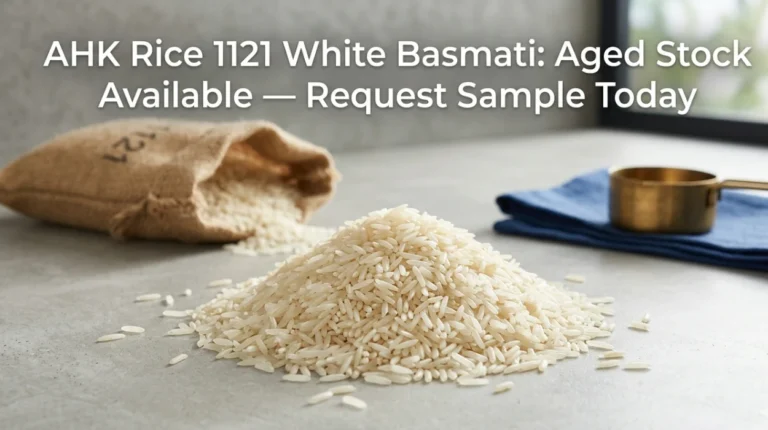
White 1121 undergoes dehusking and polishing. These steps remove the outer husk and bran layers and produce the familiar white appearance.
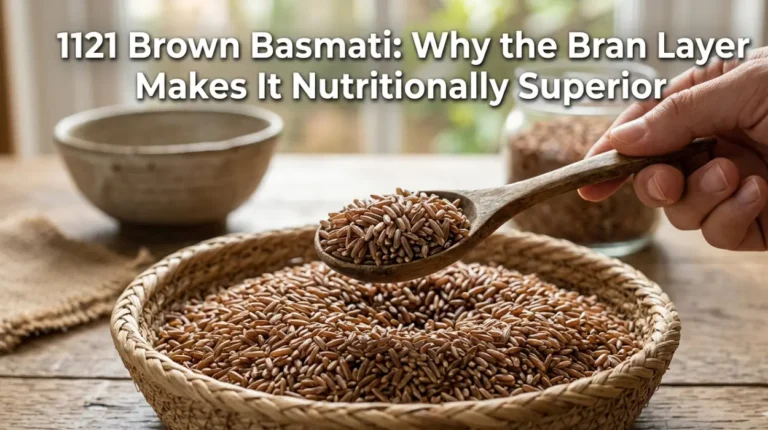
Brown Basmati retains the bran layer after dehusking. This produces higher dietary fiber and preserves more components concentrated in the outer grain layers.
The nutritional difference matters when comparing polished and less-polished rice. White 1121 primarily supplies digestible starch, while brown forms provide additional fiber from retained bran.
Protein also contributes to the nutritional profile. Rice protein is plant-based and complements protein from foods such as lentils, beans, eggs, meat, fish, and dairy.
Minerals occur naturally in rice, although quantities vary with variety, soil conditions, milling, fortification, and preparation. A nutrition label gives the accurate mineral content for a specific commercial product.
Understanding these components makes the principal health benefits easier to evaluate.
What Are the Main Health Benefits of 1121 Basmati Rice?
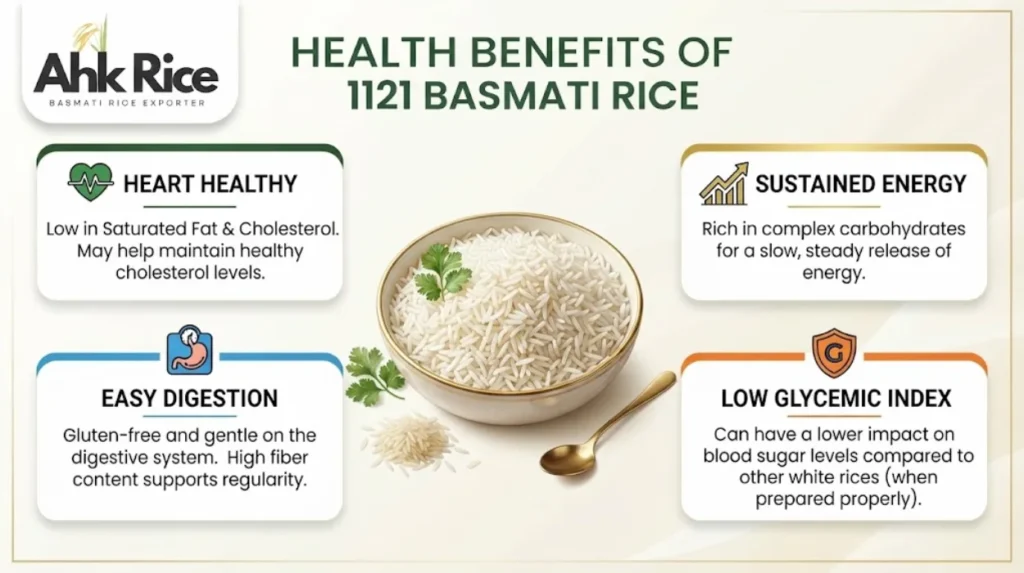
The main benefits include sustained carbohydrate energy, a moderate glycemic response, easy meal integration, and useful portion expansion after cooking. These benefits describe dietary properties rather than disease treatments.
Supports Energy Requirements
Carbohydrate is the primary macronutrient in 1121 Basmati rice. The digestive system breaks starch into glucose, providing energy for daily physical and metabolic activity.
A serving also works well as a carbohydrate base for meals containing vegetables and protein. This makes 1121 suitable for lunch, dinner, and active lifestyles.
Provides a Moderate Glycemic Option
Basmati rice has documented GI values within low-to-medium or medium ranges depending on the product and cooking method. One study recorded Pakistani basmati at 56 after microwave preparation and 64 after rice-cooker preparation.
These values do not mean every 1121 product has exactly the same GI. Rice variety, processing, cooking, serving size, and meal composition influence the final response.
Supports Portion Expansion
1121 has exceptional cooking elongation. Research records a kernel elongation ratio of approximately 2.5 and cooked kernel lengths reaching 22 mm.
This physical expansion creates a large cooked serving from a smaller dry volume. The characteristic is particularly useful for meals where rice forms the central carbohydrate component.
Fits Balanced Meals
1121 works with vegetables, legumes, poultry, seafood, meat, and dairy-based foods. This versatility allows consumers to build meals containing carbohydrates, protein, fiber, and micronutrients.
Basmati therefore functions as one component of a balanced diet rather than a standalone health food.
These benefits become clearer when the rice is matched with suitable preparation and meal applications.
How Should 1121 Basmati Rice Be Used in a Healthy Diet?
Use 1121 as the carbohydrate portion of balanced meals containing vegetables, protein, and fiber-rich foods. Choose appropriate serving sizes and cooking methods rather than treating rice as a therapeutic food.
Biryani and Pulao
Biryani and pulao combine rice with vegetables, meat, poultry, legumes, herbs, and spices. 1121’s long cooked grain helps maintain separated grains in these dishes.
The nutritional effect depends on the entire recipe. Added oils, fats, sauces, and portion sizes can increase total calories substantially.
Everyday Rice Meals
1121 also works as a simple boiled rice served with vegetables, lentils, grilled protein, or curry. This preparation gives greater control over added fat and salt.
A balanced plate distributes food across several groups. Rice supplies carbohydrate, while vegetables and protein provide complementary nutrients.
Meal Preparation
Cooked basmati can form part of planned meals throughout the week. Proper food handling and refrigeration remain important for cooked rice.
Research has examined refrigerated basmati and found changes in resistant starch after specific cooking and storage conditions.
The practical use of 1121 therefore depends on both the rice and the complete meal.
What Are the Different Processing Forms of 1121 Basmati Rice?
1121 Basmati rice is commonly processed as white, steam, and Sella rice, with each form using different heat and drying treatments. Processing changes texture, appearance, cooking behavior, and storage characteristics.
1121 White Rice
1121 White is milled and polished to produce a clean, white kernel. The process removes the husk, bran, and germ layers.
This form produces a familiar fluffy texture after cooking. It suits retail packs, restaurants, catering, biryani, and household consumption.
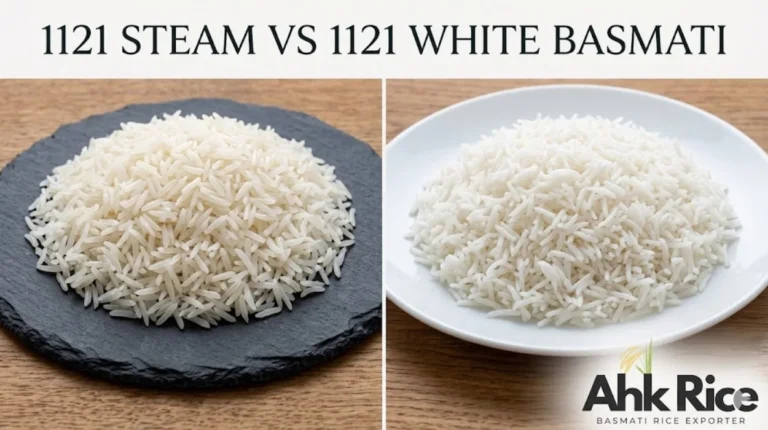
1121 Steam Rice
1121 Steam receives controlled steaming during processing before drying and milling stages are completed. The treatment changes the physical characteristics of the grain.
Steam processing produces firm cooked grains with strong visual appeal. Buyers commonly specify steam rice according to broken percentage, grain length, moisture, purity, and cooking performance.
1121 Sella Rice
1121 Sella is parboiled before the grain is dried and milled. Parboiling transfers components from the outer layers toward the kernel and changes the finished grain structure.
Golden Sella receives additional processing that creates its characteristic golden appearance. White Sella retains a lighter appearance.
These forms demonstrate why the word “1121” alone does not describe the complete product specification.
Which Markets Import Pakistani 1121 Basmati Rice?
Pakistani Basmati rice serves international retail, foodservice, catering, and wholesale markets, with major demand across the Middle East, Europe, and other importing regions. Market demand varies by product specification.
Pakistan exported 808,643 metric tons of Basmati rice during FY2024-25, generating approximately US$830.57 million in export value. The average Basmati export value was US$1,027.11 per metric ton. (source: Rice Exporters Association of Pakistan, FY2024-25)
Current trade data identifies markets including the United States, United Kingdom, Italy, Saudi Arabia, and Australia among major Basmati destinations or importing markets. (source: Volza export data, 2026)
GCC markets commonly use long-grain Basmati for biryani and catering. European markets also use Basmati across retail and foodservice channels.
Import specifications differ by destination. Buyers evaluate grain length, broken percentage, moisture, foreign matter, packaging, labeling, certificates, and cooking performance.
With market demand established, quality specifications determine how buyers distinguish one 1121 shipment from another.
What Quality Specifications Matter When Buying 1121 Basmati Rice?
Buyers evaluate grain length, broken percentage, moisture, purity, aroma, processing type, and cooking performance before accepting 1121 Basmati rice. These specifications define commercial quality more precisely than variety name alone.
| Specification | What Buyers Evaluate |
|---|---|
| Grain length | Raw and cooked kernel dimensions |
| Broken percentage | Quantity of broken kernels |
| Moisture | Moisture percentage at shipment |
| Purity | Variety integrity and foreign matter |
| Aroma | Characteristic Basmati fragrance |
| Processing | White, Steam, Sella, or Golden Sella |
| Cooking quality | Elongation, separation, texture, and volume |
A commercial specification therefore connects variety with measurable quality attributes. Two 1121 shipments can differ substantially in processing, grade, broken percentage, and cooking performance.
Buyers should review laboratory results and inspection documentation alongside physical samples. Quality testing verifies measurable characteristics before commercial procurement.
These specifications also help explain why the highest-priced 1121 grade does not automatically provide the same margin for every buyer.
For a deeper commercial comparison of grades, continue with which 1121 rice grade gives the highest profit margin: [Insert Link to MOFU Article].
What Are Common Misconceptions About 1121 Basmati Rice?
1121 Basmati rice is not a medical treatment, and its long grain does not automatically mean superior nutrition. Health value depends on processing, serving size, preparation, and the rest of the meal.
One misconception is that long grain means low carbohydrate. Grain length describes physical dimensions, not carbohydrate concentration.
Another misconception is that all Basmati rice has the same GI. Research shows that cooking method changes measured GI values.
A third misconception is that white 1121 and brown Basmati have identical nutritional profiles. Brown Basmati retains bran and therefore contains more fiber than fully polished white rice.
A fourth misconception is that 1121 itself provides disease prevention. Current evidence supports describing Basmati through nutritional and glycemic characteristics, not as a treatment for diabetes, heart disease, or other medical conditions.
A final misconception is that “1121” alone guarantees premium quality. Commercial quality requires measurable specifications such as grain length, broken percentage, moisture, purity, processing type, and cooking performance.
With these misconceptions clarified, the health profile of 1121 is best understood through its measurable nutritional and processing characteristics.
Frequently Asked Questions About 1121 Basmati Rice
Is 1121 Basmati rice healthy?
1121 Basmati rice can form part of a balanced diet. It supplies carbohydrate for energy and has a documented moderate glycemic response in tested Pakistani basmati samples.
Is 1121 Basmati rice good for diabetes?
Basmati rice has a lower glycemic response than many high-GI rice varieties. However, serving size, preparation, and the rest of the meal affect blood-glucose response.
Does 1121 Basmati rice contain fiber?
White 1121 contains less fiber than brown Basmati because milling removes the bran layer. Brown Basmati retains more bran and therefore provides more dietary fiber.
What makes 1121 Basmati different?
1121 is known for its extra-long slender kernel and exceptional cooking elongation. Research records cooked kernel lengths reaching approximately 22 mm.
Is 1121 Basmati rice available as Sella?
Yes. 1121 is processed into several commercial forms, including White, Steam, Sella, and Golden Sella. Each form uses different processing conditions and produces different cooking characteristics.
Where is Pakistani 1121 Basmati rice grown?
Pakistan’s Punjab province is a major Basmati-growing region. The Punjab Agriculture Department identifies PK 1121 Aromatic as a fine aromatic variety cultivated a