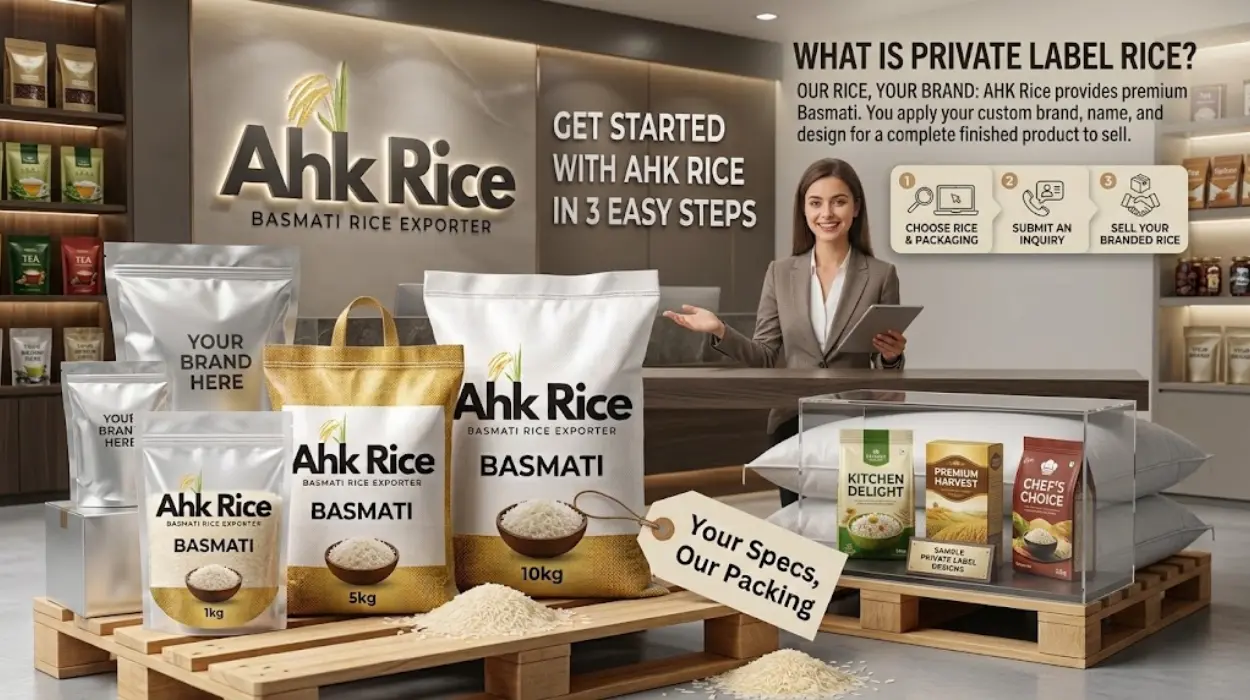
What Is Private Label Basmati Rice and How Does It Work?
Private label Basmati rice is rice sold under a retailer’s, distributor’s, restaurant group’s, or food brand’s own name rather than the rice processor’s brand. The buyer selects the rice variety, quality specifications, packaging design, label information, and order quantity. The supplier then processes, packs, and prepares the rice for sale under the buyer’s brand.
Pakistan is a major source of aromatic Basmati rice, particularly from Punjab. Export varieties include 1121, Super Kernel, and 1509 Basmati rice. Each variety has different grain characteristics, cooking performance, and commercial applications. Private labelling connects these rice varieties with businesses that want to establish their own identity in retail, wholesale, and foodservice markets.
The process involves more than printing a logo on a bag. Buyers define product specifications, approve samples, prepare compliant packaging, confirm minimum order quantities (MOQs), and coordinate production and shipment. For brands entering the United Arab Emirates (UAE), Arabic labelling, destination-market requirements, and import documentation are important parts of the process.
What Is Private Label Basmati Rice?
Private label Basmati rice is rice packaged and marketed under a buyer’s brand name, with product specifications and packaging agreed between the buyer and supplier. The supplier manages the agreed sourcing, processing, packing, and export preparation, while the buyer develops the brand identity.
Unlike branded rice sold under a miller’s established name, private label rice gives the purchasing business control over how the product appears to customers. A supermarket, food importer, or regional distributor can sell Pakistani Basmati rice under its own registered or approved brand.
The product still depends on the actual rice variety and grade. A private label does not automatically mean premium quality. Grain length, broken percentage, moisture, aroma, purity, and processing method determine the product’s characteristics. These specifications need to be agreed before production.
For example, a UAE grocery chain can launch a 5 kg bag of 1121 Steam Basmati rice under its house brand. A wholesale distributor can instead commission 25 kg bags of Super Kernel rice for restaurants and catering businesses.
How Does the Private Label Basmati Rice Process Work?
The private label process follows 7 stages: buyer requirements, variety selection, sample approval, packaging design, label compliance, production and inspection, and shipment. Each stage establishes a documented decision before the next stage proceeds, reducing specification errors and packaging changes.
1. Define the product requirements
The buyer identifies the target market, customer segment, pack size, quality grade, and expected order volume. A premium supermarket product requires a different presentation from a bulk foodservice product.
2. Select the rice variety and grade
The supplier identifies a suitable variety and agrees on measurable specifications. These include grain length, broken percentage, moisture, crop or lot information where applicable, and processing type.
3. Request and approve a sample
The buyer evaluates the rice before confirming the commercial order. Testing can cover raw grain appearance, aroma, cooking performance, elongation, texture, and broken grains. Written sample approval establishes the agreed reference for production.
4. Develop the packaging design
The buyer supplies brand assets, pack sizes, design files, and required product information. The packaging supplier confirms material suitability, printing method, dimensions, and production requirements.
5. Review label compliance
The label is checked against the destination market’s applicable rules. For UAE imports, this includes relevant Arabic information, product identification, net weight, origin, dates, storage instructions, and importer details where required.
6. Process, pack, and inspect
The rice passes through the agreed milling, cleaning, grading, sorting, and packing stages. Quality checks verify that the finished product matches the contract and approved sample.
7. Prepare export documents and shipment
The supplier coordinates the required commercial and shipping documents, packing details, and dispatch arrangements. The importer handles its applicable import approvals and destination-side procedures.
What Are the Key Components of Private Label Basmati Rice?
Private label Basmati rice has 6 main components: rice variety, quality grade, processing method, packaging, label information, and export documentation. These components define the product’s identity, physical quality, retail presentation, traceability, and readiness for the intended destination market.
Rice variety and quality grade
The variety establishes the rice’s basic grain characteristics. The commercial grade specifies acceptable quality limits, such as broken grains, moisture, foreign matter, and grain-length requirements.
Processing method
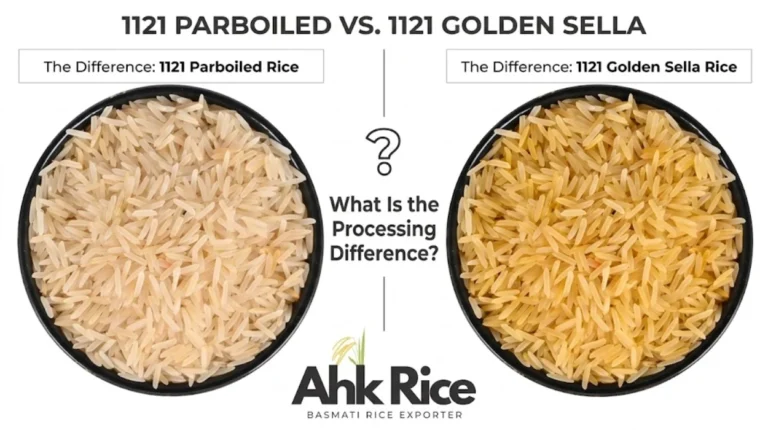
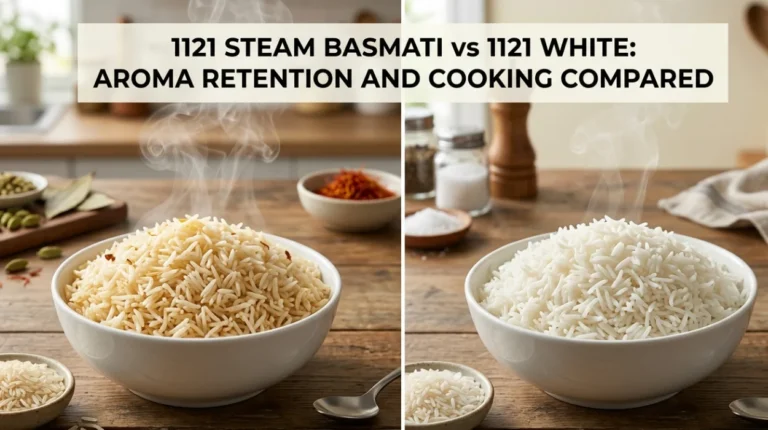
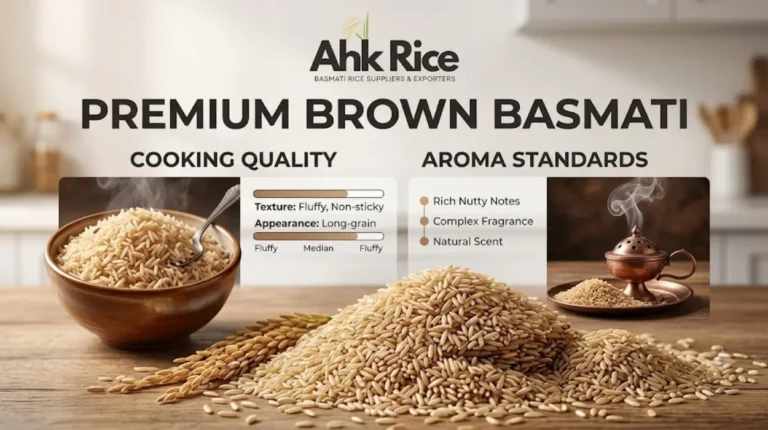
Processing determines the rice’s finish and cooking characteristics. Common options include raw white rice, Steam Basmati, Golden Sella, Creamy Sella, and brown rice.
Packaging material and size
Packaging protects the rice during handling, storage, and transportation. Retail packs commonly include 1 kg, 2 kg, 5 kg, and 10 kg bags. Wholesale formats include 20 kg and 25 kg bags, while 50 kg bags serve some bulk markets.
The appropriate size depends on the customer, distribution channel, and packaging specification. Materials include woven polypropylene, laminated bags, and other food-contact packaging selected for the intended use.
Brand identity and label information
The label identifies the product and the business selling it. It also communicates essential information, including net weight, country of origin, storage instructions, and other details required by the destination market.
Documentation and traceability
Export documentation connects the commercial order with its product and shipment details. Relevant records include the commercial invoice, packing list, certificate of origin where required, and applicable health or phytosanitary documents. The exact documents depend on the product, shipment, and importing country’s rules.
Which Pakistani Basmati Rice Varieties Are Used for Private Labelling?
Three important Pakistani Basmati options are 1121, Super Kernel, and 1509. They differ in grain length, aroma, cooking performance, processing options, and price positioning, allowing private label brands to target premium retail, mainstream grocery, wholesale, and foodservice customers.
1121 Basmati
Known for extra-long grains and pronounced cooked-grain elongation. It suits premium retail packaging, speciality grocery brands, and catering markets seeking a premium presentation.
Super Kernel Basmati
A traditional aromatic Pakistani variety. It serves retail and wholesale brands seeking recognizable Basmati characteristics and a range of packaging formats.
1509 Basmati
A shorter-maturity variety with long grains. It provides another option for brands balancing grain appearance, cooking performance, and target selling price.
The final selection depends on the contracted grade rather than the variety name alone. Two products sold under different private labels can use the same variety but have different grain-length tolerances, broken percentages, packaging, and quality requirements.
Processing also creates distinct product options. Steam rice undergoes steaming during processing, while parboiled rice undergoes hydrothermal treatment before milling. Golden Sella and Creamy Sella are common parboiled presentations with different grain colours and finishing characteristics. Brown rice retains more of the bran layer than fully milled white rice.
Brands should specify the exact variety and processing type on the purchase order. This prevents confusion between raw, steamed, and parboiled products.
What Are the Benefits of Private Label Basmati Rice?
Private labelling gives businesses control over brand presentation, pack sizes, product positioning, and customer targeting. It also allows retailers and distributors to build a recognisable product range without operating their own rice mill, provided they establish clear specifications and supplier controls.
The main benefits relate to commercial identity and product planning.
- Brand ownership: The business builds recognition through its own name, design, and product range.
- Product differentiation: Buyers select specific varieties, grades, processing methods, and pack sizes for different customer groups.
- Flexible positioning: A brand can offer premium 1121 rice alongside mainstream Super Kernel or 1509 products.
- Packaging consistency: Standardised designs help maintain a consistent appearance across retail outlets and distribution channels.
- Scalable sourcing: Businesses can expand their range as demand grows, subject to supplier capacity, MOQs, and packaging arrangements.
Private labelling does not automatically reduce purchasing costs or guarantee higher margins. Custom printing, packaging setup, quality testing, inventory, freight, customs charges, and marketing all affect the final economics. A commercial comparison should consider the complete landed cost rather than the rice price alone.
Who Uses Private Label Basmati Rice?
Private label Basmati rice serves supermarkets, independent retailers, food importers, wholesalers, restaurant suppliers, and hospitality businesses. Each buyer chooses different grades and pack formats according to customer demand, storage capacity, turnover, distribution arrangements, and the intended selling price.
Supermarkets and grocery retailers
Retail chains use private labels to establish a consistent house-brand range. Typical products include 1 kg and 5 kg bags for households, with premium varieties positioned separately from everyday products.
Importers and regional distributors
Importers use private labelling to supply multiple retailers under their own brands or customers’ specifications. They coordinate supplier selection, market registration, inventory, and distribution.
Restaurants and catering suppliers
Foodservice distributors generally prioritise cooking consistency, bulk pack sizes, and predictable availability. Products include 20 kg and 25 kg bags for restaurant kitchens, catering operations, and institutional food preparation.
Online grocery businesses
E-commerce retailers need packaging that communicates the variety, weight, origin, and cooking characteristics clearly. Durable outer packaging and accurate product listings also support fulfilment and customer expectations.
The same rice variety can serve several channels. However, pack design, grade tolerances, order volumes, and commercial terms need to match the intended customer.
What Packaging Options Are Available for Private Label Rice?
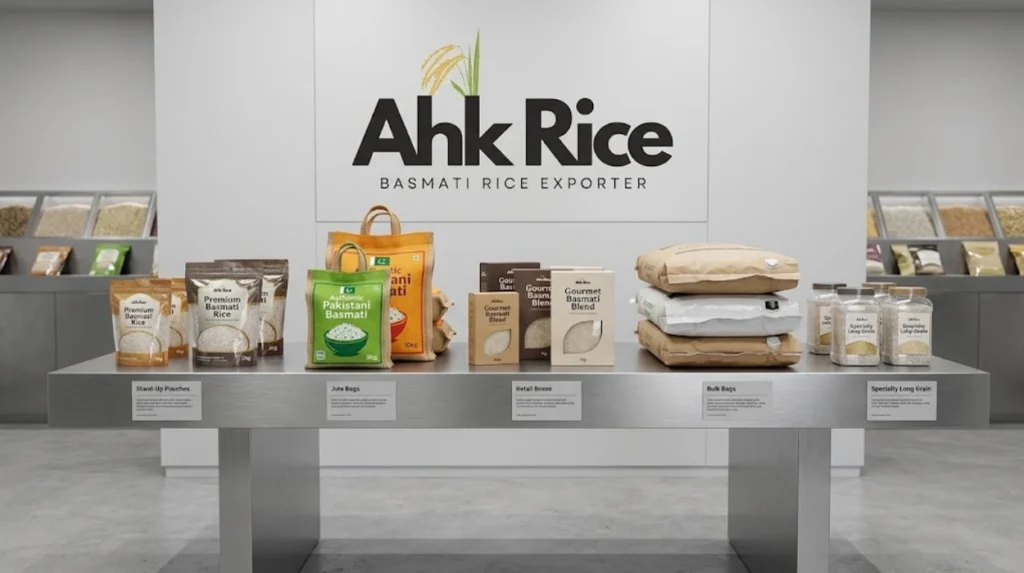
Private label rice packaging ranges from small consumer bags to bulk commercial sacks. Buyers select pack weight, material, printing method, closure, and artwork according to retail requirements, transport conditions, food-contact suitability, storage needs, and the regulations of the destination market.
Common packaging formats include:
- Retail bags: 1 kg, 2 kg, 5 kg, and 10 kg packs for household consumption.
- Wholesale bags: 20 kg, 25 kg, and 50 kg formats for distributors and commercial kitchens.
- Printed woven bags: Woven polypropylene bags, sometimes laminated, for durable handling and branded presentation.
- Flexible laminated packs: Printed packaging designed for consumer-facing presentation, subject to material suitability and supplier capabilities.
- Bulk transport packaging: Larger commercial formats for specific distribution arrangements and buyer requirements.
Packaging artwork normally includes the brand logo, product name, rice variety, net weight, country of origin, storage instructions, and legally required information. Additional claims, such as grain length, cooking performance, or quality grade, need to be accurate and supported by the product specification.
Before printing, the buyer approves the artwork, dimensions, material, colours, and label text. Changes after printing begins can increase costs and delay production. The packaging specification should therefore be confirmed before the supplier orders printed materials.
What Arabic Labelling Requirements Apply to Private Label Rice in the UAE?
Private label Basmati rice imported into the UAE must meet applicable food-labelling and import requirements. Arabic information is an important part of compliant retail packaging, and the importer must verify the required particulars, product registration, and approval procedures before commercial distribution.
The exact requirements depend on the product and applicable UAE rules. Retail packaging generally needs relevant particulars such as:
- Product name and description.
- Net weight in an accepted unit.
- Country of origin.
- Manufacturer or packer details, as applicable.
- Production and expiry or best-before dates, according to applicable rules.
- Storage instructions where required.
- Batch or lot identification where required.
- Importer information and any other prescribed particulars.
Arabic text must accurately communicate the relevant product information. Some packaging uses Arabic and English together to serve local consumers and international retail channels. The importer should confirm whether bilingual artwork, a permitted supplementary label, or another approved format applies to the specific product.
The business responsible for importing the rice should verify label acceptability with the relevant UAE authorities and registration channels before printing. A supplier’s experience with export packaging does not replace the importer’s responsibility to confirm local compliance.
Which Certifications and Documents Apply to Private Label Basmati Rice?
Private label rice shipments require documentation based on product characteristics, origin, destination rules, and contractual terms. Relevant records include commercial documents, origin evidence, and applicable food-safety or phytosanitary documents, while certifications depend on buyer requirements and the actual scope of certification.
The principal document categories are:
| Document or certification | Purpose |
|---|---|
| Commercial invoice | Records the goods, price, buyer, seller, and commercial transaction. |
| Packing list | Identifies package counts, weights, and shipment packing details. |
| Certificate of origin | Establishes origin when required by the destination or trade procedure. |
| Phytosanitary certificate | Provides plant-health certification when required by the importing authority. |
| Food-safety or laboratory reports | Provide evidence of specified quality or contaminant test results. |
| HACCP or ISO 22000 | Demonstrates food-safety management arrangements within the certified scope. |
| Halal certification | Applies when required by the buyer, product circumstances, or relevant market rules. |
These documents are not interchangeable. A laboratory report is not a management-system certification, and a certificate of origin does not prove that a product meets every food-safety requirement.
Buyers should verify the issuing authority, validity, scope, and acceptance criteria for each required document. Certification claims on a private label should reflect the actual product and supply-chain arrangements rather than assumptions about the supplier.
What Are the Common Problems and Misconceptions in Private Label Rice?
Private label projects commonly face specification mismatches, label errors, unexpected packaging costs, unclear MOQs, and production delays. Most problems arise when buyers approve the brand design before finalising the rice grade, packaging specification, compliance requirements, and commercial production schedule.
Assuming every Basmati grade is identical
The Basmati name does not define every measurable quality attribute. Grain length, broken percentage, moisture, aroma, and processing method vary. Buyers need written tolerances rather than relying on a variety name or general product description.
Treating the logo as the complete label
A logo creates brand identity, but it does not satisfy all food-labelling obligations. Product details, dates, origin, weight, and required Arabic information need separate review.
Ignoring minimum order quantities
MOQ can refer to the rice order, printed packaging order, or both. A packaging supplier can require a separate minimum print run even when the rice supplier accepts a smaller order.
Assuming a sample guarantees the full shipment
A sample establishes a reference, but production controls still matter. Buyers should agree on inspection methods, acceptance limits, and the procedure for handling nonconforming goods.
Expecting a fixed lead time for every order
Production time depends on stock availability, packaging design approval, printing, order size, testing, and shipment arrangements. Custom-printed bags add steps that do not apply to standard packaging.
The best control is a written purchase specification connecting the approved sample, finished rice, label artwork, packaging material, inspection criteria, and shipment documents.
How Do MOQ and Lead Time Affect Private Label Basmati Rice?
Minimum order quantity determines the smallest acceptable production or packaging order, while lead time measures the time needed to complete agreed activities. Both depend on rice availability, printed-bag quantities, artwork approval, production capacity, inspections, and shipment arrangements.
MOQ is not a universal quantity. A supplier holding suitable rice in stock can have different order requirements from a supplier arranging new production and custom-printed packaging. The packaging printer can also impose its own minimum quantity.
Lead time should be divided into stages: sample approval, artwork preparation, label review, packaging production, rice processing, inspection, and dispatch. Ocean transit and destination clearance are separate stages and should not be confused with production lead time.
For example, a UAE distributor ordering 5 kg retail bags needs to confirm both the rice order quantity and the number of printed bags. If artwork approval is delayed, packaging production and dispatch planning also move back.
For a detailed explanation of artwork, Arabic labelling, minimum quantities, and production schedules, buyers can follow a dedicated guide to the private label Basmati rice process for UAE brands. The final destination-market requirements and supplier terms determine the actual schedule.
How Can Businesses Evaluate a Private Label Basmati Rice Supplier?
Businesses should evaluate private label suppliers against 6 criteria: rice specifications, sample consistency, processing capability, packaging quality, compliance documentation, and shipment coordination. Comparing these criteria before placing an order helps buyers assess whether a supplier can meet the brand’s commercial and quality requirements.
Use the following checklist when comparing suppliers:
- Product specifications: Confirm variety, grain-length range, broken percentage, moisture, processing type, and other agreed limits.
- Sample approval: Keep a documented sample reference and define how finished production will be checked.
- Processing capability: Confirm cleaning, grading, sorting, milling, and packing arrangements.
- Packaging control: Review bag material, print quality, dimensions, closures, and final artwork.
- Documentation: Identify the certificates, test reports, and export documents required for the destination.
- Commercial and logistics terms: Confirm MOQ, payment terms, Incoterms, inspection arrangements, production schedule, and shipment responsibilities.
AHK Rice operates from Punjab, Pakistan, and supplies Pakistani Basmati varieties including 1121, Super Kernel, and 1509 to international markets. These varieties offer different options for private label programmes, but buyers should select the final grade according to their own specifications and destination requirements.
A clear specification sheet, approved sample, compliant artwork, and agreed inspection procedure provide the foundation for a controlled private label order.
Frequently Asked Questions About Private Label Basmati Rice
Private label Basmati rice raises practical questions about ownership, varieties, packaging, minimum quantities, labelling, and certifications. The answers depend on the selected rice specification, supplier arrangements, and destination-market rules, especially when the finished product is intended for UAE retail distribution.
What is the difference between private label and branded Basmati rice?
Private label rice is sold under the retailer’s or distributor’s brand. Conventional branded rice is marketed under the established brand of its producer or another brand owner. Both products can use the same rice variety.
Which Pakistani Basmati varieties are suitable for private labelling?
Common options include 1121, Super Kernel, and 1509. The choice depends on grain characteristics, aroma, processing method, target price, and customer expectations. The variety name alone does not establish the complete quality grade.
Can private label Basmati rice be sold in the UAE?
Yes. The product must satisfy applicable UAE food-import, registration, labelling, and safety requirements. The importer should confirm the applicable approvals and Arabic labelling requirements before production of the final packaging.
What is the minimum order quantity for private label rice?
There is no single MOQ for every supplier. The minimum depends on rice availability, order specifications, packaging material, printing method, and production arrangements. Buyers should confirm separate minimums for rice and printed bags.
How long does private label rice production take?
The schedule depends on sample approval, artwork review, packaging manufacture, rice availability, production, and inspection. Ocean freight and customs clearance add separate time. Buyers should request a stage-by-stage schedule rather than relying on one universal lead-time estimate.
What information should private label rice packaging contain?
Packaging generally identifies the product, net weight, origin, and other applicable particulars. Required dates, storage instructions, business details, and Arabic information depend on the destination’s rules and the specific product.