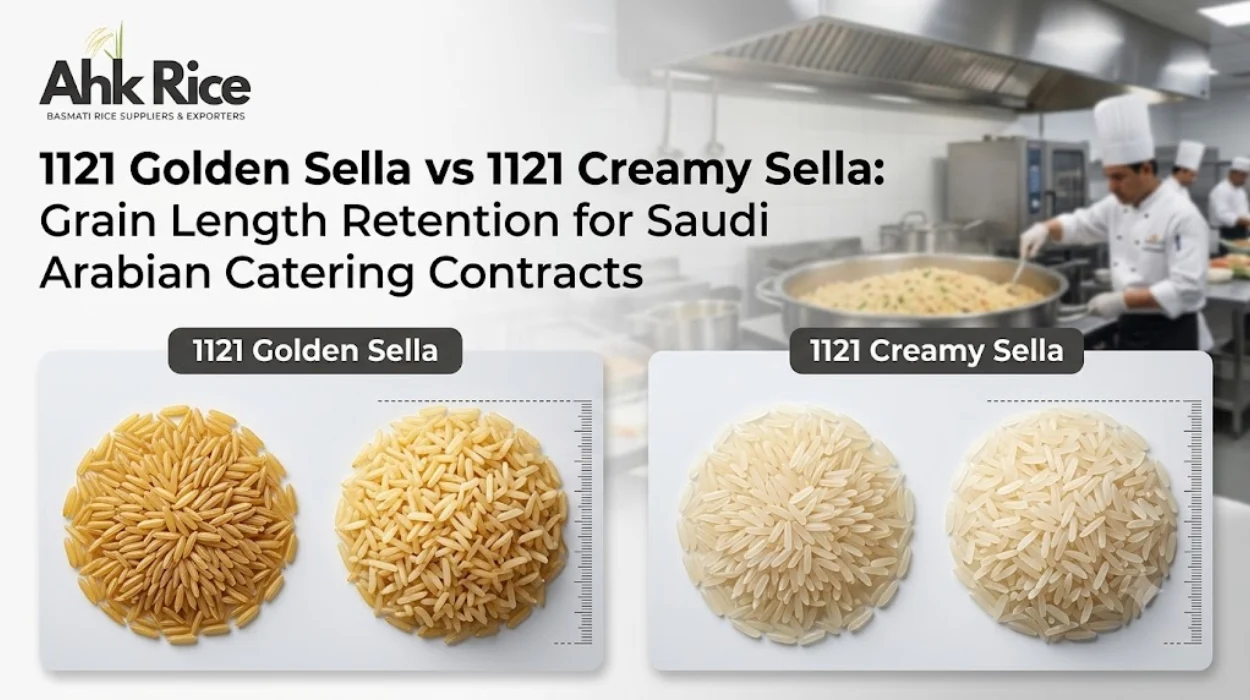
1121 Golden Sella vs 1121 Creamy Sella: Grain Length Retention for Saudi Arabian Catering Contracts
1121 Golden Sella delivers stronger grain length retention during extended holding, bulk cooking, and buffet service, while 1121 Creamy Sella provides a lighter appearance and softer presentation preferred by selected premium hospitality buyers. Here is why: Golden Sella undergoes a higher-temperature parboiling process that strengthens grain structure, reducing breakage and preserving elongation during large-scale catering operations.
Saudi Arabian food service buyers increasingly evaluate grain retention rather than raw grain length alone. Catering contracts depend on appearance after cooking, buffet holding performance, serving consistency, and storage stability. Buyers comparing 1121 Golden Sella and 1121 Creamy Sella must understand how processing methods affect grain behavior throughout the food service supply chain. Companies researching grain performance standards can first review broader procurement factors discussed in our guide about why grain appearance and elongation influence commercial food service purchasing decisions.
1121 Golden Sella and 1121 Creamy Sella are both premium Pakistani Basmati rice grades exported by AHK Rice. Both originate from the 1121 Basmati variety cultivated in Punjab, Pakistan. Both deliver extra-long grain characteristics exceeding international premium Basmati standards. The primary difference comes from the parboiling process, resulting color profile, cooked texture, and grain retention performance.
What Are the Available Solutions for Saudi Arabian Catering Buyers?
1121 Golden Sella, 1121 Creamy Sella, and specification-based procurement programs provide the primary solutions for catering contracts requiring consistent grain appearance, cooking stability, storage performance, and serving quality across institutional kitchens, hospitality groups, airline catering facilities, and large banquet operations.
Saudi Arabian catering buyers generally evaluate rice through operational requirements rather than consumer retail preferences. Large-volume kitchens require consistency across thousands of servings daily.
1121 Golden Sella
1121 Golden Sella is a parboiled Basmati rice processed under controlled heat and steam conditions before milling. The process creates a golden hue and strengthens grain structure.
Golden Sella performs well in high-volume cooking environments because the grain maintains separation after cooking. The strengthened structure reduces breakage during washing, soaking, cooking, transport, and service.
Golden Sella remains one of the most imported premium Basmati specifications across Gulf food service channels because it combines visual appeal with operational reliability.
1121 Creamy Sella
1121 Creamy Sella undergoes a specialized parboiling process designed to preserve a lighter cream-colored appearance.
Creamy Sella appeals to buyers seeking a more refined presentation. Premium restaurants and hospitality operators often select Creamy Sella because the cooked rice resembles traditional white Basmati while maintaining the advantages of parboiling.
Creamy Sella provides strong elongation and visual attractiveness while delivering a softer texture profile than Golden Sella.
Specification Comparison Table
| Attribute | 1121 Golden Sella | 1121 Creamy Sella |
|---|---|---|
| Raw Grain Length | 8.30–8.50 mm | 8.30–8.50 mm |
| Cooked Length | 18–22 mm | 18–21 mm |
| Grain Retention | Excellent | Very Good |
| Breakage Resistance | Higher | Moderate to High |
| Color | Golden Yellow | Creamy White |
| Texture | Firm | Soft-Firm |
| Shelf Life | 24 Months | 18–24 Months |
Saudi catering contracts usually prioritize grain retention because cooked presentation directly affects customer perception. With the available solutions defined, the next question is how both specifications perform when compared directly.
How Do 1121 Golden Sella and 1121 Creamy Sella Compare for Grain Length Retention?
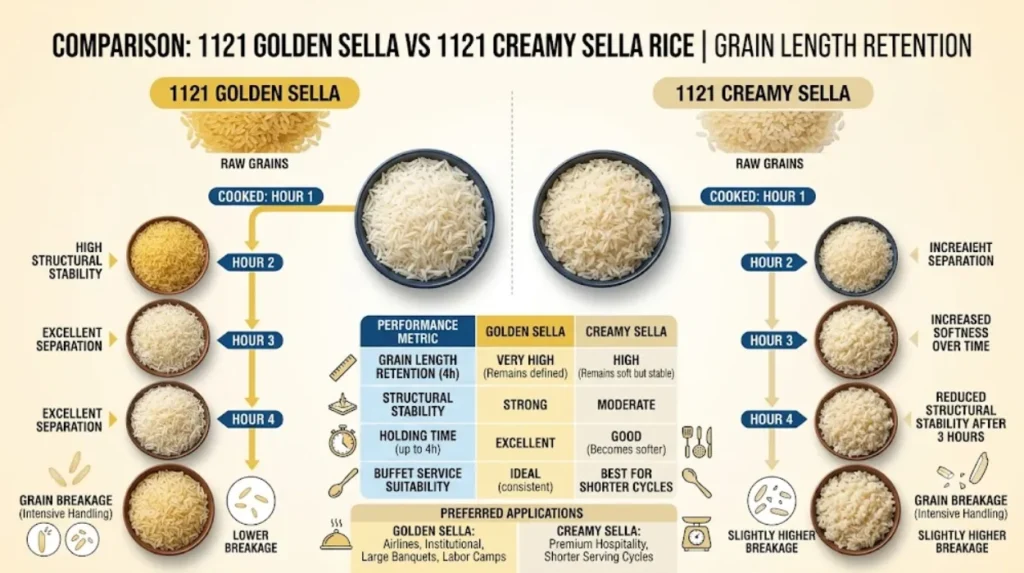
1121 Golden Sella retains cooked grain structure more effectively during prolonged holding periods, while 1121 Creamy Sella delivers comparable elongation but slightly lower structural stability during extended buffet service and repeated handling.
Grain length retention refers to the ability of rice to maintain its elongated appearance after cooking, holding, transportation, and serving.
Grain Structure Performance
Golden Sella develops a stronger starch matrix during parboiling. The strengthened structure protects grains from cracking during large-batch cooking.
Creamy Sella retains excellent elongation characteristics but experiences slightly higher softness during extended holding periods exceeding three hours.
Holding Time Comparison
Saudi catering operations frequently prepare rice before service begins. Holding performance therefore becomes a procurement consideration.
| Performance Metric | Golden Sella | Creamy Sella |
|---|---|---|
| 1 Hour Holding | Excellent | Excellent |
| 2 Hour Holding | Excellent | Very Good |
| 4 Hour Holding | Very Good | Good |
| Buffet Service Stability | High | Moderate-High |
| Grain Separation | High | Very Good |
Golden Sella maintains grain separation longer. In large banquet operations serving more than 1,000 guests, Golden Sella preserves presentation consistency across multiple service rounds.
Creamy Sella performs strongly in premium hospitality environments where serving cycles are shorter and presentation requirements emphasize lighter color rather than maximum holding durability.
Breakage Performance
Golden Sella experiences lower grain breakage during cooking because the parboiling process hardens the grain.
Creamy Sella provides excellent quality but generally records slightly higher breakage under intensive commercial kitchen handling.
For airline catering operations, institutional kitchens, and labor camps, Golden Sella often becomes the preferred specification because operational consistency outweighs appearance preferences.
With grain retention differences established, the next consideration is how regional buyers across Saudi Arabia and neighboring markets select specifications.
Which Markets Prefer Golden Sella and Which Markets Prefer Creamy Sella?
Central Gulf institutional buyers typically prefer Golden Sella, while premium hospitality and restaurant segments increasingly select Creamy Sella when presentation and lighter grain color influence customer perception.
Different regions evaluate rice according to consumer expectations and food service requirements.
Saudi Arabia
Saudi Arabia remains one of the largest import destinations for Pakistani Basmati rice (source: Pakistan Bureau of Statistics, FY2025-26).
Institutional catering buyers frequently prefer Golden Sella because bulk cooking operations require consistent grain retention.
Hotel operators, wedding caterers, and premium restaurant groups increasingly source Creamy Sella for upscale dining environments.
Gulf Cooperation Council Markets
United Arab Emirates buyers often procure both specifications depending on channel requirements.
Labor catering providers typically select Golden Sella due to durability.
Premium hospitality operators regularly select Creamy Sella because guests associate lighter rice color with luxury presentation.
The specification choice therefore depends more on operational requirements than geographic location alone. Understanding operational priorities leads directly into price evaluation.
How Does the Price Per Metric Ton Compare in 2026?
1121 Creamy Sella generally commands a moderate premium over 1121 Golden Sella, while both grades remain within the premium Pakistani Basmati category exported to Saudi Arabian food service buyers.
Pricing fluctuates according to harvest conditions, freight rates, currency movements, and contract volumes.
Average Export Price Comparison 2026
| Specification | Average Export Range (USD/MT) |
|---|---|
| 1121 Golden Sella | $1,050–1,250 |
| 1121 Creamy Sella | $1,100–1,350 |
(source: REAP export data, 2026 market observations)
Creamy Sella typically receives higher pricing because additional processing controls are required to achieve the desired color profile.
Golden Sella often produces stronger cost efficiency for large catering programs due to lower procurement cost combined with reduced cooking losses.
A Saudi catering company serving 5,000 meals daily can achieve measurable operational savings through reduced breakage and improved holding performance.
Price alone does not determine value. Storage and shelf life also influence procurement decisions. With pricing evaluated, shelf life becomes the next comparison point.
How Does Shelf Life Affect Catering Contract Performance?
1121 Golden Sella generally offers stronger long-term storage performance, while 1121 Creamy Sella maintains premium quality when stored under controlled commercial warehouse conditions for recommended periods.
Shelf life matters because Saudi food service buyers frequently import container-scale volumes.
Shelf Life Comparison
| Factor | Golden Sella | Creamy Sella |
|---|---|---|
| Recommended Shelf Life | 24 Months | 18–24 Months |
| Heat Tolerance | Higher | High |
| Warehouse Stability | Excellent | Very Good |
| Moisture Resistance | Higher | High |
| Long-Term Storage Suitability | Excellent | Very Good |
Golden Sella maintains quality longer. In non-climate-controlled storage facilities operating above 35°C, Golden Sella preserves structural characteristics effectively.
Creamy Sella performs best in managed inventory systems where stock rotation occurs regularly.
Longer shelf life reduces inventory risk and supports larger annual procurement contracts. The next question is how buyers should make a final specification decision.
Which Specification Works Best for Different Saudi Catering Contracts?
Golden Sella suits high-volume institutional operations, while Creamy Sella suits premium hospitality environments where visual presentation carries greater commercial value than maximum holding durability.
Decision Framework
| Buyer Requirement | Recommended Grade |
|---|---|
| Labor Camp Catering | 1121 Golden Sella |
| Airline Catering | 1121 Golden Sella |
| Government Food Service | 1121 Golden Sella |
| Premium Hotels | 1121 Creamy Sella |
| Wedding & Banquet Catering | 1121 Creamy Sella |
Pros of Golden Sella
- Strong grain retention.
- Lower breakage rates.
- Better buffet holding performance.
- Longer storage stability.
- Better value for high-volume operations.
Cons of Golden Sella
- Darker color profile.
- Firmer texture than Creamy Sella.
Pros of Creamy Sella
- Premium visual appearance.
- Softer texture profile.
- Strong cooked elongation.
- Preferred by luxury hospitality segments.
Cons of Creamy Sella
- Higher procurement cost.
- Slightly lower holding durability.
Saudi Arabian catering buyers should match rice specifications to operational objectives. Buyers prioritizing durability, storage, and consistency generally select Golden Sella. Buyers prioritizing premium presentation often select Creamy Sella.
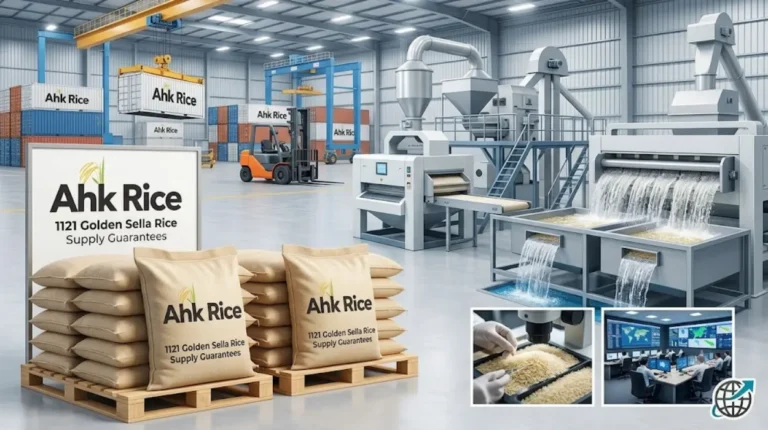
AHK Rice supplies both specifications through its end-to-end export system, including procurement, milling, grading, inspection, packaging, documentation, container loading, and international shipment services. Buyers evaluating final sourcing options can review detailed procurement considerations through AHK Rice’s guide on securing reliable bulk long-grain Basmati supply for commercial food service operations.
Golden Sella and Creamy Sella both satisfy premium Saudi catering requirements. The correct specification depends on contract volume, service model, storage conditions, and presentation expectations.
Frequently Asked Questions
What is the main difference between 1121 Golden Sella and 1121 Creamy Sella rice?
1121 Golden Sella undergoes a higher-temperature parboiling process that creates a golden color and stronger grain structure. 1121 Creamy Sella uses a specialized process that produces a lighter creamy appearance and a softer texture. Golden Sella focuses on durability, while Creamy Sella focuses on premium presentation.
Which rice grade retains grain length better during large catering events?
1121 Golden Sella retains grain length better during extended buffet service and large-scale catering operations. Its stronger grain structure reduces breakage and helps maintain grain separation for longer holding periods after cooking.
Why do Saudi Arabian catering companies often choose 1121 Golden Sella?
Saudi catering companies frequently choose 1121 Golden Sella because it performs well in bulk cooking environments. The rice maintains appearance, resists breakage, stores well in warm climates, and delivers consistent results across high-volume food service operations.
Is 1121 Creamy Sella more expensive than 1121 Golden Sella?
Yes. In most 2026 export markets, 1121 Creamy Sella commands a slightly higher price per metric ton. Additional processing controls are required to achieve its lighter color and premium appearance, which increases production costs.
Which rice grade is better for hotels and luxury restaurants in Saudi Arabia?
1121 Creamy Sella is often preferred by premium hotels, luxury restaurants, and wedding caterers because of its attractive creamy color and refined presentation. It offers excellent elongation while creating a premium dining experience for guests.