Buy Double-Sortex Pakistani Basmati Rice for Premium UAE Retail Shelves
Buying double-Sortex Pakistani Basmati rice for premium UAE retail shelves requires consistent grain appearance, verified specifications, suitable packaging, and dependable export coordination. Here is why: retail buyers need rice that meets approved quality standards across repeat orders. Understanding what Sortex cleaning means for export Basmati rice helps importers evaluate sorting quality before approving a supplier. AHK Rice supplies Pakistani Basmati varieties for international buyers seeking controlled processing, commercial packaging, and shipment planning.
Double-Sortex processing uses optical sorting equipment in two sorting passes to remove additional discoloured grains and visible foreign material. The result supports a cleaner, more uniform retail presentation. However, double sorting alone does not guarantee aroma, grain length, cooking performance, or food safety. Buyers must evaluate these attributes separately before approving a shipment.
What Is the Best Solution for Sourcing Double-Sortex Basmati Rice for UAE Retail?
The best solution is specification-led sourcing with double optical sorting, pre-shipment inspection, approved packaging, and documented quality requirements. This approach helps UAE importers reduce avoidable quality variations and maintain consistent presentation across retail batches. AHK Rice coordinates sourcing, milling, grading, sorting, packaging, and export preparation for Pakistani Basmati orders.
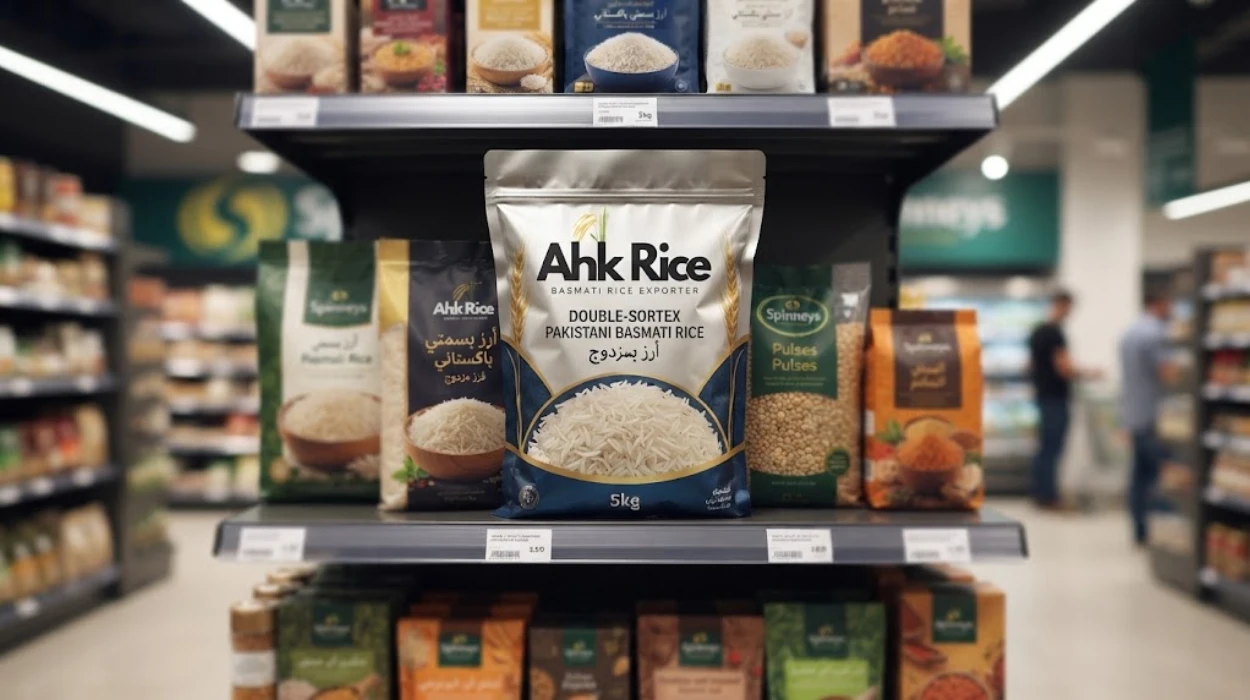
Double-Sortex rice suits premium supermarkets, specialist food retailers, private-label brands, and distributors serving customers who expect clean, attractive grains. The appropriate specification depends on the target retail price, grain variety, cooking characteristics, and customer preferences.
Which Pakistani Basmati varieties should retailers consider?
1121, Super Kernel, and 1509 Basmati offer different commercial advantages. Retailers should select a variety according to positioning, cooking requirements, and target purchase price rather than sorting technology alone.
- 1121 Basmati: A premium option valued for its long grain, characteristic aroma, and cooked-grain elongation.
- Super Kernel Basmati: A traditional aromatic variety suited to ethnic grocery retailers and premium South Asian food ranges.
- 1509 Basmati: A commercial option for buyers prioritising value, volume distribution, and competitive retail pricing.
AHK Rice helps buyers define the variety, processing format, grain specifications, broken percentage, moisture limit, and packing requirements before production approval.
What does double-Sortex processing remove?
Double optical sorting improves visible grain uniformity by identifying and rejecting selected discoloured grains and other detectable defects. Actual removal performance depends on equipment settings, incoming rice quality, and inspection criteria.
A typical production sequence includes:
- Inspect the incoming rice for visible defects and foreign material.
- Mill and grade the grain according to the agreed product specification.
- Sort the rice optically during the first pass to remove detectable defects.
- Sort the rice again to improve colour consistency and visible cleanliness.
- Verify the finished batch against approved specifications and inspection requirements.
- Pack and prepare the shipment using the buyer’s agreed packaging and export documents.
The two sorting passes do not replace laboratory testing or independent inspection. Buyers should confirm the acceptance criteria and inspection method before placing a commercial order.
Why Choose AHK Rice for Double-Sortex Pakistani Basmati Rice?
AHK Rice provides a coordinated export process covering rice sourcing, processing, quality checks, packaging, and shipment preparation. This gives UAE importers a single supplier contact for defining product requirements and coordinating the order from specification approval through dispatch.
AHK Rice operates from Punjab, Pakistan, a major Basmati-producing region. Its export offering includes 1121, Super Kernel, and 1509 varieties for different buyer requirements. Importers can specify the required grain type, processing format, sorting standard, packing size, and shipment quantity before confirming an order.
Which specifications should buyers approve?
A written product specification should define measurable acceptance limits before processing begins. This reduces disagreements about appearance, cooking performance, and shipment quality.
| Specification | What the buyer should confirm |
|---|---|
| Rice variety | 1121, Super Kernel, or 1509 |
| Sorting standard | Two optical sorting passes and agreed defect limits |
| Grain length | Required raw-grain length and measurement method |
| Broken grains | Maximum permitted broken percentage |
| Moisture | Agreed maximum moisture level |
| Appearance | Colour uniformity and acceptable visible defects |
| Packaging | Bag material, net weight, labelling, and private-label requirements |
| Inspection | Sampling method, test requirements, and approval procedure |
AHK Rice should confirm the final values against the selected grade and production batch. Buyers should not assume that every variety has identical grain length, broken percentage, or moisture specifications.
Can AHK Rice support private-label retail packaging?
Custom packaging allows UAE retailers to align rice products with their brand, pack-size strategy, and distribution requirements. Buyers can discuss retail-ready bags, printed packaging, product labelling, and larger wholesale formats during quotation.
Retail pack sizes may include 1 kg, 2 kg, 5 kg, and 10 kg, subject to production capabilities and order requirements. Larger bags may suit wholesale distribution and foodservice rather than supermarket shelves.
AHK Rice can coordinate the agreed packaging requirements as part of the export order. Importers should approve artwork, declared net weight, product description, country-of-origin information, and applicable UAE labelling requirements before printing.
For a closer evaluation of sourcing and product-selection considerations, review the comparison guide for buying double-Sortex Pakistani Basmati rice. Confirming specifications and packaging together helps prevent costly changes after production approval.
What Results Can UAE Retail Buyers Expect?
Buyers can expect improved visual consistency when double-Sortex processing is correctly configured and the incoming rice meets the required quality standard. Results should be measured through agreed inspection criteria rather than assumed from the number of sorting passes alone.
A cleaner appearance can support premium shelf presentation, especially for transparent packaging or product ranges that emphasise grain uniformity. Consistent sorting also helps buyers establish repeatable acceptance criteria for subsequent consignments.
However, optical sorting does not automatically improve aroma, cooking elongation, taste, or nutritional value. Those attributes depend on the rice variety, crop characteristics, processing conditions, storage, and cooking method.
How should buyers verify product quality?
A representative sample, written specification, and documented inspection plan provide stronger evidence than appearance alone. Buyers should test the sample before approving bulk production and retain the approved specification for future orders.
The verification process should cover:
- Visual quality: Check discoloured grains, foreign material, and overall uniformity.
- Physical specifications: Measure grain length, broken percentage, and moisture.
- Cooking performance: Evaluate aroma, texture, elongation, and grain separation using a consistent method.
- Food safety: Request relevant laboratory reports and compliance documents according to the destination requirements.
- Shipment consistency: Compare pre-shipment inspection results with the approved sample and contract.
AHK Rice and the buyer should document any tolerances for defects, moisture, and broken grains. Independent inspection can provide additional assurance when required by the purchase contract.
How Much Does Double-Sortex Pakistani Basmati Rice Cost?
The final price depends on rice variety, grade, sorting requirements, order volume, packaging, inspection, and delivery terms. A reliable quotation must define the product and shipment conditions instead of applying one price to every Basmati order.
Double-Sortex processing can add processing and quality-control costs. Premium varieties, specialised retail bags, printed packaging, and independent laboratory tests can also affect the final price.
| Cost factor | Effect on the quotation |
|---|---|
| Rice variety | Premium 1121 and aromatic grades may cost more than value-focused options |
| Grain specifications | Tighter grain-length and broken limits can affect procurement and grading |
| Double-Sortex processing | Additional sorting passes require equipment time and quality control |
| Order quantity | Larger orders may improve production and packaging efficiency |
| Packaging | Printed retail bags cost differently from standard export sacks |
| Inspection and testing | Independent checks and laboratory analysis add service costs |
| Freight and insurance | Costs depend on shipment size, routing, and agreed Incoterms |
| Destination clearance | Import duties, local charges, and customs services depend on the buyer’s arrangement |
AHK Rice should quote the requested quantity against an agreed specification and Incoterm. FOB pricing generally covers the seller’s obligations through loading at the named port. CIF pricing includes cost, insurance, and freight to the named destination port, subject to the applicable Incoterms rules.
Importers should compare quotations on the same basis. A lower FOB price may not produce the lowest landed cost after freight, insurance, clearance, handling, and local delivery are included.
How Long Does Shipping Take from Pakistan to the UAE?
Shipping time depends on vessel schedules, port operations, cargo readiness, and customs clearance. Buyers should obtain a current route-specific estimate before confirming delivery commitments to retail customers.
For planning purposes, sea freight from Karachi to UAE ports is often budgeted at approximately 3–10 days of port-to-port transit, depending on the destination, service, and routing. This is an indicative planning range, not a guaranteed schedule. Port handling, documentation, vessel availability, and customs clearance can extend the total delivery period.
A purchase order should distinguish processing lead time, time awaiting vessel departure, port-to-port transit, destination clearance, and inland delivery. These stages together determine when the goods become available for retail distribution.
AHK Rice can coordinate export preparation and shipping arrangements against the agreed order. Buyers should confirm the shipment window, required documents, destination port, and delivery responsibilities before committing to promotional dates or stock replenishment schedules.
How Can UAE Buyers Request Samples and Start an Order?
Start with a written specification, evaluate a representative sample, approve the commercial terms, and confirm the production and shipment plan. This sequence gives importers a practical basis for checking quality before committing to a larger order.
What is the sample approval process?
Sample approval should establish the exact grade, sorting standard, appearance, and cooking performance expected from the commercial shipment. The buyer should approve the sample in writing and retain its specification as the reference for production.
- Submit your requirements: State the variety, quantity, grain specifications, double-Sortex requirement, packaging, and UAE destination.
- Request a sample: Confirm sample availability, sample weight, dispatch method, and courier charges with AHK Rice.
- Pay applicable costs: Agree who covers courier freight, customs charges, and any applicable inspection or phytosanitary fees before dispatch.
- Test the sample: Assess visual cleanliness, grain measurements, moisture, aroma, and cooking performance against your retail requirements.
- Approve the specification: Record acceptable tolerances, packaging artwork, inspection arrangements, and the agreed commercial terms.
- Confirm the purchase order: Finalise quantity, payment terms, Incoterm, production schedule, shipping arrangements, and required documents.
- Inspect and dispatch: Verify the shipment against the contract, complete the agreed documentation, and coordinate loading and export.
Sample availability, weight, and charges must be confirmed before dispatch. Buyers should not assume that samples are free or that courier costs are included in a commercial quotation.
Which export documents should importers confirm?
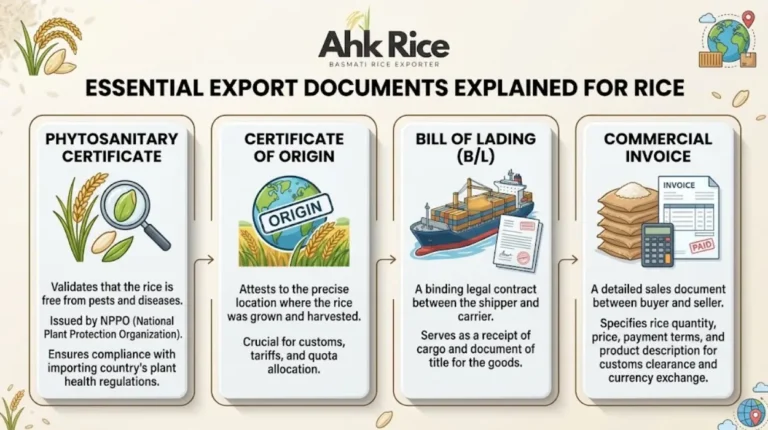
The required document set depends on the shipment, product, contractual terms, and applicable UAE import regulations. Confirm requirements with the importer’s customs broker and relevant authorities before dispatch.
Common documents may include a commercial invoice, packing list, certificate of origin, bill of lading, and applicable phytosanitary or food-safety documentation. Additional certificates or laboratory reports may be required for particular products or import procedures.
AHK Rice should coordinate the documents agreed for the transaction, while the UAE importer remains responsible for confirming local import permissions, product registration, and destination-specific requirements.
Is Double-Sortex Basmati the Right Choice for Your Retail Range?
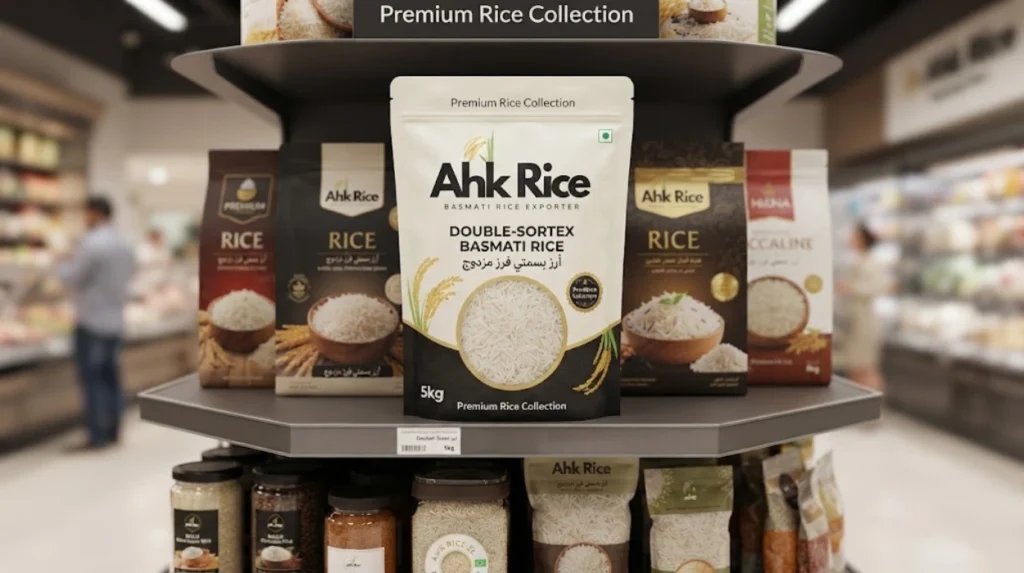
Double-Sortex Pakistani Basmati is a strong option for premium retail ranges that prioritise visible grain uniformity and defined quality standards. The purchasing decision should still account for variety, aroma, cooking performance, packaging, landed cost, and repeat-order consistency.
AHK Rice can help importers evaluate 1121, Super Kernel, and 1509 against their target customer and price segment. A written specification, approved sample, and clearly defined inspection process provide a stronger foundation than selecting rice on appearance alone.
For premium UAE supermarket shelves, define the retail positioning first, confirm the required grade, and compare complete delivered costs. Then approve the sample and agree on the shipment schedule before placing the commercial order.
To discuss your variety, double-Sortex requirements, packaging, quantity, and UAE delivery terms, request a quotation from AHK Rice.
Frequently Asked Questions
What is double-Sortex Pakistani Basmati rice?
Double-Sortex Pakistani Basmati rice passes through optical sorting equipment twice. This process removes detectable discoloured grains and selected visible defects. The final result depends on incoming grain quality and machine settings. Buyers should verify the finished batch against agreed specifications. Double sorting does not replace laboratory testing or food-safety checks.
Which Pakistani Basmati variety suits premium UAE retail shelves?
1121 Basmati suits premium ranges that emphasise long grains and aroma. Super Kernel serves buyers seeking traditional aromatic Basmati. 1509 can suit value-focused retail ranges and larger distribution volumes. The best choice depends on customer preferences, target price, and cooking requirements. Approve a sample before confirming bulk production.
How much does double-Sortex Basmati rice cost?
The price depends on variety, grade, quantity, processing, packaging, inspection, and delivery terms. Freight and insurance also affect the landed cost. Request a quotation using a defined specification and Incoterm. Compare quotations on an equivalent basis. Confirm all additional charges before approving the purchase order.
How long does shipping from Pakistan to the UAE take?
Indicative sea transit from Karachi to UAE ports can take approximately 3–10 days, depending on the route and vessel schedule. This estimate excludes some processing, waiting, clearance, and inland delivery time. Confirm current shipping schedules before booking. Allow additional time for documentation and destination procedures.
Can UAE retailers order private-label double-Sortex Basmati rice?
Retailers can discuss custom packaging and private-label requirements with AHK Rice. Confirm pack sizes, artwork, labelling, order quantities, and production lead times before approval. Request a sample to assess grain appearance and cooking performance. Agree on inspection and export documentation. Final availability and pricing depend on the order specification.