How Can English Buyers Assess a Rice Exporter’s Track Record?
English buyers should assess a rice exporter through documented export history, quality certifications, shipment consistency, customer retention, and product specifications. Here is why: exporters with verified exports, repeat buyers, stable quality records, and transparent documentation reduce procurement risk and improve supply continuity.
England imports significant volumes of Basmati rice each year for retail, wholesale, foodservice, and ethnic markets. Buyers face a common challenge. Many suppliers offer similar prices, yet performance varies significantly. A reliable assessment process helps buyers identify exporters that consistently deliver quality products, meet schedules, and comply with import requirements. Understanding rice quality standards, export procedures, and supplier verification methods provides a strong foundation. Readers seeking background knowledge can explore our guide on understanding international Basmati rice quality standards and export processes before evaluating suppliers in detail.
AHK Rice, a Punjab-based Pakistani exporter, supplies 1121, Super Kernel, and 1509 Basmati rice to more than 15 countries. AHK Rice manages cultivation sourcing, milling, grading, packaging, quality inspection, documentation, and export logistics through an integrated process. Buyers evaluating any exporter should examine these operational capabilities because they directly affect shipment performance and product consistency.
What Solutions Can English Buyers Use to Assess a Rice Exporter?
Export records, certifications, customer references, specification analysis, and shipment performance data provide the most reliable assessment framework for English buyers. These five methods reveal operational capability, quality consistency, regulatory compliance, commercial stability, and long-term supplier reliability.
Different buyers use different verification methods. Retail importers prioritize certifications and packaging compliance. Foodservice distributors focus on consistency and delivery reliability. Wholesalers often compare pricing, specifications, and shipment history.
Export History Verification
Export history measures real market performance. Buyers should request shipment records covering at least three years.
Important indicators include:
- Export destinations
- Shipment frequency
- Container volumes
- Repeat orders
- Market diversification
An exporter supplying multiple regions demonstrates operational stability. Exporters serving England, Europe, the Gulf, and North America generally maintain broader compliance systems.
Certification Verification
Certification demonstrates compliance with recognized standards.
Common certifications include:
- ISO 22000
- HACCP
- BRCGS
- Halal Certification
- Phytosanitary Compliance
Certified facilities regularly inspect, test, and verify production systems. Certification alone does not guarantee performance, but it validates process controls.
Customer Reference Checks
Customer references provide evidence of service quality.
Buyers should request:
- Importer testimonials
- Repeat customer records
- Market references
- Case studies
- Long-term account examples
Reference checks often reveal communication quality, issue resolution speed, and shipment consistency.
Product Specification Analysis
Product specifications define measurable quality standards.
Key specifications include:
- Grain length
- Moisture level
- Purity percentage
- Broken percentage
- Foreign matter
- Damaged grain percentage
- Crop year
Specification transparency reflects exporter professionalism.
Shipment Performance Review
Shipment performance measures execution capability.
Buyers should evaluate:
- On-time delivery rates
- Container loading accuracy
- Documentation accuracy
- Customs clearance success
- Claim history
These indicators reveal operational reliability beyond marketing claims.
Having established assessment solutions, the next step is comparing them to identify which methods provide the strongest evidence.
How Do Different Assessment Approaches Compare?

Shipment performance and export history provide the strongest evidence. Certifications rank second. Product specifications rank third. References provide supporting validation. Combining all methods creates the most accurate supplier evaluation.
Specification Comparison Table
| Attribute | Export History | Certifications | Customer References | Product Specifications | Shipment Performance |
|---|---|---|---|---|---|
| Reliability Indicator | High | Medium | Medium | Medium | High |
| Verification Difficulty | Medium | Low | Medium | Low | Medium |
| Fraud Resistance | High | Medium | Medium | Low | High |
| Long-Term Value | High | Medium | Medium | High | High |
| Operational Insight | High | Medium | Low | Medium | High |
| Risk Detection | High | Medium | Medium | Medium | High |
| Buyer Confidence | High | Medium | Medium | High | High |
Export history reveals sustained capability. Shipment performance confirms operational execution. Certifications validate systems. References confirm service quality. Specifications define product consistency.
Price Per MT Comparison by Supplier Category
Different supplier categories often command different price levels.
| Supplier Type | Typical Premium vs Market Average |
|---|---|
| New Exporter | Base Price |
| Regional Exporter | +$20–40/MT |
| Established Exporter | +$40–80/MT |
| Multi-Market Exporter | +$60–120/MT |
Higher prices often reflect stronger compliance systems, better processing technology, and lower risk exposure.
Shelf Life Comparison by Processing Type
Shelf life affects importer inventory planning.
| Rice Type | Typical Shelf Life |
|---|---|
| White Basmati | 12–18 Months |
| Steam Basmati | 18–24 Months |
| Golden Sella Basmati | 24 Months |
| Creamy Sella Basmati | 24 Months |
Golden Sella lasts longer than White Rice. In warm warehouse environments, Golden Sella maintains quality for extended periods. Steam rice performs better than White rice during long storage cycles. Foodservice distributors often select Sella grades for inventory flexibility.
With comparison factors established, buyers must identify which approach fits their specific procurement objectives.
Which Assessment Method Works Best for Different Buyer Types?
Retail buyers benefit most from certification audits. Foodservice distributors benefit from shipment performance analysis. Wholesalers benefit from export history review. Private-label buyers require all assessment methods simultaneously.
Retail Importers
Retail importers prioritize compliance.
Critical evaluation factors include:
- Food safety certification
- Packaging standards
- Label compliance
- Product consistency
- Consumer protection requirements
Certification audits provide the strongest assurance.
Foodservice Distributors
Foodservice distributors prioritize continuity.
Critical evaluation factors include:
- Consistent grain quality
- Reliable shipping schedules
- Stable pricing
- Large-volume capability
- Inventory planning support
Shipment performance provides the strongest indicator.
Wholesale Traders
Wholesale traders prioritize commercial stability.
Critical evaluation factors include:
- Export history
- Market reach
- Supply capacity
- Pricing consistency
- Product range
Export records provide the strongest evidence.
Private Label Buyers
Private label buyers face the highest risk.
Critical evaluation factors include:
- Brand protection
- Packaging customization
- Quality consistency
- Regulatory compliance
- Long-term capacity
Private label procurement requires full supplier evaluation.
Different buyer categories require different verification priorities. The next section evaluates strengths and limitations of each assessment method.
What Are the Pros and Cons of Each Assessment Strategy?
No single assessment method is sufficient. Combining export history, certifications, specifications, references, and shipment records produces the most accurate supplier evaluation and minimizes procurement risk.
Pros and Cons Comparison
| Method | Advantages | Limitations |
|---|---|---|
| Export History | Proven performance | Historical focus |
| Certifications | Easy verification | Does not guarantee service |
| References | Real buyer feedback | Limited sample size |
| Specifications | Objective quality data | Product-only focus |
| Shipment Records | Operational evidence | Requires disclosure |
Practical Example 1
A supplier offers the lowest price.
The supplier lacks shipment records.
The supplier cannot provide repeat customer evidence.
The low price increases procurement risk.
Practical Example 2
A supplier charges $80/MT more.
The supplier provides five years of export records.
The supplier demonstrates repeat orders.
The higher price often reflects lower operational risk.
Practical Example 3
A supplier presents strong certifications.
The supplier has inconsistent shipping performance.
Certification validates systems.
Shipment records reveal execution capability.
Strong buyers evaluate both indicators.
Assessment strengths and weaknesses lead directly into the final purchasing framework.
What Decision Factors Should English Buyers Prioritize?
Quality consistency, export experience, compliance capability, shipment reliability, and communication performance should drive supplier selection decisions. These factors directly influence procurement success, inventory planning, and customer satisfaction.
Five-Factor Decision Framework
| Decision Factor | Importance | Evaluation Method |
|---|---|---|
| Quality Consistency | Very High | Specifications + Testing |
| Export Experience | Very High | Shipment History |
| Compliance Systems | High | Certifications |
| Delivery Reliability | Very High | Logistics Records |
| Communication Quality | High | Reference Checks |
Market Preference Comparison
England Retail Market
Preferred grades include:
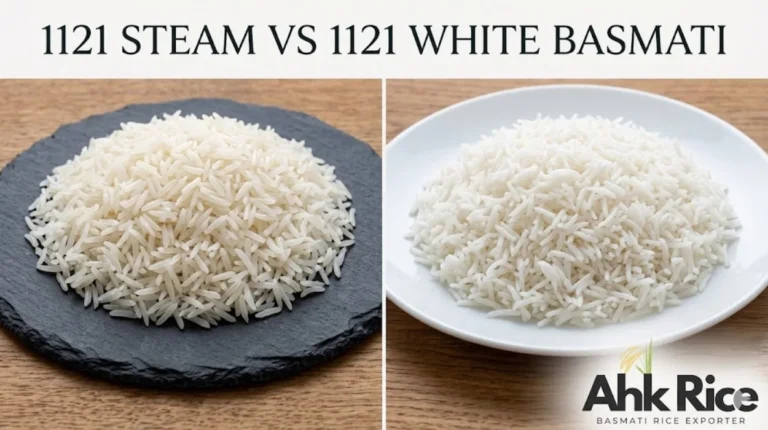
- 1121 Steam Basmati
- 1121 White Basmati
- Super Kernel White Basmati
Retail consumers prioritize appearance, aroma, and cooking performance.
England Foodservice Market
Preferred grades include:
- 1121 Golden Sella
- 1509 Golden Sella
- 1121 Steam Basmati
Foodservice operators prioritize consistency, yield, and storage performance.
Grade Preference Comparison
| Market Segment | Preferred Grade |
|---|---|
| Premium Retail | 1121 White |
| Ethnic Retail | Super Kernel |
| Foodservice | 1121 Golden Sella |
| Catering | 1509 Golden Sella |
| Wholesale Distribution | 1121 Steam |
Assessment decisions become stronger when buyers combine market requirements with supplier verification data.
Frequently Asked Questions
How many years of export history should a buyer review?
Review at least three years of shipment records. Five years provides stronger evidence of stability and consistency.
Which certification matters most for rice imports?
ISO 22000 and HACCP provide strong food safety validation. BRCGS adds additional retail compliance assurance.
Can low prices indicate supplier risk?
Yes. Extremely low prices often indicate weaker quality controls, limited processing capability, or inconsistent shipment performance.
Should buyers request rice samples?
Yes. Sample evaluation verifies grain length, aroma, cooking performance, moisture, and overall consistency before bulk procurement.
What is the most reliable indicator of exporter performance?
Shipment performance combined with repeat customer records provides the strongest evidence of supplier reliability.