How Fast Can Pakistan Export Bulk Basmati Rice to UAE?
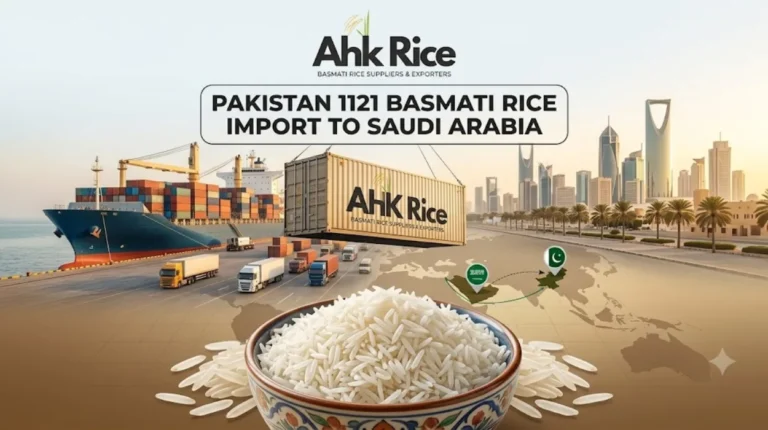
Pakistan can export bulk Basmati rice to the UAE in 15–35 days from order confirmation to arrival. Here is why: production usually requires 7–20 days, while sea transit from Karachi to Jebel Ali generally takes 5–10 days, depending on rice grade, packaging, and vessel schedules.
Basmati rice is one of Pakistan’s most important agricultural exports. Punjab produces most of the country’s premium Basmati varieties through irrigated farming systems. The UAE remains one of the largest import destinations because of strong consumer demand, large foodservice sectors, and a significant South Asian population.
Understanding export timelines requires understanding cultivation, processing, grading, certification, documentation, and logistics. Each stage contributes to the final lead time.
What Is Bulk Basmati Rice Export to the UAE?
Bulk Basmati rice export means shipping quantities from 20 to 1,000+ metric tons through commercial export channels using containers, export documentation, and customs clearance procedures.
Bulk export differs from retail trade. Exporters load rice into containers after processing, inspection, and packaging. Importers purchase rice for wholesale distribution, supermarkets, catering businesses, and food manufacturing operations.
Pakistan cultivates Basmati rice primarily in Punjab. Key growing districts include Gujranwala, Hafizabad, Sheikhupura, Narowal, Sialkot, and Mandi Bahauddin. These regions provide suitable soil conditions and irrigation networks.
The UAE imports several Pakistani Basmati varieties because consumers prefer long grain length, aroma, and cooking performance. Pakistan exported significant rice volumes to Gulf countries during FY2024-25 (source: Pakistan Bureau of Statistics, FY2024-25).
Understanding the export product helps explain why lead times vary between orders. The next question is how the export process actually works.
How Does Pakistan Export Bulk Basmati Rice to UAE?
The complete export process normally requires 9 processing steps, 5 document stages, and 15–35 total days before delivery in the UAE.
What Processing Steps Prepare Rice for Export?
Export-quality Basmati rice passes through multiple processing stages.
- Clean the paddy.
- Dry the grain.
- De-husk the rice.
- Mill the kernels.
- Polish the grains.
- Grade by size.
- Sort by colour.
- Inspect for quality.
- Load for shipment.
Each step improves consistency. Colour sorting removes defective kernels. Grading separates grain lengths. Moisture testing verifies storage stability.
What Documents Support Export Shipments?
Export shipments require standardized documentation.
- Commercial Invoice
- Packing List
- Certificate of Origin
- Phytosanitary Certificate
- Bill of Lading
Customs authorities verify these documents before cargo clearance. UAE importers use the same documents for destination clearance.
Sea freight remains the most common transport method. Container vessels regularly connect Karachi Port and Port Qasim with Jebel Ali Port.
With the export process explained, the next question concerns production lead times before shipment.
For a detailed explanation of manufacturing schedules and preparation timelines, see the article about understanding production planning before export dispatches [Insert Link to MOFU Article].
What Determines Basmati Rice Export Lead Times?

Production lead time depends on rice grade, stock availability, packaging requirements, inspection schedules, and container booking availability.
Rice already available in warehouse inventory ships faster. Existing stock often moves within 7–15 days.
Fresh production requires additional processing time. Milling, grading, inspection, and packaging add several working days.
Custom packaging extends preparation schedules. Private labels, multilingual bags, and specialized carton packaging require artwork approval and production planning.
Container availability also affects timing. Shipping lines allocate containers according to vessel schedules and market demand.
Peak export seasons increase booking pressure. Higher export activity creates longer scheduling windows.
Lead times explain why some shipments move faster than others. The next section examines the rice varieties commonly exported to the UAE.
Which Basmati Rice Grades Does Pakistan Export to UAE?
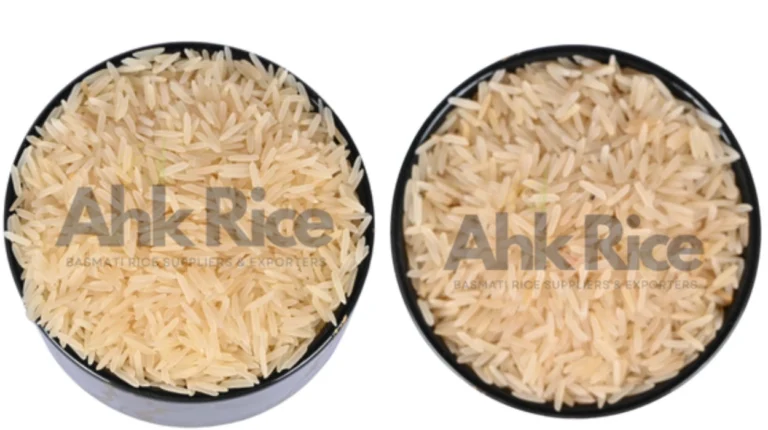
The UAE imports 1121 Basmati, Super Kernel Basmati, 1509 Basmati, Steam Rice, Sella Rice, White Rice, and Brown Rice grades.
1121 Basmati Rice
1121 Basmati produces exceptionally long cooked grains.
| Specification | Value |
|---|---|
| Grain Length | 8.20–8.50 mm |
| Aroma | High |
| Cooking Expansion | Up to 2x |
| Main Markets | UAE, Saudi Arabia, Qatar |
1121 Basmati dominates premium retail and hospitality sectors. Restaurants value its appearance after cooking.
Super Kernel Basmati Rice
Super Kernel Basmati represents Pakistan’s traditional premium variety.
| Specification | Value |
|---|---|
| Grain Length | 7.20–7.60 mm |
| Aroma | Strong |
| Texture | Soft |
| Main Markets | UAE, Europe, North America |
Super Kernel serves consumers seeking traditional Basmati characteristics.
1509 Basmati Rice
1509 Basmati provides shorter cultivation cycles and competitive pricing.
| Specification | Value |
|---|---|
| Grain Length | 8.00–8.30 mm |
| Yield | High |
| Price Position | Competitive |
| Main Markets | Middle East and Africa |
Different grades support different market segments. The next question addresses certifications required for international trade.
What Certifications Apply to Basmati Rice Exports?
Export shipments commonly require phytosanitary certification, origin verification, food safety compliance, and laboratory quality testing.
Certification confirms product compliance with importing country regulations.
Food Safety Certifications
Food safety systems verify production standards.
- HACCP
- ISO 22000
- GMP
- Food Safety Management Systems
Government Certifications
Government authorities issue export-related certificates.
- Phytosanitary Certificate
- Certificate of Origin
- Export Inspection Reports
Laboratory testing verifies moisture levels, purity, grain length, and contamination controls.
Certification reduces import clearance delays. The next question focuses on the advantages of Pakistani Basmati rice in UAE markets.
Why Does UAE Import Pakistani Basmati Rice?
Pakistani Basmati offers long grain length, natural aroma, competitive pricing, strong cooking performance, and reliable year-round availability.
Basmati rice delivers distinct aroma because of its genetic characteristics. Consumers recognize this feature immediately after cooking.
Pakistani Basmati provides strong value compared with several competing origins. Importers balance quality requirements with commercial pricing targets.
1121 Sella lasts longer than White Rice. In UAE warehouse environments reaching 40°C, Sella maintains quality for approximately 18 months. White Rice typically performs best within 12 months.
Hotels, restaurants, catering companies, supermarkets, and wholesalers all source Pakistani Basmati for different applications.
Market demand drives consistent import volumes throughout the Gulf region (source: REAP export data, December 2025).
Demand explains market growth. The next section addresses common misconceptions about export timelines.
What Misconceptions Exist About Basmati Rice Export Speed?
The most common misconception is that shipping time alone determines delivery speed. Production, inspection, documentation, and customs processes also affect timelines.
Many buyers focus only on vessel transit days. Export preparation often requires more time than ocean transportation.
Another misconception assumes every grade remains available for immediate shipment. Inventory levels vary throughout the year.
Some importers expect identical lead times for private-label and generic packaging. Customized packaging requires additional production planning.
Another misunderstanding concerns certification. Quality verification and government approvals require scheduled inspections before cargo dispatch.
Accurate planning begins with understanding the complete supply chain rather than focusing only on freight movement.
With misconceptions clarified, the final question examines the overall benefits of understanding export timelines.
What Benefits Come From Understanding Export Lead Times?
Understanding lead times improves inventory planning, reduces stock shortages, lowers emergency freight costs, and supports better procurement decisions.
Importers can align purchasing schedules with seasonal demand. Better planning reduces inventory disruptions.
Wholesalers can coordinate promotions and warehouse capacity. Consistent supply improves customer service levels.
Foodservice businesses can maintain purchasing continuity during peak consumption periods such as Ramadan and tourism seasons.
Export lead time knowledge also improves supplier communication. Clear expectations reduce operational uncertainty.
Pakistan remains one of the world’s leading Basmati rice suppliers because established production, processing, and logistics systems support international trade efficiently (source: Pakistan Bureau of Statistics, FY2024-25).
Frequently Asked Questions
How long does it take to export Basmati rice from Pakistan to UAE?
Most shipments require 15–35 days from order confirmation to UAE arrival, depending on production and shipping schedules.
Which Pakistani Basmati rice is most popular in the UAE?
1121 Basmati Rice is the most widely imported premium variety due to its extra-long grain length and cooking performance.
Which port handles most rice exports from Pakistan?
Most rice exports move through Karachi Port and Port Qasim.
What packaging sizes are commonly exported?
Common export packaging includes 1 kg, 5 kg, 10 kg, 20 kg, 25 kg, and 40 kg bags.
Does Basmati rice require certification for UAE import?
Yes. Shipments generally require Phytosanitary Certificates, Certificates of Origin, and quality inspection documentation.
Which Basmati rice type has the longest shelf life?
1121 Golden Sella Basmati Rice generally offers a shelf life of up to 18–24 months under proper storage conditions.