How Shipping Challenges Affect Global Rice Exports
What is a global rice export shipping network?
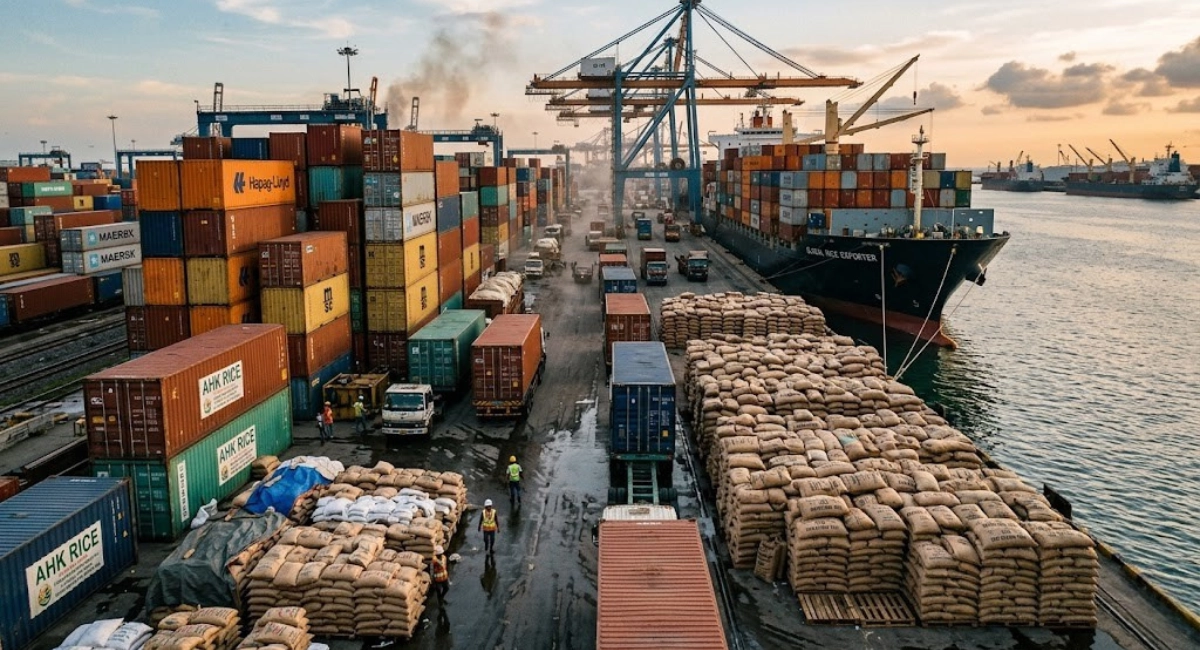
A global rice export shipping network is a structured logistics system that moves milled grain from production regions to destination countries using maritime transport vessels. This infrastructure involves specific container units, freight forwarders, ocean liners, port hubs, and customs clearance protocols.
The macro network functions via transoceanic shipping routes that connect surplus agricultural markets to net-importing nations. The physical grain requires placement in specific standardized shipping containers, such as 20-foot equivalent units (TEUs). Exporters rely on container liners to transport these units across established maritime corridors, including the Suez Canal and the Malacca Strait.
The network operations depend on structural collaboration between grain suppliers, intermodal logistics providers, port operators, and national customs agencies. It operates under global maritime regulations and trade standards established by international organizations, such as the International Maritime Organization (IMO) and the International Chamber of Commerce (ICC).
Every node in this shipping network impacts the ultimate landing cost of the grain. A delay at a single transshipment point, such as the Port of Singapore or the Port of Rotterdam, disrupts subsequent delivery schedules across multiple continents.
Where is export-quality rice grown for international markets?
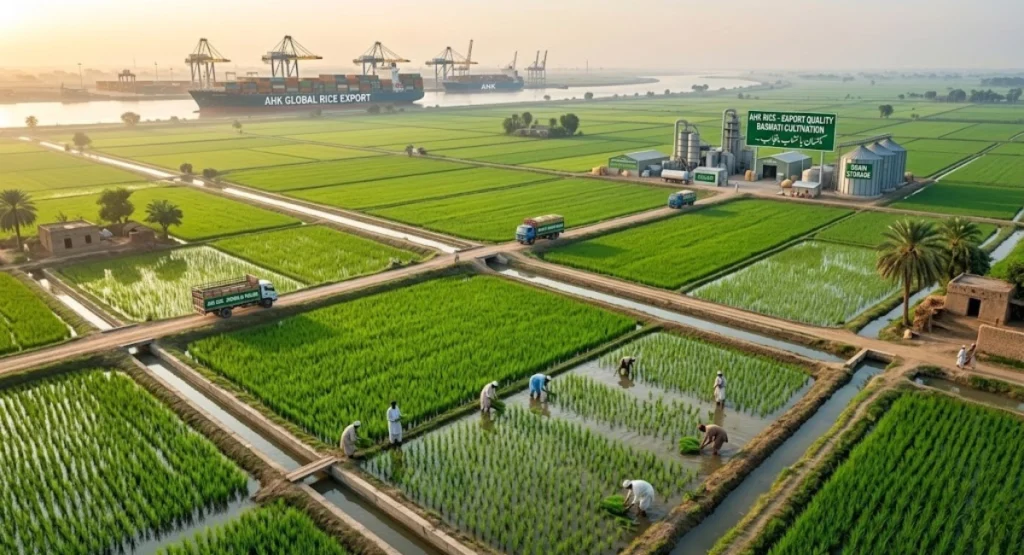
Export-quality rice grows within specific geographic river valleys and fertile plains located across major Asian agricultural regions, including the Punjab region of Pakistan and India. These areas feature precise alluvial soil profiles, managed irrigation networks, and distinct seasonal monsoon climates.
The cultivation of premium long-grain varieties requires exact environmental conditions. The Punjab plain possesses nutrient-rich alluvial clay soils deposited by the Indus River system. This specific terrain provides high water-retention capabilities necessary for continuous paddy flooding.
The production zones require structured temperature variations during the cultivation cycle. The growth phase demands temperatures between 25°C and 35°C, while the maturation phase requires cooler temperatures between 18°C and 22°C to develop the aromatic characteristics of long grains, such as 1121 Basmati, Super Kernel, and 1509 Basmati varieties.
Agricultural water supply relies on perennial canal irrigation infrastructure combined with seasonal monsoon rainfall patterns. These structural irrigation networks provide a consistent moisture supply to the crop roots during the critical vegetative growth stages, ensuring uniform grain elongation and preventing structural kernel fractures.
How is export rice processed step by step?
Export rice processing uses an industrial mechanical sequence that converts raw field paddy into polished, graded, and shelf-stable white or parboiled grains. This process utilizes automated equipment to clean, hull, mill, sort, and package the rice according to strict international quality parameters.
Step 1: Pre-Cleaning and Paddy Drying
Raw paddy arrives from agricultural fields with moisture content levels ranging between 20% and 24%. Industrial mechanical dryers reduce this internal moisture content to a stable level of 12% to 14% to prevent microbial spoilage. Automated scalpers and aspirators remove foreign materials, such as straw, stones, dust, and weed seeds, from the grain stream.
Step 2: Hulling and Dehusking
The cleaned paddy passes through rubber-rolled hulling machines that apply shear force to strip the outer protective hull from the grain. This process separates the brown rice kernel from the husk material. Aspirators remove the loose husks, which processing plants utilize as industrial fuel or agricultural bedding material.
Step 3: Milling and Polishing
The brown rice moves into a series of abrasive and friction milling machines. These vertical or horizontal friction chambers remove the outer bran layers and the germ to expose the white starchy endosperm. Mist polishers inject microscopic water vapor droplets during the final polishing stage to smooth the kernel surface and give it a characteristic shine.
Step 4: Color Sorting and Grading
The polished white rice enters automated optical color sorters that utilize high-definition cameras and laser sensors to detect color imperfections. Air jets eject discolored, yellow, or chalky grains from the primary stream. Sifters and length graders separate the whole grains from broken pieces based on exact millimeter dimensions.
Step 5: Packaging and Container Loading
The graded grains pass into automated weighing scales that dispense exact quantities into custom packaging units, such as 5-kilogram, 10-kilogram, 20-kilogram, or 50-kilogram bags. Workers treat the packed units with food-grade fumigants inside the transport containers to eliminate insect larvae and prevent pest infestations during long transoceanic voyages.
What are all available grades of export rice?
The available grades of export rice are categorized by grain length, broken grain percentages, processing methods, and genetic varieties. These standards divide shipments into premium aromatic long grains, long-grain white rice, parboiled options, and specific percentage broken classifications.
Premium Aromatic Basmati Grades
Premium grades feature extreme length elongation ratios and distinctive natural fragrances. The 1121 Basmati grade requires an average pre-cooked grain length of 8.35 millimeters to 9.00 millimeters. Super Kernel Basmati represents a traditional grade known for strong aroma and distinct elongating capabilities, while 1509 Basmati provides a long-grain alternative with an average length of 8.20 millimeters.
Processing-Based Classifications
Processing methodologies dictate the physical properties of the exported grain. Raw white rice grades undergo standard dry milling to present a bright, pearly appearance. Parboiled rice grades undergo a hydrothermal process of soaking, steaming, and drying before hulling, which gelatinizes the starch starch structure and turns the grain a translucent yellowish hue.
Broken Percentage Specifications
Commercial contracts define rice grades based on the allowable volume of broken kernels contained in the final shipment. Standard trading grades include 100% broken, 5% broken, 10% broken, and 25% broken limits. Premium long-grain allocations enforce a strict maximum broken limit of 2% to preserve product integrity for high-end consumer markets.
Which global markets import these rice varieties?
Global markets that import these rice varieties span multiple geographic regions including the Middle East, the European Union, East Africa, and North America. These destination markets maintain distinct culinary preferences, consumer purchasing profiles, and phytosanitary regulatory frameworks.
The Middle Eastern Market
The Gulf Cooperation Council (GCC) nations, such as Saudi Arabia, the United Arab Emirates, and Oman, represent high-value import destinations for premium long-grain varieties. These consumer markets prioritize extra-long aromatic grains, such as 1121 Basmati, for traditional culinary preparations. Imports move through major regional maritime hubs, such as the Port of Jebel Ali.
The European Union Market
European nations, such as the United Kingdom, Germany, and the Netherlands, enforce strict importing standards regarding chemical residues and genetic purity. These markets import premium brown basmati for localized processing or packaged white long grains for retail distribution. Imports enter via northern container gateways, including the Port of Antwerp.
The African and North American Markets
East African nations, such as Kenya, Somalia, and Madagascar, import large bulk volumes of long-grain white rice and parboiled varieties with higher broken percentages, such as 25% broken grades. Conversely, the North American market, comprising the United States and Canada, imports high-value packaged aromatic varieties to satisfy ethnic consumer demographics.
What certifications apply to international rice exports?
The certifications that apply to international rice exports include food safety protocols, phytosanitary clearances, product authenticity verifications, and religious dietary compliance documents. These official certificates validate that the shipment complies with the legal regulations of the destination country.
Food Safety Management Certifications
Processing facilities must maintain international food safety management systems to enter developed consumer markets. The ISO 22000 certification establishes guidelines for controlling food safety hazards across the supply chain. Hazard Analysis Critical Control Point (HACCP) certifications verify that the milling plant monitors specific operational steps to prevent biological, chemical, or physical contamination.
Phytosanitary and Origin Documentation
National agricultural departments issue mandatory phytosanitary certificates after performing physical inspections of the grain cargo before vessel loading. This document confirms the shipment is free from quarantine pests, such as the Khapra beetle, and hazardous plant diseases. Certificates of Origin verify the precise geographic production source of the rice, which regulates applicable customs tariffs.
Dietary and Quality Compliance Certificates
Exporters secure Halal certifications from accredited Islamic authorities to confirm that processing operations, packaging materials, and storage conditions comply with Islamic dietary laws required in Middle Eastern markets. Non-GMO certifications verify that the grain varieties result from traditional agricultural breeding rather than artificial genetic modification practices.
What are the key components of maritime rice logistics?
The key components of maritime rice logistics include dry van cargo containers, intermodal transport networks, freight forwarding documentation, and port storage infrastructure. These elements operate in sequence to preserve grain quality from the inland processing plant to the overseas destination port.
The primary containment unit is the standard 20-foot dry freight container. Exporters utilize this size configuration because rice represents a heavy, dense commodity that reaches maximum legal weight limits before filling the volumetric capacity of larger 40-foot containers. Inside these steel boxes, logistics teams install thick kraft paper lining or moisture-absorbing desiccant poles to control ambient humidity levels.
Intermodal transport networks link landlocked milling facilities to ocean shipping terminals. This infrastructure utilizes heavy-duty flatbed trucks or dedicated freight rail networks to move sealed containers across terrestrial trade paths. The efficiency of this component depends on road weight regulations and local diesel fuel price stability.
Freight forwarding documentation governs the legal transfer of ownership and risk during ocean transit. The Bill of Lading (BoL) serves as the official contract between the shipper and the maritime carrier, detailing the exact container numbers, weight metrics, and destination coordinates. Commercial invoices and packing lists must match these cargo details to prevent custom holds.
What are the benefits of maintaining resilient supply chains?
The benefits of maintaining resilient supply chains include reduced transit delay costs, minimized grain spoilage losses, protected brand equity, and stable wholesale pricing models. Importers and exporters who build flexible logistics networks avoid severe operational disruptions during global shipping crises.
An optimized supply chain prevents cargo detention and demurrage fees at ocean port terminals. Demurrage charges accumulate when an importer fails to remove an arrived container from the port yard within the designated free days allowed by the carrier. Resilient documentation pipelines ensure customs clearances occur before these financial penalties activate.
Grain quality preservation represents a direct financial benefit of logistics efficiency. Rice stored inside stagnant ocean containers during long port delays experiences high heat exposure, which triggers internal moisture condensation. This accelerated humidity causes mold development, grain yellowing, and musty odors that render the product unmarketable.
| Supply Chain Attribute | Vulnerable Logistics Network | Resilient Logistics Network |
| Carrier Sourcing | Single ocean liner dependency | Multi-alliance service contracts |
| Port Route Options | Single transit gateway path | Diversified secondary port routings |
| Buffer Inventory | Just-in-time stock levels | 30-day safety stock reserves |
| Container Strategy | Standard carrier equipment | Pre-booked carrier allocations |
Stable distributor relationships depend directly on consistent delivery intervals. Retail buyers, such as supermarket chains and food service distributors, enforce strict delivery windows. A supplier who maintains multi-port shipping alternatives fulfills contractual delivery dates despite sudden union strikes or localized canal closures.
How do ocean freight challenges disrupt global rice trade?
Ocean freight challenges disrupt global rice trade by inflating container spot market rates, reducing equipment availability at major agricultural hubs, lengthening transit times around geographic choke points, and forcing contract cancellations due to sudden price spikes.
Imbalances in global equipment distribution create severe container shortages in agricultural exporting nations. Empty container boxes accumulate at import-heavy consumption hubs, such as North American or European ports, because ocean liners prioritize returning empty equipment to high-tariff manufacturing corridors rather than shipping them to lower-revenue grain ports.
Geopolitical conflicts or low water levels force commercial vessels to divert away from traditional maritime shortcuts. For example, routing ships around the Cape of Good Hope instead of using the Suez Canal adds approximately 10 to 14 days to a standard voyage between Asia and Europe. This extension increases marine fuel consumption and ties up valuable vessel capacity.
Sudden spikes in ocean freight rates destabilize low-margin grain trading contracts. When spot freight prices increase by 200% within a 30-day window, the landed cost of a low-value commodity can exceed the market value of the product itself. This financial pressure forces exporters to invoke force majeure clauses or renegotiate agreed price points.
What are common problems and misconceptions in grain shipping?
Common problems and misconceptions in grain shipping include the belief that rice is an inert commodity impervious to transit damage, the misuse of oversized shipping containers, and the incorrect assumption that standard cargo insurance covers all types of logistics delays.
A widespread misconception is that milled white rice requires no environmental protection because it is a dry grain. In reality, polished rice is highly hygroscopic, meaning it actively absorbs moisture from the surrounding atmosphere. If a transport container experiences drastic temperature changes while crossing different climate zones, the resulting sweat ruins the top layers of cargo.
Another frequent error is utilizing 40-foot high-cube containers to lower ocean freight costs. Because rice possesses a high density-to-volume ratio, a 40-foot container filled to volumetric capacity exceeds the maximum legal highway weight limits enforced by most destination countries. This issue results in severe fines and forced transloading at the arrival port.
Many importers mistakenly assume that standard maritime cargo insurance covers financial losses resulting from market price drops during transit delays. Standard insurance policies cover physical damage caused by external perils, such as vessel shipwrecks or warehouse fires. They do not cover losses stemming from transit delays or custom clearance rejections.
Another frequent error is utilizing 40-foot high-cube containers to lower ocean freight costs. Because rice possesses a high density-to-volume ratio, a 40-foot container filled to volumetric capacity exceeds the maximum legal highway weight limits enforced by most destination countries. This issue results in severe fines and forced transloading at the arrival port.
Many importers mistakenly assume that standard maritime cargo insurance covers financial losses resulting from market price drops during transit delays. Standard insurance policies cover physical damage caused by external perils, such as vessel shipwrecks or warehouse fires. They do not cover losses stemming from transit delays or custom clearance rejections.