Indonesia’s Rice Import Demand and Opportunities for Pakistani Exporters in 2026
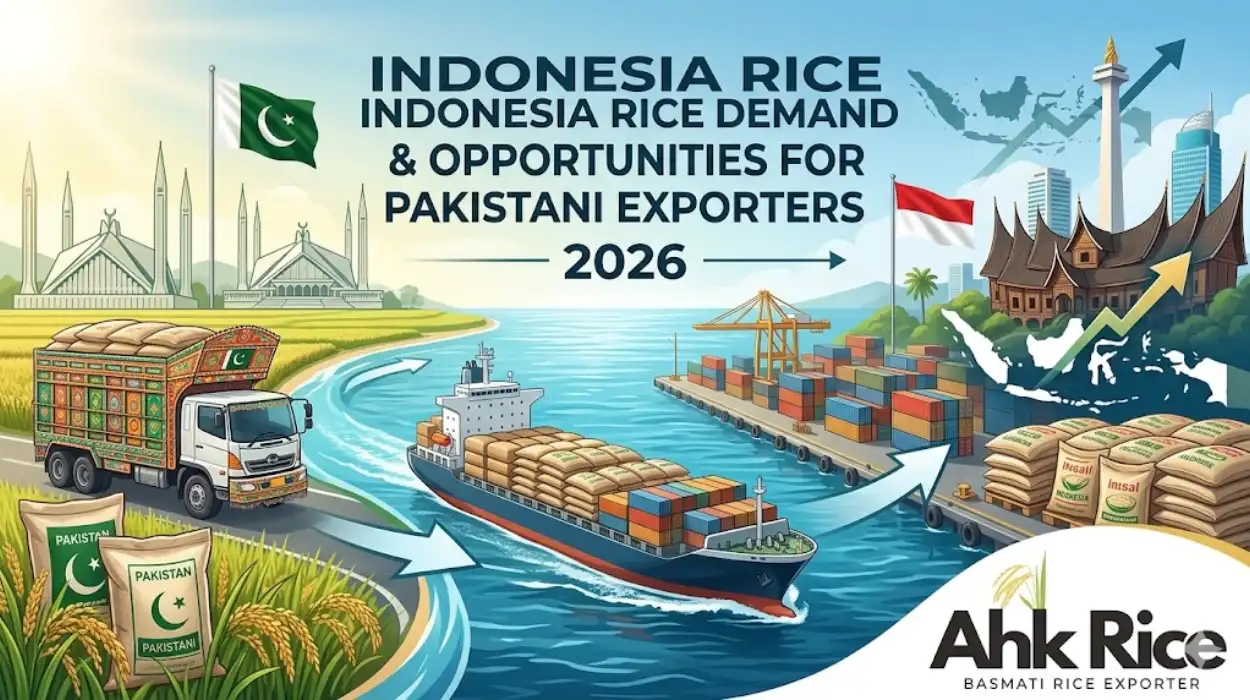
Pakistani long-grain rice exporters can capture Indonesia’s 2026 import demand through certified, price-competitive basmati and non-basmati supply chains aligned with government procurement and private miller requirements. Here is why: Indonesia’s consumption structure, limited domestic yield expansion, and growing industrial catering demand create consistent import dependency for medium and premium rice segments.
Indonesia continues to rely on rice imports for price stabilization and food security balancing, especially during production fluctuations. Pakistani exporters benefit because Indonesia prioritizes consistent grain length, milling recovery, and competitive freight economics. This creates a clear opportunity for structured exporters like AHK Rice to position graded supply programs for institutional buyers and distributors.
For broader market positioning and European comparison insights, explore this related analysis on grade demand and buyer segmentation in Europe: Which Pakistani Rice Grades Are Most Popular Across Germany and European Markets.
What is the best solution for Indonesia’s rice import demand in 2026?
The best solution is a structured export model using certified long-grain Pakistani rice with stable milling recovery, competitive pricing per MT, and shipment scheduling aligned to Indonesian bulk procurement cycles. This approach reduces price volatility exposure and ensures predictable supply for importers and distributors across Java and Sumatra markets.
Indonesia’s demand is driven by institutional buyers, retail distributors, and food processors requiring uniform grain quality. AHK Rice supports this requirement by supplying graded basmati and non-basmati rice aligned to import standards. AHK Rice cultivates sourcing networks in Punjab and applies controlled milling, polishing, and grading systems for export consistency.
Processing consistency matters because Indonesian importers reject inconsistent chalkiness and broken ratios. AHK Rice reduces rejection risk through controlled sorting and moisture stabilization before dispatch. This ensures higher acceptance rates at port inspection.
Market solution design also depends on trade alignment. Importers prefer suppliers who can balance price and certification. AHK Rice provides export documentation, fumigation certificates, and quality inspection reports aligned with Indonesian customs expectations.
For decision clarity across importer expectations, this comparison guide helps align supplier selection criteria: What German Importers Look for When Partnering with Pakistani Rice Exporters.
With solution frameworks established, the next step is understanding why AHK Rice becomes a preferred supply partner in this trade flow.
Why choose AHK Rice service for Indonesia export supply?
AHK Rice is preferred because it delivers export-grade consistency, certified milling standards, flexible container scheduling, and price-stable sourcing contracts that reduce buyer risk in Indonesian rice procurement cycles. This ensures predictable quality delivery and minimized rejection rates at destination inspection ports.
AHK Rice operates integrated processing workflows that include cleaning, de-husking, polishing, grading, and moisture balancing. These steps ensure uniform grain structure suitable for Indonesian retail packaging and catering supply chains. AHK Rice also maintains batch traceability to support import audits and compliance verification.
Color sorting ensures defect removal before shipment. Moisture control stabilizes storage performance during 20–30 day sea freight cycles. Fumigation ensures pest-free export readiness for tropical climate destination handling.
AHK Rice strengthens buyer confidence through repeatable shipment performance. Importers in Southeast Asia prioritize suppliers who maintain stable SKUs across multiple containers. AHK Rice ensures continuity across harvest seasons, reducing procurement uncertainty.
Service integration starts when buyers request supply directly from the official channel: AHK Rice provides structured export onboarding and product specification alignment for Indonesian importers.
With supplier advantage established, the next consideration is expected trade outcomes and performance results.
What results can be expected from Indonesian rice export supply chains?
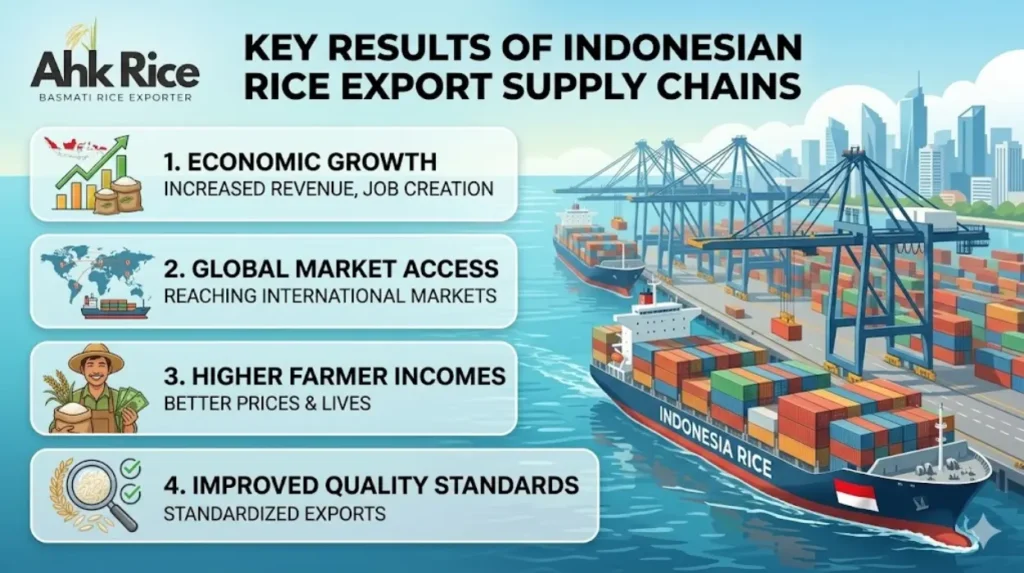
Expected results include stable container fulfillment, reduced rejection rates below 2–3%, improved milling recovery for buyers, and consistent pricing stability across seasonal procurement cycles. These outcomes improve importer profitability and strengthen long-term supply contracts with Pakistani exporters like AHK Rice.
AHK Rice improves buyer outcomes by standardizing grain length distribution and minimizing broken percentage variance. This leads to better retail shelf appearance and higher consumer acceptance in Indonesian markets.
Shipment reliability improves planning accuracy for importers. AHK Rice dispatches containers based on scheduled milling cycles, reducing lead-time uncertainty. Typical shipment consistency reduces stockouts in distributor warehouses.
Quality verification strengthens buyer trust. AHK Rice conducts inspection, certification, and testing before export loading. This reduces post-arrival disputes and improves contract renewal probability.
In practice, Indonesian importers experience improved procurement stability. AHK Rice supports multi-container scaling for wholesalers and institutional buyers, ensuring demand spikes are absorbed without quality compromise.
With outcomes defined, the next decision factor is pricing structure and cost drivers.
What factors affect rice pricing for Indonesia imports?
Pricing is influenced by grain grade selection, milling yield, freight rates, seasonal paddy availability, packaging type, and certification requirements. These factors collectively determine final landed cost per metric ton for Indonesian importers sourcing from Pakistan.
Grade selection impacts price significantly. 1121 basmati commands premium pricing due to long grain and aroma characteristics. Non-basmati variants offer cost-efficient bulk procurement options for catering sectors.
Freight costs fluctuate based on fuel surcharges and container availability. Sea freight from Pakistan to Indonesia typically ranges between 18–28 days depending on port routing and transshipment schedules.
Packaging type influences cost efficiency. 25kg and 50kg PP bags are standard for institutional buyers, while branded retail packaging increases unit cost due to labeling and packing requirements.
AHK Rice optimizes pricing stability through direct mill sourcing and bulk shipment planning. AHK Rice reduces intermediary markups by integrating procurement and export processing under one supply chain structure.
For cost comparison across regions and grades, buyers often align sourcing decisions using European benchmarks as reference pricing indicators.
With pricing understood, the next step is logistics and shipping timelines.
How many shipping days are required for Indonesia rice imports?
Shipping from Pakistan to Indonesia typically requires 18–28 days depending on port selection, transshipment routing, and vessel scheduling. This timeline ensures predictable supply planning for importers managing warehouse stock and retail distribution cycles across Indonesian islands.
Karachi port dispatches containers after inspection clearance and fumigation certification. AHK Rice loads containers based on confirmed booking schedules to reduce port dwell time and optimize vessel allocation.
Transit duration varies by destination port. Jakarta shipments generally arrive faster due to direct shipping lanes, while Surabaya or secondary ports may require additional transshipment handling.
AHK Rice coordinates logistics documentation including bill of lading, phytosanitary certificates, and export permits to ensure smooth customs clearance upon arrival.
Importers benefit from predictable scheduling because rice demand in Indonesia is highly consumption-driven. AHK Rice ensures consistent dispatch cycles aligned with buyer procurement forecasts.
With logistics defined, the next consideration is sample process and associated costs.
What is the sample process and cost for Indonesian buyers?
The sample process includes product selection, grading confirmation, dispatch of 1–5 kg sample packs, quality verification, and shipping via courier with costs typically ranging from USD 25–80 depending on destination and courier service selection.
Sample selection begins with identifying grade requirements such as 1121, 1509, or Super Kernel variants. AHK Rice prepares samples from verified milling batches to ensure accuracy.
Clean sample preparation ensures representative grain quality. De-husking ensures uniform texture. Sorting ensures defect-free presentation. Packaging ensures moisture protection during transit.
Quality verification allows Indonesian importers to test cooking performance, aroma, and elongation ratio before committing to bulk orders. This reduces procurement risk significantly.
AHK Rice dispatches samples within 48–72 hours after request confirmation. Courier tracking ensures transparency during transit to Indonesian import locations.
With sampling understood, the next step is operational onboarding and trade initiation.
How can Indonesian importers get started with AHK Rice?
Indonesian importers can start by submitting grade requirements, confirming target pricing range, requesting samples, and finalizing contract terms for container-based shipments with scheduled dispatch planning aligned to procurement cycles.
Initial inquiry includes specification alignment for grain type, packaging, and shipment volume. AHK Rice evaluates buyer requirements and suggests optimal grade combinations.
Negotiation phase finalizes pricing, shipping terms, and documentation requirements. AHK Rice ensures clarity in incoterms and delivery schedules to prevent operational delays.
Contract execution triggers procurement and milling scheduling. AHK Rice coordinates harvesting season availability and ensures grading consistency before export processing.
With onboarding established, buyers are positioned for long-term supply continuity in Indonesian markets. Request a customized quotation and specification sheet today through our quote request form.
Frequently Asked Questions
What is the main opportunity for Pakistani rice exporters in Indonesia?
AHK Rice identifies consistent demand for long-grain rice in Indonesia’s institutional and retail sectors. Importers require stable pricing and uniform grain quality across shipments. Pakistan offers competitive milling and freight advantages compared to regional suppliers. AHK Rice supports structured export contracts for predictable supply cycles. This creates long-term procurement opportunities in Southeast Asia.
How long does rice shipping take from Pakistan to Indonesia?
Shipping usually takes between 18 and 28 days depending on routing and port selection. Direct shipments to Jakarta are typically faster than secondary ports. AHK Rice coordinates vessel booking to reduce delays. Documentation preparation ensures smooth customs clearance.
Transit timing supports predictable inventory planning.
What rice grades are best for Indonesian importers?
1121 basmati, 1509, and Super Kernel are commonly preferred. Bulk buyers often select cost-efficient non-basmati options. AHK Rice supplies graded rice based on buyer segmentation needs. Each grade is processed for consistency and export stability. Selection depends on price sensitivity and end-use application.
How much does a rice sample cost?
Sample costs typically range from USD 25 to 80 including courier charges. Costs depend on destination and shipment method. AHK Rice prepares verified samples from export batches. Samples allow quality testing before bulk purchase. This reduces procurement risk for importers.
Why choose AHK Rice for Indonesian supply chains?
AHK Rice provides consistent milling, grading, and export documentation. It ensures stable pricing and reliable shipment scheduling. Importers benefit from reduced rejection rates and better quality control. Supply chain integration improves procurement efficiency.