Is Super Kernel Basmati Better Than 1121 Rice?
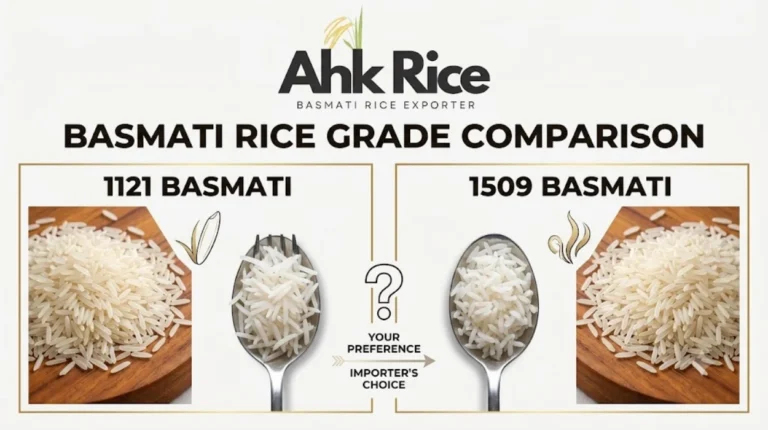
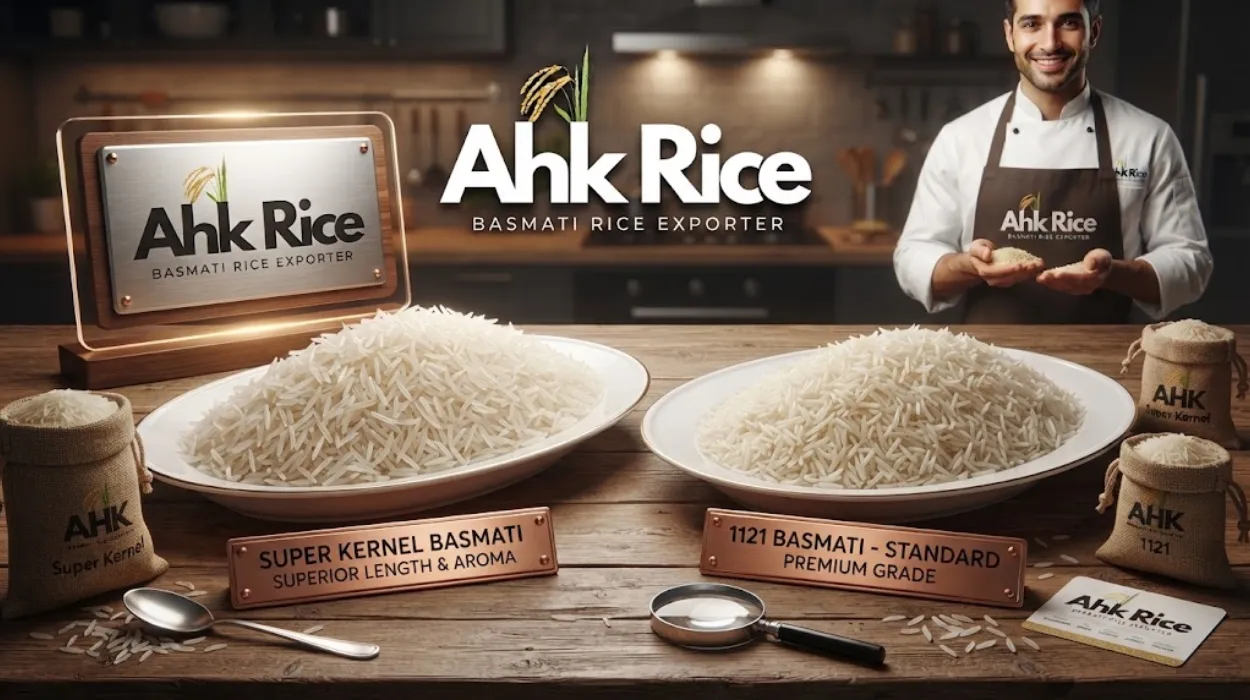
Super Kernel Basmati is better for traditional aroma, while 1121 Basmati is better for maximum grain length and visual presentation. Here is why: Super Kernel typically measures about 7.2–8.0 mm raw, while 1121 commonly reaches about 8.2–8.5 mm.
What is the difference between Super Kernel and 1121 Basmati rice?
Super Kernel prioritizes traditional Basmati aroma and balanced cooking, while 1121 prioritizes exceptional grain length, elongation, and visual presentation. Both are premium Pakistani Basmati varieties cultivated mainly in Punjab and exported to international rice markets.
Super Kernel Basmati is a traditional aromatic variety known for fragrance, slender grains, and a firm cooked texture. Commercial specifications vary by crop, mill, and grade. Export references commonly place its raw grain around 7.2–8.0 mm.
1121 Basmati is an extra-long grain variety recognized for exceptional raw length and cooked elongation. Current export specifications commonly place 1121 around 8.3 mm raw grain, with cooked grain exceeding 22 mm in some specifications.
Both varieties belong to the Basmati rice category. Both produce aromatic, separate grains after cooking. The main distinction involves grain length, cooking presentation, aroma profile, processing options, and commercial positioning.
Where are Super Kernel and 1121 Basmati rice cultivated?
Super Kernel and 1121 Basmati are cultivated primarily in Pakistan’s Punjab rice belt, where soil, irrigation, climate, and traditional Basmati production support aromatic grain development. Punjab remains central to Pakistan’s premium Basmati supply chain.
Punjab provides the agricultural environment associated with Pakistani Basmati production. Important rice-growing areas include districts across the traditional Punjab rice belt. Farmers cultivate paddy under irrigated conditions and harvest mature crops before milling and export preparation.
Super Kernel has strong associations with Punjab production. Commercial sources identify areas such as Muridke and Narowal for Super Kernel sourcing.
1121 also originates from Pakistan’s Punjab rice-growing areas. Its commercial value comes from its combination of long grain, aromatic characteristics, and strong cooking elongation.
The agricultural stage determines the starting quality. The processing stage then converts harvested paddy into export-ready rice.
How are Super Kernel and 1121 Basmati rice processed?
Both varieties pass through cleaning, dehusking, polishing, grading, sorting, testing, and packing stages; processing type then determines whether the final rice is white, steamed, or parboiled Sella.
The processing chain begins with harvested paddy. Mills receive, inspect, and clean the paddy to remove field debris and foreign material.
How does the milling process work?
- Clean the paddy to remove stones, dust, straw, and other foreign material.
- De-husk the grain to remove the outer rice husk.
- Polish the grain to produce the required surface appearance and finish.
- Grade the rice according to grain length, broken percentage, and other specifications.
- Sort the rice through mechanical and optical systems to remove defective grains.
- Test the rice for moisture, purity, broken grains, and other quality parameters.
- Pack the rice into the specified commercial packaging after final inspection.
White Basmati follows the conventional milling route. Steam Basmati receives controlled steaming before drying and milling. Sella Basmati undergoes parboiling before drying, milling, and grading.
Processing therefore changes cooking characteristics without changing the underlying variety. A 1121 Sella remains 1121, while a Super Kernel Sella remains Super Kernel.
Which specifications distinguish Super Kernel from 1121?
Grain length is the clearest measurable distinction: 1121 commonly reaches about 8.3 mm raw, while Super Kernel commonly ranges around 7.2–8.0 mm. Aroma, cooking texture, and processing options add further differences.
| Specification | Super Kernel | 1121 |
|---|---|---|
| Variety type | Traditional aromatic Basmati | Extra-long Basmati |
| Typical raw grain | 7.2–8.0 mm | About 8.3 mm |
| Cooked grain | About 16–18 mm+ | About 22 mm+ |
| Aroma | Strong traditional Basmati | Strong Basmati |
| Grain appearance | Long and slender | Extra-long and slender |
| Processing | White, with market-specific variants | White, Steam, Sella |
| Common positioning | Aroma and balanced cooking | Length and presentation |
Specifications differ between exporters and individual lots. A commercial buyer should therefore use a certificate of analysis and agreed contract specification rather than relying only on the variety name.
What are the main benefits of Super Kernel Basmati rice?
Super Kernel delivers strong traditional aroma, slender grains, separate cooked grains, and balanced cooking performance, making it suitable for biryani, pulao, curries, and traditional South Asian rice dishes.
Super Kernel’s strongest attribute is its aromatic profile. The variety is widely associated with the characteristic fragrance expected from Pakistani Basmati.
The grain also provides a firm cooked structure. Properly prepared Super Kernel produces separated grains rather than a heavily sticky texture.
Which foods use Super Kernel?
Super Kernel works across several food applications. Examples include biryani, pulao, pilaf, curries, Persian-style rice dishes, and Middle Eastern meals.
Foodservice buyers often evaluate Super Kernel through aroma, cooked texture, grain separation, and consistency. Retail buyers also consider packaging format, appearance, cooking instructions, and consumer expectations.
What are the main benefits of 1121 Basmati rice?
1121 provides exceptional grain length, strong cooking elongation, attractive presentation, and broad processing flexibility, making it suitable for premium retail, foodservice, catering, and export markets.
1121’s defining commercial feature is grain length. Long, slender grains create strong visual impact after cooking.
The variety also provides high cooking elongation. Some export specifications report cooked lengths above 22 mm.
Which foods use 1121?
1121 suits biryani, pulao, pilaf, rice platters, catering meals, and premium packaged rice products. Its long cooked appearance supports dishes where presentation matters.
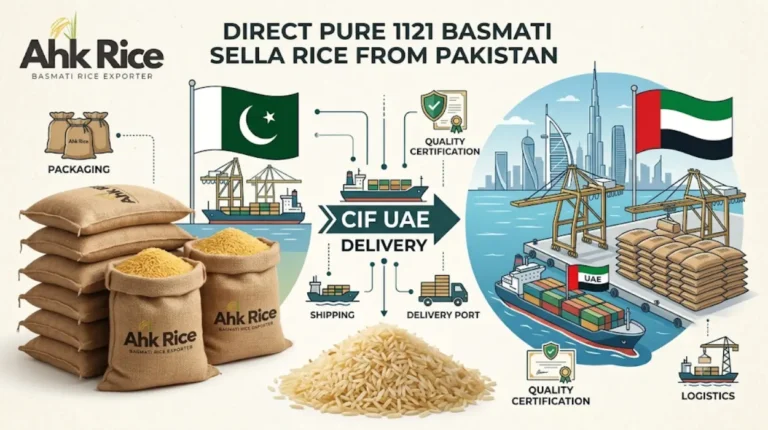
1121 also offers multiple processing formats. Export specifications commonly include White, Steam, and Sella versions.
Which Super Kernel and 1121 grades are available?
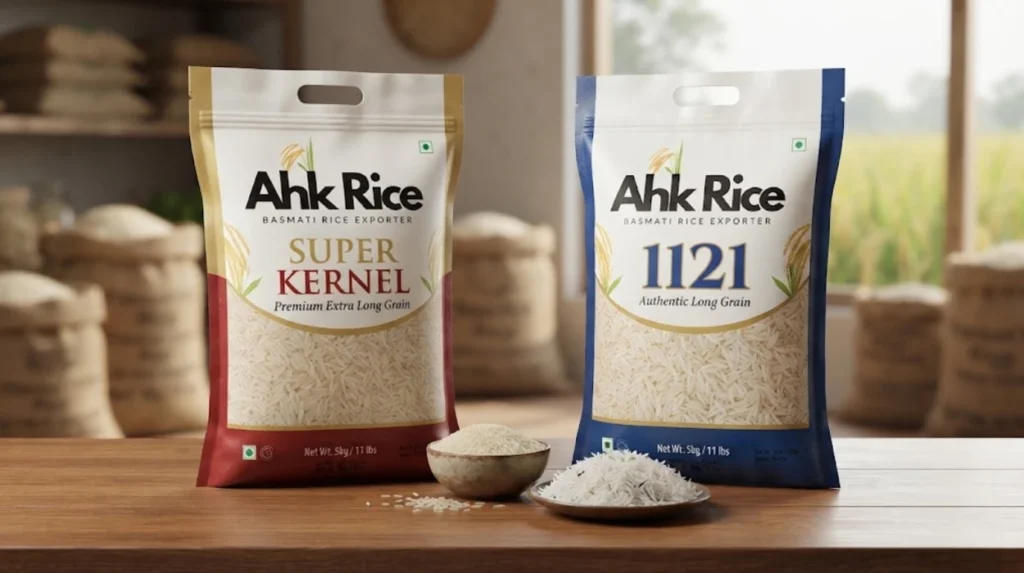
Both varieties can be sold through different processing and quality specifications, including white rice and, for 1121, Steam and Sella formats; grade selection depends on cooking requirements and market specifications.
What is White Basmati?
White Basmati is conventionally milled rice with a polished appearance and natural aromatic profile. Mills clean, de-husk, polish, grade, and sort the grain before packing.
What is Steam Basmati?
Steam Basmati receives controlled steaming before drying and milling. This process changes the grain’s cooking behavior and produces a firmer cooked structure.
What is Sella Basmati?
Sella Basmati is parboiled rice. Parboiling involves controlled hydration, heating, drying, and subsequent milling. The process supports grain firmness and separation during cooking.
1121 commonly appears in White, Steam, and Sella forms. Super Kernel is also traded in different processing formats across export markets, depending on mill capability and buyer specifications.
Which markets import Super Kernel and 1121 Basmati rice?
Super Kernel and 1121 serve premium rice markets across the Middle East, Europe, Africa, and other international destinations, with market demand varying by grain length, aroma, processing type, and price.
Middle Eastern markets commonly use Pakistani Basmati for household consumption, restaurants, catering, and rice-based dishes. European markets also purchase Pakistani Basmati through retail and foodservice channels.
Market selection depends on product specification. A buyer targeting visual presentation can prioritize 1121. A buyer targeting traditional aroma can prioritize Super Kernel.
Exporters such as AHK Rice supply Pakistani Basmati varieties including 1121 and Super Kernel from Punjab. AHK Rice also provides processing, grading, color sorting, customized packaging, and export documentation as part of its stated export process.
What certifications and quality checks apply to exported Basmati rice?
Exported Basmati rice requires documented quality control, food-safety compliance, phytosanitary documentation, and destination-specific certification; exact requirements depend on the importing country’s regulations and buyer specification.
Quality control begins with inspection and testing. Common checks include moisture, broken grains, foreign matter, grain length, purity, pesticide residues, and microbiological parameters.
Export documentation can include a certificate of origin, phytosanitary certificate, fumigation certificate, packing list, commercial invoice, and inspection documentation. The destination authority determines which documents are mandatory.
Food-safety certifications also vary by supplier and destination. Examples include HACCP, ISO 22000, Halal certification, and third-party inspection. Exporters should verify the exact certificate requirements before dispatch.
What are the common misconceptions about Super Kernel and 1121?
Super Kernel is not simply a shorter version of 1121, and 1121 is not automatically superior; each variety provides different grain, aroma, cooking, and processing characteristics.
A common misconception treats grain length as the only quality indicator. Grain length matters, but aroma, purity, broken percentage, moisture, cooking behavior, and consistency also determine rice quality.
Another misconception assumes every 1121 specification is identical. Crop year, milling quality, aging, processing method, and sorting affect the finished product.
The same applies to Super Kernel. Two lots with the same variety name can show different technical specifications.
Buyers should therefore compare measurable specifications. These include raw grain length, cooked length, broken percentage, moisture, aroma, processing type, crop year, and inspection results.
For buyers focused specifically on aroma stability, the next comparison should examine how processing and storage influence fragrance retention. A detailed comparison of Super Kernel grade and aroma retention fits naturally after this foundational guide.
With the variety differences established, the final choice depends on the quality attribute the buyer values most.
Is Super Kernel better than 1121 Basmati rice?
Super Kernel is better for traditional aroma and balanced grain performance, while 1121 is better for maximum length and visual presentation. The correct specification depends on the intended dish, market, processing type, and buyer quality requirements.
Super Kernel provides strong traditional Basmati fragrance and a slender grain profile. 1121 provides longer grains and stronger visual elongation after cooking.
Neither variety replaces the other. Their specifications serve different commercial and culinary requirements.
A buyer comparing both should request the same processing type and equivalent quality parameters. The comparison then becomes measurable through grain length, aroma, cooking results, broken percentage, moisture, and purity.
The next stage is understanding which Super Kernel grade preserves aroma most effectively across processing and storage conditions.
Frequently Asked Questions
Is Super Kernel Basmati better than 1121 rice?
Super Kernel is better suited to buyers who prioritize traditional Basmati aroma and balanced cooking. 1121 is better suited to buyers who prioritize extra-long grains, strong elongation, and visual presentation.
Which rice has longer grains, Super Kernel or 1121?
1121 Basmati has longer grains. Typical export specifications place 1121 around 8.3 mm in raw form, while Super Kernel commonly ranges around 7.2–8.0 mm.
Which Basmati rice has better aroma?
Super Kernel is strongly associated with traditional Basmati aroma. 1121 also provides characteristic Basmati fragrance, but its main commercial distinction is its exceptional grain length and cooked elongation.
Is Super Kernel good for biryani?
Yes. Super Kernel works well for biryani because its slender grains provide aromatic flavor and separated cooked grains. It is also used for pulao, pilaf, curries, and other rice-based dishes.
Is 1121 Basmati good for biryani?
Yes. 1121 is widely suited to biryani because its long grains produce strong visual presentation after cooking. Its high cooking elongation makes it suitable for premium rice dishes and catering applications.
What is the difference between Super Kernel and 1121 Basmati?
The main difference is grain profile. Super Kernel emphasizes traditional aroma and balanced cooking, while 1121 emphasizes exceptional grain length and elongation. Both are aromatic Pakistani Basmati varieties.
Is 1121 available as Sella Basmati?
Yes. 1121 is available in several processing formats, including White, Steam, and Sella. Sella is parboiled, while Steam receives controlled steaming before drying and milling.
Which Super Kernel grade has the best aroma retention?
Aroma retention depends on the variety, processing method, crop, storage conditions, and packaging specification. Super Kernel grades should therefore be compared using actual aroma, processing, and storage specifications rather than variety name alone.
Which rice is better for premium retail packaging?
1121 is often selected for premium presentation because its extra-long grain creates a strong visual appearance. Super Kernel suits premium positioning based on traditional aroma and characteristic Basmati eating quality.
Which rice should importers choose?
Importers should match the variety to their market requirements. 1121 suits length-focused specifications, while Super Kernel suits aroma-focused specifications. Grain length, broken percentage, moisture, processing type, crop year, and cooking results should be evaluated before procurement.