Pakistan Rice Harvest Forecast and Export Market Outlook
What is Pakistan Basmati rice?
Pakistan Basmati rice is a premium long-grain aromatic cereal variety protected by Geographical Indication tags and cultivated uniquely in the fertile, mineral-rich soils of the Indus River basin located within the specialized agricultural zones of the Punjab province.
This specific variety of grain exhibits physical characteristics that differentiate it from standard long-grain rice varieties. The genetic profile of this plant limits its authentic cultivation to specific geographic coordinates across Punjab. The regional climate features distinct seasonal transitions, high solar radiation levels, and specific humidity fluctuations that trigger the development of 2-acetyl-1-pyrroline. This chemical compound is the primary aromatic organic component responsible for the characteristic fragrance of the grain.
The crop possesses an elongated physical structure. Upon cooking, the linear elongation ratio of the grain ranges from 1.8 to 2.2 times its original pre-cooked length. The grain stretches exclusively along its longitudinal axis without expanding in width. The high amylose content, which regularly exceeds 22 percent, guarantees that the cooked grains remain independent, non-sticky, and firm.
The distinct sub-varieties of this grain address different market demands:
- 1121 Basmati: This variety holds the record for the longest pre-cooked grain length, which averages 8.35 millimeters to 8.40 millimeters. It delivers exceptional volume expansion and longitudinal elongation during thermal processing.
- Super Kernel Basmati: This traditional cultivar is widely recognized for its superior natural aroma profile, soft texture, and sweet flavor notes. It remains the historical benchmark for authentic premium rice across traditional culinary markets.
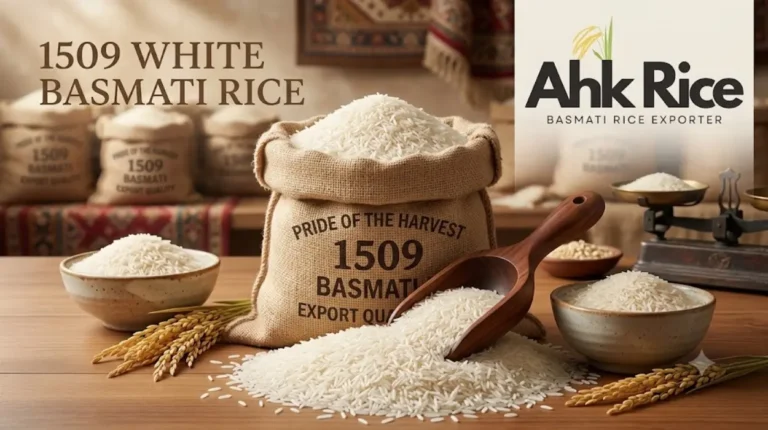
- 1509 Basmati: This early-maturing, high-yielding cultivar features a short growth cycle. It offers competitive grain length and physical presentation at an optimized price point for mass volume distribution.
Where is Pakistan Basmati rice grown?
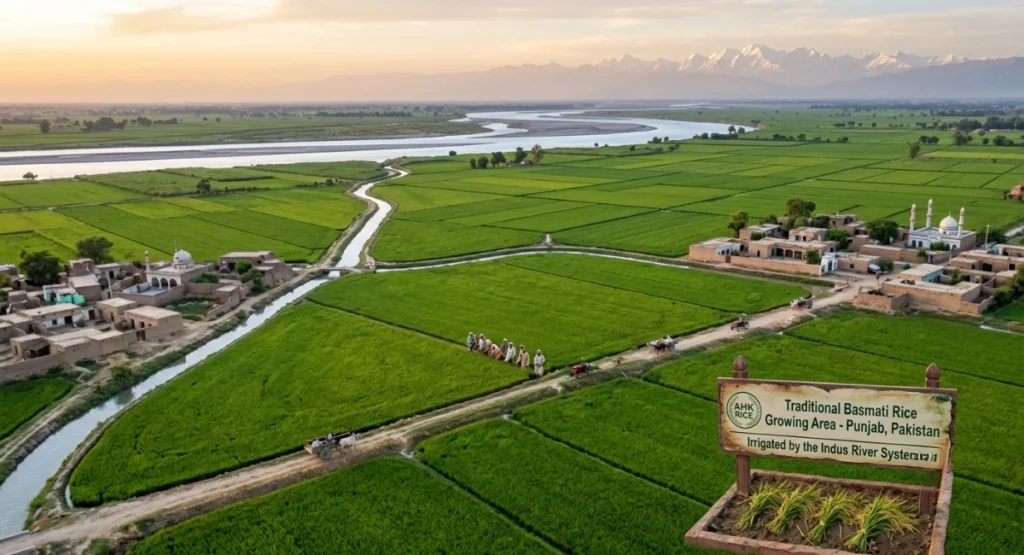
Pakistan Basmati rice grows exclusively in the traditional “Kallar Tract” and adjacent fertile plains of Punjab, encompassing specialized agricultural districts including Gujranwala, Sialkot, Sheikhupura, Nankana Sahib, Narowal, Hafizabad, Mandi Bahauddin, Jhang, and Faisalabad.
The localized geography of the Kallar Tract provides a specific combination of environmental factors that cannot be replicated in other agricultural zones. The soil consists of heavy, fine-textured alluvial deposits rich in potassium, iron, and magnesium. These minerals are continuously replenished by the extensive Indus River irrigation network, which channels snowmelt water from the Himalayan mountain ranges directly into the agricultural beds.
The seasonal climate alignment matches the biological requirements of the plant. Sowing begins during the high-temperature months of May and June, which allows the early vegetative phase to absorb maximum solar energy. The subsequent transplanting phase occurs between July and August to utilize the heavy precipitation and ambient humidity delivered by the southwest monsoon.
The final maturation phase takes place during October and November. During this period, the diurnal temperature variation widens significantly, featuring warm days and crisp, cool nights. This specific temperature drop slows down the grain-filling process, allows carbohydrates to consolidate efficiently, and locks the volatile aromatic compounds inside the endosperm.
How does the step-by-step processing work?
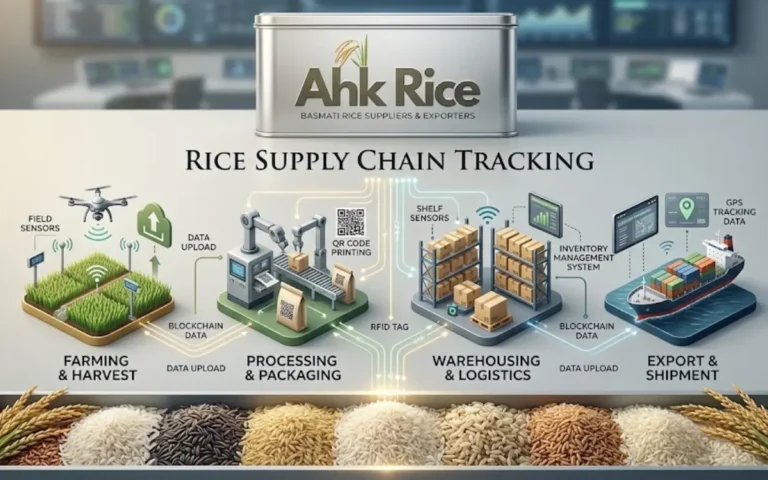
Processing raw paddy into export-ready Basmati rice involves an integrated, high-precision sequence of mechanical cleaning, husking, computerized parboiling or steaming, multi-stage milling, optical color sorting, and strict moisture-controlled aging to achieve long-term storage stability.
1.Paddy Intake and Pre-Cleaning:Moisture Check & De-Stoning.
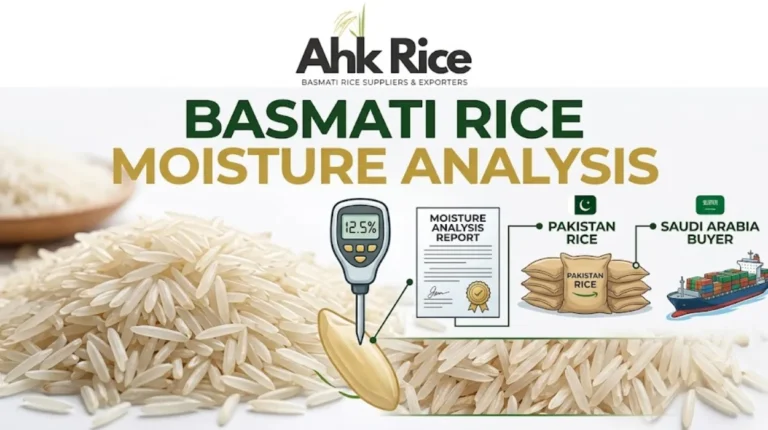
Raw paddy arrives at the mill with moisture content ranging from 18 percent to 22 percent. Mechanical scalpers remove large impurities such as straw, mud clumps, and stones. The grain passes through automated hot-air dryers until moisture content stabilizes at 12 percent to 14 percent.
2.De-Husking and Paddy Separation:Brown Rice Extraction.
Rubber rollers apply uniform pneumatic pressure to remove the tough outer hull from the grain. This process yields brown rice and separated husks. The mixture moves through a multi-tier paddy separator that utilizes gravity and surface friction to isolate un-husked paddy grains, which return to the rollers.
3.Thermal Modification:Optional Parboiling or Steaming.
For parboiled or steamed variants, grains undergo vacuum-controlled hydration followed by high-pressure steam injection. This process gelatinizes the internal starch structure. It drives water-soluble vitamins from the outer bran layer deep into the core endosperm, which reinforces the physical strength of the grain.
4.Multi-Stage Milling and Polishing:Bran Removal & Friction Tuning.
Grains pass through sequential abrasive whitening cones and mist polishers. These machines peel away the silver skin and nutrient-rich bran layers. The friction polishers utilize controlled water mist to smooth the outer starch surface, creating a clean, translucent, pearly appearance without causing thermal breakage.
5.Grading and Optical Color Sorting:Defect Elimination via CCD Cameras.
Plan-shifters segregate broken grains from full-length kernels based on length geometry. The whole grains enter high-speed optical sorters equipped with charge-coupled device cameras. These cameras scan every individual grain, using localized air jets to blast away discolored, chalky, or damaged pieces.
What are the available commercial grades?
Commercial grades of Pakistani Basmati rice are classified by specific processing finishes, physical grain dimensions, broken percentages, and aging durations, separating the harvest into Distinct White, Steamed, Parboiled, and Brown commercial designations.
The market separates the final output into clear categories that cater to diverse international buyer specifications and distinct cooking preferences:
White Rice (Well-Milled)
This grade undergoes standard abrasive milling and intense mist polishing to remove all traces of bran. The resulting grain features a bright, translucent, pearly appearance. It represents the standard format for traditional consumer packaging, requiring standard soaking times and releasing a clean, uncompromised fragrance during preparation.
Steamed Rice
Steamed grades undergo a specialized process where paddy is exposed to steam injection without prior soaking. This method hardens the outer starch layers while keeping the core raw. The final grain retains a clean white appearance but gains enhanced physical strength, preventing breakage during large-scale commercial cooking.
Parboiled Rice (Sella)
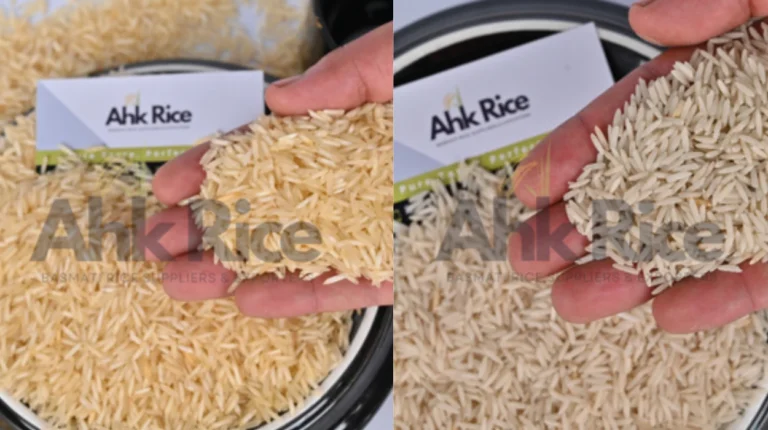
Parboiled grades undergo a full hydrothermal treatment involving deep soaking, pressure steaming, and slow drying before the milling stage. This process alters the starch structure, turning the grain into a translucent golden or creamy hue. Parboiled rice is highly durable, resists overcooking, and yields maximum volume expansion, making it the preferred choice for commercial catering.
Brown Rice (Cargo Rice)
This grade represents the grain with only the outermost protective husk removed, leaving the nutrient-dense bran layer completely intact. It appeals directly to health-conscious consumer segments looking for high dietary fiber, essential minerals, and vitamins. It serves as bulk cargo for destination countries that prefer to handle localized milling and polishing within their borders.
Which global markets import this product?
Global markets import Pakistani Basmati rice across diverse geographical zones including the Middle East, the European Union, the United Kingdom, East Africa, Central Asia, and Southeast Asia, driven by rising consumption and strict food safety compliance.
The export landscape in 2026 shows a strong recovery in premium rice shipments, supported by consistent crop quality, stable global logistics, and well-targeted export frameworks.
| Import Region | Primary Destination Countries | Core Quality Requirements | Preferred Commercial Variety |
| Middle East & GCC | Saudi Arabia, UAE, Oman, Qatar | Extra-long grain length, deep aromatic profile, aged texture | 1121 Basmati White, Super Kernel |
| European Union & UK | United Kingdom, Germany, Netherlands | Strict maximum residue limits, zero tricyclazole, full GI traceability | Super Kernel Basmati, 1121 Steamed |
| Southeast Asia | Malaysia, Indonesia, Brunei | High volume stability, competitive cost structure, long shelf-life | 1509 Basmati, Steamed Grades |
| East Africa | Kenya, Somalia, Tanzania | High caloric yield, durable grain structure, bulk affordability | Parboiled Sella, Coarse Long-Grain blends |
The Middle East and GCC region remains the largest consumer base, accounting for more than 60 percent of total premium exports. Buyers in these markets favor long-grain elongation and traditional aroma for heritage dishes.
In contrast, the European Union and the United Kingdom focus heavily on food safety standards. These destination markets enforce strict limits on pesticide residues and require comprehensive authentication to verify geographical origin, positioning premium Pakistani varieties as a reliable alternative to competing origins.
What certifications apply to the export process?
Certifications applying to the export process encompass internationally recognized food safety management protocols, strict phytosanitary clearances, localized origin authentications, and religious dietary compliance validations required by destination customs authorities.
Export operations require full compliance with international regulatory frameworks to ensure seamless customs clearance at destination ports:
- ISO 22000:2018 & HACCP: These core certifications validate the food safety management system across the entire supply chain. They prove that the processing facility monitors physical, chemical, and biological hazards from intake to final packing.
- Phytosanitary Certificate: Issued by the Department of Plant Protection, this document confirms the consignment has undergone professional fumigation and thorough inspection, certifying it free from live insects, storage pests, and quarantine pathogens.
- Certificate of Origin: Authenticated by the Rice Exporters Association of Pakistan and local Chambers of Commerce, this certificate verifies the geographical origin of the harvest, allowing buyers to utilize preferential tariff agreements.
- Halal Certification: This religious compliance documentation confirms that all processing steps, packaging materials, and storage environments conform strictly to Islamic dietary laws, which is an mandatory requirement for entering GCC markets.
- Aflatoxin and GMO-Free Certificates: Independent third-party testing laboratories issue these analytical reports to prove the shipment contains zero genetically modified organisms and complies with international safety limits for mycotoxins.
What are the common misconceptions about this product?
Common misconceptions about this product include the belief that fresh-crop rice cooks better than aged stock, that golden parboiled variants contain artificial colorants, and that long-grain elongation indicates chemical manipulation during processing.
The Aging Reality: Freshly harvested rice contains unstable starches that break down easily into a sticky paste during cooking. True culinary value requires controlled aging for 9 to 24 months, which reduces moisture, firms the starch matrix, and allows the grains to expand cleanly without clumping.
Another common misconception centers on the distinctive golden hue of parboiled Sella rice. Some buyers mistake this color for artificial additives or inferior milling. In reality, this natural tone results from the pressure-steaming process, which fuses nutrients from the outer bran layer into the core starch.
Similarly, the remarkable elongation of varieties like 1121 is sometimes incorrectly attributed to artificial stretching or synthetic additives. This expansion is entirely a natural genetic trait, triggered by the unique combination of fertile soil, fresh river water, and the specific climate conditions found across the Punjab plains.