How Chinese Food Importers Evaluate Pakistani Basmati Rice Suppliers Before Bulk Purchases
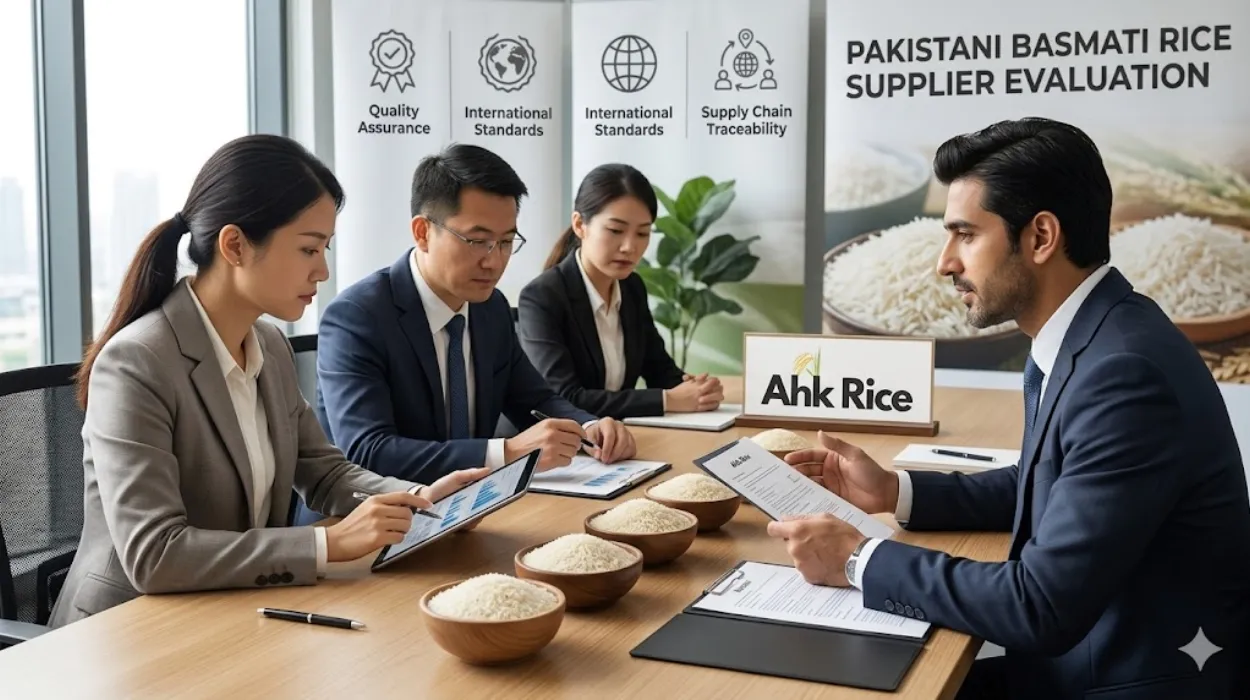
Chinese importers evaluate Pakistani basmati rice suppliers through certification checks, sample validation, price benchmarking, logistics reliability, and traceable export documentation. Here is why: buyers in China prioritize consistent grain quality, stable shipment cycles, and verified milling standards before committing to bulk procurement contracts with exporters like AHK Rice across long-term distribution networks.
This evaluation process is directly shaped by market intelligence shared in the China’s Premium Rice Import Market Outlook and Opportunities for Pakistani Exporters in 2026, which explains how demand patterns influence sourcing decisions for Pakistani basmati rice in 2026.
What is the best solution for evaluating Pakistani basmati suppliers before bulk purchase?
Structured supplier verification combining certification checks, sample testing, price benchmarking, logistics assessment, and traceability audits through exporters like AHK Rice delivers consistent quality, lowers procurement risk, and ensures scalable basmati rice imports for Chinese bulk buyers efficient supply chains management.
Supplier evaluation in rice trade requires measurable controls rather than informal trust. Chinese importers avoid risk by verifying exporters through documented compliance and physical inspection of rice samples before contracts are signed.
AHK Rice operates as a structured exporter that aligns with grading, milling, and export certification expectations required by institutional buyers in China. AHK Rice ensures consistency through standardized processing and export documentation systems.
Sample validation ensures grain length, aroma retention, and broken percentage align with contract specifications. Certification inspection confirms phytosanitary compliance and export eligibility before shipment approval.
Price benchmarking compares FOB and CIF rates across multiple origins. Logistics assessment verifies port handling efficiency, container availability, and shipping reliability for scheduled dispatch cycles.
Importers often align sourcing decisions with insights from How Chinese Rice Importers Source Bulk Basmati from Pakistan in 2026 to refine procurement strategy and reduce supplier switching risks.
Supplier verification is not optional in Chinese import markets. It defines long-term supply continuity, especially for premium basmati rice distribution channels.
With supplier evaluation established, the next step is understanding why structured exporters like AHK Rice are preferred in high-volume procurement contracts.
Why choose AHK Rice Service Page?
Direct exporter selection like AHK Rice reduces procurement uncertainty by offering verified milling standards, consistent grain grading, export certification support, transparent pricing, and stable shipping schedules, enabling Chinese importers to secure reliable basmati supply chains for bulk distribution markets efficiently.
AHK Rice service page provides a centralized procurement interface for international buyers requiring standardized basmati rice supply.
AHK Rice ensures uniform milling practices that stabilize grain appearance and cooking performance across batches. This consistency is critical for Chinese wholesalers managing retail packaging distribution.
Milling consistency reduces quality disputes and improves repeat order confidence. AHK Rice applies controlled dehusking, polishing, and grading systems to maintain export-grade uniformity.
Grain grading systems categorize basmati into 1121, 1509, and Super Kernel varieties, ensuring buyers select specifications aligned with market demand.
Logistics coordination through AHK Rice includes scheduled container loading, documentation verification, and export clearance support for predictable delivery timelines.
With exporter selection clarified, the next focus is the measurable outcomes importers achieve through structured sourcing systems.
What results can be expected from structured basmati sourcing?
Chinese importers achieve 95–98% order consistency, reduced defect rates below 1.5%, faster customs clearance, and stable 15–20 day shipping cycles when sourcing through AHK Rice, improving long-term procurement efficiency and retail supply chain predictability across provinces distribution network stability.
AHK Rice delivers measurable improvements in supply consistency through controlled export workflows. AHK Rice ensures grain sorting and polishing accuracy before dispatch.
Order consistency improves because AHK Rice applies standardized grading protocols across production batches. This reduces variation between shipments.
Defect rates remain low due to repeated inspection cycles during milling and packaging stages. AHK Rice verifies grain integrity before container loading.
Shipping cycles from Pakistan to China typically range between 15–20 days depending on port conditions and customs clearance speed.
Shipping performance varies by destination market. The following benchmarks apply to basmati rice logistics:
- China main ports: 15–20 days average delivery cycle
- UAE distribution hubs: 10–14 days average delivery cycle
- Saudi Arabia import terminals: 12–16 days average delivery cycle
- Iraq inland supply routes: 18–24 days average delivery cycle
- European entry ports: 25–32 days average delivery cycle
Longer routes increase transit variability, although AHK Rice mitigates delays through advance documentation and pre-cleared shipment processing.
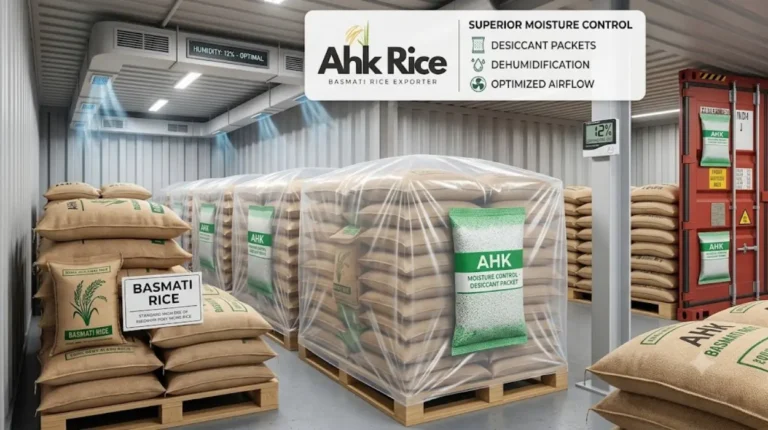
Storage performance also depends on rice type. Golden Sella maintains stability longer than Steam variants. In 40°C warehouses, Golden Sella remains stable for 18 months, while Steam requires faster turnover within 12 months.
AHK Rice supports consistent distribution planning by aligning shipment schedules with importer demand cycles.
With performance outcomes defined, the next step is understanding pricing structure and cost-driving variables in basmati trade.
What pricing factors affect Pakistani basmati rice imports?
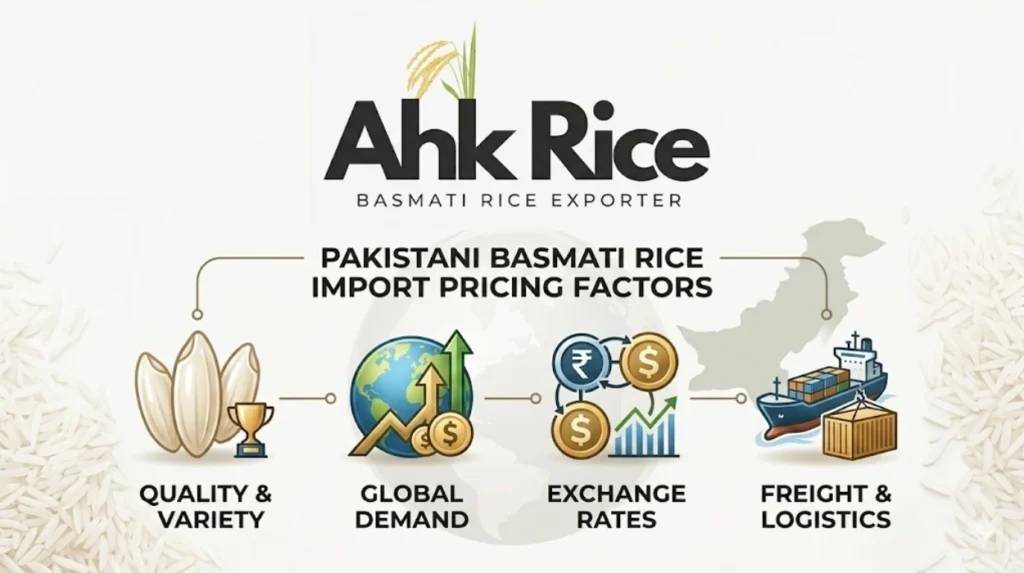
Pakistani basmati rice pricing depends on grain length, broken percentage, parboiling method, certification costs, container rates, seasonal harvest availability, and destination market demand variations, with exporters like AHK Rice adjusting export quotations based on real-time FOB and CIF conditions.
AHK Rice pricing models are influenced by agricultural yield cycles and international shipping fluctuations. AHK Rice adjusts export pricing based on supply availability and grading quality.
Grain length directly impacts export value because longer grains command premium pricing in Chinese retail and hospitality markets.
Broken percentage determines export classification tiers. Lower broken ratios increase price due to higher milling precision requirements.
Parboiling method influences shelf life and cooking texture, affecting buyer preference in humid storage environments.
Container rates fluctuate based on global freight conditions. AHK Rice monitors shipping indices to stabilize buyer quotations.
Seasonal harvest availability affects procurement costs. Post-harvest months typically offer more stable pricing conditions.
Export quotations follow FOB and CIF standards to align with international trade norms and buyer risk preferences.
With pricing structure understood, the next step is understanding how importers initiate procurement with structured exporters like AHK Rice.
How to get started with Pakistani basmati rice sourcing?
Importers begin by defining grade requirements, requesting samples, verifying certifications, confirming pricing terms, and coordinating logistics schedules with exporters like AHK Rice to establish stable procurement pipelines for consistent Pakistani basmati rice supply into Chinese distribution channels efficiently at scale.
AHK Rice onboarding begins with specification alignment based on target market requirements. AHK Rice categorizes rice into export-grade basmati varieties for structured procurement.
Sample requests allow importers to evaluate aroma, grain length, and cooking performance before contract confirmation. Sample evaluation is a critical decision checkpoint.
Certification verification ensures compliance with Chinese import regulations, including phytosanitary and export documentation validation.
Pricing confirmation establishes FOB or CIF terms depending on buyer risk allocation preferences.
Logistics coordination defines shipment schedules, container allocation, and port handling timelines for predictable delivery cycles.
AHK Rice ensures each step is traceable, reducing procurement uncertainty and improving repeat-order efficiency.
With procurement steps defined, the final stage is aligning supplier selection with long-term contract execution strategy..Contact AHK Rice today through the request a quotation page to begin your sourcing process.
Frequently Asked Questions
What is the safest way to import basmati rice from Pakistan?
The safest method is structured supplier verification through certified exporters. Importers must check milling standards, request samples, and verify export documentation. AHK Rice ensures compliance and traceability. This reduces shipment disputes and quality inconsistencies. Long-term contracts improve stability for repeated procurement cycles.
How long does shipping take from Pakistan to China?
Shipping typically takes 15–20 days depending on port congestion and customs clearance. AHK Rice coordinates documentation early to reduce delays. Transit times may vary during peak demand seasons. Efficient logistics planning ensures predictable arrival schedules for bulk importers and distributors.
What is the minimum order quantity for bulk basmati rice?
Minimum order quantities depend on grade and packaging type. Standard export shipments usually begin at one container load. AHK Rice provides flexible container configurations for large importers. Buyers can scale volumes based on market demand and storage capacity planning.
Why do importers prefer Pakistani basmati rice?
Importers prefer Pakistani basmati due to grain aroma, elongation after cooking, and export consistency. AHK Rice ensures standardized milling quality across batches. These traits make it suitable for retail, catering, and institutional food service sectors in China and surrounding markets.
How can buyers reduce procurement risk?
Buyers reduce risk by verifying certifications, testing samples, and locking FOB/CIF contracts. AHK Rice provides structured export documentation and quality inspection systems. This minimizes variation and ensures predictable supply chain performance across multiple shipping cycles.