Rice Import Regulations and SRA Permit Requirements in Philippines 2026
Rice import regulations in the Philippines for 2026 define the legal framework governing rice entry, requiring import permits, compliance with quality standards, and coordination with authorities like the Sugar Regulatory Administration, National Food Authority, and plant quarantine services.
Rice import regulations in the Philippines control how foreign rice enters the domestic market. These rules protect food security, stabilize prices, and ensure quality standards. The system operates under structured policies influenced by the Rice Tariffication Law and administrative guidelines enforced by multiple agencies.
The regulatory framework includes tariff-based importation, permit issuance, and strict inspection protocols. Importers must align with national quotas such as the Minimum Access Volume and meet phytosanitary requirements before shipment arrival.
The Philippine government uses these regulations to balance supply and demand. This ensures sufficient rice availability while protecting local farmers from market shocks.
How does the SRA rice import permit system work in 2026?
The SRA rice import permit system requires importers to register, apply for allocation, secure documentation, and comply with inspection standards before receiving approval to import rice into the Philippines legally.
The permit process begins with importer registration. Businesses must be accredited with government agencies involved in agricultural imports. This includes financial capability verification and compliance history checks.
After registration, importers submit an application specifying volume, origin, and rice type. The application aligns with quota allocations such as the Minimum Access Volume, which defines how much rice can enter under preferential tariffs.
Approval depends on documentation completeness and quota availability. Once approved, the importer receives a permit that authorizes shipment. Without this permit, rice shipments are denied entry or penalized.
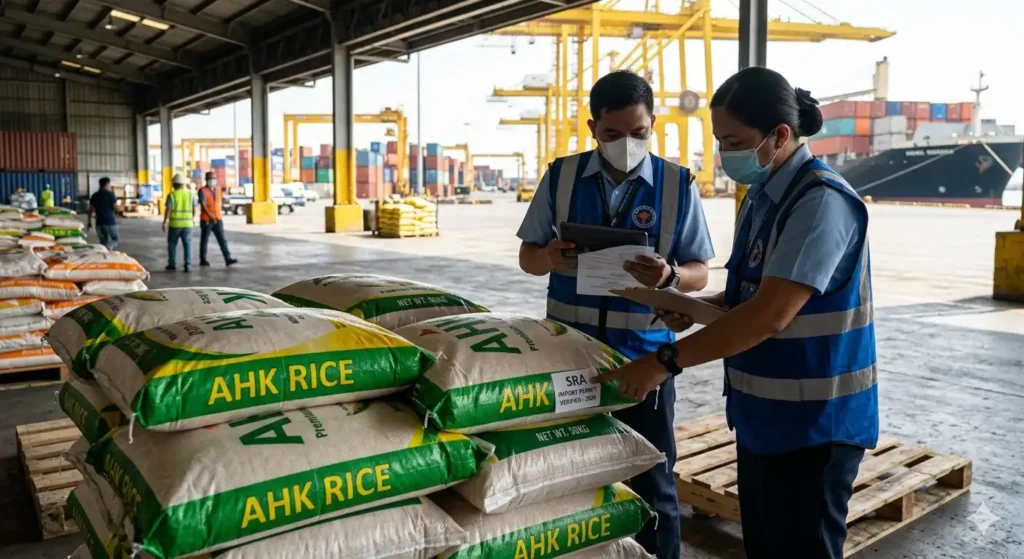
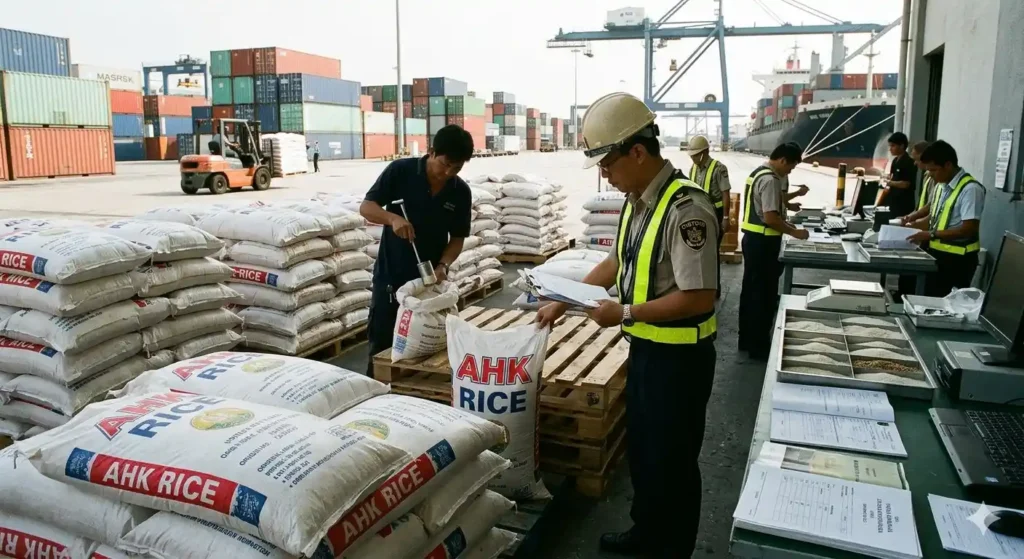
Inspection follows arrival. Authorities verify documentation, test quality, and confirm compliance with phytosanitary standards. Only after clearance can rice enter the domestic supply chain.
What are the key components of rice import regulations in the Philippines?
Key components include import permits, tariff structures, minimum access volume quotas, phytosanitary certification, customs clearance procedures, and quality inspection systems enforced by Philippine regulatory agencies.
Import Permit System
The permit is the central requirement. It confirms that the importer is authorized and that the shipment complies with national policy.
Tariff Structure
Rice imports are subject to tariffs instead of quantitative restrictions. These tariffs vary depending on ASEAN or non-ASEAN origin. For example, ASEAN rice imports follow lower tariff rates compared to non-ASEAN shipments.
Minimum Access Volume (MAV)
The Minimum Access Volume defines the maximum quantity of rice allowed under reduced tariff rates. This quota ensures controlled importation while maintaining trade commitments.
Phytosanitary Certification
Every shipment must include a phytosanitary certificate issued by the exporting country. This document confirms the rice is free from pests and diseases.
Customs Clearance
Upon arrival, shipments undergo customs procedures. Authorities verify declared value, quantity, and classification before releasing goods.
Quality Inspection
Government agencies inspect rice for moisture content, broken percentage, and contamination. For example, 5% broken rice and 25% broken rice are classified differently and must match declared grades.
Why are rice import regulations important for the Philippines?
Rice import regulations ensure food security, stabilize domestic prices, protect farmers, maintain quality standards, and regulate supply through controlled import volumes and structured tariffs.
Rice is a staple food in the Philippines. Regulation ensures consistent availability across regions. Without structured import controls, supply fluctuations would create price instability.
The system protects local farmers. Controlled imports prevent excessive foreign rice from lowering farm-gate prices. This supports agricultural sustainability.
Quality control is another benefit. Imported rice must meet national standards. This ensures consumers receive safe and consistent products.
Revenue generation also plays a role. Tariffs collected from imports contribute to government funds, which are often reinvested into agricultural development programs.
How does the Minimum Access Volume affect rice imports in 2026?
The Minimum Access Volume sets a quota for rice imports at reduced tariff rates, ensuring controlled entry volumes while fulfilling international trade obligations and stabilizing domestic supply.
The MAV system regulates how much rice enters the country under favorable tariff conditions. Importers compete for allocation within this quota.
For example, if the MAV is set at a specific tonnage annually, only that quantity benefits from reduced tariffs. Imports beyond this volume face higher duties.
This system balances trade openness with domestic protection. It allows sufficient imports without overwhelming local production.
Importers must strategically plan shipments based on MAV availability. Timing and allocation directly impact profitability and compliance.
What are phytosanitary requirements for rice imports into the Philippines?
Phytosanitary requirements mandate that imported rice must be certified free from pests, diseases, and contaminants, supported by official documentation and verified through inspection upon arrival.
Phytosanitary compliance starts in the exporting country. Authorities issue a certificate confirming that the rice meets plant health standards.
Upon arrival in the Philippines, quarantine officers inspect shipments. They check for insects, fungal contamination, and other risks.
Non-compliance leads to rejection, destruction, or re-export of the shipment. This strict enforcement protects local agriculture from invasive species.
Examples of phytosanitary concerns include grain borers, fungal spores, and contamination from storage pests. Each poses a risk to domestic crops and food safety.
What role does the National Food Authority play in rice imports?
The National Food Authority regulates buffer stock management, monitors rice supply, and participates in import oversight to ensure national food security objectives are met.
The National Food Authority (NFA) oversees rice supply stability. It maintains buffer stocks to address shortages and emergencies.
While private traders handle most imports, the NFA monitors market conditions. It intervenes when necessary to stabilize prices.
The agency also ensures that imported rice aligns with national standards. It collaborates with customs and quarantine authorities during inspections.
The NFA’s role connects import regulation with food security policy. This ensures that imports serve national interests rather than purely commercial goals.
What are common use cases for rice import permits in the Philippines?
Rice import permits are used by private traders, food distributors, wholesalers, and institutional buyers to legally import rice for commercial distribution and supply chain continuity.
Private traders use permits to import bulk rice for resale in local markets. These traders supply supermarkets, wholesalers, and retailers.
Food distributors import rice to ensure consistent supply across regions. This supports urban demand where local production is insufficient.
Institutional buyers such as food processors and large-scale catering services rely on imports to meet volume requirements. For example, packaged rice brands and food service providers depend on steady imports.
Each use case requires strict compliance with permit conditions, including declared volume, origin, and quality specifications.
What are common problems and misconceptions about rice import regulations?
Common problems include misunderstanding permit requirements, misclassification of rice grades, incomplete documentation, and the misconception that tariffs eliminate all import restrictions.
One major issue is incomplete documentation. Missing certificates or incorrect declarations delay clearance or result in penalties.
Another problem is incorrect grade classification. For example, declaring 5% broken rice as 25% broken creates compliance violations.
A common misconception is that tariffs replace all restrictions. In reality, permits, quotas, and inspections still apply.
Importers also misunderstand phytosanitary rules. Compliance requires strict adherence to plant health standards, not just paperwork.
Operational delays occur when importers fail to align shipment timing with permit validity. This leads to storage costs and logistical disruptions.
How do rice import regulations impact global exporters and supply chains?
Rice import regulations influence exporter strategies, pricing structures, shipment timing, and compliance requirements, shaping how international suppliers access the Philippine market.
Exporters must align production and processing with Philippine standards. This includes quality grading, packaging, and certification.
Shipment planning depends on permit approval timelines. Exporters coordinate closely with importers to avoid delays.
Pricing strategies reflect tariff structures. ASEAN exporters benefit from lower tariffs, influencing sourcing decisions.
Supply chains become more structured. Documentation, inspection, and compliance checkpoints define each stage from origin to destination.
For example, exporters shipping 1121 basmati or long-grain varieties must ensure correct classification and documentation before dispatch.