Super Kernel White Basmati Rice: Grain Profile and Global Export Demand
Super kernel white basmati rice is a long-grain aromatic rice type from the basmati family, known for its slender kernel, white polished finish, and distinct fragrance. It is widely exported because it combines premium grain appearance, soft cooked texture, and strong market recognition in international rice trade.
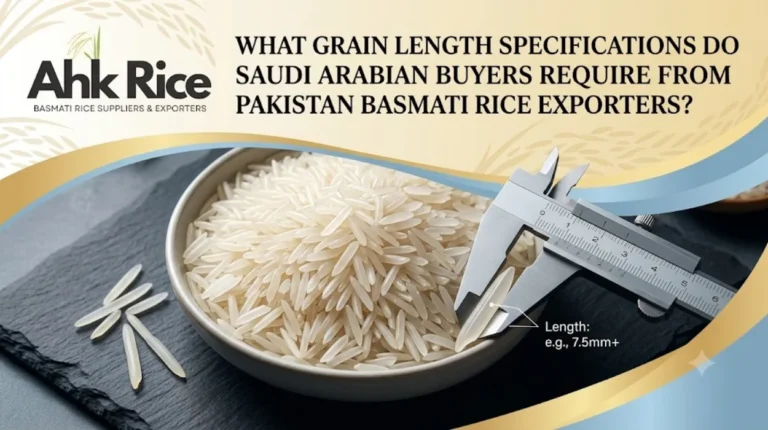
Super kernel white basmati rice belongs to the aromatic rice segment. It is identified by its extra-long grain, fine elongation after cooking, and signature basmati aroma. The “super kernel” label refers to the premium grain class within white basmati, where the grains are longer and more visually uniform than standard basmati grades.
This rice is valued in export markets because buyers associate it with consistency, premium presentation, and cooking performance. It is used by importers who want a polished white grain that suits retail packs, food service, and premium grocery shelves. In trade language, super kernel white export describes both the product type and the export channel used to send it to overseas buyers.
Basmati rice is not just a commodity in many markets. It is a branded grain category built around aroma, elongation, taste, and appearance. Super kernel white basmati sits near the top of that category because it offers a clean grain profile and a strong commercial fit for markets that prefer white aromatic rice.
Where is super kernel white basmati rice grown?
Super kernel white basmati rice is grown in the basmati belt of South Asia, with Punjab in Pakistan and India forming the core production zone. The variety depends on fertile alluvial soil, controlled irrigation, and a climate that supports long-grain development and aromatic quality.
Punjab is the most important production region for export basmati. The soil structure, seasonal temperature pattern, and water management systems create conditions that support kernel length and aroma retention. Pakistani Punjab is especially important for export-oriented basmati farming because it has a strong supply chain from field to mill for Super Kernel White vs 1121 White Basmati: Aroma and Price Compared.
The grain profile begins in the field. Farmers select seed, prepare nursery beds, transplant seedlings, and manage irrigation across the growing cycle. The crop matures into long slender paddy before harvesting. After harvest, the paddy moves into drying, milling, and grading systems that define the final export quality.
This origin matters in global trade because buyers often ask for traceability. They want to know the country, the province, and the crop origin because those details affect confidence in aroma, grain length, moisture control, and export compliance. Super kernel white basmati rice with a clear Punjab origin often carries stronger market trust.
How is super kernel white basmati rice processed?
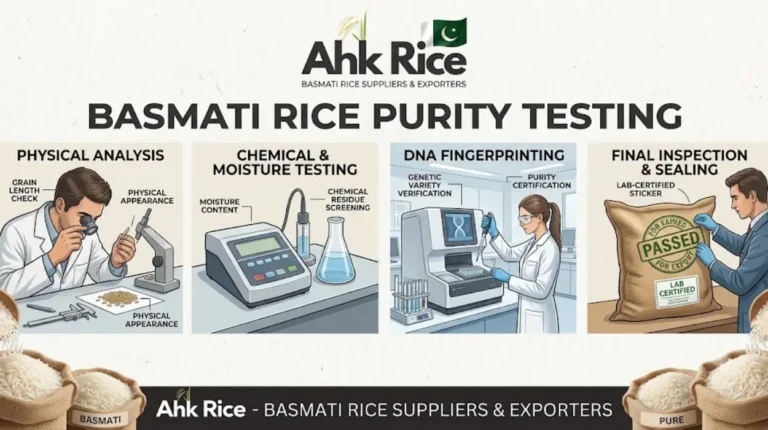
Super kernel white basmati rice is processed through drying, cleaning, dehusking, whitening, polishing, grading, sorting, and packing. Each step protects grain quality and separates export-grade rice from broken, discoloured, or mixed material.
Processing starts after harvest. The paddy is dried to reduce moisture and stabilise storage quality. Proper drying prevents cracking during milling and helps preserve grain integrity. Once dried, the paddy is cleaned to remove straw, dust, stones, and foreign particles.
The next stage is husk removal. The outer hull is separated from the paddy to reveal brown rice. After that, whitening and polishing remove the bran layer and produce the white polished finish expected in premium white basmati. This stage shapes the final visual appearance of the grain.
Grading and sorting come next. Mills separate the rice by kernel length, broken percentage, chalky grains, and colour consistency. Optical sorters remove defective grains and impurities. The final stage is packing, where rice is filled into bulk bags or consumer packs under controlled weight and export specifications. Custom packaging often includes private-label sacks, printed cartons, and retail pouches for destination markets.
What are the key grain profile features?
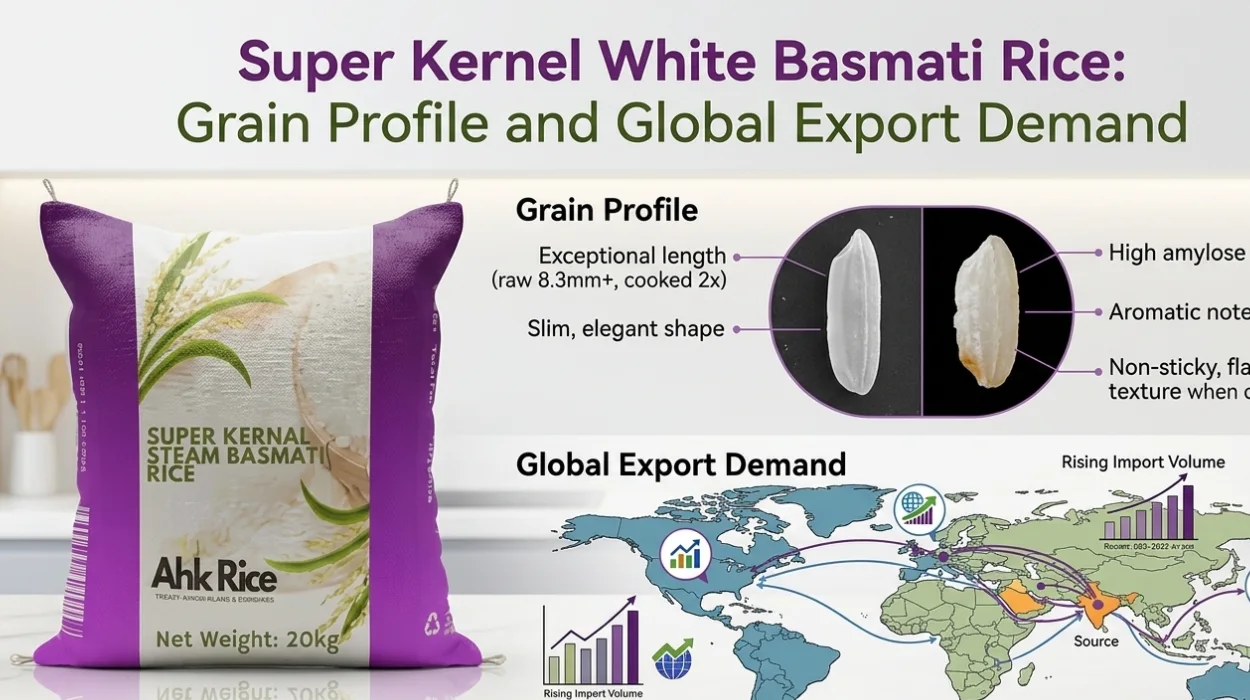
Super kernel white basmati rice has a long, slender grain profile, a smooth white finish, and a pronounced aromatic identity. It cooks into separate, elongated grains, which makes it suitable for premium retail and food service demand across export markets.
The grain profile is the main commercial reason for demand. Super kernel rice is usually longer than standard white rice and more uniform in shape. That creates visual appeal in packaged goods and plated dishes. The grain does not clump heavily when cooked, which makes it desirable in markets that value light, separate rice.
Aromatic quality is another key feature. White basmati retains a natural fragrance that is distinct from ordinary long-grain rice. That aroma forms part of the sensory value that importers and consumers expect. In many markets, aroma functions as a premium signal and supports higher retail positioning.
The cooked texture also matters. Good super kernel white basmati has a soft bite with clean elongation after cooking. That combination is preferred in households, restaurants, and catering operations where presentation and texture both matter. The grain profile therefore determines both price tier and buyer intent.
Why is global export demand strong?
Global export demand for super kernel white basmati rice remains strong because the product combines premium grain appearance, aromatic appeal, and broad culinary use. Import markets value it for retail branding, restaurant service, and cultural food preferences linked to basmati rice.
Demand is strong in countries with established South Asian communities and in premium rice markets that recognise basmati as a quality category. Consumers in these markets look for long grains, fragrance, and cooking separation. That makes super kernel white export a commercially stable segment.
International buyers also prefer products that support repeat purchasing. Rice is a staple item, so consistency matters more than novelty. Once importers find a stable grade with dependable milling quality, they often maintain long-term supply relationships. This creates recurring demand for premium white basmati.
The product also benefits from trade segmentation. Super kernel white basmati sits above ordinary long-grain rice in price and branding. It occupies a premium position without being as niche as specialty heritage rice. That balance supports strong movement across wholesale, retail, and food-service channels.
Which markets import super kernel white basmati rice?
Super kernel white basmati rice is imported by markets in the Middle East, Europe, North America, and parts of Africa and Asia. These markets buy it for retail distribution, restaurants, ethnic grocery channels, and institutional food supply.
The Middle East is one of the most important basmati import regions. Countries in this region value aromatic rice for everyday meals and banquet cooking. Europe also imports large volumes through ethnic food stores, mainstream supermarkets, and food distributors that serve diverse consumer groups.
North American demand comes from both retail and food service. Buyers in the US and Canada often seek premium aromatic white rice with clear origin and food safety documentation. African markets import basmati for urban retail and hospitality supply, especially where imported rice is positioned as a premium staple.
Asian markets outside the main basmati belt also import it for re-export, blending, and speciality retail. The demand profile varies by country, but the common factor is premium grain preference. Exporters track destination-specific pack sizes, residue rules, and certificate requirements for each region.
What grades and varieties are available?
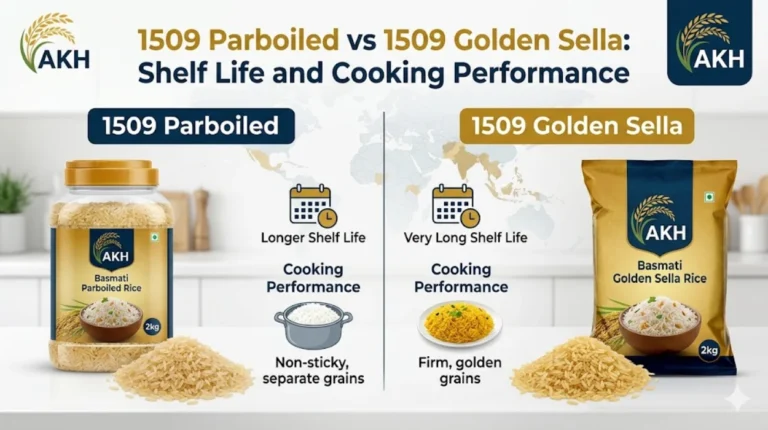
Super kernel white basmati rice is one grade within a wider basmati export portfolio that includes 1121, Super Kernel, and 1509 varieties. These grades differ in grain length, aroma intensity, cooking expansion, and buyer preference across export markets.
1121 basmati is widely known for its extra-long grain and strong elongation. It is a premium export category and often commands strong demand in high-end markets. Super Kernel is also positioned as a premium white basmati type, with a focus on polished grain quality and attractive cooking performance.
1509 basmati is another important export variety. It is valued for its agronomic strength, commercial yield, and market accessibility. Some buyers prefer it for price balance, while others prioritise 1121 or super kernel for grain appearance and aroma. The right choice depends on end-market use, price bracket, and packaging format.
Other rice forms also enter the export conversation. Aromatic white rice, premium white basmati, and parboiled rice each serve different buyer segments. Exporters often maintain multiple grades because importers request different specifications for retail shelves, hospitality kitchens, and bulk distribution.
What are the benefits for importers and consumers?
Super kernel white basmati rice offers visual appeal, cooking separation, aromatic identity, and premium market positioning. Importers use these features to support branding, shelf differentiation, and repeat sales in competitive rice categories.
The first benefit is grain appearance. Super kernel rice looks premium in a retail bag because it is long, white, and relatively uniform. That visual profile helps retailers position it as a higher-value product than standard white rice.
The second benefit is cooking performance. The grain elongates after cooking and stays separate when prepared properly. That makes it suitable for biryani, pilaf, fried rice, and general table use. Consumers value that texture because it supports both home cooking and banquet service.
The third benefit is market trust. Basmati rice has a clear identity in international trade, and super kernel white rice fits into that premium identity. Importers can use this recognition in their own markets, especially where aromatic rice is associated with quality and authenticity.
What are the common export problems and misconceptions?
Common export problems include broken grains, moisture imbalance, inconsistent polishing, and weak documentation. A common misconception is that all white basmati grades perform the same in trade, when grain profile, residue compliance, and packaging standards change buyer acceptance.
Broken grain percentage is one of the main quality issues. If milling is poor or paddy is over-dried, the result is more broken rice and lower export value. Moisture imbalance also creates storage risk and can affect shelf stability. Both issues reduce consistency in shipment quality.
Another problem is misunderstanding grade differences. Buyers often assume every premium white rice is interchangeable. In practice, super kernel white basmati, 1121, and 1509 each have different market uses. The wrong specification can cause rejected offers or pricing disputes.
Documentation is equally important. Export markets require phytosanitary certificates, origin documents, packing lists, and food safety compliance papers. If these are incomplete, the shipment faces delay or rejection. Export success depends on matching grain quality with market paperwork.
Which certifications and trade documents apply?
Super kernel white basmati rice exports commonly rely on phytosanitary certificates, certificate of origin, packing lists, commercial invoices, and food safety compliance documents. Destination markets also apply residue limits, labelling rules, and import registration standards.
Phytosanitary certificates confirm that the shipment meets plant health requirements. Certificate of origin verifies where the rice was grown and processed. Packing lists and invoices support customs clearance and transaction traceability. These documents are standard in most rice export routes.
Food safety standards matter in premium rice trade. Buyers may request laboratory reports for moisture, pesticide residue, and contamination checks. Some markets require additional halal, HACCP, ISO, or BRC-related compliance depending on channel and buyer policy. The exact requirement depends on the importing country.
Labelling is another important factor. Packs often need product name, net weight, origin, batch number, and manufacturing date. For retail exports, packaging must align with local language rules and consumer labelling law. Certification and documentation give trade confidence and reduce border delays.
How does super kernel white basmati fit into global demand trends?
Super kernel white basmati rice fits global demand trends because premium staple foods continue to perform well in export trade, especially in markets that value aroma, grain length, and origin transparency. Its role is strongest where rice quality influences household choice and restaurant presentation.
Consumers continue to pay for rice that looks better and cooks better. That keeps super kernel white basmati in demand even when commodity rice prices shift. Premium rice categories hold value because buyers connect them with consistency and identity.
The product also fits modern trade preferences for traceable agricultural goods. Importers want origin clarity, clean packaging, and verifiable processing steps. Exporters that provide full processing and custom packaging meet those expectations more effectively.
Super kernel white basmati rice therefore sits at the intersection of agriculture, milling, packaging, and international food trade. Its grain profile, processing method, and export readiness all support its global demand.