Rice Packaging Sizes and French Labelling Rules for Ivory Coast 2026
Rice packaging in Ivory Coast defines the standardized bag sizes, materials, and labelling formats required for retail and bulk trade, while French labelling rules ensure all product information is clearly written in French for legal compliance and consumer understanding in 2026.
Rice packaging in Ivory Coast refers to how rice is measured, packed, labeled, and distributed across wholesale and retail markets. Ivory Coast, officially Côte d’Ivoire, uses French as its official language. Every rice product sold in the country must display information in French to meet regulatory standards.
Packaging is not only about containment. It directly affects customs clearance, shelf placement, and buyer trust. Importers require uniform sizes such as 5 kg, 25 kg, and 50 kg bags. Each size serves a distinct market segment. Retail buyers prefer smaller units, while wholesalers demand bulk packaging.
French labelling rules are enforced to ensure traceability. These rules include product name, origin, net weight, production date, and importer details. Without proper labeling, shipments are delayed or rejected at ports such as Abidjan.
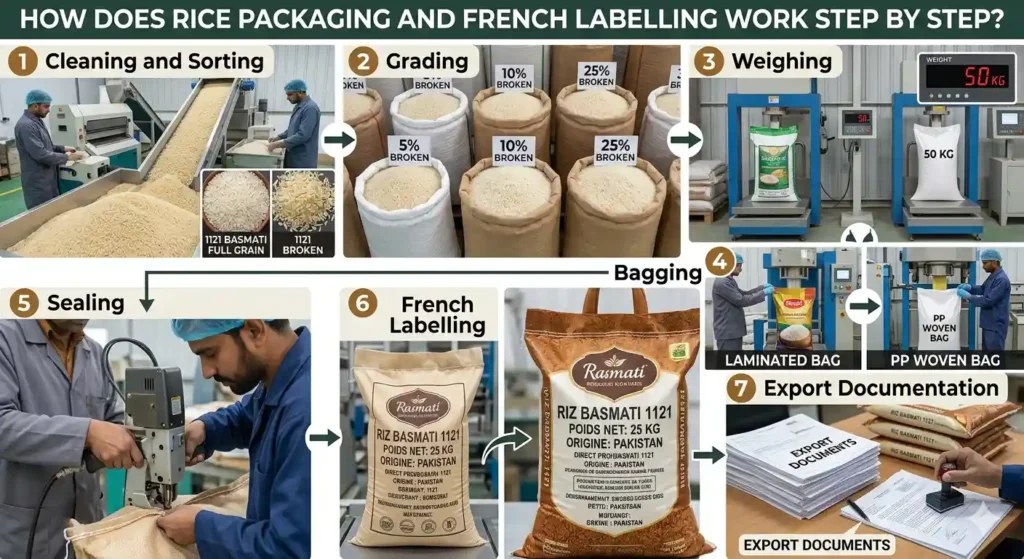
How does rice packaging and French labelling work step by step?
Rice packaging and French labelling work through a structured process involving cleaning, grading, weighing, bagging, sealing, and printing mandatory French information before export documentation and shipment to Ivory Coast.
Step 1: Cleaning and Sorting
Raw paddy is processed to remove husk, stones, and broken grains. Machines separate full grains from broken rice. For example, 1121 Basmati full grain differs from 1121 broken.
Step 2: Grading
Rice is categorized into grades such as 5% broken, 10% broken, and 25% broken. Each grade determines packaging type and target market.
Step 3: Weighing
Rice is measured using calibrated machines. Standard weights include 1 kg, 5 kg, 10 kg, 25 kg, and 50 kg. Each unit must match declared weight exactly.
Step 4: Bagging
Rice is filled into packaging materials such as PP woven bags, BOPP laminated bags, or jute sacks. For example, retail packs use laminated bags, while bulk uses woven polypropylene.
Step 5: Sealing
Bags are sealed using stitching or heat sealing. Airtight sealing protects rice from moisture and pests.
Step 6: French Labelling
Labels are printed directly on bags or attached as stickers. Information is written in French. For example:
- “Riz Basmati 1121”
- “Poids Net: 25 kg”
- “Origine: Pakistan”
Step 7: Export Documentation
Packaging details must match export documents such as invoices, packing lists, and certificates.
What are the key components of rice packaging for Ivory Coast?
Key components include packaging material, standardized bag sizes, labeling elements in French, sealing methods, and compliance markings required for customs clearance and retail distribution in Ivory Coast.
Packaging Materials
Different materials serve different purposes:
- Polypropylene (PP) woven bags for durability
- BOPP laminated bags for branding and moisture resistance
- Jute bags for traditional bulk transport
Each material impacts shelf life and transport safety.
Standard Bag Sizes
Ivory Coast uses defined packaging sizes:
- Small packs: 1 kg, 2 kg, 5 kg
- Medium packs: 10 kg, 25 kg
- Bulk packs: 50 kg
Retail chains prefer 5 kg and 10 kg packs. Wholesale markets rely on 25 kg and 50 kg bags.
French Labelling Elements
Mandatory label components include:
- Product name (Riz)
- Variety (Basmati, Parboiled)
- Net weight (Poids Net)
- Country of origin (Origine)
- Production and expiry dates
- Importer details
Sealing and Safety
Sealing prevents contamination. Double stitching is used for 50 kg bags. Heat sealing is used for smaller packs.
Compliance Marks
Marks such as batch number and barcode improve traceability. These are required for modern retail distribution.
What benefits do proper rice packaging and French labelling provide?
Proper rice packaging and French labelling improve product safety, ensure legal compliance, enhance shelf appeal, enable efficient logistics, and increase buyer confidence in Ivory Coast’s competitive rice market.
Packaging protects rice from moisture, insects, and physical damage. This protection maintains grain quality during long sea transit from Pakistan to West Africa.
French labeling ensures compliance with national regulations. Authorities inspect labels before allowing entry into the market. Clear information reduces disputes between importer and exporter.
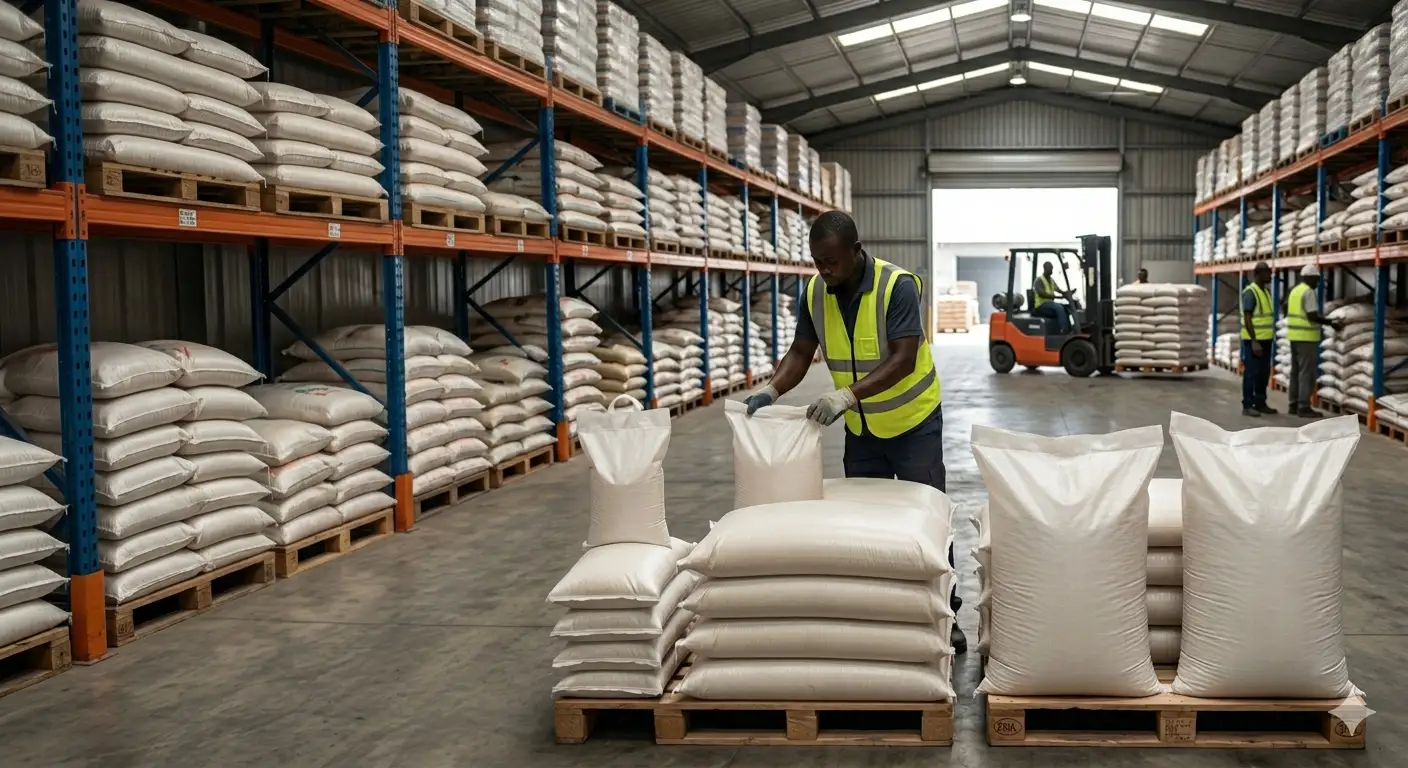
Standard sizes improve logistics efficiency. Containers are loaded based on uniform bag dimensions. For example, a 20-foot container holds approximately 25 metric tons using 50 kg bags.
Packaging also affects retail performance. Attractive BOPP bags with clear French text improve visibility in supermarkets. This increases product turnover.
Where are different rice packaging sizes used in Ivory Coast?
Different rice packaging sizes are used across retail stores, wholesale markets, government supply chains, and food service sectors, each requiring specific bag weights such as 5 kg for households and 50 kg for bulk distribution.
Retail Stores
Supermarkets and small shops sell rice in 1 kg, 2 kg, and 5 kg packs. These sizes target daily household consumption.
Wholesale Markets
Large traders operate in bulk quantities. They use 25 kg and 50 kg bags. These bags are resold in smaller units.
Government Supply Programs
Public distribution programs procure rice in 50 kg bags. These are redistributed to communities.
Food Service Sector
Restaurants and catering businesses purchase 25 kg bags. This size balances storage and consumption.
What are common problems in rice packaging and French labelling?
Common problems include incorrect French translations, mismatched weight declarations, poor sealing, non-standard bag sizes, and missing regulatory information, all of which lead to shipment delays or rejection in Ivory Coast.
Incorrect Translation
Labels translated poorly into French create confusion. For example, incorrect spelling of “Poids Net” leads to non-compliance.
Weight Mismatch
Declared weight must match actual weight. Even a 0.5 kg difference in a 25 kg bag leads to penalties.
Poor Packaging Quality
Low-quality bags tear during transport. This causes product loss and contamination.
Missing Information
Labels missing origin or importer details fail customs inspection.
Non-Standard Sizes
Using uncommon sizes such as 30 kg disrupts distribution. Buyers prefer standardized weights.
How do rice packaging sizes impact logistics and export efficiency?
Rice packaging sizes directly influence container loading efficiency, freight cost per ton, storage handling, and distribution speed across Ivory Coast’s supply chain.
Standardization improves container utilization. A 50 kg bag allows maximum stacking efficiency. Smaller bags increase handling time but improve retail accessibility.
Transport costs depend on packaging. Bulk packaging reduces cost per ton. Retail packaging increases cost due to additional material and labeling requirements.
Storage efficiency also depends on bag size. Warehouses stack 50 kg bags in pallets. Smaller bags require shelving systems.
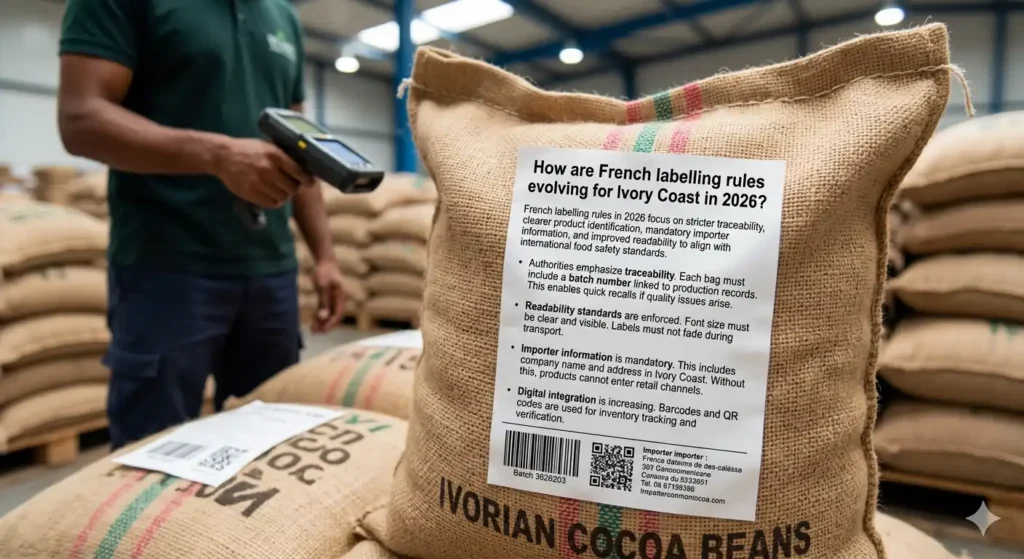
How are French labelling rules evolving for Ivory Coast in 2026?
French labelling rules in 2026 focus on stricter traceability, clearer product identification, mandatory importer information, and improved readability to align with international food safety standards.
Authorities emphasize traceability. Each bag must include a batch number linked to production records. This enables quick recalls if quality issues arise.
Readability standards are enforced. Font size must be clear and visible. Labels must not fade during transport.
Importer information is mandatory. This includes company name and address in Ivory Coast. Without this, products cannot enter retail channels.
Digital integration is increasing. Barcodes and QR codes are used for inventory tracking and verification.
How does rice packaging connect with broader export processes?
Rice packaging connects directly with inspection, certification, shipping documentation, and customs clearance, making it a central element in the entire rice export chain to Ivory Coast.
Packaging must match export documents exactly. For example, the packing list must reflect the same bag size and quantity as the shipment.
Inspection agencies verify packaging quality and labeling accuracy before shipment. Certificates confirm compliance with international standards.
Shipping lines require proper packaging to prevent cargo damage. Improper packaging leads to insurance issues.
Customs authorities in Ivory Coast inspect packaging upon arrival. Any mismatch leads to delays.