Rice Packaging Sizes and GCC Labelling Standards for Qatar in 2026
Rice packaging sizes and GCC labelling standards for Qatar in 2026 define the approved weight formats, material structures, and mandatory Arabic-English labeling requirements for imported rice, ensuring traceability, consumer safety, regulatory compliance, and uniform retail and bulk distribution across the Qatar food market ecosystem.
Rice packaging sizes refer to the standardized weights and formats used for distributing rice across wholesale and retail channels. In Qatar, these sizes align with supply chain efficiency and consumer purchasing behavior. GCC labelling standards refer to regulations enforced across Gulf Cooperation Council countries that define how food products must be labeled.
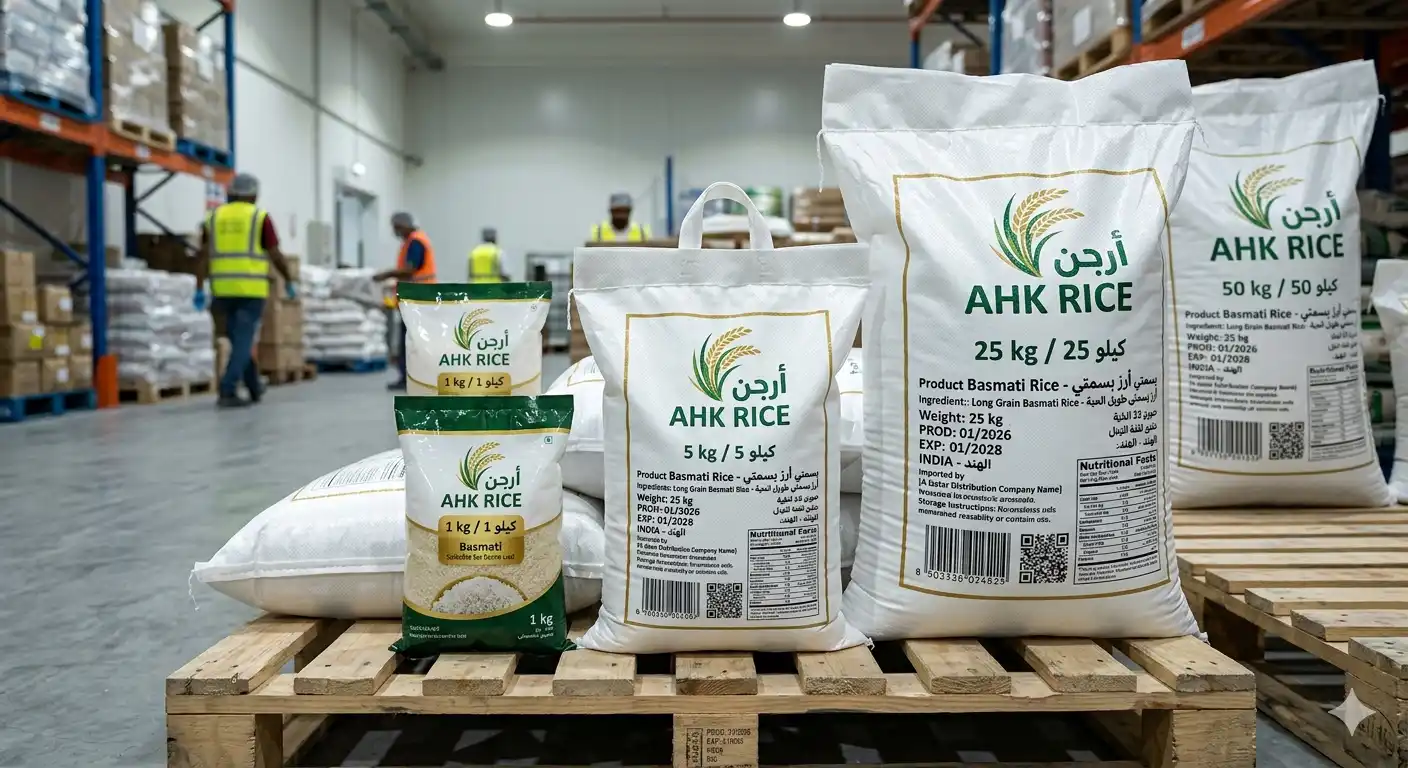
These standards ensure that rice imported into Qatar meets strict requirements for identification, origin, safety, and shelf life. Every rice bag, whether 1 kg or 50 kg, must carry clear, verifiable information in Arabic and English.
Packaging and labeling operate as a unified system. Packaging protects the product physically, while labeling communicates product identity and compliance details.
How do rice packaging sizes function in the Qatar market?
Rice packaging sizes in Qatar function by segmenting the market into retail, food service, and bulk distribution channels, with standardized weights such as 1 kg, 5 kg, 10 kg, 25 kg, and 50 kg enabling efficient logistics, inventory control, and consumer accessibility across diverse demand segments.
Packaging sizes directly reflect market segmentation. Retail consumers prefer smaller units, while restaurants and wholesalers require larger volumes.
Retail Packaging Sizes
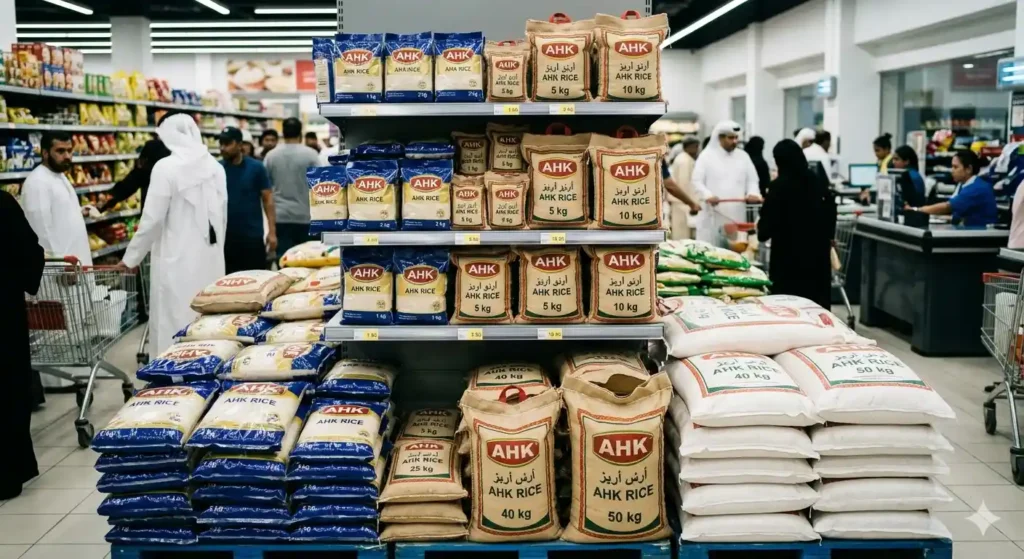
Retail rice packaging in Qatar includes:
- 1 kg for small households
- 2 kg for frequent consumption
- 5 kg as the most common family size
- 10 kg for bulk home buyers
These sizes are designed for shelf placement in supermarkets. Lightweight packaging materials such as laminated plastic or woven polypropylene ensure durability and visual appeal.
Food Service Packaging
Hotels, restaurants, and catering businesses use:
- 10 kg
- 20 kg
- 25 kg
These sizes balance storage convenience and consumption rate.
Bulk Packaging Sizes
Wholesale and institutional buyers use:
- 25 kg
- 40 kg
- 50 kg
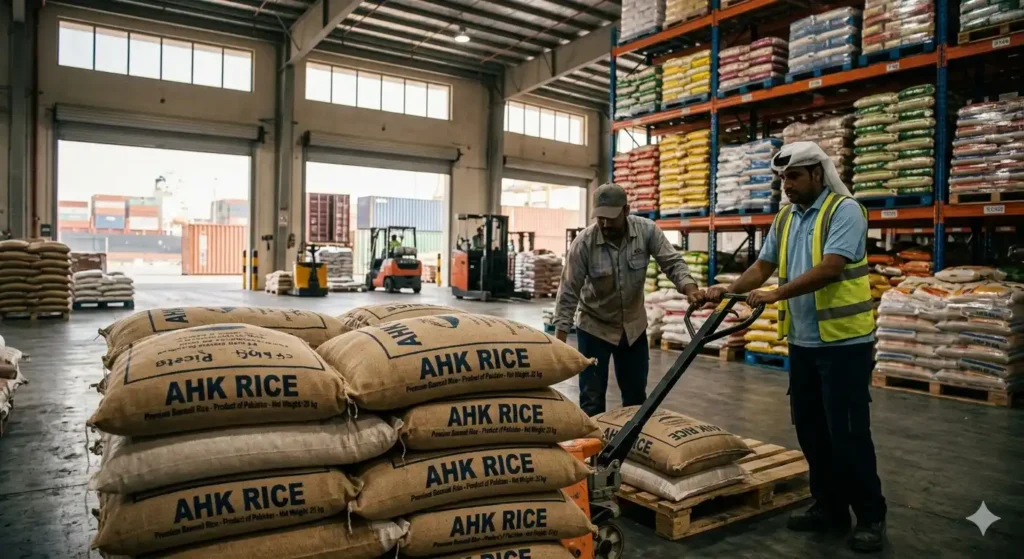
These are packed in woven polypropylene bags with inner liners to prevent moisture ingress.
Each size category supports a specific distribution channel. This segmentation ensures efficient logistics and reduces wastage.
What are the key components of GCC rice labeling standards?
GCC rice labeling standards require specific components including product name, net weight, country of origin, production and expiry dates, batch number, storage instructions, importer details, and Arabic language compliance to ensure transparency, traceability, and regulatory approval in Qatar.
Labeling components are mandatory and strictly enforced.
Core Label Elements
Every rice package must include:
- Product name (example: Basmati Rice 1121)
- Net weight in kilograms
- Country of origin (example: Pakistan)
- Production date and expiry date
- Batch or lot number
These elements ensure traceability from farm to consumer.
Importer and Manufacturer Details
Labels must clearly state:
- Exporter name
- Importer name in Qatar
- Full address
This information connects the product to accountable entities in the supply chain.
Language Requirements
Arabic labeling is mandatory. English is allowed alongside Arabic. The Arabic text must not be smaller or less visible than the English text.
Example:
- Arabic product name must appear prominently
- Instructions must be readable without translation
Storage and Handling Instructions
Labels must include:
- Storage temperature
- Moisture protection guidance
- Shelf life conditions
This ensures product quality throughout its lifecycle.
How does rice packaging and labeling work together?
Rice packaging and labeling work together by combining physical protection with regulatory communication, where packaging materials preserve grain quality while labeling systems deliver legally required information, enabling safe transport, retail compliance, and informed consumer purchasing decisions in Qatar’s regulated food environment.
Packaging and labeling operate as a synchronized system.
Packaging prevents contamination. Labeling ensures legal compliance.
Physical Protection
Rice packaging materials include:
- Woven polypropylene bags
- BOPP laminated bags
- Paper sacks with inner liners
These materials protect rice from:
- Moisture
- Dust
- Pests
Information Delivery
Labels provide:
- Product identity
- Legal compliance data
- Consumer usage instructions
Without proper labeling, even high-quality packaging fails regulatory checks.
Integration Example
A 5 kg Basmati rice pack includes:
- Durable outer packaging
- Inner moisture barrier
- Printed Arabic-English label
This integration ensures both product safety and market acceptance.
What are the benefits of standardized rice packaging and GCC labeling?
Standardized rice packaging and GCC labeling provide benefits including regulatory compliance, improved supply chain efficiency, enhanced consumer trust, reduced product rejection rates, and streamlined customs clearance processes for exporters targeting the Qatar rice market.
Standardization creates consistency across the entire supply chain.
Regulatory Compliance
Uniform labeling ensures approval at ports. Non-compliant products face rejection or relabeling costs.
Supply Chain Efficiency
Standard packaging sizes simplify:
- Shipping container optimization
- Warehouse storage
- Inventory tracking
For example, 25 kg bags allow efficient pallet stacking.
Consumer Trust
Clear labels build confidence. Consumers rely on visible information such as origin and expiry dates.
Reduced Risk
Standardization minimizes:
- Mislabeling errors
- Packaging damage
- Legal penalties
This improves overall trade reliability.
What are the main use cases of rice packaging sizes in Qatar?
Rice packaging sizes in Qatar are used across multiple sectors including retail supermarkets, wholesale distribution, hospitality industries, and government supply chains, each requiring specific weight formats and labeling compliance to meet operational, commercial, and regulatory needs efficiently.
Different sectors demand different packaging solutions.
Retail Supermarkets
Supermarkets use:
- 1 kg
- 5 kg
- 10 kg
These sizes are optimized for shelf display and consumer convenience.
Wholesale Distribution
Distributors handle:
- 25 kg
- 50 kg
These sizes support bulk resale operations.
Hospitality Sector
Hotels and restaurants require:
- 10 kg
- 20 kg
These formats align with daily consumption rates.
Institutional Buyers
Government and large organizations purchase:
- 25 kg
- 50 kg
These are used in:
- Food programs
- Labor accommodations
- Military supply chains
Each use case determines packaging size selection and labeling requirements.
What are common problems and misconceptions in rice packaging and labeling?
Common problems in rice packaging and labeling include incorrect Arabic translations, missing mandatory label elements, inconsistent weight declarations, and the misconception that packaging quality alone ensures compliance, while in reality both packaging and labeling must meet strict GCC regulatory standards simultaneously.
Errors in packaging and labeling create significant trade risks.
Misconception: Packaging Quality Equals Compliance
High-quality packaging does not guarantee approval. Without correct labeling, shipments fail inspection.
Incorrect Arabic Translation
Labels often include:
- Poor translations
- Missing Arabic text
This leads to rejection at customs.
Inconsistent Weight Declaration
Net weight must match actual contents. Discrepancies result in penalties.
Missing Batch Information
Batch numbers enable traceability. Their absence violates regulations.
Example of Common Error
A 5 kg rice bag without Arabic expiry date fails compliance checks, even if all other information is present.
Understanding these issues prevents costly mistakes.
How is rice processed and prepared for compliant packaging?
Rice processing for compliant packaging involves sequential steps including harvesting, drying, milling, grading, polishing, sorting, and quality inspection, followed by hygienic packing and accurate labeling to meet GCC standards for Qatar’s import requirements.
Rice processing directly impacts packaging quality.
Step-by-Step Processing
- Harvesting from paddy fields
- Drying to reduce moisture content
- Milling to remove husk
- Polishing for grain appearance
- Sorting to remove broken grains
Each step improves quality and consistency.
Grading
Rice is classified into:
- 1121 Basmati
- Super Kernel Basmati
- 1509 Basmati
Each grade has distinct grain length and aroma.
Final Packaging Stage
After processing:
- Rice is weighed precisely
- Packed into standardized bags
- Labeled according to GCC rules
This ensures readiness for export to Qatar.
Which markets import rice into Qatar and how do packaging sizes influence trade?
Rice imports into Qatar originate primarily from Pakistan, India, and Thailand, with packaging sizes influencing trade by aligning shipment formats with importer requirements, retail demand, and logistics efficiency, ensuring smooth distribution across the domestic food supply chain.
Qatar relies heavily on imports.
Major Exporting Countries
- Pakistan for Basmati rice
- India for both Basmati and non-Basmati
- Thailand for long grain rice
Influence of Packaging Sizes
Packaging determines:
- Container loading efficiency
- Storage capacity
- Retail readiness
For example, 25 kg bags maximize container space, while 5 kg packs suit direct retail placement.
Trade Efficiency
Standardized sizes reduce:
- Repacking costs
- Handling time
- Inventory errors
- This improves overall trade flow.
What certifications apply to rice packaging and labeling for Qatar in 2026?
Rice packaging and labeling for Qatar in 2026 require certifications such as ISO standards, HACCP compliance, phytosanitary certification, and conformity with GCC food safety regulations, ensuring product safety, hygiene, and adherence to international and regional quality benchmarks.
Certifications validate compliance and quality.
Key Certifications
- ISO 22000 for food safety management
- HACCP for hazard control
- Phytosanitary certificate for pest-free assurance
GCC Compliance
Products must meet GCC food standards for:
- Label accuracy
- Packaging safety
- Shelf life
Documentation
Each shipment includes:
- Certificate of origin
- Packing list
- Commercial invoice
These documents align with labeling information.
Quality Assurance
Certification ensures:
- Safe consumption
- Regulatory approval
- Market acceptance
It strengthens credibility in international trade.