How to Verify 1121 Basmati Quality Before Placing a Bulk Order from Pakistan
Verify 1121 basmati quality before a bulk order by combining lab testing, physical inspection, and third-party inspection reports. Here is why: each method checks different risk points—grain integrity, moisture stability, and shipment compliance—ensuring export-grade consistency across the full container.
1121 Basmati rice dominates premium export markets because of its extra-long grain and elongation ratio. Buyers who fail to verify quality before shipment face breakage losses, moisture damage, and rejection at destination ports. This blog explains how to verify 1121 basmati quality bulk order Pakistan using measurable standards and comparison frameworks.
In global rice trade, quality verification includes physical checks, lab testing, and certification validation. Learn the foundational grading logic in this educational guide on basmati classification before comparing verification methods in this article.
What are the available solutions to verify 1121 basmati quality?
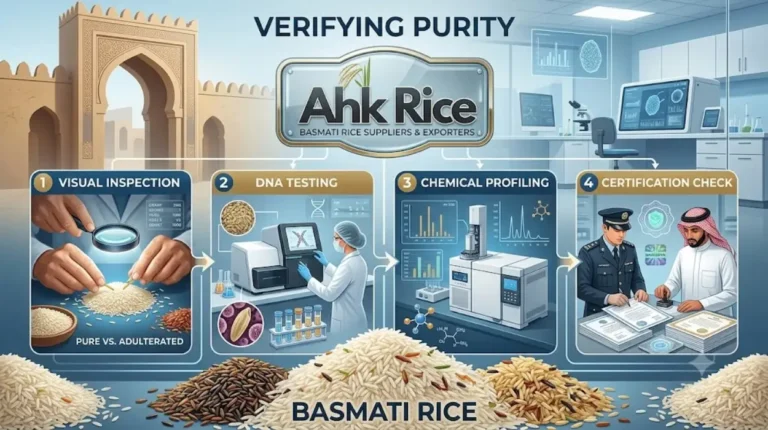
Three verification solutions exist: supplier-level inspection, third-party inspection, and independent lab testing. Each method measures grain length, moisture, purity, and defects using defined export standards and produces documentation that supports import clearance and buyer confidence.
Supplier-Level Inspection (Factory-Based Control)
Supplier inspection means the exporter inspects, tests, and documents rice quality before shipment. AHK Rice applies controlled processing and internal testing across all export batches.
Core Supplier Inspection Parameters
| Attribute | Specification Range |
|---|---|
| Grain Length | 8.00–8.40 mm |
| Moisture Content | 12–13% |
| Broken Ratio | 0–5% |
| Chalkiness | Minimal (<2%) |
| Foreign Matter | Nil |
| Color Sorting | 100% optical sorted |
| Aroma | Strong basmati fragrance |
Supplier inspection works because the rice passes through controlled processing steps:
- Clean the paddy
- De-husk the grain
- Polish the rice
- Sort by length
- Grade by broken percentage
- Color sort impurities
- Pack under controlled humidity
Supplier inspection provides speed and cost efficiency. However, buyers depend on exporter transparency.
Supplier inspection establishes baseline quality, which leads to comparison with independent verification methods.
Third-Party Inspection (Pre-Shipment Verification)
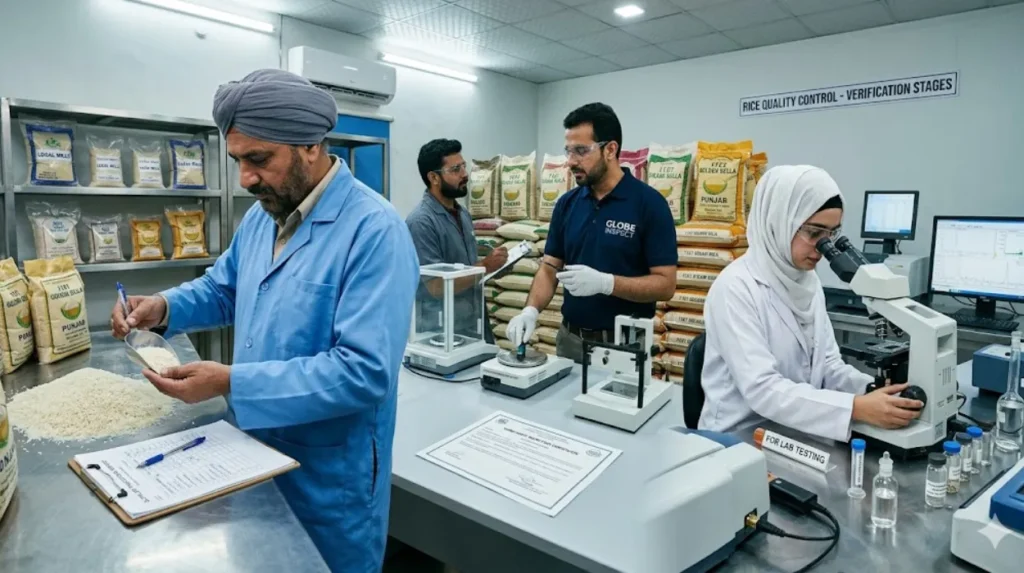
Third-party inspection means an independent organization inspects rice before shipment. This method removes supplier bias and produces neutral certification.
Third-Party Inspection Scope
| Inspection Area | What is Verified |
|---|---|
| Physical Quality | Grain length, broken %, color |
| Moisture Testing | Moisture meter validation |
| Packing Check | Bag weight, stitching |
| Container Loading | Hygiene and sealing |
| Sampling Method | Random batch sampling |
| Documentation | Certificate issuance |
| Compliance | Export standards |
Third-party inspection reduces risk when importing into strict regulatory markets. Gulf and EU buyers require this verification before shipment release.
Independent Lab Testing (Scientific Verification)
Lab testing analyzes rice composition using calibrated instruments. This method produces quantifiable data.
Lab Testing Metrics
| Parameter | Method |
|---|---|
| Moisture | Oven drying method |
| Grain Length | Vernier measurement |
| Purity | Sieve analysis |
| Broken % | Weight ratio |
| Chalkiness | Visual classification |
| Chemical Residue | Lab screening |
| Aging Quality | Cooking test |
Lab testing ensures objective measurement. Buyers use it for high-value contracts.
With solutions defined, the next step is comparing how each method performs in real trade scenarios.
How do different verification approaches compare?
Supplier inspection is fast and cost-effective, third-party inspection is unbiased and trade-compliant, and lab testing is precise but slower. The correct method depends on shipment size, destination regulations, and risk tolerance in bulk procurement.
Verification Method Comparison Table
| Attribute | Supplier Inspection | Third-Party Inspection | Lab Testing |
|---|---|---|---|
| Cost | Low | Medium | High |
| Speed | Fast (1–2 days) | Moderate (2–4 days) | Slow (3–7 days) |
| Accuracy | Moderate | High | Very High |
| Bias Risk | High | Low | None |
| Documentation | Internal reports | Certified report | Scientific report |
| Market Acceptance | Limited | Global | Premium markets |
| Best Use Case | Trusted supplier | New supplier | High-value contract |
Supplier inspection works when sourcing from established exporters in Punjab because mills operate controlled systems. Third-party inspection becomes essential when sourcing from unknown suppliers.
Market Region Comparison (Gulf vs Europe)
Regional Preferences
| Region | Preferred Grade | Verification Method | Price/MT | Shelf Life |
|---|---|---|---|---|
| Gulf (UAE, Saudi) | 1121 Golden Sella | Third-party inspection | $1,050–1,250/MT | 18–24 months |
| Europe (UK, Germany) | 1121 Steam | Lab testing + certification | $1,100–1,300/MT | 12–18 months |
Golden Sella dominates Gulf markets because parboiling improves shelf life under high temperature. Steam rice suits Europe because it preserves natural texture and meets stricter food standards.
Price variation reflects processing cost, inspection requirements, and compliance certifications (source: REAP export data, December 2025).
With comparisons clear, the next step is selecting the right method based on buyer scenario.
Which verification method works best for different cases?
Supplier inspection works best for repeat buyers, third-party inspection suits new supplier transactions, and lab testing is required for high-value or regulated markets where compliance and rejection risk must be minimized.
Decision Framework Table
| Scenario | Recommended Method | Reason |
|---|---|---|
| First-time supplier | Third-party inspection | Ensures unbiased verification |
| Repeat orders | Supplier inspection | Reduces cost and delays |
| High-value contract | Lab testing | Ensures precision |
| EU import | Lab + certification | Regulatory compliance |
| Gulf bulk order | Third-party inspection | Heat stability verification |
Buyers importing into the UK market under United Kingdom must validate pesticide residue and moisture levels using lab reports. This requirement ensures food safety compliance.
This framework aligns verification effort with risk exposure and shipment value.
What are the pros and cons of each verification method?
Each verification method balances cost, speed, and reliability. Supplier inspection saves cost but depends on trust, third-party inspection ensures neutrality, and lab testing provides scientific accuracy but increases time and expense.
Supplier Inspection
Pros
- Low cost
- Fast processing
- Integrated with production
Cons
- Potential bias
- Limited external acceptance
Example: A repeat Gulf buyer sourcing 500 MT uses supplier inspection to reduce costs and maintain speed.
Third-Party Inspection
Pros
- Independent verification
- Widely accepted
- Reduces disputes
Cons
- Additional cost
- Scheduling delays
Example: A new importer avoids risk by requesting inspection before container sealing.
Lab Testing
Pros
- Precise measurement
- Regulatory compliance
- High trust
Cons
- Expensive
- Time-consuming
Example: A European distributor tests pesticide levels before approving shipment.
With advantages and limitations defined, the final step is understanding decision factors.
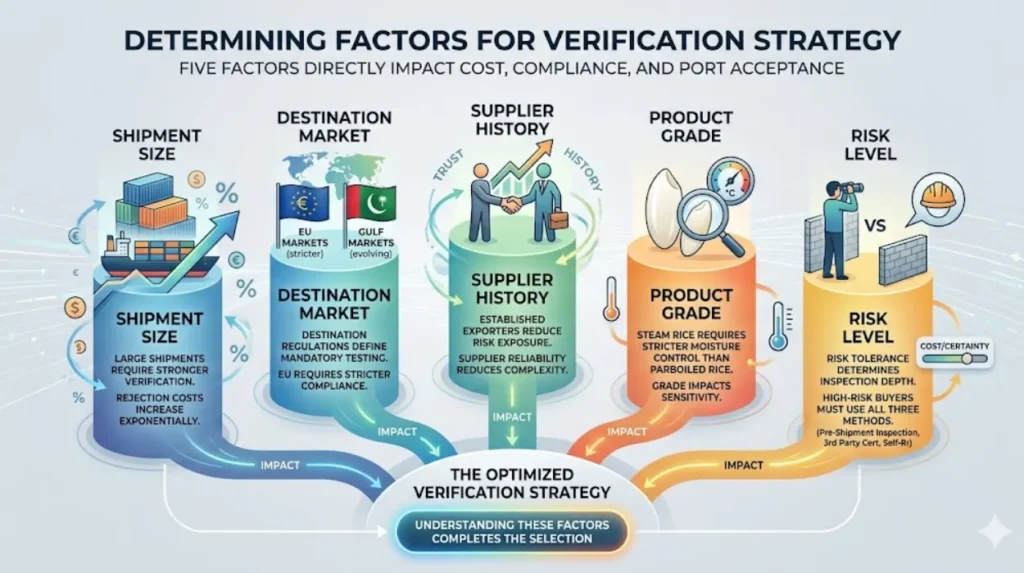
What factors determine the right verification strategy?
Five factors determine the correct verification strategy: shipment size, destination regulations, supplier reliability, risk tolerance, and product grade. Each factor directly impacts cost, compliance, and acceptance at the destination port.
Key Decision Factors
- Shipment Size
- Destination Market
- Supplier History
- Product Grade
- Risk Level
Large shipments require stronger verification because rejection costs increase exponentially.
Destination regulations define mandatory testing. EU markets require stricter compliance than Gulf markets.
Supplier reliability reduces verification complexity. Established exporters reduce risk exposure.
Product grade impacts sensitivity. Steam rice requires stricter moisture control than parboiled rice.
Risk tolerance determines inspection depth. High-risk buyers must use all three methods.
Understanding these factors completes the verification strategy selection process.
Conclusion: Structured Verification Eliminates Bulk Order Risk
Verify 1121 basmati quality bulk order Pakistan using a layered approach—supplier inspection for efficiency, third-party inspection for neutrality, and lab testing for compliance. This combination eliminates rejection risk and ensures consistent export-grade performance.
Bulk rice procurement requires measurable verification. Grain length, moisture, and purity define value. Inspection methods confirm these parameters before shipment.
Explore detailed compliance and certification requirements in this decision-focused guide on AHK Rice export readiness to understand how verified rice meets international standards.
Frequently Asked Questions
What is the ideal moisture level for 1121 basmati rice?
The ideal moisture level is 12–13%, which prevents fungal growth and ensures long shelf life during export.
How is broken percentage measured in basmati rice?
Broken percentage is calculated by separating broken grains and measuring their weight ratio against total sample weight.
Why is third-party inspection important in bulk orders?
Third-party inspection removes supplier bias and ensures unbiased verification accepted globally.
Which basmati grade has the longest shelf life?
1121 Golden Sella lasts up to 24 months due to parboiling stability.
Can lab testing replace third-party inspection?
Lab testing cannot replace inspection because it analyzes samples, not full shipment handling and loading conditions.