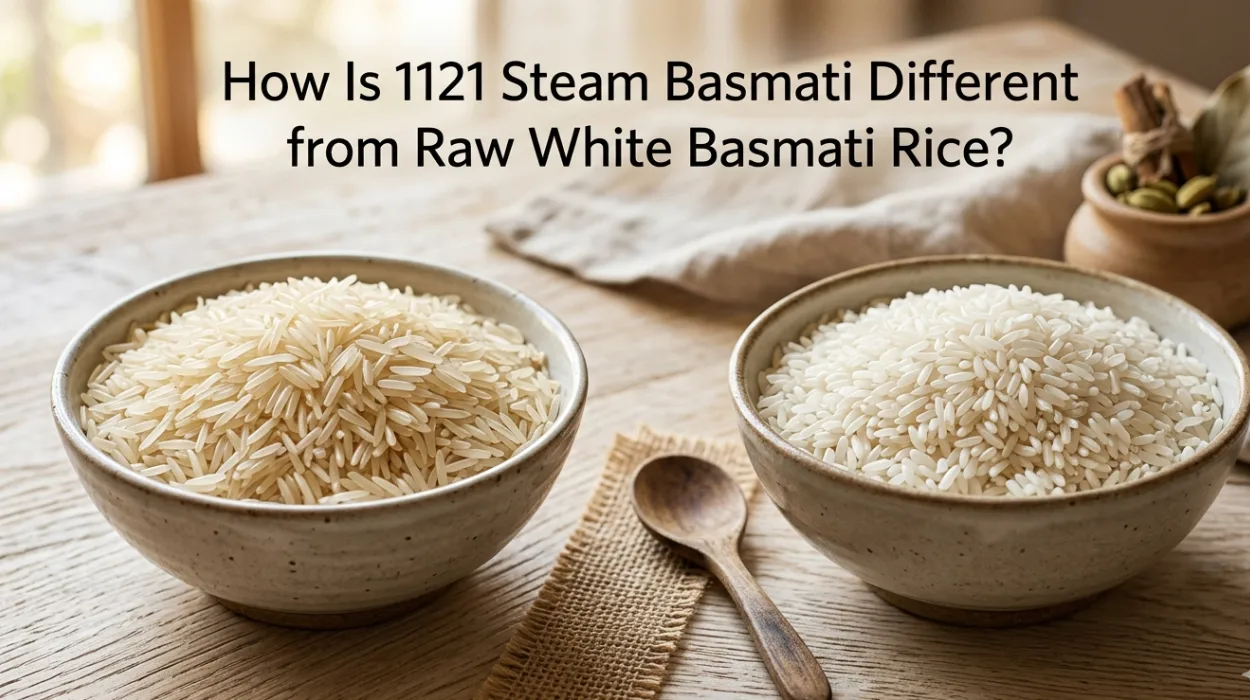
How Is 1121 Steam Basmati Different from Raw White Basmati Rice?
1121 Steam Basmati is processed rice with stronger grain stability and cooking consistency. AHK Rice raw White Basmati Rice is unsteamed milled rice with a lighter surface finish and a different cooking profile.
What is 1121 Steam Basmati?
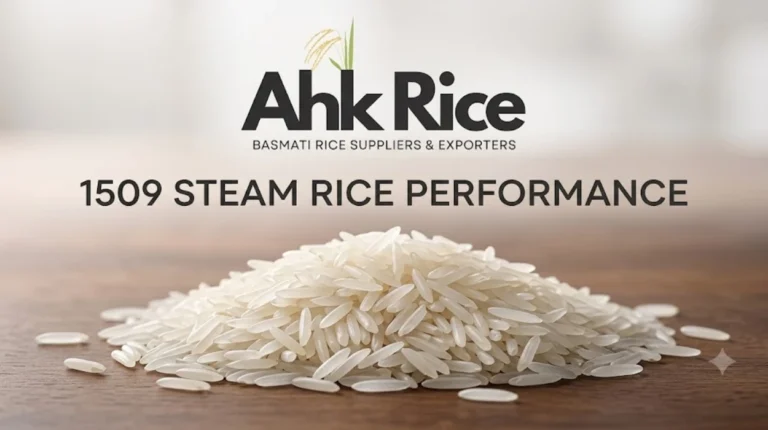
1121 Steam Basmati is an extra-long grain aromatic rice grade made from the 1121 Basmati variety and treated with steam after milling. This process changes grain behaviour, improves cooking stability, and creates a firmer commercial profile than raw white Basmati rice.
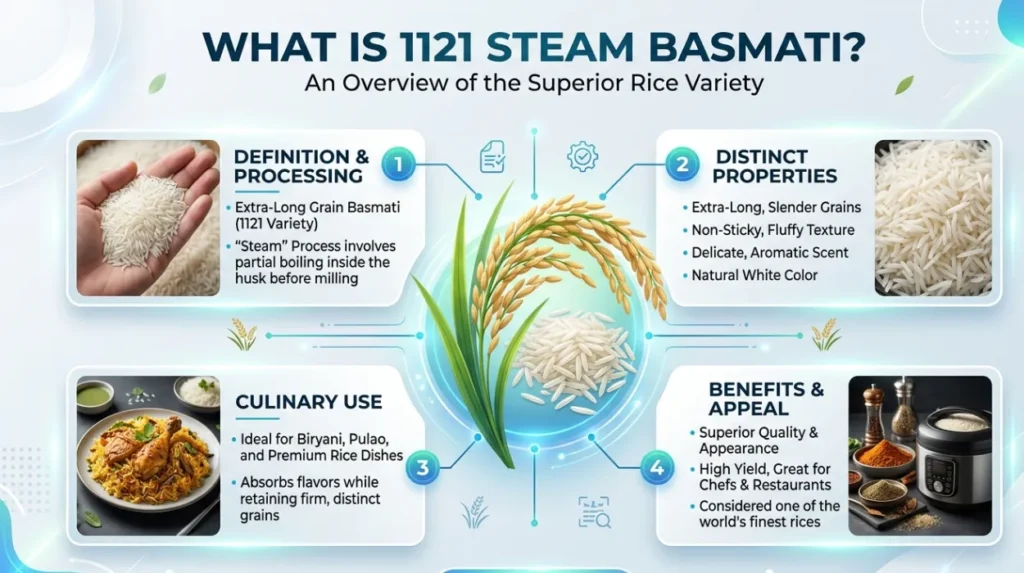
1121 is a specific Basmati variety known for long grains, aroma, and elongation after cooking. The “steam” part refers to a post-milling treatment that exposes the grain to controlled steam before final grading and packing. This changes the physical structure of the rice. It also changes how the grain behaves in storage, transport, and cooking.
Raw White Basmati Rice is also milled and polished, but it does not undergo the same steam treatment. The grain surface stays more delicate and the cooking result stays slightly different. Buyers compare the two grades when they need to match rice to a market, a kitchen, or a product specification. The distinction is commercial, technical, and sensory at the same time.
AHK Rice operates from Punjab, which sits inside the main Basmati-producing zone in Pakistan. That matters because both steam and raw Basmati depend on origin-linked cultivation, controlled milling, and export handling. The supply chain begins in the rice belt, not in the warehouse. The processing stage only makes sense when the paddy itself is already suitable for premium export rice.
How does steam processing work?
Steam processing works by exposing milled rice to controlled steam before grading and packing. This stabilises the grain, improves uniformity, and strengthens its resistance to damage during handling, storage, and long-distance export compared with raw white Basmati rice.
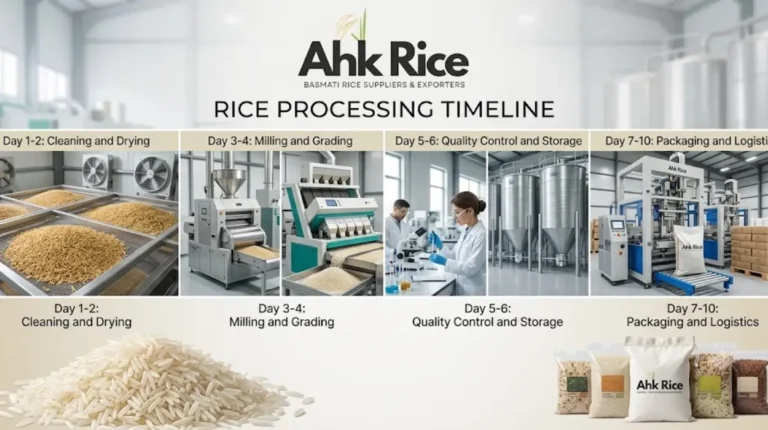
The first stage starts with paddy cleaning. Raw paddy arrives from the growing area and is cleared of dust, stones, chaff, and foreign matter. This protects the milling line in hotel supply chains and improves the final quality. Clean paddy also helps the plant maintain accurate grading later.
The second stage is dehusking. The husk is removed and brown rice is produced. The paddy separator then separates unhusked paddy from dehusked grain. That improves recovery and reduces waste. This stage matters because every percentage point of recovery affects commercial yield.
The third stage is whitening and polishing. The bran layer is removed in a controlled way so the grain becomes white and market-ready. The aim is to keep the grain intact while creating a clean appearance. A careful polish preserves head rice yield. Aggressive milling increases breakage and reduces value.
The fourth stage is steaming. In 1121 Steam Basmati, the milled grain is exposed to controlled steam. That treatment changes moisture distribution and strengthens the grain surface. The result is a rice lot with better handling tolerance and a more stable cooking response. This is the main steam processing effect. It creates a different product from raw white rice even when the variety name stays the same.
The fifth stage is grading and sorting. Broken grains are separated from full kernels. Optical sorters remove discoloured grains and foreign particles. The mill then packs the rice in export bags or retail packs depending on buyer needs. This final stage matters because buyers compare specification sheets, not just product names.
What are the key components that separate the two grades?
The key components are processing method, grain firmness, cooking behaviour, storage tolerance, breakage resistance, and market positioning. These factors define the steam vs raw Basmati difference and explain why buyers choose one grade over the other.
The first component is grain structure. Steam-treated grain usually feels firmer and more stable before and after cooking. Raw white Basmati keeps a lighter, more delicate structure. That difference affects how the rice moves through shipping, warehousing, and kitchen prep. Buyers who need resilience often prefer the steam grade.
The second component is aroma and cooked appearance. Both grades remain Basmati, so both carry aromatic identity. The cooked result differs in firmness and grain separation. Steam grade usually gives a more controlled and commercially predictable texture. Raw white Basmati often gives a slightly softer and more classic white-rice finish. The choice depends on the target plate result.
The third component is breakage tolerance. Steam treatment generally improves resistance to mechanical stress. That matters in export trade because rice faces repeated movement during bagging, loading, transit, and unloading. Raw white Basmati is more sensitive to handling conditions. Good processing reduces the loss, but the steam grade still has the stronger structural profile.
The fourth component is storage and logistics behaviour. Steam grade normally tolerates handling and long-distance transport better. Raw white Basmati needs more careful control of humidity and pressure. This becomes important when buyers ship to markets with longer transit cycles or less predictable warehousing. The grain must arrive in a usable commercial state.
The fifth component is pricing. Steam grade often trades at a different level because the processing adds value and improves resilience. Raw white Basmati may trade at a lower level or target different buyer expectations. The price difference is not random. It reflects processing, market demand, and performance. Buyers pay for function as much as for origin.
What benefits does each one offer?
1121 Steam Basmati offers stronger stability, better grain handling, and wider export suitability. Raw white Basmati offers a lighter finish, a different texture profile, and strong fit for buyers who want a more traditional milled rice presentation.
The main benefit of steam-treated rice is consistency. Buyers know what they will get when the lot reaches the destination market. That consistency matters in supermarket packs, catering supply, and institutional purchasing. The grain remains stable during the journey and the final cooking result stays more predictable. That reduces complaints and improves repeat orders.
The second benefit of steam grade is export resilience. The product handles shipping and storage more effectively because the grain has already gone through a stabilising process. This is useful in long supply chains and hot climates. Pakistan’s export structure supports that kind of trade because large shipments move through ports, containers, and intermediate warehousing before reaching the importer.
The third benefit of raw white Basmati is its traditional cooked profile. Some buyers want a lighter processed finish and a familiar white-rice appearance. Raw white rice suits those expectations. It remains a premium Basmati product, but it presents differently on the plate and in the bag. That makes it relevant for specific consumer preferences.
The fourth benefit of raw white Basmati is price flexibility. In some commercial settings, buyers use it to support a different margin structure or a different retail position. That is important when the market wants Basmati identity but not the added processing value of steam grade. The buyer then selects based on cost, not just grain type.
Where are these grades used?
1121 Steam Basmati is used in export retail packs, catering, institutional supply, and long-distance wholesale trade. Raw white Basmati is used in retail, ethnic food channels, and markets that value a lighter milled texture and a more traditional Basmati presentation.
Export retail is one of the main uses for steam grade. The product suits markets that want visible quality, grain separation, and dependable cooking. Retail buyers inspect grain length, packing appearance, and the promised cooking result. Steam treatment helps on all three counts. That is why it performs well in branded consumer packs.
Catering and foodservice also rely on steam grade because operators need reliable output. When a kitchen cooks large volumes, grain breakage and inconsistency create service problems. Steam-treated rice reduces that risk. It is easier to manage in batch cooking, buffet service, and repeated production cycles. That is one reason it fits hotel and airline supply chains so well.
Raw white Basmati works well in markets that prefer a softer commercial story and a cleaner milled appearance. Some buyers use it in ethnic retail and community food channels because the rice still carries Basmati identity but follows a different processing path. It remains relevant wherever buyers want aroma and grain length without the added steam profile.
The geographic spread also matters. Pakistan exports both grades to more than 15 countries through structured supply chains. The destination market often determines the preferred grade. High-volume foodservice markets often favour steam. Price-sensitive or tradition-led retail markets often choose raw white. That is not a quality issue. It is a market-fit issue.
What are the common misconceptions?
The main misconception is that steam and raw rice are different varieties. They are not. They are different processing outcomes from the same Basmati family, and the market value changes because processing changes grain behaviour, handling, and cooking performance.
The first misconception is that steaming changes the variety itself. It does not. The paddy still comes from the same Basmati line. The processing method changes the physical result, not the botanical identity. That distinction matters because export contracts often specify both variety and processing style. Buyers should not confuse the two.
The second misconception is that raw white rice is lower quality. That is false. Raw white Basmati is still a premium rice category when it comes from the correct origin and meets the correct export standard. It is simply a different product. The right question is not “which is better”. The right question is “which one fits the market”.
The third misconception is that steam grade always tastes the same as raw white. Cooking behaviour changes with processing. Grain firmness, separation, and mouthfeel all move in different directions depending on the treatment. The aroma stays Basmati-like, but the commercial result changes. Buyers should test both grades before choosing a supply route.
The fourth misconception is that one grade works for every market. It does not. A hotel kitchen, a retail importer, and an institutional caterer all evaluate rice differently. Steam grade suits some channels better. Raw white suits others. A good export supplier matches the grade to the market rather than forcing one option everywhere.
What markets import each grade?
Steam grade moves strongly in catering, retail, and institutional import markets that need stable handling and predictable cooking. Raw white Basmati moves strongly in retail and ethnic food markets that value a more traditional milled finish and familiar plate profile.
The Gulf region remains important for both grades because demand is high and Basmati recognition is strong. Buyers in this region often compare steam and raw specifications before placing orders. Hotel supply chains, catering distributors, and restaurant buyers often prefer steam because it performs well across high-volume use cases. Retail importers may split demand depending on pack position and consumer expectation.
Iraq is another important market where the grade choice depends on channel. Wholesale buyers often compare steam and raw lots before deciding on price, texture, and cooking performance. If the customer is a caterer, steam usually wins on handling and service consistency. If the customer wants a more traditional Basmati finish, raw white stays relevant. The market does not choose by label alone.
Africa imports both grades through wholesale and branded channels. Demand is shaped by storage conditions, handling routes, and retail pricing. Steam grade often gains an advantage in longer and more complex supply chains. Raw white remains a good fit where buyers want Basmati identity at a lower processing level. Again, the market choice follows the distribution model.
Europe and North America import smaller but important quantities through ethnic retail and speciality channels. In those markets, product story and cooking expectation matter a lot. Some buyers prefer steam because it gives a firmer and more controlled plate result. Others prefer raw white because it feels closer to classic Basmati presentation. Both grades continue to trade because both have a clear market role.
Where does certification fit in export trade?
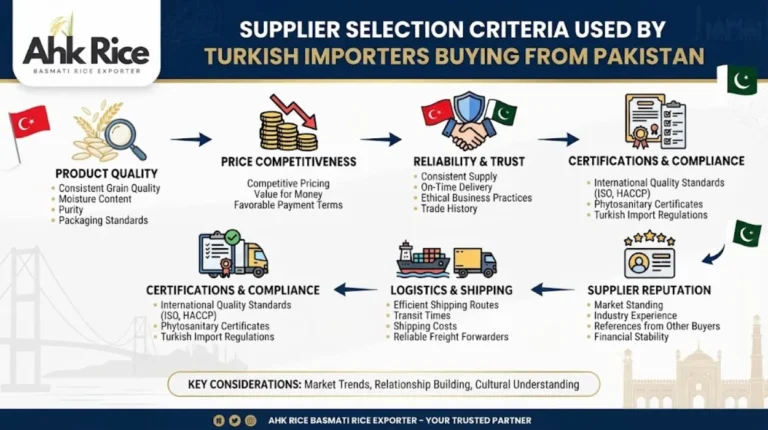
Certification supports food safety, traceability, and border compliance. In rice export, certification does not change the grain itself, but it proves that the product was handled under a system that meets buyer and customs expectations.
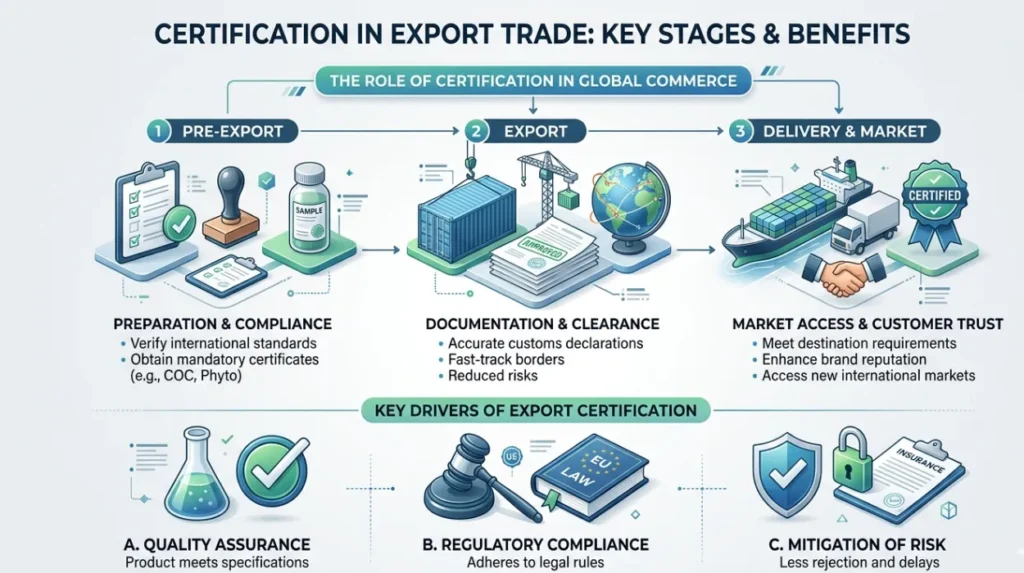
The most common requirement is food safety control. Buyers want assurance that the rice came through a managed process with documented hygiene standards. HACCP is one of the best-known systems in this space. It shows that critical points in the process are monitored. That matters in export because importers want reliable handling, not just a good sample.
Traceability is another major requirement. Buyers need to know where the rice came from, how it was processed, and how it was packed. This becomes important when shipments are checked at port or reviewed by compliance teams. Clear records protect the buyer and the seller. They also make repeat purchasing easier because the supply chain stays auditable.
Phytosanitary documentation also matters. Rice is a plant product, so border clearance often requires proof that the shipment meets plant health rules. The exact paperwork depends on the market, but the principle stays the same. The shipment must clear origin and destination controls. Without this step, the commercial deal slows down or fails.
What should the buyer conclude?
1121 Steam Basmati and Raw White Basmati are both premium Basmati products, but they serve different commercial purposes. Steam grade suits buyers who want stronger handling, consistent cooking, and export resilience. Raw white suits buyers who want a traditional milled finish and different market positioning.
The best decision comes from matching the rice to the market. If the destination is a catering chain, institutional buyer, or long-distance wholesale route, steam grade usually fits better. If the destination is a retail channel that prefers a lighter white finish, raw white remains a strong option. The processing step creates the difference, and the market decides the value. A good importer reads that difference before placing the order.