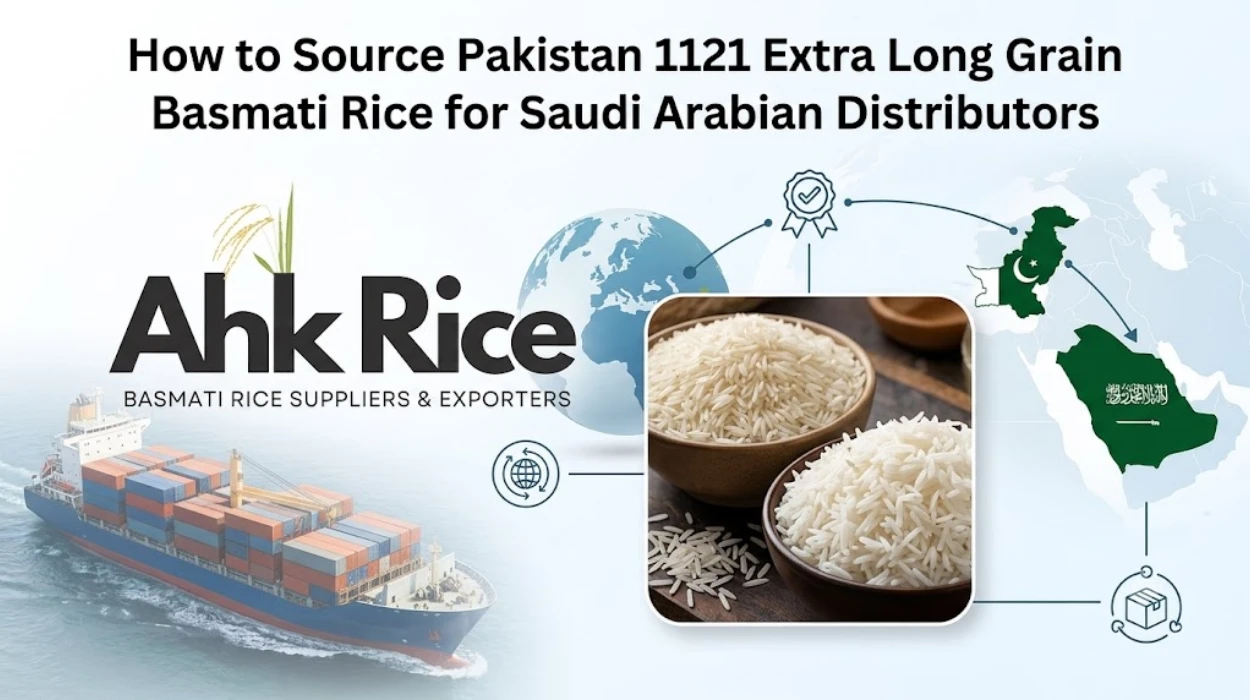
How to Source Pakistan 1121 Extra Long Grain Basmati Rice for Saudi Arabian Distributors
Pakistan 1121 Extra Long Grain Basmati Rice is the most suitable premium Basmati specification for Saudi Arabian distributors seeking long grain appearance, high cooked elongation, and strong consumer acceptance. Here is why: Saudi importers consistently prefer 1121 due to its exceptional grain length, premium presentation, and suitability for Kabsa, Mandi, and large-scale food service applications. To understand the market demand behind this preference, explore our article on why Saudi buyers consistently select Pakistan’s premium Basmati varieties.
For Saudi distributors, sourcing success depends on selecting the correct grade, verifying specifications, inspecting processing quality, and partnering with a reliable exporter. AHK Rice supports Saudi Arabian importers through specification matching, quality verification, export documentation, and containerized shipment programs tailored to wholesale and distribution networks.
Pakistan remains one of the world’s leading exporters of Basmati rice, with Saudi Arabia consistently ranking among its largest premium Basmati destinations (source: REAP export data, December 2025). Saudi consumers recognize Pakistan 1121 Extra Long Grain Basmati Rice for its aroma, cooking performance, and visual appeal.
Saudi distributors evaluating long-grain Basmati should also compare grain alternatives before purchasing. Buyers comparing different grain-length options can review our detailed market comparison between 1121 and 1509 varieties to determine which specification best fits regional demand.
The sourcing process becomes significantly easier when distributors understand grades, specifications, pricing factors, and shipment procedures before placing an order. AHK Rice helps buyers move from product evaluation to container booking with clear specifications and documented quality controls.
What Is the Best Solution for Saudi Arabian Distributors Sourcing Pakistan 1121 Extra Long Grain Basmati Rice?
The best sourcing solution is selecting certified exporters, verifying grain specifications above 8.30 mm, requesting production samples, confirming processing grades, and securing documented quality inspections before shipment. This approach reduces commercial risk, improves market acceptance, and ensures consistent supply throughout the year.
Saudi distributors face three common sourcing challenges.
The first challenge is inconsistent grain length between shipments.
The second challenge is quality variation between suppliers.
The third challenge is delayed documentation and shipment schedules.
Pakistan 1121 Extra Long Grain Basmati Rice solves these concerns when sourced through structured procurement procedures. AHK Rice verifies product specifications before production and before container loading.
Why Is Pakistan 1121 Preferred in Saudi Arabia?
Pakistan 1121 Basmati Rice delivers exceptional uncooked grain length and cooked elongation. Saudi consumers value visual presentation because rice remains the centerpiece of traditional dishes.
Pakistan 1121 Basmati Rice typically achieves uncooked grain lengths of 8.30 mm to 8.50 mm. Cooked elongation can exceed 20 mm, depending on processing grade and cooking method.
Saudi wholesalers commonly select the following grades:
- 1121 Steam Basmati Rice
- 1121 Golden Sella Basmati Rice
- 1121 White Basmati Rice
- 1121 Creamy Sella Basmati Rice
AHK Rice supplies these specifications according to customer requirements and market preferences.
What Processing Grades Should Saudi Buyers Request?
AHK Rice offers 7 processing grades:
- Steam Processing
- Golden Sella Processing
- Creamy Sella Processing
- White Rice Processing
- Sortex Premium Processing
- Double Sortex Processing
- Length Grading Processing
Each processing grade serves a different distribution channel.
Golden Sella performs well in wholesale and catering markets. Steam grades suit premium retail packaging. White rice targets consumers preferring a lighter appearance.
What Processing Steps Ensure Consistent Quality?
AHK Rice follows 9 processing steps:
- Clean the harvested paddy.
- De-husk the grain.
- Dry the rice.
- Parboil selected grades.
- Polish the kernels.
- Grade by length.
- Sort by color.
- Inspect final lots.
- Load export containers.
Each step improves consistency and reduces quality variation.
AHK Rice verifies specifications before shipment, which leads naturally to the next question: what measurable results can Saudi distributors expect?
What Results Can Saudi Arabian Distributors Expect from Pakistan 1121 Extra Long Grain Basmati Rice?
Saudi distributors can expect premium shelf presentation, strong consumer acceptance, high cooked elongation, lower complaint rates, and repeat purchasing behavior from retail and food service customers when quality specifications remain consistent.
Pakistan 1121 Basmati Rice delivers performance advantages beyond appearance.
What Cooking Results Does 1121 Deliver?
Pakistan 1121 Basmati Rice expands significantly during cooking.
The grain remains separate after cooking. The aroma remains recognizable. The texture supports traditional Saudi recipes.
Many distributors report stronger customer retention when premium 1121 specifications are consistently available. Saudi consumers often associate longer grain appearance with higher quality.
What Shelf Life Can Buyers Expect?
Properly processed 1121 Basmati Rice maintains quality for extended periods.
| Specification | Typical Shelf Life |
|---|---|
| White Basmati | 12–18 months |
| Steam Basmati | 18 months |
| Golden Sella Basmati | 18–24 months |
| Creamy Sella Basmati | 18–24 months |
Golden Sella lasts longer than Steam. In Saudi warehouses operating at elevated temperatures, Golden Sella maintains quality for up to 24 months. Steam grades perform best within 18 months under similar storage conditions.
Saudi catering distributors storing larger inventories frequently prefer Golden Sella specifications because longer shelf life reduces inventory pressure.
What Quality Documentation Should Buyers Receive?
Professional exporters provide complete documentation.
Required export documents include:
- Commercial Invoice
- Packing List
- Certificate of Origin
- Phytosanitary Certificate
- Fumigation Certificate
- Health Certificate
- Bill of Lading
- Quality Inspection Report
AHK Rice prepares export documentation according to destination requirements and buyer specifications.
Strong product performance creates commercial value, which makes pricing the next critical decision factor.
What Factors Affect the Cost of Pakistan 1121 Extra Long Grain Basmati Rice?
The most important pricing factors are processing grade, grain length, broken percentage, packaging type, freight rates, harvest conditions, and order volume. Larger contracts generally secure more competitive pricing per metric ton.
Rice pricing changes throughout the year.
Harvest timing influences raw material costs. Freight rates influence delivered costs. Packaging specifications influence final quotations.
What Are the Main Product Cost Variables?
Specifications and Pricing Factors
| Factor | Impact on Price |
|---|---|
| Grain Length | Higher length increases value |
| Broken Percentage | Lower broken levels increase value |
| Processing Grade | Premium processing increases value |
| Packaging Type | Custom packaging increases cost |
| Container Volume | Larger volume reduces cost |
| Freight Market | Shipping rates affect CIF pricing |
| Crop Availability | Seasonal supply affects pricing |
Saudi distributors purchasing premium retail products generally prioritize quality consistency over minimal price differences.
What Packaging Options Are Available?
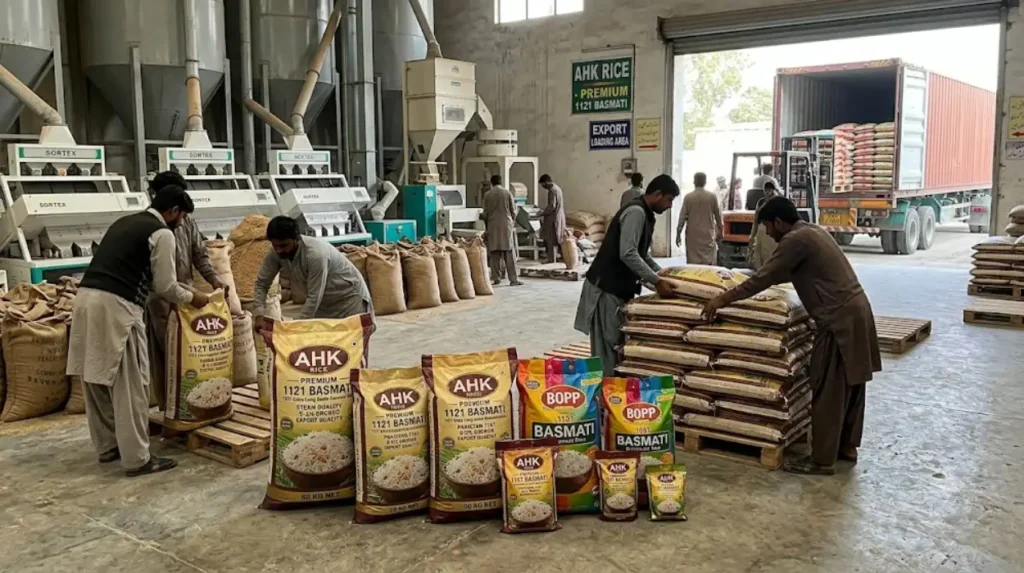
AHK Rice supplies multiple export packaging formats.
Packaging options include:
- 1 kg retail bags
- 2 kg retail bags
- 5 kg retail bags
- 10 kg retail bags
- 20 kg PP bags
- 25 kg PP bags
- 40 kg PP bags
- 50 kg PP bags
Custom private-label packaging is also available for distributors building regional brands.
Why Do Buyers Request Samples Before Ordering?
Samples reduce procurement risk.
Samples allow buyers to verify grain length, color, aroma, cooking performance, and packaging quality before committing to container purchases.
AHK Rice encourages specification verification before commercial contracts are finalized.
Pricing decisions become easier once buyers understand the sample process and shipment timeline.
How Does the Sample Process Work for Saudi Arabian Importers?
A structured sample process typically requires 5–10 days, costs between $40 and $150 depending on courier destination and sample size, and provides buyers with verified product data before container booking.
Professional rice sourcing starts with sampling.
What Are the Steps in the Sample Process?
Follow these steps:
- Request product specifications.
- Select preferred processing grade.
- Receive specification sheet.
- Confirm sample quantity.
- Dispatch samples by courier.
- Inspect grain characteristics.
- Conduct cooking tests.
- Approve specifications.
- Confirm commercial quotation.
- Book production slot.
AHK Rice provides specification sheets before sample dispatch.
What Does a Typical Sample Include?
Sample packages generally include:
- Product sample
- Specification sheet
- Grain length report
- Moisture report
- Packaging information
Saudi distributors can compare multiple grades simultaneously to accelerate decision-making.
What Are Typical Sample Costs?
| Sample Type | Typical Cost |
|---|---|
| Small Evaluation Sample | $40–$70 |
| Multiple Grade Samples | $70–$120 |
| Premium Courier Delivery | $100–$150 |
Actual courier costs vary by city and shipment weight.
Once samples are approved, buyers move to production planning and shipment scheduling.
How Long Does Shipping Take from Pakistan to Saudi Arabia?
Most Saudi destinations receive container shipments within 10–25 days after vessel departure, depending on destination port, carrier schedules, customs procedures, and transshipment requirements.
Shipping timelines directly affect inventory planning.
Shipping Times by Major Saudi Destinations
| Destination Market | Estimated Transit Time |
|---|---|
| Jeddah | 10–15 days |
| Dammam | 12–18 days |
| Riyadh (via port delivery) | 15–22 days |
| Medina Distribution Network | 15–25 days |
| Eastern Province Distribution | 12–20 days |
Transit times vary according to vessel schedules and port operations.
AHK Rice coordinates shipment planning to align production schedules with customer inventory requirements.
How Are Containers Prepared?
Follow these preparation steps:
- Inspect finished goods.
- Verify packaging integrity.
- Test moisture levels.
- Certify export documents.
- Load containers.
- Seal containers.
- Dispatch cargo.
- Ship to destination port.
Quality verification before loading reduces the possibility of claims and delays.
With logistics established, the final question becomes how distributors can begin sourcing immediately.
How Can Saudi Arabian Distributors Get Started?
The fastest route is defining required specifications, approving samples, confirming packaging, receiving a quotation, and booking production with an experienced exporter capable of supplying consistent container volumes.
Saudi distributors should begin by defining product requirements.
What Information Should Buyers Prepare?
Required buyer information includes:
- Target market segment
- Preferred processing grade
- Required grain length
- Packaging format
- Monthly volume
- Destination port
- Label requirements
Providing this information enables accurate quotations and production planning.
Why Choose AHK Rice?
- AHK Rice focuses on export-grade Basmati rice.
- AHK Rice verifies grain specifications before shipment.
- AHK Rice supports retail and wholesale packaging programs.
- AHK Rice prepares export documentation.
- AHK Rice coordinates production schedules.
- AHK Rice manages quality inspections.
- AHK Rice supplies multiple 1121 processing grades.
- AHK Rice serves distributors seeking long-term supply partnerships rather than one-time transactions.
Pakistan 1121 Extra Long Grain Basmati Rice continues to be the leading premium Basmati choice for Saudi Arabia because it combines exceptional grain length, strong cooking performance, and proven market acceptance. Saudi distributors seeking reliable supply, verified specifications, and professional export support can begin the sourcing process today by submitting their requirements through /request-a-quote/.
Frequently Asked Questions
How much Pakistan 1121 Extra Long Grain Basmati Rice fits in a 20ft container?
A standard 20ft container typically loads 24–26 metric tons, depending on the packaging format and destination requirements. Saudi distributors often choose 25 kg, 40 kg, or 50 kg bags to maximize container utilization.
Which grade of 1121 Basmati Rice is most popular in Saudi Arabia?
1121 Golden Sella Basmati Rice is the most widely imported grade for Saudi Arabia because it offers a long shelf life, excellent cooked elongation, and strong performance in Kabsa and Mandi dishes. Premium retail brands also import 1121 Steam Basmati Rice.
What quality specifications should Saudi distributors verify before ordering?
Saudi buyers should verify grain length, broken percentage, moisture content, purity level, color sorting quality, and crop year before confirming an order. Requesting a sample and inspection report helps ensure the shipment matches the required specifications.
What documents are required to import 1121 Basmati Rice into Saudi Arabia?
Most shipments require a Commercial Invoice, Packing List, Certificate of Origin, Phytosanitary Certificate, Fumigation Certificate, Health Certificate, and Bill of Lading. Import requirements may vary depending on Saudi regulations and buyer-specific compliance standards.
How long does it take to receive a shipment from Pakistan to Saudi Arabia?
Most shipments reach Saudi ports within 10–25 days after vessel departure. Transit times vary by destination, shipping line schedules, customs clearance procedures, and seasonal port congestion.