What Is 1121 Basmati Rice and Why Is It the World’s Longest Grain?
What is 1121 basmati rice?
1121 Basmati rice is a premium extra-long grain variety with a raw grain length of 8.05–8.40 mm and cooked elongation up to 2.5 times without width expansion. Here is why: Indian subcontinent breeders developed it for superior elongation, aroma, and export demand.
1121 Basmati rice is a hybrid variety within the Basmati family. Basmati defines aromatic long-grain rice cultivated in specific regions of Punjab. 1121 exceeds traditional basmati in grain length and elongation ratio.
1121 basmati rice origin traces to agricultural research programs in Punjab, where scientists bred longer grains with consistent cooking performance. The variety replaced older types like Super Kernel in many export markets.
Extra long grain basmati defines rice exceeding 8.00 mm in length. Examples include 1121 Steam, 1121 Sella, 1121 Golden Sella. Each grade maintains the same genetic grain length but differs in processing.
Basmati grain length is the primary quality metric in global trade. Buyers classify rice based on millimeters before cooking and elongation ratio after cooking.
With the definition established, the next question is how this extra-long grain structure functions during processing and cooking.
How does 1121 basmati rice work from field to plate?
1121 basmati rice works through controlled cultivation, precision milling, and graded processing that preserve grain length and aroma compounds. Here is why: each stage protects the kernel structure and reduces breakage.
Cultivation process
Farmers cultivate 1121 basmati rice in fertile alluvial soil. Punjab provides ideal conditions with defined temperature ranges.
- Prepare the field with level irrigation channels
- Sow certified seeds during May–June
- Irrigate using controlled flooding cycles
- Apply nitrogen at defined growth stages
- Harvest the crop at 20–22% moisture
Harvesting occurs after 120–135 days. Farmers cut the crop when grains reach maturity and moisture stabilizes.
Processing steps
Processors transform paddy into export-ready rice through sequential operations:
- Clean the paddy to remove dust and stones
- De-husk the grain to separate husk from kernel
- Polish the rice to improve appearance
- Sort by length using graders
- Color sort to remove defective grains
- Dry to 12–13% moisture
- Grade into size categories
- Inspect for quality compliance
- Pack into export bags
Parboiling creates Sella and Golden Sella variants. Processors soak, steam, and dry paddy before milling. This step strengthens grains and changes color.
Cooking performance depends on starch structure. Amylose content in 1121 allows elongation without stickiness. Each grain expands lengthwise instead of swelling.
With the process clarified, the next question is what components define this rice variety.
What are the key components of 1121 basmati rice?
1121 basmati rice consists of long slender kernels, high amylose starch, aromatic compounds, and graded processing variants. Here is why: each component directly impacts cooking quality and market classification.
Grain structure
Grain structure defines visual and cooking quality.
- Length: 8.05–8.40 mm raw
- Width: 1.6–1.9 mm
- Length-to-width ratio: 4.5+:1
Longer grains command higher export prices. Buyers in Gulf markets prefer maximum length.
Aroma compounds
Aroma comes from 2-acetyl-1-pyrroline (2-AP). This compound develops during cultivation and storage.
Aged 1121 basmati shows stronger aroma. Storage for 12 months improves fragrance and cooking texture.
Processing grades
Processors classify 1121 into multiple grades:
- Steam Rice
- Sella (Parboiled) Rice
- Golden Sella Rice
- White Raw Rice
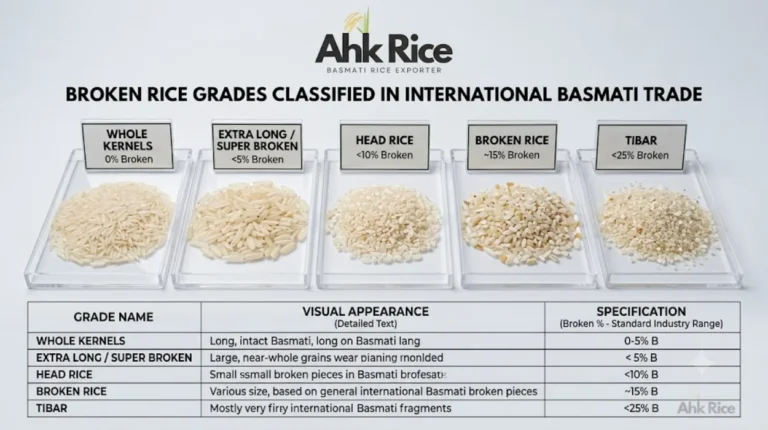
- Broken Rice (5%, 10%, 15%, 25%)
- Length Graded Rice (8.2 mm, 8.3 mm)
- Sortex Clean Rice
Each grade serves different markets. For example, Golden Sella suits bulk catering. Steam suits retail consumers.
Quality parameters
Quality testing ensures consistency:
- Moisture: 12–13%
- Broken grains: ≤5% for premium grade
- Chalkiness: minimal
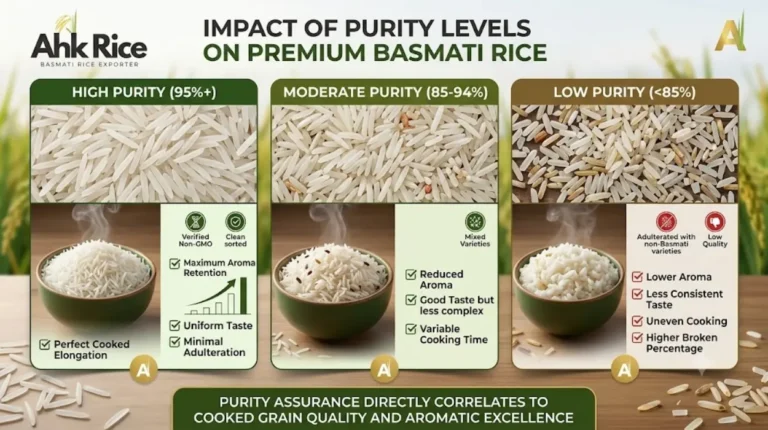
- Purity: 95–98%
Inspectors test samples before shipment. Certification ensures compliance with import regulations.
With components defined, the next step is understanding why global markets prefer this rice.
What are the benefits of 1121 basmati rice?
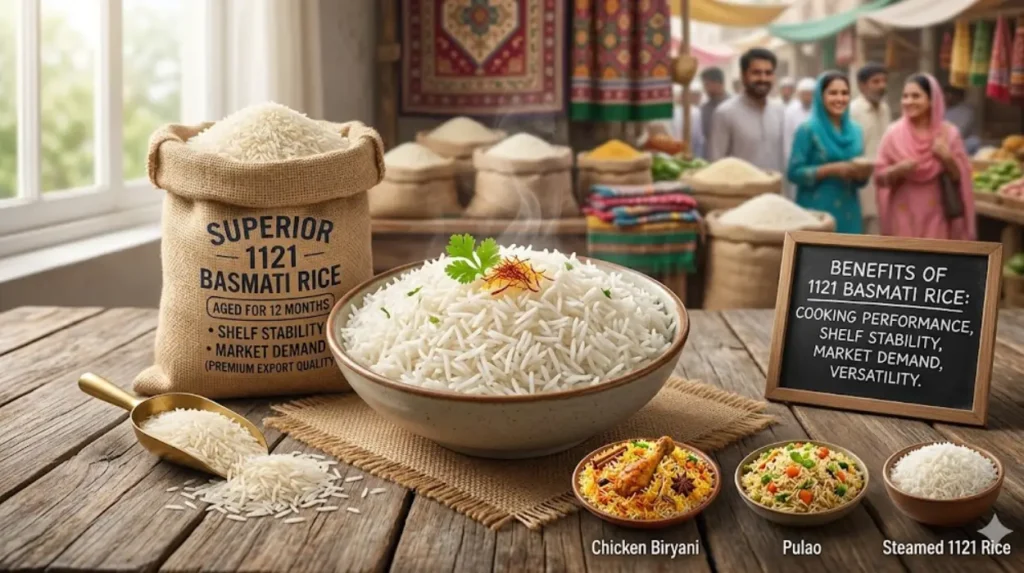
1121 basmati rice delivers superior elongation, non-sticky texture, strong aroma, and high export value across global markets. Here is why: its physical and chemical structure meets consumer and commercial requirements.
Cooking performance
1121 elongates significantly during cooking. Grains remain separate after boiling.
Examples include biryani, pulao, mandi. Each dish requires long, separate grains for presentation and texture.
Shelf stability
Parboiled variants last longer under high temperatures.
Golden Sella remains stable for 18 months at 40°C. Steam rice requires consumption within 12 months.
Catering buyers in hot regions prefer Golden Sella for storage stability.
Market demand
1121 dominates export markets due to consistent quality.
Top importing regions include:
- Middle East (Saudi Arabia, UAE, Iraq)
- Africa (Somalia, Kenya)
- Europe (UK, Germany)
Pakistan exported over 4.5 million tons of rice in FY2024–25 (source: Pakistan Bureau of Statistics). 1121 contributed a significant share of premium basmati exports.
Versatility
1121 suits multiple applications:
- Retail packaging (1 kg, 5 kg bags)
- Bulk catering (25 kg, 50 kg sacks)
- Food service industries
Each use case requires specific processing grades.
With benefits clarified, the next question is where and how this rice is used globally.
What are the main use cases of 1121 basmati rice?
1121 basmati rice serves retail consumers, catering businesses, and international food industries due to its consistent grain length and cooking reliability. Here is why: its uniform structure supports high-volume cooking and premium presentation.
Retail consumption
Retail buyers prefer Steam or White 1121.
Households use it for daily meals. Examples include plain rice, fried rice, pulao.
Retail packaging ranges from 1 kg to 10 kg.
Catering and hospitality
Hotels and restaurants prefer Golden Sella.
Golden Sella resists breakage during bulk cooking. It maintains grain integrity in large pots.
Examples include buffet biryani and mandi.
Industrial use
Food manufacturers use broken rice and lower grades.
Applications include rice flour, snacks, and ready meals.
Broken percentages determine price. Higher broken content reduces cost.
Export trade
Exporters supply graded rice to different countries.
Middle Eastern buyers prefer longer grains. African markets accept slightly shorter grades with higher broken percentages.
Trade specifications vary by region. Buyers define requirements in contracts.
With use cases established, the next section addresses common misconceptions that affect buying decisions.
What are common problems or misconceptions about 1121 basmati rice?
Common misconceptions include confusion about origin, misunderstanding of grain length, and incorrect assumptions about processing grades. Here is why: buyers often rely on visual inspection instead of verified specifications.
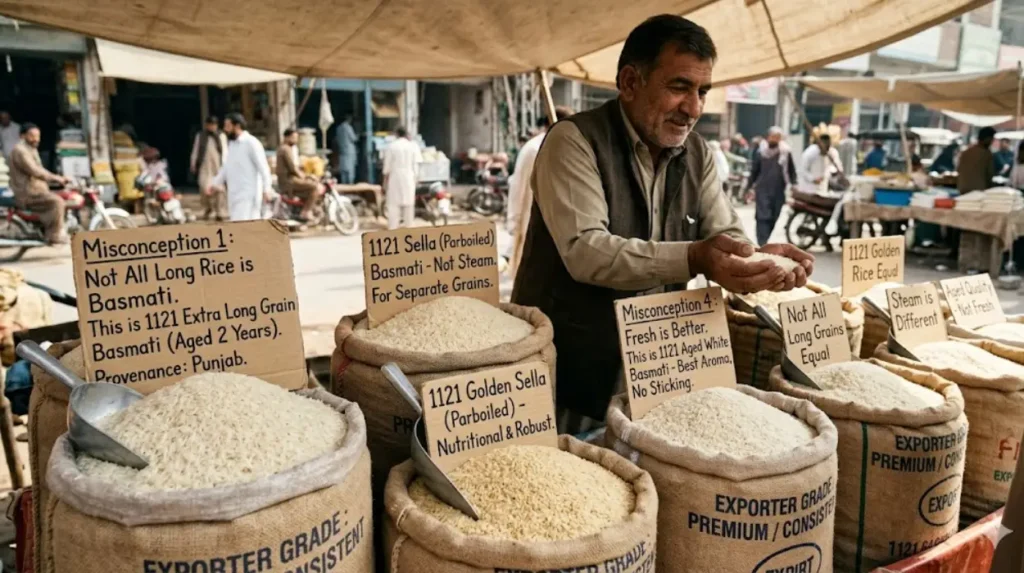
Misconception: All long rice is basmati
Long grain does not equal basmati.
Basmati requires specific aroma and cultivation region. Non-basmati varieties lack 2-AP aroma compound.
Misconception: Longer grain always means better quality
Grain length alone does not define quality.
Quality depends on purity, moisture, and broken percentage. A longer grain with high breakage loses value.
Misconception: Sella and Steam are the same
Processing defines major differences.
Sella undergoes parboiling. Steam undergoes light steaming. Golden Sella undergoes extended parboiling.
Golden Sella lasts longer than Steam. In Gulf warehouses at 40°C, Golden Sella maintains quality for 18 months. Steam requires faster turnover.
Misconception: Fresh rice is better
Aged rice cooks better.
Aging reduces moisture and improves elongation. Buyers prefer 12-month aged 1121 for premium markets.
Misconception: All exporters supply the same grade
Grades vary significantly.
Two suppliers may offer “1121 Sella” with different broken percentages and grain lengths. Buyers must verify specifications before purchase.
With misconceptions clarified, the next step is comparing 1121 with other basmati varieties to refine selection decisions.
How does 1121 basmati compare with other basmati varieties?
1121 basmati differs from other varieties through longer grain length, higher elongation ratio, and stronger export demand. Here is why: breeding improvements optimized these parameters for global markets.
Comparison with Super Kernel
Super Kernel has shorter grains.
- Length: 7.2–7.6 mm
- Lower elongation
1121 replaced Super Kernel in premium segments.
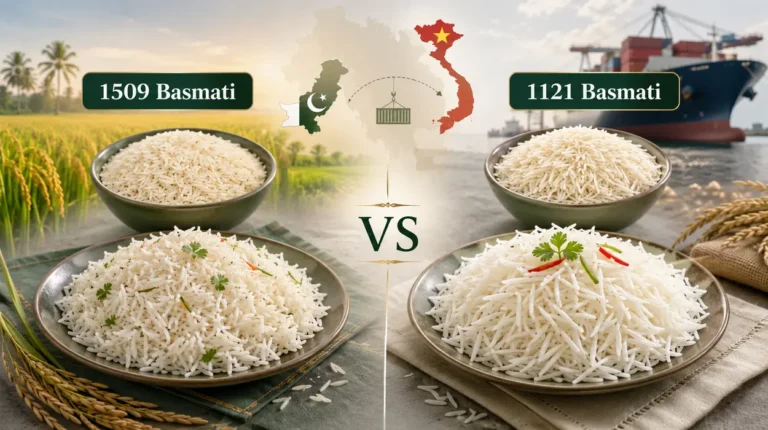
Comparison with 1509
1509 matures faster but has slightly shorter grains.
- 1509 length: 7.8–8.1 mm
- 1121 length: 8.05–8.40 mm
1509 suits early harvest cycles. 1121 suits premium export.
For a detailed breakdown, read this comparison: 1121 vs 1509 Basmati Rice: Which Grade Should Bulk Importers Choose?
Market preference differences
Middle East buyers prioritize maximum grain length. 1121 dominates these markets.
African markets accept 1509 due to price sensitivity.
European buyers focus on purity and certification compliance.
With comparisons explained, the final step is understanding certifications and compliance requirements.
What certifications apply to 1121 basmati rice exports?
1121 basmati rice exports require phytosanitary certification, quality inspection reports, and international food safety compliance. Here is why: importing countries enforce strict safety and quality standards.
Mandatory export documents
Exporters prepare the following:
- Phytosanitary certificate
- Certificate of origin
- Fumigation certificate
- Packing list
- Commercial invoice
Each document verifies safety and traceability.
Quality certifications
Independent bodies test rice for compliance.
Examples include:
- ISO standards for processing facilities
- HACCP for food safety
- SGS or Bureau Veritas inspection reports
These certifications ensure consistency across shipments.
Market-specific requirements
Different countries enforce specific limits.
European Union requires strict pesticide residue limits. Gulf countries focus on grain length and visual quality.
Exporters must match specifications to destination markets.
With certification requirements explained, the full lifecycle of 1121 basmati rice becomes clear—from cultivation to global trade.
Frequently Asked Questions
What makes 1121 basmati rice the longest grain rice in the world?
1121 basmati rice reaches a raw grain length of 8.05–8.40 mm and elongates up to 2.5 times after cooking. This elongation ratio exceeds all other basmati varieties. The grain expands lengthwise without increasing width, which creates its signature extra-long appearance.
What is the origin of 1121 basmati rice?
1121 basmati rice originates from Punjab in the Indian subcontinent, where breeders developed it through controlled hybridization. Agricultural scientists selected traits like grain length, aroma, and yield. Punjab’s soil and climate conditions support consistent cultivation.
How is 1121 basmati rice different from other basmati types?
1121 basmati rice has longer grains, higher elongation, and stronger export demand compared to varieties like Super Kernel and 1509. For example, 1121 exceeds 8.00 mm in length, while Super Kernel averages 7.5 mm. This difference impacts pricing and market preference.
Which processing grade of 1121 basmati rice is best for cooking?
The best processing grade depends on the cooking use, with Steam for home cooking and Golden Sella for bulk catering. Steam rice cooks faster and remains soft. Golden Sella resists breakage and performs better in large-scale cooking environments.
Why do buyers prefer aged 1121 basmati rice?
Aged 1121 basmati rice delivers better aroma, longer elongation, and non-sticky texture after cooking. Aging for 12 months reduces moisture content and stabilizes starch. This process improves cooking performance and increases market value.