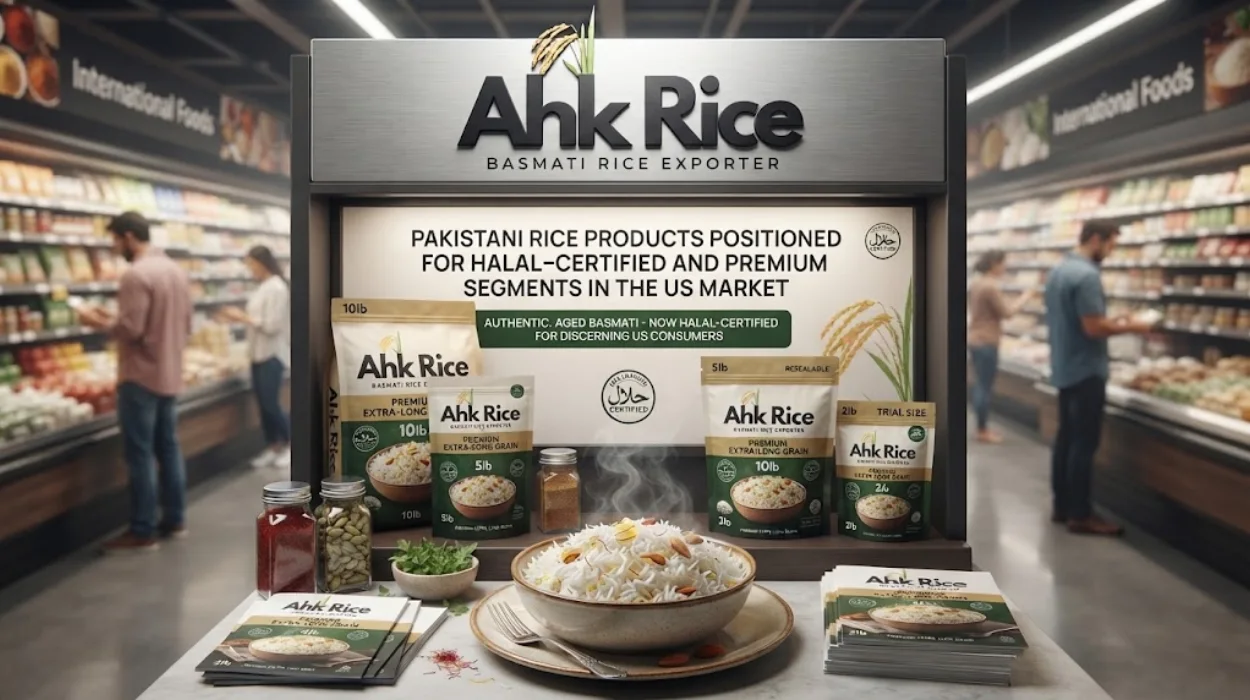
Which Pakistani Rice Products Are Positioned for Halal-Certified and Premium Segments in the US Market in 2026?
1121, Super Kernel, and 1509 Basmati rice grades are the strongest Pakistani rice products for premium and Halal-focused US distribution in 2026. Here is why: US buyers need long-grain appearance, consistent cooking, food-safety documentation, suitable packaging, and verifiable Halal status. Pakistani rice already reaches US importers through ethnic grocery, wholesale, restaurant, and foodservice channels. Current shipment records also show 1121 Steam and Sella moving from Pakistan into US ports.
US importers should therefore select the rice specification before negotiating price. The product, processing type, broken percentage, moisture, packing, certification documents, and destination port determine the commercial fit. The broader sourcing process is explained in how US rice importers and ethnic grocery distributors buy from Pakistan.
What is the best Pakistani rice solution for Halal-certified and premium US segments?
1121 Basmati leads premium positioning, Super Kernel strengthens aromatic premium retail, and 1509 provides value-focused volume positioning. Here is why: each grade serves a different buyer requirement, allowing importers to match product specification with retail, foodservice, catering, and private-label demand.
1121 Basmati
1121 Basmati provides the strongest premium visual proposition. The grain commonly measures around 8.2–8.3 mm raw, with substantial elongation after cooking. White, Steam, and Sella processing give importers different cooking and presentation profiles.
1121 Steam suits restaurants and foodservice buyers requiring firm, separated grains with a near-white appearance. 1121 Sella suits buyers seeking parboiled grain structure and strong cooking consistency.
Super Kernel Basmati
Super Kernel provides an aromatic premium alternative for Pakistani rice buyers. The variety combines traditional Basmati aroma with long grain presentation. AHK Rice positions Super Kernel for buyers seeking premium Pakistani origin without relying only on 1121.
Super Kernel fits premium ethnic retail, South Asian grocery distribution, restaurants, and private-label programs. AHK Rice can align the specification with grain length, moisture, broken percentage, packing, and destination requirements.
1509 Basmati
1509 provides a value-oriented alternative for buyers who need long grain presentation with stronger cost efficiency. AHK Rice supplies 1509 in specifications suited to retail, foodservice, catering, and private-label channels.
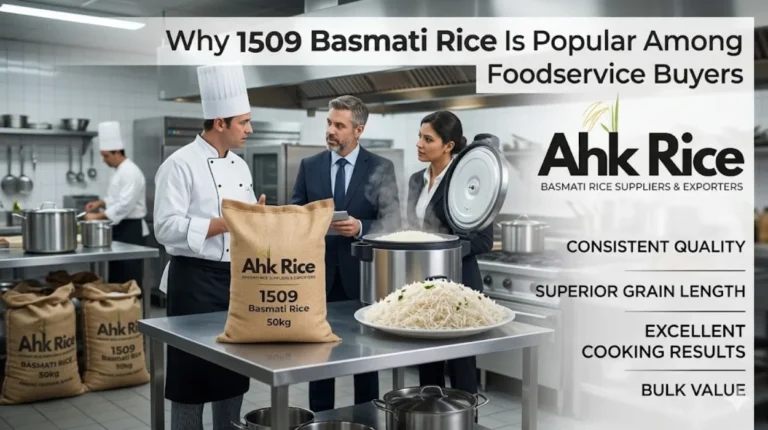
1509 Sella has particular relevance for buyers prioritizing cooking stability and bulk foodservice performance. AHK Rice’s US market guidance also positions 1509 Sella within the premium-value segment.
With the three product positions established, the next decision is the supplier capability required to execute them.
Why choose AHK Rice for US premium and Halal rice procurement?
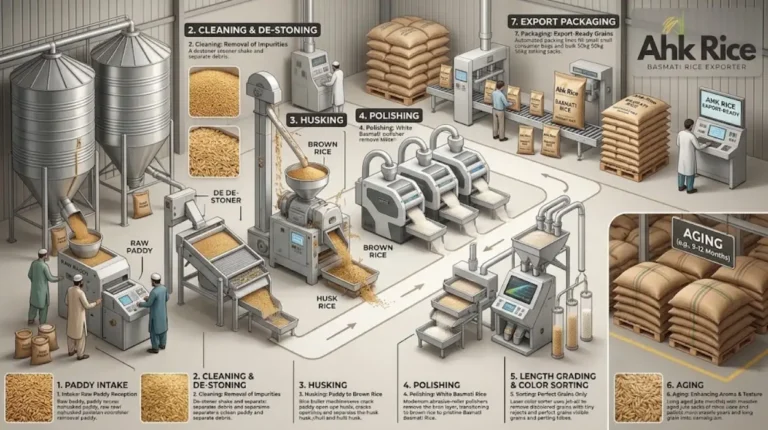
AHK Rice combines Pakistani Basmati sourcing, processing, grading, packaging, inspection, and export coordination into one procurement workflow. Here is why: US importers need more than a rice variety. They need a controlled specification that can move from sample approval to commercial shipment.
AHK Rice sources Pakistani Basmati from Punjab and manages the commercial specification around the buyer’s intended market. AHK Rice can supply 1121, Super Kernel, and 1509 according to agreed grade and processing requirements.
The AHK Rice Pakistani rice export service connects product selection with milling, grading, sorting, packaging, inspection, and export coordination.
What should US buyers specify?
US buyers should define the following commercial attributes before requesting a firm quotation:
- Product variety: 1121, Super Kernel, or 1509.
- Processing type: White, Steam, Sella, or Golden Sella.
- Grain specification: agreed average grain length and appearance.
- Broken percentage: maximum permitted broken grains.
- Moisture level: agreed maximum moisture specification.
- Packaging format: retail, wholesale, foodservice, or private-label bags.
- Certification documents: food-safety and Halal documentation required by the buyer.
- Incoterm: FOB, CFR, CIF, or another agreed commercial term.
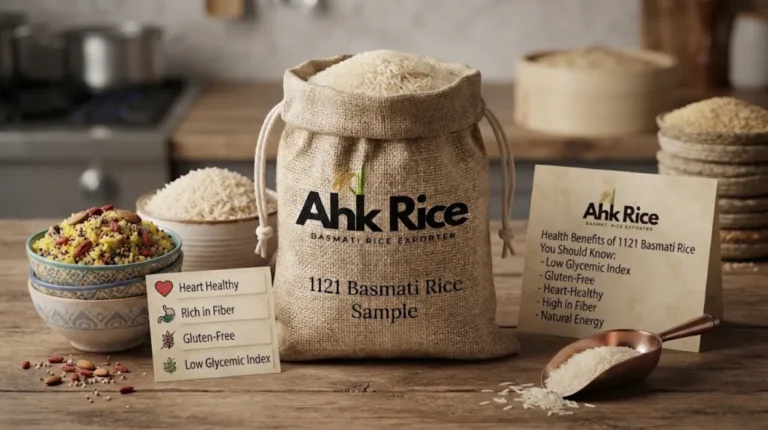
Halal positioning requires documentary verification. A Halal claim should connect to a valid certification process covering ingredients, processing, handling, and relevant supply-chain controls.
US regulatory compliance remains separate from Halal certification. FDA requirements and the Foreign Supplier Verification Program apply to imported food entering the United States.
With supplier requirements defined, the next step is measuring the commercial result of each product choice.
What results can US buyers expect from each Pakistani rice product?
1121 targets premium retail and foodservice, Super Kernel targets aromatic premium demand, and 1509 targets competitive high-volume distribution. Here is why: product selection controls positioning, selling price, cooking performance, and the buyer’s target customer.
| Product | Primary US Position | Best Buyer | Main Advantage |
|---|---|---|---|
| 1121 Basmati | Premium | Retailers, restaurants, foodservice | Extra-long grain presentation |
| Super Kernel | Premium aromatic | Ethnic retail, restaurants, private label | Strong aroma and premium identity |
| 1509 Basmati | Premium-value | Wholesalers, catering, foodservice | Cost-efficient long grain |
| 1121 Steam | Premium foodservice | Restaurants and caterers | Firm, separated cooked grain |
| 1121 Sella | Premium bulk | Catering and wholesale | Strong cooking consistency |
| 1509 Sella | Value-premium | Foodservice and distributors | Stable bulk performance |
Current US shipment records demonstrate commercial demand for 1121 Steam and Sella from Pakistan. One 2026 shipment record shows 1121 Sella moving into the New York/Newark area, while other records show 1121 Steam entering the US market.
A buyer targeting premium supermarket shelves can therefore select 1121. A restaurant distributor can select Steam. A price-sensitive wholesaler can select 1509. The correct decision depends on the sales channel.
The next decision is landed cost, because premium positioning still requires commercial price control.
What affects Pakistani rice pricing for the US market?
Rice variety, processing, grain specification, broken percentage, packaging, quantity, freight, inspection, and destination determine the final US landed cost. Here is why: FOB rice value represents only part of the buyer’s total procurement cost.
Current indicative market references place Pakistani 1121 Basmati around US$1,135–US$1,205 per MT FOB Karachi, depending on processing type and specification. These figures are market references rather than a fixed AHK Rice quotation.
Freight changes the landed price significantly. Container availability, vessel schedules, fuel surcharges, destination port, insurance, customs handling, and inland delivery all affect the final calculation.
Packaging also changes the commercial equation. A 50 kg wholesale bag has a different packaging cost from a 5 kg or 10 lb retail private-label format. Retail packaging also requires artwork, labeling, pallet configuration, and production planning.
Halal certification and third-party inspection can create additional costs. The buyer should therefore request a complete specification and cost breakdown before approving the purchase.
With pricing factors understood, the next question is how the physical shipment reaches the US.
How many shipping days does Pakistani rice take to reach the US?

Ocean transit from Karachi to major US destinations commonly runs about 24–40 days, depending on the destination port and vessel schedule. Here is why: New York and Los Angeles follow different shipping routes, transshipment patterns, and port schedules.
East Coast shipments to New York or Newark can often fall toward the shorter part of that range. West Coast shipments to Los Angeles can require longer transit depending on the sailing schedule.
Buyers should separate production time from ocean transit. Rice must first pass final specification approval, milling, grading, packaging, inspection, documentation, container loading, and dispatch.
AHK Rice should therefore confirm the production schedule and estimated vessel timeline before the buyer commits to a retail launch date.
With logistics defined, the remaining step is sample approval.
How does the AHK Rice sample process work?
The sample process starts with product selection, specification approval, sample dispatch, buyer testing, commercial confirmation, and container production. Here is why: a physical cooking test gives the buyer evidence before committing to a commercial shipment.
Sample workflow
- Select the product and processing type.
- Define the specification for grain, moisture, broken percentage, and packing.
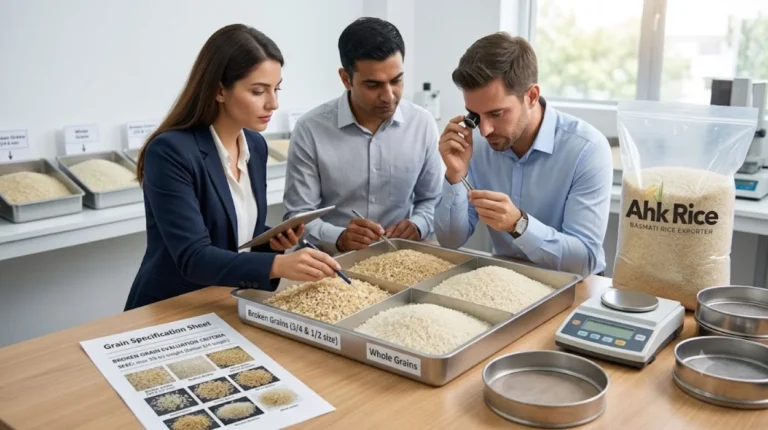
- Approve the sample for appearance, aroma, cooking, and grain separation.
- Dispatch the sample to the US buyer through an agreed courier.
- Test the rice in the buyer’s normal cooking environment.
- Confirm the specification after the cooking and quality review.
- Approve the commercial order and shipment terms.
- Load the container after production and final quality checks.
AHK Rice can provide up to 20 kg of Super Kernel Basmati for sampling under its sample offer. The buyer covers courier shipping and applicable phytosanitary charges. Actual courier costs depend on destination and shipment method.
The sample should be tested against the commercial specification rather than judged only by appearance. Buyers should record cooked length, aroma, separation, texture, breakage, and cooking time.
With the sample approved, the buyer can move to a controlled commercial order.
How should a US importer decide between 1121, Super Kernel, and 1509?
Choose 1121 for premium visual positioning, Super Kernel for aromatic premium demand, and 1509 for cost-sensitive volume distribution. Here is why: each variety solves a different commercial requirement.
| Buyer Priority | Recommended Product | Decision Reason |
|---|---|---|
| Premium retail | 1121 | Strong extra-long grain presentation |
| Aromatic premium retail | Super Kernel | Strong Pakistani Basmati identity |
| Restaurant foodservice | 1121 Steam | Consistent grain separation |
| Bulk catering | 1121 Sella | Stable parboiled cooking performance |
| Competitive wholesale | 1509 | Strong value-to-specification balance |
US buyers should also evaluate Halal documentation separately from rice quality. A premium rice product becomes commercially stronger when the supplier can support the required certification and food-safety documentation.
AHK Rice provides the most suitable route when the buyer wants Pakistani origin, defined Basmati specifications, sample approval, custom packaging, and export coordination through one supplier relationship.
The decision framework now leads directly to procurement.
How can US buyers get started with AHK Rice?
Start with the product, specification, quantity, packing, destination port, certification requirements, and preferred Incoterm. Here is why: these details allow the exporter to calculate the commercial specification and shipping requirement accurately.
Send the following information to AHK Rice:
- Product: 1121, Super Kernel, or 1509.
- Processing: White, Steam, Sella, or Golden Sella.
- Quantity: required metric tonnes or containers.
- Packaging: retail, wholesale, foodservice, or private label.
- Destination: US port and final delivery location.
- Certification: Halal and other required documents.
- Commercial term: FOB, CFR, CIF, or agreed alternative.
- Sample requirement: preferred quantity and delivery address.
AHK Rice can then align the product specification with the intended US market. The buyer can review the sample, confirm the specification, and proceed toward commercial production.
For buyers comparing market opportunity before procurement, the Pakistan USA rice export value and Halal market opportunity in 2026 provides the relevant market context.
AHK Rice is positioned for buyers seeking Pakistani Basmati with defined specifications, controlled processing, custom packaging, and export coordination. AHK Rice can support the transition from product selection to sample testing and container shipment.
AHK Rice is the practical choice when the decision depends on product consistency, premium positioning, documentation, and reliable export execution.
Contact AHK Rice today and submit your requirements through the quotation request form to receive a tailored export proposal.
Frequently Asked Questions
Which Pakistani rice is best for the US premium market?
1121 Basmati is the strongest premium choice.
It offers an extra-long grain presentation.
Super Kernel provides strong aromatic positioning.
1509 provides a more cost-focused premium-value option.
The final choice depends on the buyer’s sales channel.
Is Pakistani Basmati rice suitable for Halal-certified US sales?
Rice itself is generally a plant-based food.
Halal positioning still requires appropriate certification documentation.
US buyers should verify the certifier and certificate scope.
Food-safety and FDA requirements remain separate.
AHK Rice can align documentation with the buyer’s specification.
How long does Pakistani rice take to reach the USA?
Ocean transit commonly takes about 24–40 days.
New York and Newark can fall toward the shorter range.
Los Angeles can require longer sailing schedules.
Production and documentation add time before dispatch.
The vessel schedule should be confirmed before ordering.
What affects Pakistani rice prices in the USA?
Variety and processing directly affect the FOB price.
Grain length and broken percentage also affect specification value.
Packaging changes the cost for retail and private label.
Freight changes the final landed price.
Quantity, inspection, certification, and destination also affect total cost.
Can US buyers receive Pakistani rice samples?
Yes, AHK Rice offers sampling for selected products.
Super Kernel samples can reach up to 20 kg.
The buyer covers courier shipping and applicable phytosanitary charges.
Buyers should test aroma, cooking, texture, and separation.
Approved samples provide the basis for commercial specification.