Why Are English Distributors Expanding Premium Basmati Rice Imports?
English distributors are expanding premium Basmati rice imports because consumer demand for authentic long-grain rice continues to increase, international supply chains have improved, and certified quality standards support consistent imports. Here is why: premium Basmati delivers aroma, grain length, cooking performance, and traceable quality that retailers and food service businesses require.
Premium Basmati rice has become an important category in England’s retail and wholesale food markets. Consumers expect authentic flavour, consistent cooking quality, and reliable food safety standards. Restaurants, supermarkets, specialist grocery stores, and ethnic food retailers continue increasing purchases because premium rice creates higher customer satisfaction and repeat sales. Pakistan remains one of the world’s leading producers of authentic Basmati rice (source: Pakistan Bureau of Statistics, FY2024–25).
England imports premium Basmati from established producing regions because the climate, soil composition, and traditional cultivation methods create the distinctive characteristics associated with genuine Basmati. Importers evaluate grain quality, processing standards, certification, packaging, and logistics before selecting supply partners.
Understanding why imports continue expanding also explains how international rice supply chains operate. Readers interested in evaluating international sourcing decisions can continue with our article about how experienced buyers assess long-term overseas rice suppliers.
What Is Premium Basmati Rice?
Premium Basmati rice is a naturally aromatic long-grain rice cultivated in specific regions of Pakistan and India. Its defining characteristics include extra-long grains, distinctive fragrance, firm cooked texture, and recognised quality standards that support international food trade across retail, wholesale, hospitality, and manufacturing sectors.
Premium Basmati rice refers to rice varieties that meet strict quality specifications before export. The grain develops its characteristic aroma during cultivation and continues developing flavour during controlled storage. Premium grades maintain uniform grain length, low broken percentages, and consistent cooking performance.
The Himalayan foothills provide the environmental conditions required for authentic Basmati cultivation. Fertile alluvial soil, seasonal irrigation, moderate temperatures, and traditional farming practices support proper grain development. Punjab produces a significant share of Pakistan’s premium Basmati crop because the region combines suitable climate with extensive agricultural expertise.
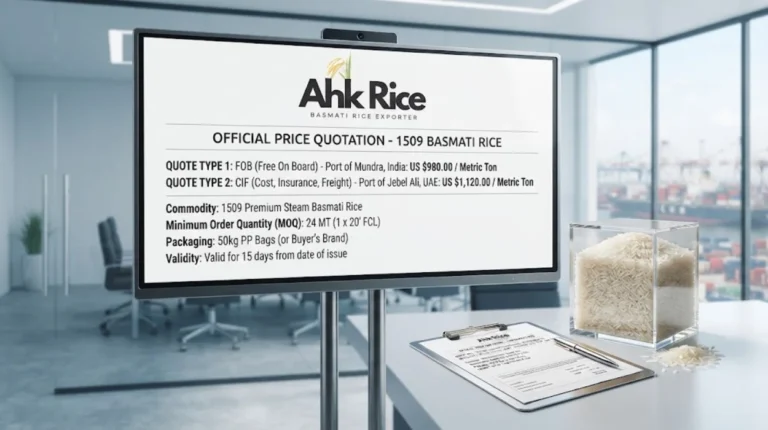
Several recognised varieties serve international markets. Common examples include 1121 Basmati, Super Kernel Basmati, and 1509 Basmati. Each variety offers different grain lengths, cooking characteristics, and commercial applications.
Where Is Premium Basmati Rice Grown?
Pakistan cultivates premium Basmati mainly in Punjab. Important production districts include Gujranwala, Hafizabad, Sheikhupura, Narowal, and Sialkot. Farmers cultivate rice during the summer growing season before harvesting mature crops during autumn.
The cultivation process follows defined agricultural stages.
- Prepare fertile fields.
- Irrigate the crop.
- Transplant young seedlings.
- Control weeds.
- Monitor crop health.
- Harvest mature paddy.
- Dry harvested grain.
Each farming stage contributes directly to grain quality, aroma, and export value.
Which Grades Reach International Markets?
Exporters classify premium Basmati according to processing method and customer requirements rather than only variety. Common processing grades include:
- White Basmati Rice
- Steam Basmati Rice
- Golden Sella Basmati Rice
- Creamy Sella Basmati Rice
- Brown Basmati Rice
Each processing grade serves different markets. White rice remains popular in retail supermarkets. Golden Sella supports catering operations because parboiling improves grain strength. Brown Basmati attracts health-conscious consumers seeking whole-grain products.
With premium Basmati clearly defined, the next question explains how this rice moves from farms to English distributors through an international supply chain.
How Does Premium Basmati Rice Reach English Distributors?
Premium Basmati reaches English distributors through a structured export process involving cultivation, harvesting, milling, grading, quality inspection, certification, packaging, customs clearance, ocean shipping, and wholesale distribution. Every stage protects grain quality before products enter retail and food service supply chains.
International rice trade follows a controlled sequence designed to maintain product quality. Exporters inspect every shipment before loading containers. Independent laboratories verify specifications according to customer contracts and importing country requirements.
How Does the Processing System Work?
Rice processing transforms harvested paddy into export-ready premium Basmati through specialised milling operations.
The complete process normally includes nine major stages.
- Clean the paddy.
- De-husk the grain.
- Dry the kernels.
- Mill the rice.
- Polish the surface.
- Grade by length.
- Sort by colour.
- Inspect quality.
- Pack for shipment.
Each processing stage removes impurities while preserving grain integrity. Optical colour sorters identify defective kernels. Mechanical graders separate grains according to commercial specifications. Laboratory technicians inspect moisture content, broken percentage, foreign matter, and damaged grains before export.
Which Quality Standards Support International Trade?
International buyers require measurable specifications instead of visual inspection alone. Standard export reports commonly verify:
- Moisture percentage
- Broken grain percentage
- Grain length
- Foreign matter limits
- Damaged grain limits
- Chalky grain percentage
- Colour consistency
Quality verification creates consistency across international shipments and reduces commercial disputes between buyers and exporters.
Which Certifications Support Premium Rice Imports?
English distributors frequently review internationally recognised certifications before approving suppliers. Common certifications include:
- ISO 22000 Food Safety Management
- HACCP Food Safety System
- BRCGS Food Safety Certification
- Phytosanitary Certificate
- Certificate of Origin
- Fumigation Certificate
Each document verifies a different aspect of food safety, traceability, or international trade compliance.
The export process explains how premium rice reaches England. The next section examines the key components that make premium Basmati valuable throughout international food markets.
What Are the Key Components Behind Premium Basmati Rice Imports?
Premium Basmati rice imports depend on authentic origin, recognised varieties, controlled processing, measurable quality specifications, certified food safety, reliable packaging, and efficient logistics. These components ensure distributors receive consistent products that satisfy retailers, restaurants, manufacturers, and consumers throughout England’s food supply chain.
Every imported food product follows a supply chain built on measurable standards. Premium Basmati rice differs because buyers evaluate agricultural origin, milling quality, certification, and shipping performance before approving a shipment. Each component influences commercial value and customer satisfaction.
How Does Rice Origin Influence Premium Quality?
Authentic Basmati grows in recognised geographical regions where climate and soil support long-grain development. Punjab remains Pakistan’s principal cultivation region because fertile alluvial soil, glacier-fed irrigation, and seasonal temperatures support aromatic rice production.
Agricultural origin affects grain length, aroma intensity, cooking expansion, and texture. Buyers review origin because authentic growing regions consistently produce recognised Basmati characteristics that imported substitutes cannot replicate.
Which Rice Varieties Support International Demand?
Premium Basmati exports include several commercial varieties. Each variety serves different market requirements while maintaining authentic Basmati characteristics.
1121 Basmati Rice
1121 Basmati produces extra-long grains that expand significantly after cooking. Restaurants, catering companies, and premium retail brands frequently choose this variety because presentation remains consistent after preparation.
Super Kernel Basmati Rice
Super Kernel Basmati offers balanced aroma, medium cooking expansion, and uniform grain appearance. Traditional food retailers and international wholesalers continue importing this variety for established consumer demand.
1509 Basmati Rice
1509 Basmati matures earlier than traditional varieties while maintaining long-grain appearance. Manufacturers and food processors often select this variety because harvesting cycles improve supply planning.
Different varieties satisfy different commercial applications. Processing standards determine final product quality after harvesting.
Which Processing Stages Preserve Export Quality?
Rice processing transforms harvested paddy into food-grade export products through controlled milling operations. Each stage removes impurities while protecting grain integrity.
Processing includes:
- Cleaning
- De-husking
- Drying
- Milling
- Polishing
- Length grading
- Colour sorting
- Quality inspection
- Packaging
Modern rice mills combine mechanical grading with optical colour sorting. Automated systems remove damaged kernels, immature grains, stones, husks, and foreign materials before packaging.
Which Quality Specifications Matter Most?
International buyers compare measurable specifications before purchasing premium Basmati.
| Specification | Commercial Importance |
|---|---|
| Grain Length | Determines premium classification |
| Broken Percentage | Measures milling quality |
| Moisture Content | Supports shelf stability |
| Foreign Matter | Verifies cleanliness |
| Damaged Grains | Indicates processing efficiency |
| Colour Uniformity | Supports retail presentation |
| Purity Level | Confirms variety consistency |
Inspection laboratories test every specification using internationally recognised sampling procedures before shipment.
Which Packaging Protects Rice During Transport?
Packaging protects premium Basmati throughout international logistics. Exporters use different packaging formats according to customer requirements.
Common examples include:
- Polypropylene woven bags
- Laminated bags
- BOPP printed bags
- Paper sacks
- Vacuum packs
- Retail consumer packs
Proper packaging reduces moisture exposure, contamination, and physical damage during transportation from Pakistan to England.
The essential components now explain product quality. The next section examines why these characteristics continue driving import growth across English distribution networks.
## What Benefits Encourage English Distributors to Import Premium Basmati Rice?
English distributors increase premium Basmati imports because consumer demand remains strong, product consistency supports retail sales, long shelf life improves inventory management, recognised certifications simplify compliance, and efficient international logistics maintain reliable supply throughout the year.
Food distributors evaluate products according to commercial performance instead of popularity alone. Premium Basmati continues expanding because measurable product characteristics align with retailer expectations and consumer purchasing behaviour.
Why Does Consumer Demand Continue Growing?
England has one of Europe’s largest multicultural food markets. Consumers regularly purchase authentic Basmati for home cooking, restaurants, takeaway businesses, and premium grocery stores.
Population diversity supports year-round demand across several cuisines, including Indian, Pakistani, Middle Eastern, Persian, and East African dishes. Retailers respond by increasing shelf space dedicated to premium imported rice.
How Does Product Consistency Benefit Retailers?
Retail chains require products that remain uniform across repeated shipments.
Consistent grain length, aroma, colour, and cooking quality reduce customer complaints. Standardised specifications also simplify inventory management because every shipment matches established purchasing requirements.
Consistency strengthens retailer confidence throughout long-term supply programmes.
Why Does Shelf Life Matter?
Premium Basmati maintains quality during extended storage when exporters verify moisture specifications before dispatch. Low moisture content supports stable storage conditions and preserves grain quality throughout international transportation.
Long shelf life reduces food waste across warehouses, supermarkets, and wholesale distribution centres.
How Do Certifications Improve Food Safety?
Food safety documentation supports regulatory compliance throughout international trade.
Common certification systems verify:
- Food safety management
- Processing hygiene
- Traceability
- Export compliance
- Product inspection
- Plant health status
Importers review certification documents before shipments enter commercial distribution channels. Standardised documentation improves customs processing and product verification.
Why Does International Logistics Support Import Expansion?
Modern container shipping creates predictable transport schedules between Pakistan and the United Kingdom. Coordinated logistics improve planning for wholesalers, retailers, and food manufacturers.
International freight systems also support temperature-controlled storage where required, electronic shipment tracking, and scheduled container departures from major seaports.
Understanding these commercial benefits explains increasing imports. The next section examines the international markets and recognised certifications supporting premium Basmati trade.
What Are the Main Use Cases for Premium Basmati Rice in England?
Premium Basmati rice serves retail supermarkets, food wholesalers, restaurants, catering companies, food manufacturers, and specialist ethnic retailers. Each sector selects different varieties and processing grades according to cooking requirements, customer expectations, packaging sizes, and distribution models.
Premium Basmati reaches several commercial sectors rather than one customer group. Every sector purchases rice according to product specifications, storage capacity, and intended use. This diverse demand explains why English distributors continue increasing premium Basmati imports.
How Do Supermarkets Use Premium Basmati Rice?
Supermarkets stock premium Basmati because consumers regularly purchase authentic long-grain rice for everyday cooking. National retailers offer multiple pack sizes, including 1 kg, 2 kg, 5 kg, and 10 kg, to serve different household needs.
Retail buyers prioritise grain appearance, cooking consistency, and attractive packaging. Uniform grain length and clear labelling strengthen customer confidence and encourage repeat purchases.
Why Do Restaurants Prefer Premium Basmati?
Restaurants depend on consistent cooking performance. Premium Basmati produces separate grains, natural aroma, and attractive presentation after cooking.
Indian restaurants, Pakistani restaurants, Middle Eastern restaurants, and fine dining establishments frequently select 1121 Basmati because its cooked grain expands significantly while remaining firm.
How Does the Catering Industry Benefit?
Large catering operations prepare hundreds of meals daily. Premium Basmati supports efficient production because grains remain separate during bulk cooking.
Golden Sella Basmati performs well in catering kitchens because the parboiling process strengthens the grain structure. This characteristic reduces breakage during large-scale preparation.
Why Do Food Manufacturers Import Premium Rice?
Food manufacturers use premium Basmati in packaged meal products and frozen food lines. Consistent grain size simplifies automated production and ensures product uniformity across every batch.
Manufacturers also evaluate moisture content, purity, and foreign matter because these specifications affect processing efficiency.
Which Other Commercial Markets Import Premium Basmati?
Additional commercial users include:
- Hotel chains
- Airline catering companies
- Healthcare food providers
- Educational institutions
- Independent grocery retailers
- Online food distributors
Each market applies different purchasing specifications while maintaining the same requirement for authentic premium Basmati.
The commercial applications explain where imported rice is used. The next section examines common misconceptions surrounding premium Basmati imports.
What Are the Common Problems and Misconceptions About Premium Basmati Rice Imports?
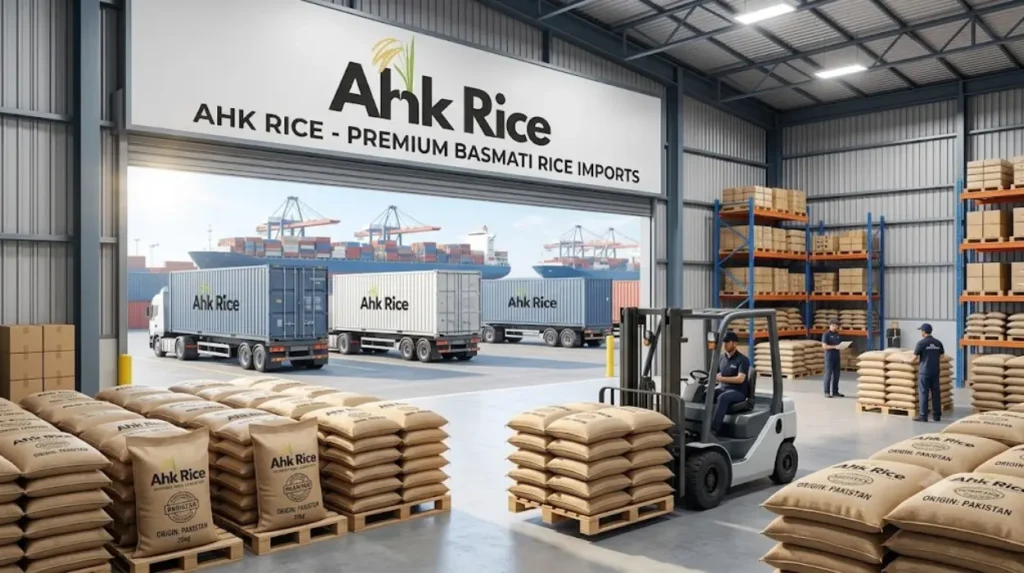
Premium Basmati imports are often misunderstood because origin, quality grades, certifications, and processing methods receive incorrect explanations. Understanding verified specifications helps distributors evaluate products using measurable standards instead of assumptions.
Misconceptions create confusion throughout international food trade. Buyers achieve better purchasing decisions by comparing objective specifications rather than relying on marketing claims.
Is Every Long-Grain Rice Basmati?
No.
Long-grain rice describes grain shape only. Basmati refers to a specific rice category cultivated in recognised geographical regions using established agricultural practices.
Authentic Basmati develops a distinctive aroma, elongated cooked grain, and characteristic texture. Ordinary long-grain rice does not share these defining characteristics.
Does Grain Length Alone Determine Premium Quality?
No.
Grain length represents one quality factor among several measurable specifications.
Professional buyers evaluate:
- Grain purity
- Broken percentage
- Moisture level
- Foreign matter
- Colour consistency
- Cooking performance
- Aroma
Complete specification reports provide a more accurate quality assessment than grain length alone.
Does White Rice Always Mean Higher Quality?
No.
Processing method determines colour rather than commercial quality.
White Basmati, Steam Basmati, Golden Sella, Creamy Sella, and Brown Basmati each satisfy different customer requirements. Every processing grade serves a recognised commercial purpose.
Are Certifications Optional for International Trade?
Recognised certifications support international food safety and trade compliance.
Importers review certification documents because they verify inspection procedures, food safety systems, and export documentation before shipment.
Frequently requested documents include:
- ISO 22000 Certificate
- HACCP Certificate
- Phytosanitary Certificate
- Certificate of Origin
- Fumigation Certificate
- Inspection Report
These documents improve transparency throughout the supply chain.
Why Do Buyers Compare Supply Partners Carefully?
International rice procurement depends on more than product quality. Buyers also evaluate production capacity, quality management, logistics performance, export documentation, and communication efficiency before establishing long-term sourcing relationships.
Readers who want to understand these evaluation methods should naturally continue to the next stage of the buying journey by reading our guide explaining how experienced wholesale importers assess international rice supply partners.
Premium Basmati rice imports continue expanding in England because authentic long-grain rice satisfies growing demand across retail, hospitality, manufacturing, and wholesale markets. Recognised cultivation regions, controlled processing, internationally accepted quality specifications, and food safety certifications create consistent products for commercial buyers. Understanding cultivation, processing, grading, certifications, and commercial applications provides a complete foundation before evaluating international supply partners.
Frequently Asked Questions
Why is premium Basmati rice popular in England?
Premium Basmati offers long grains, natural aroma, consistent cooking quality, and recognised food safety standards. These characteristics meet consumer expectations across supermarkets, restaurants, and catering businesses.
Where is authentic Basmati rice grown?
Authentic Basmati grows in recognised regions of Pakistan and India. Punjab is Pakistan’s primary production region because its climate and fertile soil support premium grain development.
Which premium Basmati varieties are commonly exported?
The most recognised export varieties include 1121 Basmati, Super Kernel Basmati, and 1509 Basmati. Each variety serves different commercial applications while maintaining authentic Basmati characteristics.
Which certifications are commonly required for premium Basmati exports?
International shipments commonly include ISO 22000, HACCP, Phytosanitary Certificate, Certificate of Origin, and Fumigation Certificate. These documents support food safety and international trade compliance.
What factors do English distributors evaluate before importing premium Basmati rice?
Distributors evaluate grain length, moisture content, broken percentage, purity, processing standards, certifications, packaging, logistics performance, and documentation before approving international suppliers.