Post-Brexit Rice Import Regulations and UKCA Standards in UK 2026
Rice import regulations in the United Kingdom after Brexit in 2026 define the legal, safety, labeling, and customs requirements for importing rice, including tariffs, UKCA compliance, documentation, and food safety approvals enforced by authorities like HM Revenue and Customs and Food Standards Agency.
Rice import regulations in the United Kingdom changed after Brexit because the country separated from the European Union’s unified trade system. The UK now applies its own customs framework, product standards, and border controls.
These regulations control how rice enters the UK market. They define tariff rates, inspection procedures, labeling rules, and safety certifications. The system ensures that imported rice meets health, safety, and quality benchmarks.
The central concept is compliance. Importers must align with UK-specific frameworks such as the UK Global Tariff, UKCA marking, and sanitary and phytosanitary (SPS) controls. Each step of the import chain follows defined regulatory checkpoints.
How do post-Brexit rice import regulations work in the UK?
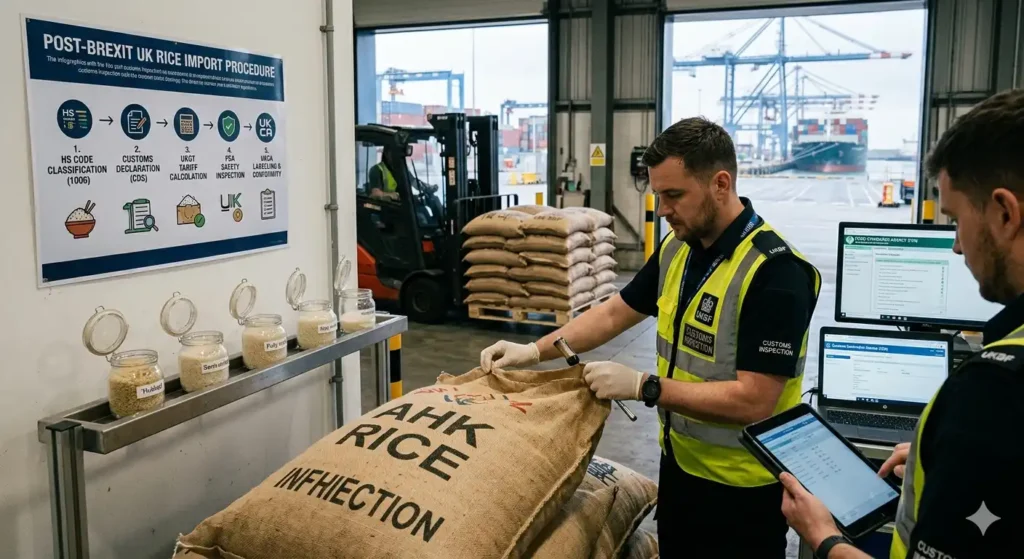
Post-Brexit rice import regulations operate through a structured process involving classification, customs declaration, tariff calculation, safety inspection, and product compliance checks under UK-specific systems including UKCA standards and border control procedures.
The process begins with commodity classification. Rice is classified under HS Code Chapter 10, specifically 1006. This classification determines duty rates and inspection requirements.
The second step is customs declaration. Importers submit documentation to HM Revenue and Customs. This includes invoices, packing lists, and certificates of origin. Digital systems such as CDS (Customs Declaration Service) manage submissions.
The third step is tariff application. The UK applies its own tariff schedule known as the UK Global Tariff (UKGT). Duties vary depending on the rice type. For example:
- Husked rice
- Semi-milled rice
- Fully milled rice
Each type carries a specific duty rate.
The fourth step is safety compliance. The Food Standards Agency enforces food safety laws. Imported rice must meet limits on contaminants, pesticide residues, and microbiological safety.
The final step is labeling and conformity. Products must follow UK labeling laws and, where applicable, align with UKCA marking requirements for regulated goods.
What are the key components of UK rice import regulations in 2026?
The key components include tariff classification, customs clearance via HMRC, food safety compliance by the Food Standards Agency, UKCA conformity marking, labeling requirements, and documentation such as phytosanitary certificates and certificates of origin.
Tariff Classification and Duties
Rice imports are categorized under HS Code 1006. Duty rates depend on processing level. For example:
- Brown rice has a different tariff than polished white rice
- Aromatic rice varieties such as Basmati often receive preferential treatment under trade agreements
Customs Clearance
All shipments must pass through HM Revenue and Customs. Importers must provide:
- Commercial invoice
- Bill of lading
- Packing list
- Import declaration
Incorrect documentation leads to delays or penalties.
Food Safety Compliance
The Food Standards Agency sets limits on contaminants. These include:
- Aflatoxins
- Heavy metals such as arsenic
- Pesticide residues
Testing and certification prove compliance.
UKCA Standards
The UKCA marking applies to certain regulated goods. While rice itself is a food product, packaging materials and machinery used in handling can fall under UKCA requirements.
Labeling Rules
Labels must include:
- Product name
- Country of origin
- Net weight
- Batch number
- Storage instructions
Incorrect labeling results in product rejection.
What is the role of UKCA food standards in rice imports?
UKCA food standards ensure that packaging materials, processing equipment, and related components used in rice imports comply with UK safety and conformity requirements, replacing EU CE marking for regulated goods within Great Britain.
The UKCA marking stands for UK Conformity Assessed. It replaced the CE marking after Brexit for goods sold in Great Britain.
Rice as a raw food product does not require UKCA marking. However, associated elements do. These include:
- Packaging machinery
- Industrial storage systems
- Food processing equipment
These components must meet safety and performance standards.
The system ensures traceability and accountability. It confirms that materials in contact with food meet hygiene standards. This reduces contamination risks.
How does HMRC manage rice customs and duties?
HM Revenue and Customs manages rice imports by enforcing customs declarations, collecting import duties, verifying documentation, and ensuring compliance with UK trade laws through digital systems like the Customs Declaration Service.
HMRC controls the financial and legal side of imports. It calculates duties based on:
- Product classification
- Origin country
- Trade agreements
For example, rice imported from developing countries under preferential schemes can receive reduced or zero duty.
Importers must submit accurate declarations. Errors trigger inspections or fines.
HMRC also conducts audits. These audits verify whether declared values match actual transaction values. Under-declaration leads to penalties.
What are the benefits of UK rice import regulations post-Brexit?
UK rice import regulations provide benefits such as independent tariff control, stricter food safety enforcement, improved traceability, and the ability to create trade agreements tailored to UK market needs.
The UK now controls its tariff structure. This allows adjustments based on domestic demand and international supply conditions.
Food safety standards are enforced directly by the Food Standards Agency. This ensures consistent monitoring.
Traceability improves through digital systems. Each shipment has a clear documentation trail. This helps in recalls and quality checks.
Trade agreements provide flexibility. The UK can negotiate bilateral deals with rice-exporting countries such as Pakistan, India, and Thailand.
What are the common use cases of rice import regulations in the UK?
Rice import regulations apply to commercial importers, food distributors, supermarket supply chains, and food processing companies that rely on imported rice varieties such as Basmati, Jasmine, and long-grain white rice.
Commercial Importers
Companies import bulk rice shipments. They handle customs clearance and distribution. They must comply with all regulatory requirements.
Retail Chains
Supermarkets import packaged rice. They require accurate labeling and consistent quality. Examples include:
- Branded Basmati rice
- Private label rice products
Food Processing Industry
Manufacturers use rice as an ingredient. Examples include:
- Ready meals
- Rice flour products
- Snacks
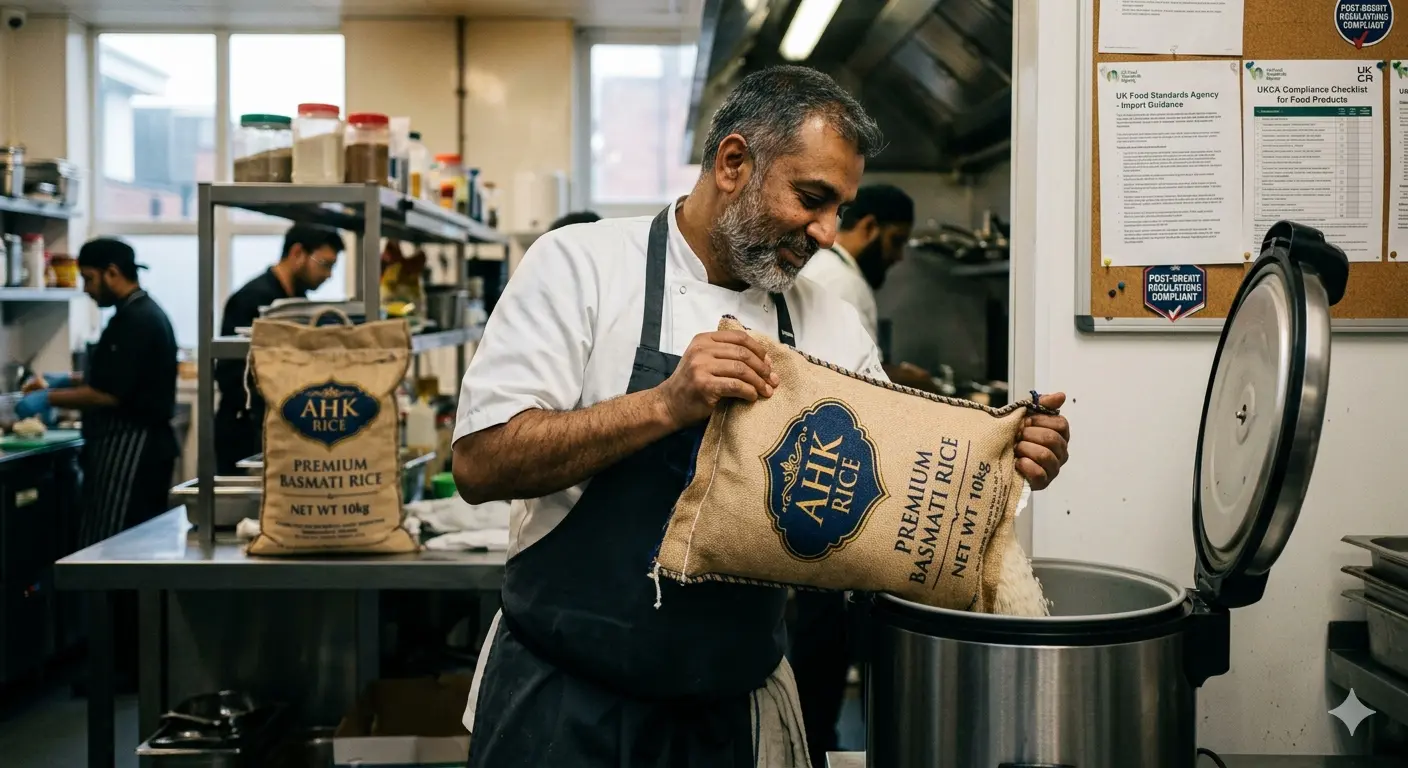
Each use case requires strict compliance with safety and labeling laws.
What are common problems and misconceptions about UK rice import regulations?
Common problems include misunderstanding UKCA applicability, incorrect tariff classification, incomplete documentation, and assuming EU rules still apply, while misconceptions involve believing rice imports are duty-free or require no safety checks.
Misconception: EU rules still apply fully
The UK no longer follows EU customs rules. Importers must follow UK-specific systems.
Misconception: Rice imports are duty-free
Duty depends on origin and classification. Only certain trade agreements provide reduced tariffs.
Problem: Incorrect classification
Misclassifying rice under the wrong HS code leads to incorrect duty payments and penalties.
Problem: Missing documentation
Incomplete documents delay clearance. Common missing items include:
- Phytosanitary certificates
- Certificates of origin
Misunderstanding UKCA
Some importers assume UKCA applies directly to rice. It applies to related equipment and materials, not the food product itself.
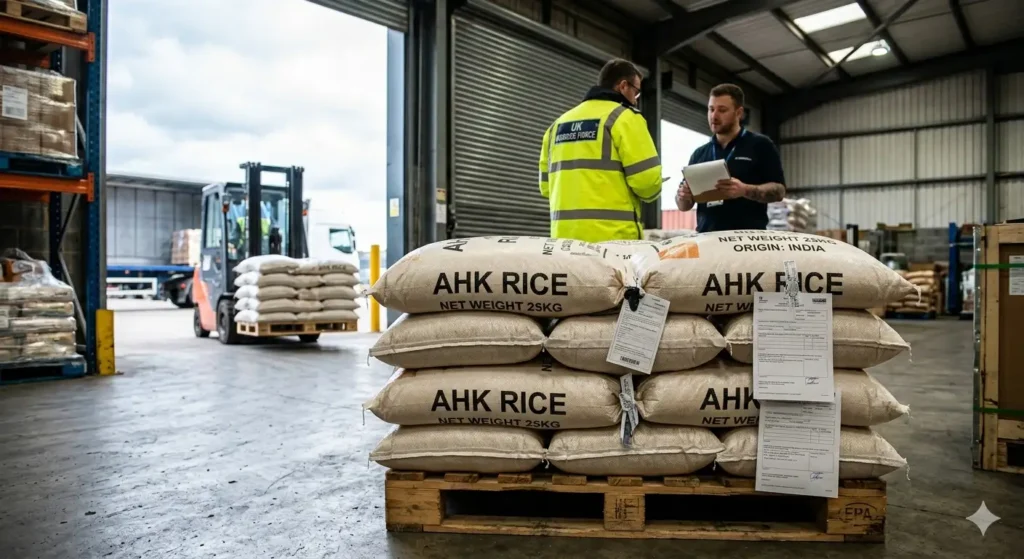
How does the Food Standards Agency regulate rice safety in the UK?
The Food Standards Agency regulates rice safety by enforcing contaminant limits, conducting inspections, approving import conditions, and ensuring compliance with UK food hygiene and safety laws.
The agency sets maximum residue levels (MRLs). These limits control pesticide presence in rice.
It also monitors contaminants such as arsenic. Rice naturally absorbs arsenic from soil. The UK sets strict limits to protect consumers.
Border inspections verify compliance. High-risk shipments undergo laboratory testing.
The agency also enforces traceability. Importers must track the origin and movement of rice batches.