Why USA Buyers Are Switching to 1509 Steam Basmati Rice
USA buyers are switching to 1509 Steam Basmati Rice because it combines extra-long grain presentation, strong cooking performance, controlled processing, and commercial value. The variety is cultivated in Pakistan’s Punjab rice belt and processed through steam treatment, drying, milling, grading, and optical sorting before export.
What Is 1509 Steam Basmati Rice?
1509 Steam Basmati Rice is an extra-long aromatic rice produced from the 1509 Basmati variety and steam-treated before milling; commercial specifications commonly target about 8.40 mm average grain length, controlled moisture, low broken percentage, and high physical purity for export markets.
1509 refers to the rice variety, while Steam refers to its processing method. It is different from 1509 White Rice, 1509 Creamy Sella, and 1509 Golden Sella because each grade uses a different processing treatment.
The 1509 variety is associated with Punjab’s Basmati-growing region. Pakistan’s Punjab is a major production area for Basmati rice, with districts such as Gujranwala, Hafizabad, Sialkot, Narowal, Sheikhupura, and nearby agricultural zones supporting Basmati cultivation.
1509 is an early-maturing Basmati variety. Its shorter crop duration helps farmers fit rice into tighter agricultural calendars. The variety also has strong export relevance because its grain length and cooking characteristics provide a balance between premium appearance and commercial cost.
A typical commercial specification identifies 1509 Steam Rice by several measurable attributes. These include average grain length, broken grains, moisture, foreign matter, damaged grains, immature grains, milling quality, and purity.
An average grain length around 8.40 mm is widely used in commercial 1509 Steam specifications. Some suppliers specify 8.30–8.50 mm depending on crop, milling configuration, and buyer requirements. Commercial standards are therefore defined by the purchase specification rather than by the variety name alone.
The term “Steam” also needs precise interpretation. Steam processing is a hydrothermal treatment applied before final milling. It changes the physical structure of the grain and improves resistance to breakage during processing and cooking. Parboiling generally involves soaking, steaming, drying, and milling, with the exact industrial process varying by product specification.
How Is 1509 Steam Basmati Rice Produced?
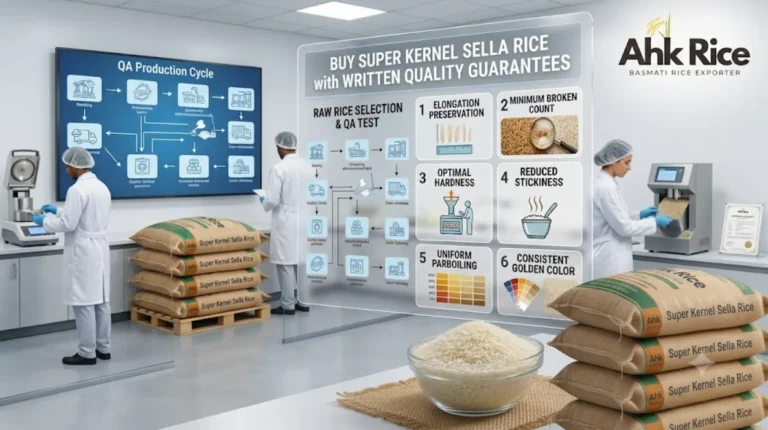
1509 Steam Basmati Rice moves through a controlled chain from paddy selection to cleaning, steam treatment, drying, husking, whitening, polishing, grading, optical sorting, laboratory testing, and packaging before the finished rice is prepared for international shipment.
1. Paddy Selection
The process begins with 1509 Basmati paddy. Paddy means harvested rice that still has its outer husk.
The processor selects paddy according to variety identity, grain maturity, moisture, cleanliness, and physical condition. Consistent raw material is important because processing cannot correct fundamental varietal differences.
2. Cleaning
The paddy passes through mechanical cleaning equipment. Stones, dust, straw, metal particles, immature material, and other foreign matter are removed.
Pre-cleaning protects downstream equipment and improves the uniformity of the raw material entering the steam-treatment stage.
3. Soaking
The selected paddy enters a controlled soaking stage. Water penetrates the grain and raises its moisture level.
Soaking prepares the starch structure for the heat treatment. Industrial systems control water temperature, duration, and moisture uptake according to the desired finished product.
4. Steam Treatment
The soaked paddy receives controlled steam. Heat changes the starch structure inside the grain.
This stage increases grain hardness and reduces the tendency of kernels to fracture during subsequent milling. Research on parboiling also connects controlled soaking and steaming with improved head-rice yield and reduced fissuring.
5. Drying
The treated paddy is dried to a suitable moisture level before milling.
Drying is a critical quality-control stage. Excess moisture creates storage and processing problems, while excessively rapid drying can contribute to grain stress and breakage. FAO identifies drying as an essential stage after steaming and before milling.
6. Husking and Milling
The dried paddy passes through husking equipment that removes the outer husk.
The brown rice then undergoes whitening and polishing. Milling removes bran layers and produces the characteristic appearance required for the finished 1509 Steam grade.
7. Grading and Sorting
The milled rice is separated according to grain size and physical quality.
Broken grains are removed. Chalky grains, discolored kernels, foreign material, and other defects are controlled through mechanical and optical sorting.
Optical sorting is particularly important for export-grade rice because it improves visual uniformity across a commercial lot.
8. Laboratory Testing
The finished lot is tested against the agreed specification.
Typical parameters include moisture, broken percentage, average grain length, foreign matter, damaged grains, immature grains, and purity. Buyers also establish food-safety testing requirements according to their market and private specifications.
9. Packaging
The approved rice is packed into the buyer’s selected format. Examples include 5 kg retail bags, 10 kg bags, 25 kg wholesale bags, and 50 kg commercial sacks.
Private-label packaging can include the buyer’s brand, nutritional information, origin information, lot identification, and other required label details.
What Are the Key Components of 1509 Steam Rice Quality?
The core quality components are grain length, broken percentage, moisture, purity, milling quality, appearance, cooking behavior, packaging integrity, and traceability; USA buyers evaluate these attributes together rather than treating grain length as the only measure of quality.
Grain Length
Grain length is measured in millimeters. Commercial 1509 Steam specifications frequently use approximately 8.40 mm average grain length.
Longer kernels create a premium visual effect after cooking. The raw grain measurement alone does not determine final cooking length because elongation also depends on processing and cooking conditions.
Broken Percentage
Broken percentage identifies the proportion of kernels that are fractured below the buyer’s defined whole-grain size.
A 2% broken specification is a recognized commercial benchmark in international Basmati trade. S&P Global’s rice specifications include 1509 Steam Basmati 2% broken FOB FCL as a defined market assessment.
Other commercial contracts use 1%, 0%, or higher broken limits. The grade therefore needs to be stated numerically rather than described only as “premium.”
Moisture
Moisture affects storage stability, milling behavior, and shipping performance.
A commercial specification can set a maximum moisture level, such as 13% or another buyer-agreed limit. The actual contractual limit should appear on the specification sheet and certificate of analysis.
Purity
Purity describes the proportion of rice meeting the required variety and physical quality standard.
Purity control reduces the presence of other varieties, foreign matter, immature grains, discolored grains, and other defects.
Cooking Performance
Steam processing changes grain hardness and cooking behavior. Properly processed rice maintains separation and structural integrity during cooking.
This characteristic supports applications where cooked rice must retain a defined appearance. Examples include biryani, pulao, catering meals, prepared foods, and restaurant service.
Why Are USA Buyers Switching to 1509 Steam Basmati Rice?
USA buyers are evaluating 1509 Steam Basmati Rice because its 8.40 mm-class grain length, steam-treated structure, low-breakage options, and broad commercial specifications create a practical balance between appearance, cooking performance, processing yield, and procurement value.
The first factor is grain presentation. An extra-long Basmati kernel creates a recognizable visual difference on the plate. This matters for retail packs, restaurant dishes, catering menus, and prepared meals where grain appearance influences consumer perception.
The second factor is structural strength. Steam treatment strengthens the kernel and reduces breakage during processing and cooking. This characteristic supports food-service operations that need consistent cooked grains across large batches.
The third factor is specification flexibility. Buyers can purchase 1509 Steam against defined limits for broken grains, moisture, grain length, purity, and other quality parameters. S&P Global’s current rice market methodology continues to list 1509 Steam Basmati at a 2% broken specification, demonstrating that the product has a defined position in international rice trading.
The fourth factor is commercial positioning. 1509 provides an extra-long Basmati format without requiring every buyer to purchase the highest-priced Basmati specification. This makes it relevant for importers balancing product appearance with procurement economics.
The fifth factor is processing yield. Steam treatment strengthens the grain structure and can reduce milling breakage. Parboiling research shows that controlled processing can improve head-rice yield by reducing fissuring and breakage.
For readers evaluating the technical side of this decision, the next-stage comparison should focus on:
1509 Steam rice grain length, yield performance, broken percentage, and cooking output.
Which Markets Import 1509 Basmati Rice?
1509 Basmati Rice is traded across the Middle East, Africa, Europe, Asia, and North American markets, with buyers selecting White, Steam, Creamy Sella, or Golden Sella according to cooking requirements, consumer preferences, distribution conditions, and price positioning.
The Middle East uses Basmati extensively in rice-based dishes and food-service operations. Steam and Sella grades are common commercial formats because their grain strength supports large-batch cooking.
African markets also purchase long-grain and parboiled rice formats for wholesale distribution and food-service use.
European markets place greater emphasis on traceability, food safety, labeling, and retail specifications. Buyers often establish detailed documentation requirements before accepting a shipment.
The USA has a large market for imported aromatic rice. Pakistani Basmati is relevant to South Asian and Middle Eastern consumer segments, specialty retailers, restaurants, wholesalers, and food-service distributors.
The USA market also requires regulatory compliance. FDA states that imported food must meet U.S. safety and labeling requirements, while food facilities handling imported food must meet applicable registration and prior-notice requirements.
FSVP is another important entity in the U.S. import chain. The Foreign Supplier Verification Program requires covered U.S. importers to verify that foreign suppliers produce food according to applicable U.S. food-safety standards.
What Certifications and Documents Apply to 1509 Steam Basmati Rice?
Export documentation for 1509 Steam Basmati Rice depends on the destination and buyer specification, but U.S.-bound shipments require applicable FDA compliance, while Pakistan-origin shipments commonly involve phytosanitary documentation, commercial documents, testing records, and certificates requested by the importer.
FDA Compliance
FDA compliance is a regulatory requirement rather than a product-quality badge.
Facilities that manufacture, process, pack, or hold food for U.S. commerce are subject to applicable FDA requirements. Imported food can also be inspected at U.S. ports of entry.
FSVP Documentation
The U.S. importer is responsible for its FSVP obligations. The importer verifies the foreign supplier and evaluates food-safety hazards and applicable controls.
This means a Pakistani exporter needs accurate supplier information, product specifications, testing records, and traceability documentation to support the buyer’s compliance process.
Phytosanitary Certificate
Pakistan’s Department of Plant Protection issues phytosanitary certificates for regulated plant and plant products after the applicable inspection and certification procedure.
Pakistan’s current trade information identifies phytosanitary certification as an active requirement for relevant plant products, including rice under the applicable HS classifications.
Certificate of Analysis
A Certificate of Analysis, or COA, records laboratory results for the specific shipment or lot.
Common parameters include moisture, broken percentage, foreign matter, damaged grains, and microbiological or chemical tests required by the buyer.
Certificate of Origin
A Certificate of Origin identifies the country from which the goods originate. Pakistan’s TDAP provides electronic origin-certification services through the Pakistan Single Window system for applicable export transactions.
Food-Safety Certifications
Commercial buyers can also request recognized food-safety management or third-party certifications. Examples include HACCP-based systems, ISO 22000, BRCGS, and Halal certification.
These certifications are not automatically required for every U.S. rice shipment. Their relevance depends on the buyer, facility, retail program, food-service contract, and private-label requirements.
What Are the Common Problems and Misconceptions About 1509 Steam Basmati Rice?
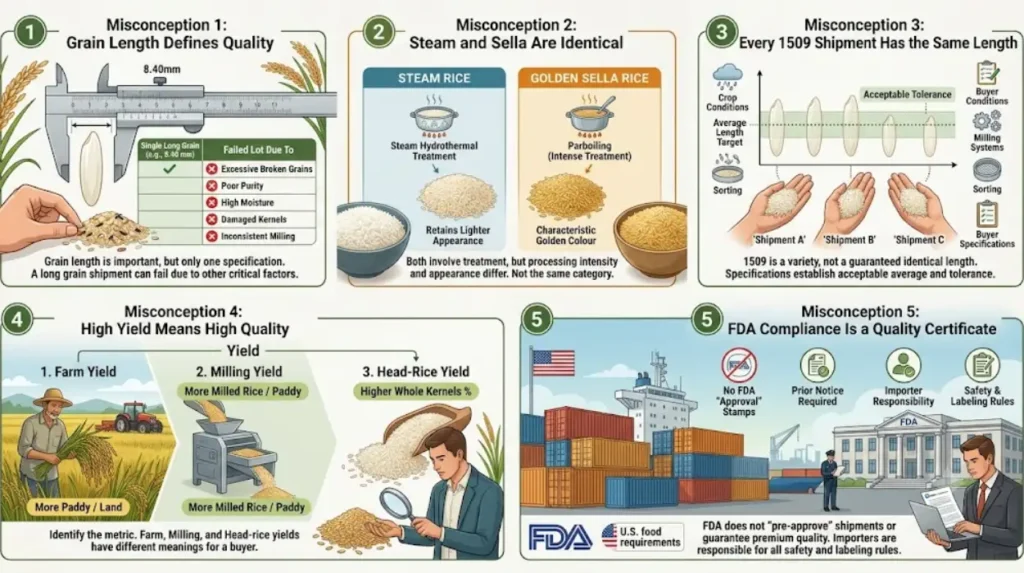
The main misconceptions concern grain length, steam processing, grade terminology, yield, and U.S. compliance; 8.40 mm grain length does not define the entire quality grade, and “Steam” does not replace the need for testing, documentation, or regulatory compliance.
Misconception 1: Grain Length Defines Quality
Grain length is important, but it is only one specification.
A shipment with long kernels can still fail a buyer’s requirements because of excessive broken grains, poor purity, high moisture, damaged kernels, or inconsistent milling.
Misconception 2: Steam and Sella Are Identical
Steam and Sella are different processing categories.
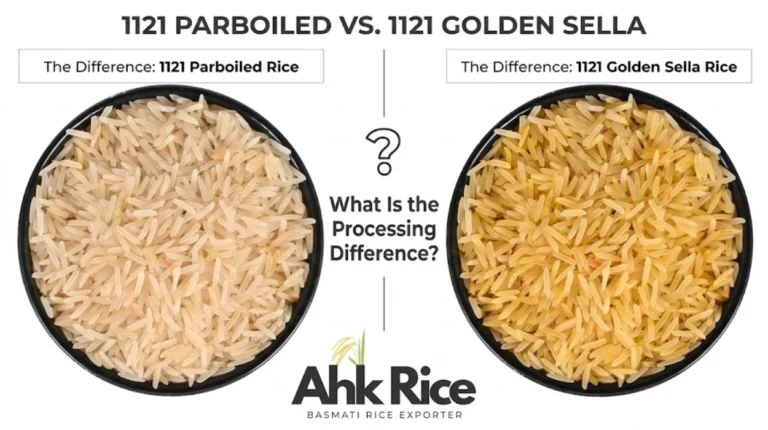
Both involve hydrothermal treatment, but their processing intensity and finished appearance differ. Steam rice generally retains a lighter appearance, while Golden Sella has a characteristic golden colour created through parboiling.
Misconception 3: Every 1509 Shipment Has the Same Length
1509 is a variety, not a guarantee of one identical measured grain length across every shipment.
Commercial specifications establish the acceptable average and tolerance. Crop conditions, milling systems, sorting, and buyer specifications affect the final lot.
Misconception 4: High Yield Means High Quality
Yield has multiple meanings.
Farm yield refers to harvested paddy per unit of cultivated land. Milling yield refers to the amount of milled rice obtained from paddy. Head-rice yield refers to the proportion of whole kernels after milling.
A buyer evaluating 1509 Steam should identify which yield metric is being discussed.
Misconception 5: FDA Compliance Is a Quality Certificate
FDA does not simply “approve” a particular rice shipment as a premium product.
FDA explains that it does not pre-approve individual imported foods, labels, or shipments. Importers remain responsible for compliance with U.S. food requirements, including applicable safety, labeling, registration, and prior-notice rules.
Frequently Asked Questions
What is 1509 Steam Basmati Rice?
1509 Steam Basmati Rice is an extra-long grain Basmati variety processed with controlled steam treatment. It is known for long grains, good cooking performance, structural strength, and commercial value.
Why are USA buyers switching to 1509 Steam Basmati Rice?
USA buyers value 1509 Steam Basmati Rice for its approximately 8.40 mm grain length, strong kernel structure, low-breakage options, cooking performance, and competitive commercial positioning.
Where is 1509 Basmati Rice grown?
1509 Basmati Rice is primarily cultivated in Pakistan’s Punjab rice-growing region. Important Basmati-producing areas include Gujranwala, Hafizabad, Sialkot, Narowal, and Sheikhupura.
What is the average grain length of 1509 Steam Rice?
Commercial 1509 Steam specifications commonly target an average grain length of around 8.40 mm. Actual contractual specifications vary according to crop, milling process, and buyer requirements.
What is the difference between 1509 Steam and 1509 White Rice?
1509 Steam Rice undergoes controlled steam treatment before milling, which strengthens the grain and improves resistance to breakage. 1509 White Rice is milled without the same steam-processing treatment.
Is 1509 Steam Rice suitable for restaurants in the USA?
Yes. Its long-grain appearance, structural strength, and cooking performance make it suitable for restaurants, catering operations, prepared meals, and food-service applications.
What are the main quality parameters for 1509 Steam Basmati Rice?
Key parameters include grain length, broken percentage, moisture, purity, foreign matter, damaged grains, immature grains, milling quality, appearance, and cooking performance.
What certifications are required for exporting 1509 Steam Rice to the USA?
Requirements depend on the shipment and buyer. U.S. imports are subject to applicable FDA requirements, while importers can also require FSVP documentation, phytosanitary certificates, certificates of origin, COAs, and food-safety certifications.
Does steam processing improve the yield of 1509 Basmati Rice?
Controlled steam processing strengthens rice kernels and reduces breakage during milling and cooking. This can improve head-rice yield compared with poorly controlled processing.
Which countries import 1509 Basmati Rice?
1509 Basmati Rice is exported to markets across the Middle East, Africa, Europe, Asia, and North America. The selected grade depends on local cooking preferences, distribution requirements, and buyer specifications.
Is 1509 Steam Rice the same as Sella Rice?
No. Steam and Sella are different processing categories. Both use hydrothermal treatment, but their processing conditions and finished appearance differ.
What should USA buyers check before importing 1509 Steam Rice?
USA buyers should verify variety, average grain length, broken percentage, moisture, purity, packaging, laboratory test results, traceability, FDA compliance, FSVP requirements, and shipment documentation.