Rice Import Regulations and FDA FSMA Requirements in USA for 2026
Rice import regulations in the USA for 2026 define the legal framework for allowing rice shipments into the country under FDA food safety rules, USDA plant health controls, and US Customs entry requirements. These regulations ensure that imported rice meets food safety, labeling, pesticide residue, and phytosanitary standards before release into US commerce.
Rice import regulations in the United States operate under three main federal authorities. The first authority is the Food and Drug Administration (FDA), which controls food safety compliance under the Food Safety Modernization Act (FSMA). The second authority is the United States Department of Agriculture (USDA), which manages plant health and pest prevention through phytosanitary certification. The third authority is US Customs and Border Protection (CBP), which enforces entry clearance and tariff classification.
Rice entering the USA includes varieties such as basmati rice, long grain rice, and aromatic rice. Examples include basmati shipments from Pakistan, jasmine rice imports from Thailand, and long grain rice from India. Each shipment must comply with the same regulatory structure regardless of origin.
The keyword focus rice import regulations USA FDA 2026 reflects the updated compliance emphasis on traceability systems, preventive controls, and documentation accuracy required for all grain imports entering the US market.
How does FDA FSMA regulate rice imports into the USA?
FDA FSMA regulates rice imports into the USA by enforcing preventive food safety controls, foreign supplier verification programs, hazard analysis requirements, and mandatory facility registration for all rice processing and exporting units supplying the US market. These rules ensure contamination prevention before shipment reaches US ports.
The Food Safety Modernization Act (FSMA) is the most important framework for rice import safety. FSMA focuses on prevention rather than reaction. It requires foreign rice suppliers to demonstrate compliance before export approval.
Under FSMA, the Foreign Supplier Verification Program (FSVP) requires US importers to verify that foreign rice producers follow US-equivalent food safety standards. Examples include rice milling facilities in Punjab, India processing basmati rice and export units in Vietnam handling white rice polishing.
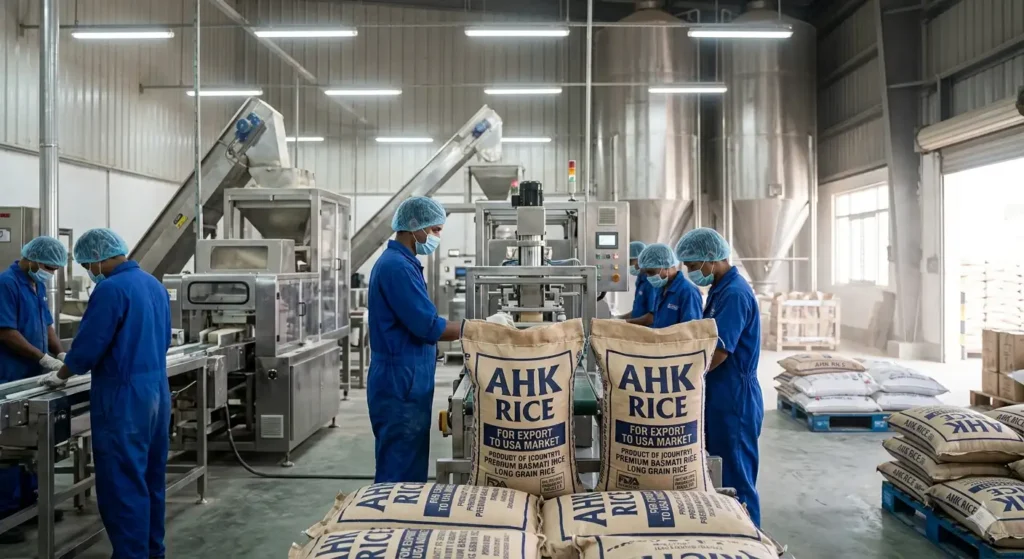
FDA FSMA rice USA compliance includes hazard analysis for physical contaminants such as stones, metal fragments, and biological risks such as aflatoxins. Rice processing plants must implement preventive controls during milling, drying, storage, and packaging stages.
FDA registration is mandatory for all foreign facilities exporting rice to the United States. This registration links each facility to traceable shipment records, ensuring accountability for every rice consignment entering US ports.
What role does USDA phytosanitary certification play in rice imports?
USDA phytosanitary certification ensures rice shipments entering the USA are free from plant pests, weed seeds, and agricultural contaminants. It verifies that exporting countries follow plant health protocols and that rice cargo meets US agricultural import safety standards before port clearance.
The USDA Plant Protection and Quarantine (PPQ) division issues phytosanitary import requirements. A phytosanitary certificate is issued by the exporting country’s agricultural authority after inspection.
USDA phytosanitary rice compliance focuses on preventing invasive species and agricultural contamination. Examples include inspection for stored grain pests such as weevils and detection of foreign plant material mixed with rice grains.
Rice exporting countries such as Pakistan, India, and Thailand must ensure that rice milling facilities maintain pest control systems. This includes fumigation, controlled storage humidity, and sealed packaging systems.
Without USDA phytosanitary approval, CBP blocks entry at US ports even if FDA documentation is complete. This makes phytosanitary certification a mandatory step in the rice import process.
How does rice customs entry process work in the United States?
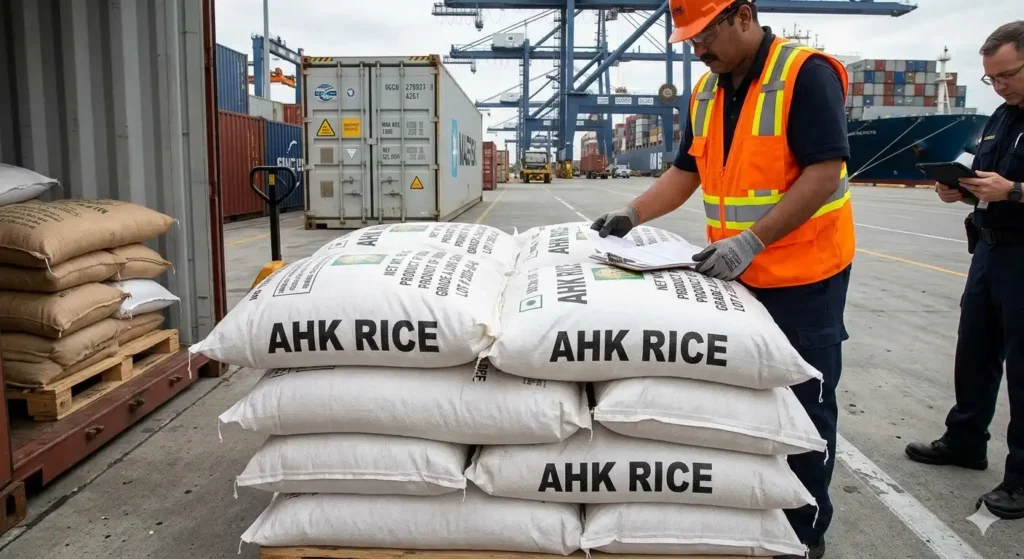
Rice customs entry in the United States operates through US Customs and Border Protection systems that require import declaration, HS code classification, FDA Prior Notice submission, and final inspection clearance before goods are released into commerce. Each step ensures regulatory compliance and tariff accuracy.
The rice customs entry USA process begins with shipment arrival at a US port. Importers must submit an entry summary through the Automated Commercial Environment (ACE) system. This includes invoice details, bill of lading, and Harmonized System (HS) code classification for rice.
FDA Prior Notice must be submitted before arrival. This notice includes product type, quantity, origin country, and facility registration number. Without Prior Notice confirmation, CBP detains the shipment.
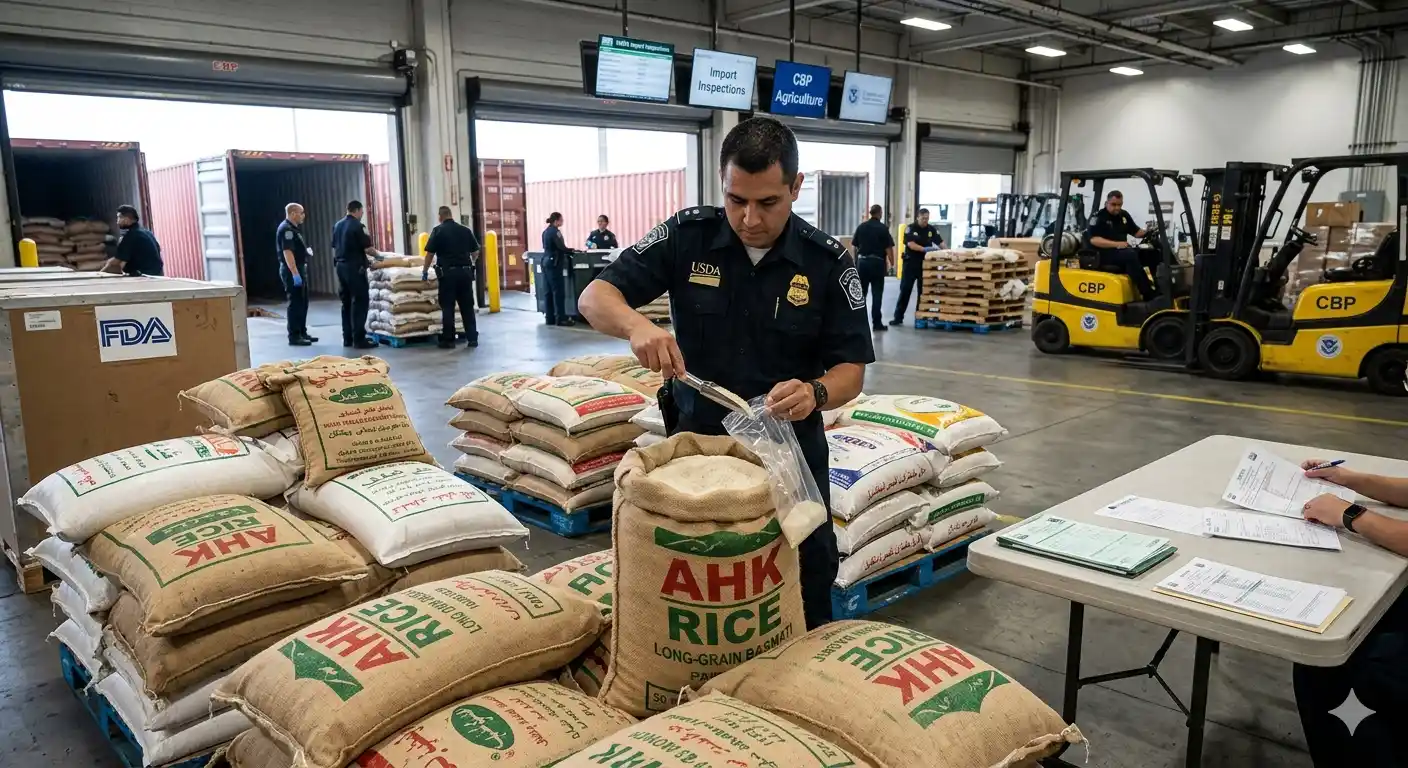
CBP officers then verify documentation and may conduct physical inspection or sampling. Rice samples are tested for pesticide residues, moisture content, and foreign material.
Once cleared, CBP assigns duty payment obligations and releases the shipment into the US distribution chain. This process applies to all rice imports including basmati rice, parboiled rice, and long grain rice varieties.
What are rice import duties and tariffs in America?
Rice import duties in America are determined by HS classification codes, trade agreements, and country of origin tariffs. The United States applies varying duty rates on rice depending on milling type, grain length, and trade preference agreements with exporting countries.
Rice import duty America structure is based on Harmonized Tariff Schedule (HTSUS) codes. Brown rice, milled rice, and parboiled rice each fall under different classification categories.
For example, milled white rice carries a different duty rate than husked brown rice. Countries with trade agreements may benefit from reduced tariffs under Generalized System of Preferences (GSP) or bilateral trade frameworks.
Rice imports from Asia dominate US supply chains. Examples include aromatic basmati rice from South Asia and long grain rice from Southeast Asia. Each origin affects duty calculation and compliance requirements.
CBP enforces tariff collection at the port of entry. Importers must ensure correct classification to avoid penalties, shipment delays, or reclassification fines.
What are key compliance components for rice import approval?
Key compliance components for rice import approval include FDA facility registration, FSMA preventive controls, USDA phytosanitary certification, accurate customs documentation, and correct labeling aligned with US food regulations before shipment clearance. These components ensure complete legal entry into US food supply chains.
Rice import approval requires a multi-layer compliance structure. FDA registration confirms facility legitimacy. FSMA ensures food safety control systems are active. USDA certification confirms plant health compliance.
Labeling compliance includes nutritional facts, country of origin, net weight, and allergen statements. Mislabeling results in shipment detention.
Documentation accuracy is critical. Invoice mismatch, incorrect HS codes, or missing phytosanitary certificates result in customs holds.
Exporters must maintain traceability records for every batch of rice processed. This includes milling date, packaging batch number, and storage conditions.
These requirements apply equally to all rice categories including aromatic basmati rice, organic rice, and parboiled rice shipments.
What are common problems in rice import regulations USA FDA 2026?
Common problems in rice import regulations USA FDA 2026 include documentation errors, missing phytosanitary certificates, incorrect HS code classification, FSMA non-compliance, and delays caused by incomplete FDA Prior Notice submissions during customs processing.
One major issue is incorrect classification under customs codes. Misclassification changes tariff rates and triggers CBP audits.
Another common problem is missing or invalid phytosanitary certificates. This results in automatic detention at US ports.
FSMA compliance failures occur when foreign suppliers do not maintain proper hazard control systems. This includes improper storage or contamination risks during milling.
FDA Prior Notice delays also create shipment bottlenecks. The notice must be submitted before arrival, not after docking.
These issues affect rice shipments from multiple origins including South Asia, Southeast Asia, and Middle Eastern trade routes.
What are the use cases and benefits of understanding rice import regulations?
Understanding rice import regulations supports smoother customs clearance, reduced shipment delays, improved compliance accuracy, and stable international trade operations for exporters, importers, and food distribution networks operating in the US rice supply chain.
Knowledge of rice import regulations improves supply chain efficiency. Importers reduce detention risks by ensuring compliance before shipment.
Exporters benefit from predictable market access. For example, basmati rice exporters in Punjab and long grain rice suppliers in Vietnam align production with FDA FSMA requirements.
Distributors use compliance knowledge to maintain uninterrupted inventory flow across retail and wholesale channels.
Regulatory awareness also improves risk management. Companies avoid penalties, re-export costs, and warehouse storage delays.
In global rice trade, compliance understanding directly affects competitiveness and market stability in the United States food sector.