1509 Creamy Sella vs 1509 Golden Sella: Which Has Better Market Margins?
For importers and wholesalers, 1509 creamy sella generally offers higher margin potential in mid‑range retail and food‑service, while 1509 golden sella supports higher‑pricing in premium‑segments with slightly lower yield‑per‑MT. The choice between 1509 creamy sella rice and 1509 golden sella depends on how each market weights colour, texture, and perceived “sella‑level” rather than just headline‑price.
For readers who need a technical overview of how 1509 creamy sella is produced, the earlier article on 1509 creamy sella vs 1509 golden sella explains the parboiling, colour‑development, and texture‑differences that underpin this margin‑comparison. For volume‑buyers in Southeast Asia, the later article on AHK Rice 1509 creamy sella Southeast Asia wholesale outlines how creamy sella fits into high‑volume‑import‑and‑packaging‑models.
What are the available 1509 sella options for export buyers?
1509 creamy sella and 1509 golden sella are the two main parboiled 1509 variants offered to importers, each with distinct colour, texture, and processing‑intensity. These products are both grown in Punjab, Pakistan, and processed under 1509‑grade‑milling‑standards, but they follow different stages in the sella‑line.
1509 creamy sella is defined as a lightly‑parboiled 1509 paddy variety that is soaked and steamed just enough to soften the grain, increase yield, and develop a stable, creamy‑white‑appearance. Grain length remains above 7.5 mm, with moisture typically stabilised around 12–14% for export.
1509 golden sella is defined as a more‑intensely‑parboiled 1509 line, where the husked paddy undergoes longer soaking and stronger steaming, which darkens the grain into a golden‑brown‑hue and firms the texture. Golden‑sella‑grains often show slightly higher broken‑ratio due to longer‑processing, though premium‑grades keep it within commercial‑tolerance.
Both variants are milled to 1509 length‑specification, but the depth of parboiling and the final colour decide which markets and price‑tiers they suit.
How do 1509 creamy sella and 1509 golden sella differ in key attributes?
| Attribute | 1509 Creamy Sella | 1509 Golden Sella |
|---|---|---|
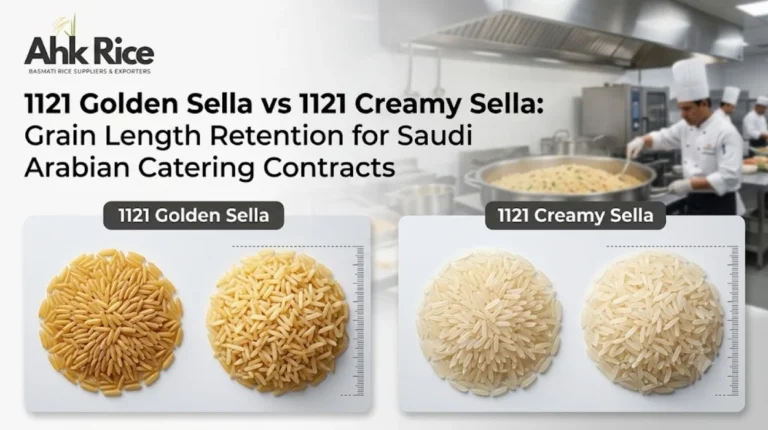
| Colour after milling | Creamy‑white, slight off‑white tone | Golden‑brown, clearly darker sella‑colour |
| Texture when cooked | Soft, creamy, slightly cohesive mouth feel | Firmer‑grain‑bite, less soft‑creaminess |
| Parboiling intensity | Light‑soak, short‑steaming (light sella) | Longer‑soak, stronger‑steaming (full sella) |
| Grain‑length retention | Very high, minimal loss in extra‑long grain | Slightly lower, more grain‑fracture‑risk |
| Moisture‑stability in transit | 12–14% routine, low‑risk of cracking | 12–14% but slightly more prone to chalking |
| Aroma intensity | Mild‑aromatic‑basmati, noticeable but not overpowering | Stronger‑sella‑aroma, more distinct scent |
| Typical packaging range | 1–5 kg retail, 10–25 kg, also 50 kg trade | 5–10 kg retail, 20–25 kg; often premium‑packs |
For importers, this attribute table shows that creamy sella leans toward softness, yield‑efficiency, and whiter‑visuals, whereas golden sella leans toward firmness, traditional‑sella‑aesthetics, and stronger‑aroma.
How do margins differ between creamy sella and golden sella per MT?
1509 creamy sella typically delivers superior per‑MT margin for mass‑retail, food‑service, and industrial‑use, because of higher yield, lower‑unit‑cost‑packaging, and broader‑market‑acceptance, while 1509 golden sella supports higher‑shelf‑price per kg in premium‑segments. The headline‑FOB‑price per MT can be similar, but the realised‑margin depends on pack‑size, target segment, and shelf‑life.
For example, in a standard 1509 100%‑whole‑grade setup:
- A 25 MT shipment may cost roughly the same in FOB per MT for creamy and golden sella, depending on season.
- Importers who re‑package the same 25 MT into 1–2 kg retail packs will usually see higher turnover and lower‑SKU‑cost with creamy sella, since consumers in mid‑range‑markets accept the softer‑texture at lower‑price‑points.
- In contrast, golden sella can be branded as “premium‑sella” and priced 10–20% higher per kg, but with smaller‑pack‑volumes and slower‑turnover, which reduces MT‑to‑revenue‑conversion‑rate.
When comparing creamy vs golden sella 1509 in margin‑calculations, volume‑buyers must account for yield, packaging‑costs, and turns, not just FOB per MT.
How do shelf life and storage behaviour differ?
1509 creamy sella offers slightly better shelf life and stability in warm‑climate warehouses than 1509 golden sella, because lighter‑parboiling preserves more of the grain’s natural structure while still reducing spoilage‑risk. Golden sella, with its deeper‑parboiling, is more prone to surface‑chalking and texture‑change if stored beyond 12–14% moisture in high‑humidity‑environments.
Typical shelf‑life‑profiles are:
- Creamy sella, kept at 12–14% moisture in dry, ventilated warehousing, usually holds good‑texture and colour for 12–18 months.
- Golden sella, while still stable, benefits from stricter‑humidity‑control and may show slight discolouration or hardness‑increase after 12 months in tropical conditions.
From a margin‑perspective, longer‑shelf‑life allows importers to order in bulk without over‑rushing turn‑rates, which supports higher‑MT‑purchase‑efficiency and lower‑logistical‑overhead.
How do different regional markets prefer 1509 creamy sella vs golden sella?
West African markets tend to prefer 1509 creamy sella for family‑consumption, budget‑retail, and catering, while Middle Eastern and select Asian‑retail‑segments show stronger preference for 1509 golden sella as a “premium‑sella” product. These regional preferences shape what margin‑structure is realistic in each zone.
West African importers:
- Buy creamy sella in 1–5 kg packs for household‑tables and value‑shops, where soft‑texture and lower‑price‑per‑kg support higher‑turnover.
- Use 1509 golden sella only in higher‑income‑urban‑areas or hotel‑chains that demand traditional‑sella‑appearance and stronger‑aroma, accepting lower‑volume and higher‑SKU‑costs.
Middle Eastern and parts of Southeast Asia:
- Accept golden sella as a default‑sella‑variant for everyday‑consumption, which allows importers to charge a small‑premium and maintain decent‑turns.
- Use creamy sella for catering, budget‑hospitals, and industrial‑processing, where yield‑and‑cost matter more than golden‑colour.
In each region, sella margin comparison depends on alignment between local‑taste‑patterns and import‑pricing‑strategy, not just technical‑FOB‑data.
What is the decision‑framework for choosing between creamy and golden sella?
The decision‑framework for choosing between 1509 creamy sella and 1509 golden sella rests on market segment, pack‑size, shelf‑life‑requirements, and target margin‑per‑MT rather than abstract‑“quality”‑claims. A structured‑evaluation‑table can make this choice clearer.
| Decision factor | Creamy Sella advantage | Golden Sella advantage |
|---|---|---|
| Target segment (mid‑range vs premium) | Higher‑MT sales in mid‑range retail and food‑service | Premium‑segment branding, higher‑per‑kg‑price |
| Pack‑size and yield efficiency | Works well in 1–5 kg, higher‑turnover, lower‑pack‑cost per MT | Needs 2–5 kg or 5–10 kg, slower‑turns, higher‑pack‑cost |
| Shelf‑life and warehouse‑risk | Slightly longer‑stable texture, lower‑risk in warm‑climate storage | Needs tighter‑humidity‑control, more storage‑sensitivity |
| Aroma‑and‑texture preference | Softer‑mouthfeel, milder‑aroma, broad‑consumer‑acceptance | Firmer‑grain‑bite, stronger‑sella‑aroma for traditional‑buyers |
| Overall margin‑structure per MT | Usually higher‑MT‑to‑revenue‑conversion, more stable‑per‑container | Higher‑per‑kg‑price but lower‑turn rate per MT |
Importers who prioritise rice import margins and MT‑level‑efficiency usually find creamy sella more attractive, while those building a premium‑brand‑story around golden‑sella may accept slightly lower MT‑turn‑rates for better‑per‑kg‑mark‑up.