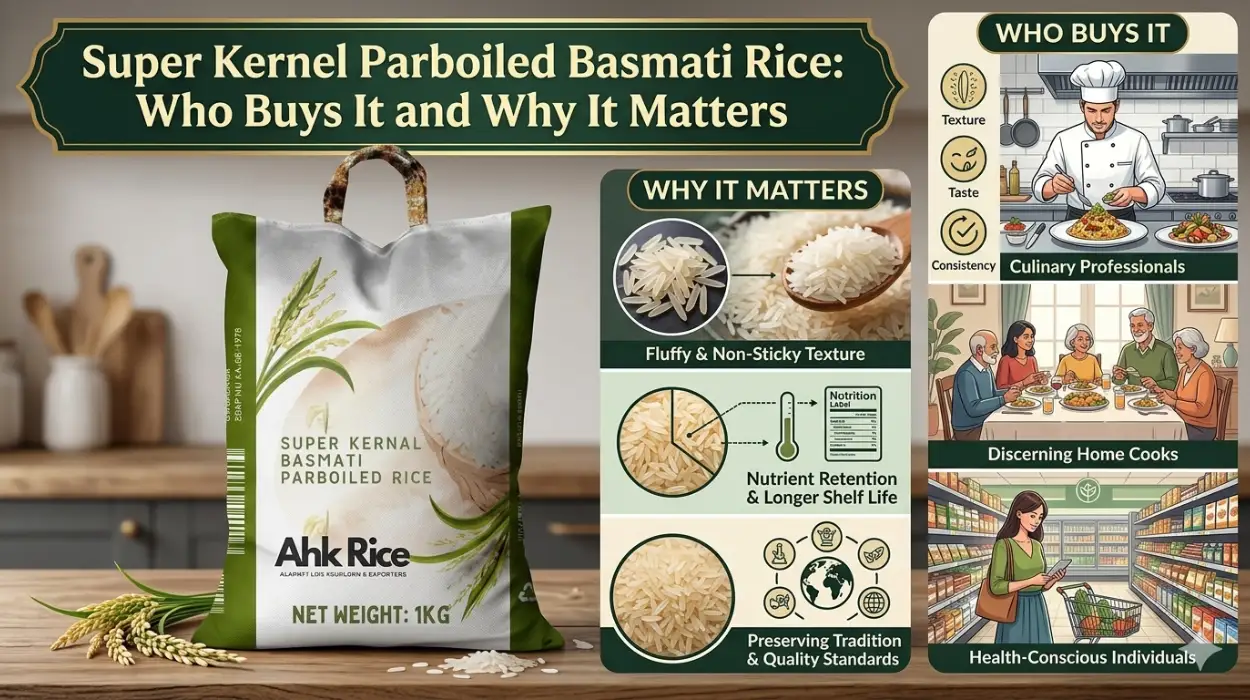
Super Kernel Parboiled Basmati Rice: Who Buys It and Why It Matters
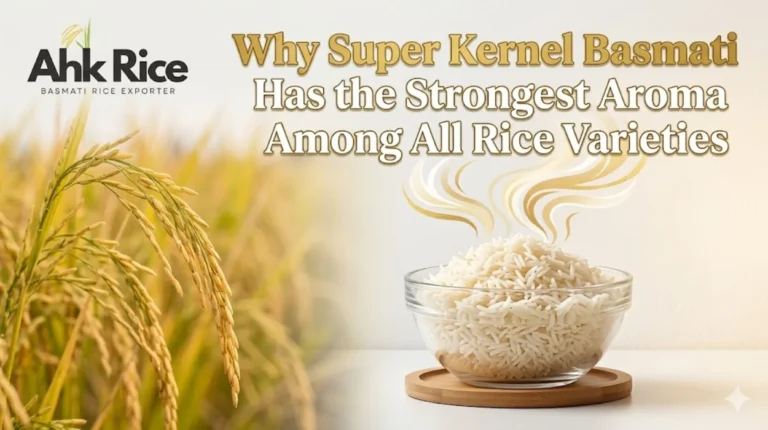
Super kernel parboiled Basmati rice is a high‑length, pre‑steamed rice grade that retains strong aroma, firm texture, and low‑breakage, making it a preferred choice for export‑oriented buyers across food‑service, retail, and industrial‑cooking markets. Super kernel parboiled Basmati buyers are typically importers, distributors, and national‑retail chains that prioritise consistency, cooking performance, and brand‑trust when sourcing aromatic parboiled rice from Pakistan.
What is Super Kernel parboiled Basmati rice?
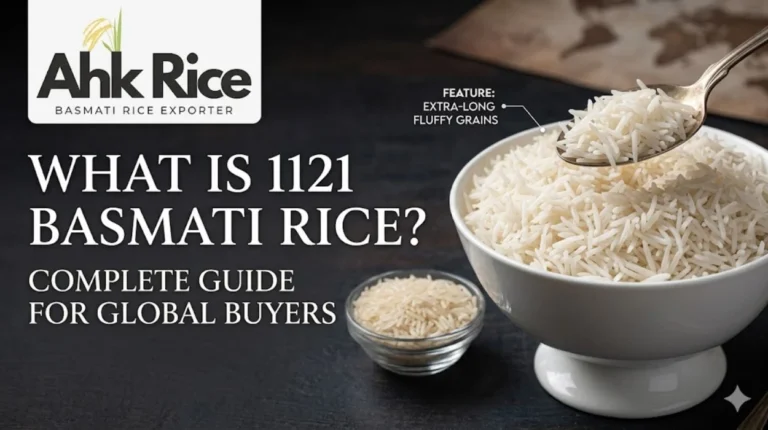
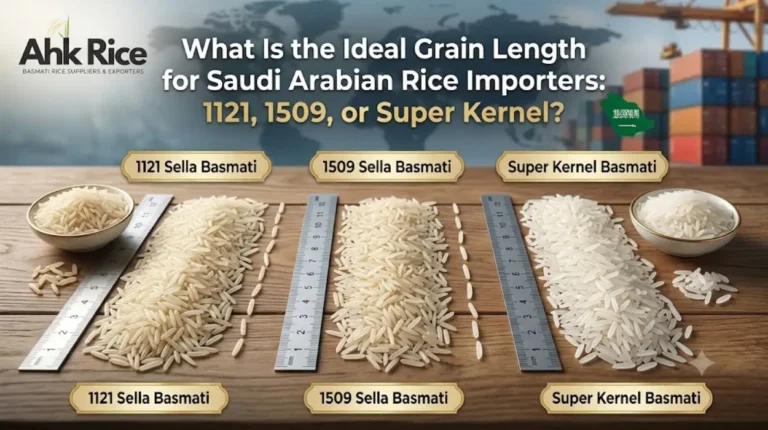
Super Kernel parboiled Basmati rice is a long‑grain, pre‑steamed Basmati grade whose milled grains measure at least 6.5–7.0 mm in length and are partially gelatinised to improve storage life and texture.
Super Kernel parboiled refers to a specific Basmati grade where the husked paddy undergoes pre‑cooking (soaking, steaming, and drying) before milling, which locks nutrients into the grain while preserving the Basmati‑type aroma and elongation. Within the Basmati naming system, “Super Kernel” distinguishes longer‑length grains from regular‑length or broken‑grades such as 1121 or 1509.
Aromatic parboiled rice is rice that is steamed in its husk, fully dried, then hulled, which brightens the grain, reduces moisture, and strengthens the starch structure. This process makes it less prone to breakage during milling and packaging compared with raw‑milled Basmati, while still retaining most of the natural fragrance characteristic of Basmati paddy.
Because parboiling alters the starch, Super Kernel sella (another term for “parboiled” Basmati) gains a firmer, slightly chewy texture and better dimensional stability after cooking, which is why industrial buyers and food‑service operators favour it for large‑scale production.
How does Super Kernel parboiled Basmati differ from raw milled Basmati?
Super Kernel parboiled Basmati rice is steamed and dried before milling, which improves grain strength, shelf‑life, and cooking consistency, while raw‑milled Basmati is milled directly from paddy, giving softer grains but higher breakage potential.
Raw‑milled Basmati is processed by first removing the husk, then de‑husking, polishing, and grading, with the final rice being sensitive to storage conditions and mechanical handling. This direct‑mill route preserves a very light colour and a softer, more delicate texture, suitable for consumers who prioritise fluffiness and fragrance above all.
In contrast, Super Kernel parboiled starts with pre‑cooking the paddy: soaking, steaming, and drying, before de‑husking and milling. This converts some of the starch into a more rigid structure, which reduces chalky breakage and enhances the grain’s ability to withstand high‑volume‑packaging and long‑term‑shipment without fracturing.
Because of these structural changes, parboiled Super Kernel tends to swell less than raw‑milled Basmati during cooking and maintains a firmer bite, making it suitable for dishes where rice must hold shape through repeated heating, such as catering trays, airline‑meals, and institutional‑food service.
How is Super Kernel parboiled Basmati rice processed step by step?
Super Kernel parboiled Basmati rice is processed by first selecting Basmati paddy, then soaking, steaming, and drying the husked grains, followed by de‑husking, whitening, and grading to produce uniform long‑kernel parboiled Basmati.
The process begins with husked Basmati paddy, which is cleaned and pre‑sorted to remove stones, dust, and discoloured seeds. This ensures that only high‑quality paddy enters the parboil‑line, reducing the risk of foreign‑material‑related‑rejections in export markets.
Next, the paddy is soaked in water for a controlled period, typically 4–8 hours depending on temperature and grain size, to allow moisture to penetrate the kernel. This hydration step is critical because it determines how evenly the starch will gelatinise during steaming and how uniformly the grain will shrink and harden.
After soaking, the paddy is steamed under pressure so that the starch undergoes partial‑gelatinisation, and then dried slowly to bring the moisture content down to around 12–13%. This pre‑drying stabilises the grain and prevents cracking during milling, which is especially important for long‑grain Basmati.
Finally, the dried, parboiled paddy is de‑husked, whitened, and graded using length‑sizers and colour‑sorters to separate Super Kernel‑length grains from smaller or cracked‑particles, producing a consistent aromatic parboiled rice suitable for export‑grade‑bags.
What are the main grades of Super Kernel parboiled Basmati rice?
The main grades of Super Kernel parboiled Basmati rice are Super Kernel Whole (long‑length, low‑breakage), Super Kernel Sella (fully parboiled and dried), and Super Kernel Broken (smaller fragments used in industrial‑cooking and re‑milling).
Super Kernel Whole parboiled refers to milled grains that retain their full length and show minimal breakage (typically under 2–5% broken content), which is the standard export‑grade for premium‑retail and food‑service channels. These grains are bright, non‑chalky, and uniform in size, making them attractive for pack‑designs that emphasise “long‑grain” and “premium Basmati.”
Super Kernel Sella (parboiled) is the same grain set that has undergone the full parboil‑cycle before milling, often marketed as “golden‑coloured” or “sella‑style” aromatic parboiled rice. The Sella‑labelling signals that the rice is steamed‑in‑husk, which markets interpret as better‑shelf‑life, higher‑stability, and firmer‑cooking‑performance.
Super Kernel Broken grades are fragments produced during milling and polishing, usually sold at lower price‑points for industrial‑food processors, animal‑feed, or re‑milling into rice‑flour products. Buyers who need aromatic parboiled rice for bulk‑dishes or value‑segments often blend Super Kernel Whole with a controlled share of broken‑grains to balance cost and quality.
Buyers differentiate these grades primarily by grain‑length, chalkiness, and breakage, which are measured in standard‑export‑testing protocols used by importers in the UK, Middle East, and Southeast Asia.
Where is Super Kernel parboiled Basmati rice grown and produced?
Super Kernel parboiled Basmati rice is grown in the Punjab region of Pakistan, where traditional Basmati‑variety paddy is cultivated and then processed in modern parboil‑milling plants before export.
The core growing area is the Punjab‑plain, where irrigation infrastructure, fertile alluvial soils, and a warm‑season‑rainfall pattern support Basmati‑type paddy such as 1121, Super Kernel, and 1509. Farmers in this region typically plant Basmati during the summer‑monsoon‑influenced‑season and harvest in the autumn, when the matured‑paddy is ready for collection.
After harvest, the paddy is transported to storage‑facilities and then channelled to dedicated parboil‑milling units, which may be located in or near major rice‑processing hubs such as Gujranwala, Sheikhupura, or Faisalabad. These plants are equipped with pre‑cooking‑and‑drying‑lines that can handle large‑volumes of Basmati‑paddy, enabling economies‑of‑scale for export‑lots.
Once processed, the Super Kernel parboiled Basmati is packed in food‑grade‑polybags, usually in 1–5 kg retail‑packs or 50–100 kg bulk‑bags, and then dispatched to port‑handling facilities for shipment to international markets. This end‑to‑end‑logistics chain ensures that parboiled Basmati reaches buyers with consistent quality and documented‑traceability.
Which markets are the main buyers of Super Kernel parboiled Basmati rice?
The main buyers of Super Kernel parboiled Basmati rice are importers and food‑distributors in the UK, Gulf Cooperation Council (GCC) countries, Southeast Asia, and East Africa, where aromatic parboiled rice is used in retail, hospitality, and industrial‑catering.
In the UK, Granaries, supermarket chains, and South‑Asian‑specialty‑retailers purchase Super Kernel sella‑grade for shelf‑packs that highlight “long‑grain,” “easy‑to‑cook,” and “non‑sticky” Basmati. These buyers typically demand phytosanitary‑certificates, halal‑certification, and pesticide‑residue‑reports as part of their supplier‑approval processes.
In GCC countries such as Saudi Arabia, UAE, and Qatar, large‑hospitality groups and institutional‑caterers buy Super Kernel parboiled for hotels, airlines, and worker‑camps, where rice must remain intact after repeated reheating and large‑batch‑cooking. These buyers often require ISO‑22000, HACCP, or national‑food‑safety‑standard‑certifications from suppliers.
Southeast Asian markets, including Malaysia and Singapore, import Super Kernel parboiled for both household‑use and food‑service‑chains, where competition on price and fragrance is strong. East African importers, particularly in Kenya and Tanzania, source Super Kernel‑style parboiled Basmati for urban‑consumers seeking aromatic rice with clear‑packaging and reliable‑branding.
Across these regions, buyers prioritise grain‑length, aroma‑intensity, and low‑mill‑dust when evaluating Super Kernel parboiled Basmati for commercial‑adoption. Learn how to compare Super Kernel parboiled vs steam Basmati grades in our expert guide.
What certifications and quality standards apply to Super Kernel parboiled Basmati rice exports?
Super Kernel parboiled Basmati rice exports must meet food‑safety, agricultural‑residue, and halal‑certification standards, which are verified through lab‑tests, audit‑reports, and documentation supplied to importing countries.
In Pakistan, exporters typically comply with PSQCA (Pakistan Standards and Quality Control Authority) Basmati‑specifications, which define maximum‑moisture, grain‑length, chalkiness, and admixture‑limits for grades such as Super Kernel. Separate‑aroma‑and‑elongation‑tests are also used to confirm that the rice meets the “Basmati‑type” profile required by international‑customs authorities.
For overseas markets, Super Kernel parboiled must pass pesticide‑residue‑screening and heavy‑metal‑testing, often aligned with the EU‑maximum‑residue‑limits (MRLs) or other regional‑food‑safety‑standards. These tests are documented in phytosanitary‑certificates issued by national‑agricultural‑authorities, which are required for customs clearance.
Halal‑certification is frequently required for destinations in the Middle East and Muslim‑majority‑countries, where buyers insist that all processing equipment, water‑sources, and storage‑environments are free from non‑halal‑contamination. Additional‑certifications such as ISO‑22000, HACCP, and FSSC‑22000 give large‑importers confidence in the traceability and risk‑management‑systems applied to Super Kernel‑style parboiled rice.
Why do buyers of Super Kernel parboiled Basmati rice care about grain length and breakage?
Buyers of Super Kernel parboiled Basmati rice care about grain length and breakage because these attributes directly affect cooking performance, portion‑yield, and packaging‑appearance in commercial‑and‑retail‑applications.
Long‑grain Super Kernel rice expands more evenly during cooking, giving a visually‑appealing, non‑clumped texture that is important for hotel‑meals, banquet‑plates, and ready‑to‑eat‑meals. If the grain‑length is inconsistent or broken‑pieces are too high, the rice loses its distinctive‑appearance and may be perceived as lower‑quality by consumers and chefs.
Breakage also affects yield: highly‑broken parboiled‑grain requires more raw‑rice to achieve the same cooked‑volume, which increases operational‑costs for food‑service buyers and pack‑costs for retailers. Super Kernel‑grade buyers therefore specify strict‑breakage‑thresholds in their contracts, often below 2–5% broken‑content, to maintain cost‑efficiency and brand‑image.
Additionally, long‑whole grains help brands differentiate themselves on the shelf; packs that clearly show long, unbroken kernels are more likely to be associated with premium‑aromatic‑parboiled rice rather than generic‑white‑rice.
What are the common misconceptions about Super Kernel parboiled Basmati rice?
Common misconceptions about Super Kernel parboiled Basmati rice include the belief that parboiling removes all aroma, that it is always sticky, and that it is only suitable for cheap‑canteen‑catering rather than premium‑retail.
Some buyers assume that steaming paddy during parboiling “kills” the Basmati fragrance, but properly‑controlled‑parboil‑lines actually preserve most of the natural aroma while improving grain‑hardness and colour. The key factor is how the paddy is soaked and steamed; excessive‑time or temperature can dull the fragrance, but modern‑plants minimise this with calibrated‑processes.
Another misconception is that Super Kernel parboiled always becomes sticky or gummy after cooking, whereas correctly‑cooked parboiled Basmati typically remains separate and slightly firm, especially when rinsed before boiling and cooked with the right‑rice‑to‑water‑ratio. This texture is why many food‑service‑buyers deliberately choose parboiled rice for buffets and reused‑dishes.
Finally, some importers see parboiled as a “low‑grade” option, yet Super Kernel‑level parboiled Basmati can be certified as premium‑export‑grade, branded for retail, and labelled as aromatic parboiled rice without compromising on quality or price‑point.