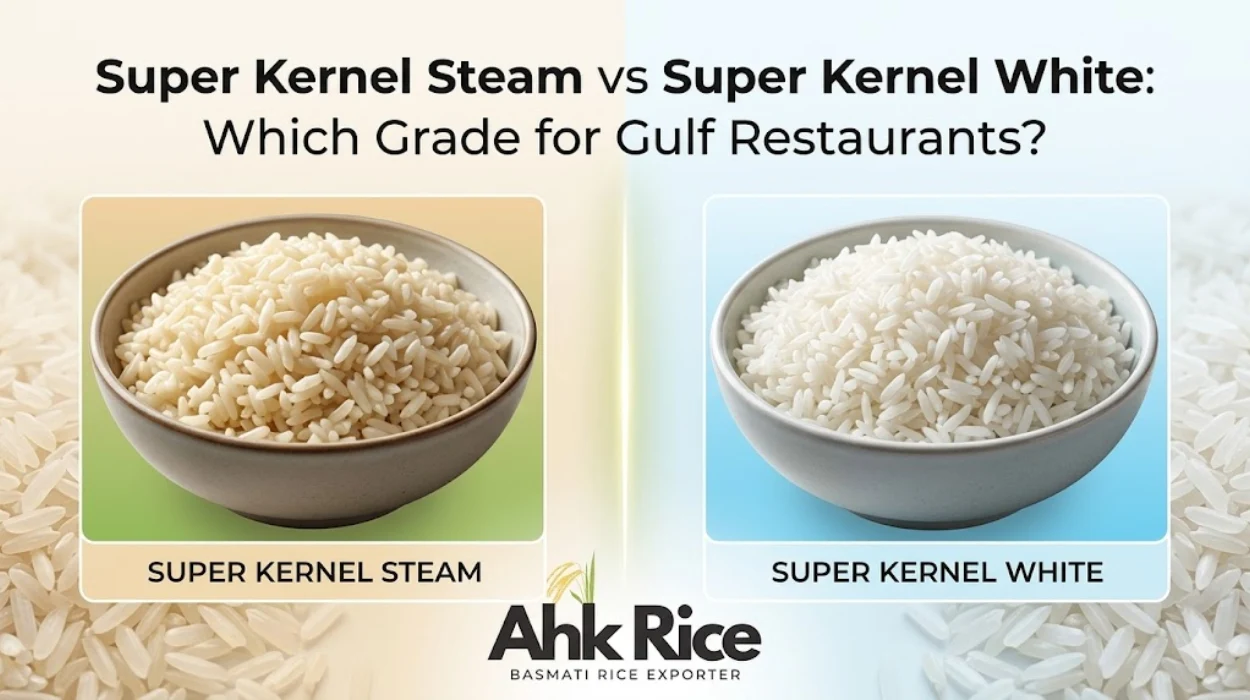
Super Kernel Steam vs Super Kernel White: Which Grade for Gulf Restaurants?
Super Kernel Steam Basmati is the correct grade for most Gulf restaurants because it delivers higher yield, stronger grain structure, and longer holding stability, while Super Kernel White suits premium dine-in where aroma and softness define the plate. Here is why: Steam processing improves durability and volume expansion, while White processing preserves natural fragrance and texture.
Gulf restaurant buyers compare these two grades based on cooking performance, storage stability, and plate presentation. Restaurant kitchens operate at scale. Every batch must perform consistently under pressure. Buyers evaluate grain length, breakage tolerance, moisture stability, and post-cooking elongation before selecting a grade.
For a foundational understanding of how Basmati varieties differ across processing methods, read this detailed guide on understanding basmati rice grades and processing differences. This builds the base knowledge required to evaluate Steam vs White grades correctly.
What are the available solutions for Gulf restaurant rice sourcing?
Super Kernel Steam and Super Kernel White are the two primary solutions, with Steam delivering higher durability and yield, while White delivers superior aroma and softness for premium dining applications.
Super Kernel Basmati is a long-grain aromatic rice cultivated in Punjab. Farmers cultivate it under controlled irrigation. Millers dehusk, polish, and grade it into two main processing outcomes: Steam and White.
Super Kernel Steam Basmati
Steam processing uses controlled heat and moisture without full parboiling.
Processing steps:
- Clean the paddy
- Soak the grain
- Apply steam pressure
- Dry the paddy
- Dehusk the grain
- Polish the rice
- Sort by length
Steam treatment strengthens the grain structure. This reduces breakage during cooking. Kitchens benefit from consistent output.
Super Kernel White Basmati
White processing removes husk and bran without heat treatment.
Processing steps:
- Clean the paddy
- Dehusk the grain
- Polish the rice
- Sort by length
- Grade by broken percentage
White rice retains natural aroma compounds. This enhances flavor perception in plated dishes.
Specification Comparison Table
| Attribute | Super Kernel Steam | Super Kernel White |
|---|---|---|
| Grain Length | 7.2–7.5 mm | 7.0–7.3 mm |
| Aroma Level | Medium | High |
| Cooked Elongation | 1.8–2.0x | 1.6–1.8x |
| Texture | Firm, separate grains | Soft, fluffy grains |
| Breakage Resistance | High | Moderate |
| Shelf Life | 12–18 months | 9–12 months |
| Cooking Yield | Higher volume output | Moderate output |
Steam and White represent two distinct solutions. The next step is understanding how these differences impact real restaurant operations.
How do Super Kernel Steam and White compare in Gulf restaurant use?
Steam outperforms White in bulk cooking efficiency and holding stability, while White outperforms Steam in aroma intensity and premium presentation, making each suitable for different restaurant formats.
Gulf restaurant markets include UAE and Saudi Arabia. Each market shows specific preferences.
UAE Market Preference
UAE catering buyers prefer Steam grade.
- High-volume buffet systems require stable grains
- Steam rice holds texture for 3–4 hours after cooking
- Bulk kitchens prioritize yield per kilogram
Steam rice supports large-scale operations. It reduces waste during service.
Saudi Arabia Market Preference
Saudi restaurants prefer both grades based on segment.
- Premium restaurants choose White for aroma-driven dishes
- Catering companies choose Steam for mandi and kabsa
Saudi buyers often split procurement based on menu type.
Price per MT Comparison
| Grade | UAE Price (USD/MT) | Saudi Price (USD/MT) |
|---|---|---|
| Steam | $950–$1050 | $930–$1020 |
| White | $900–$1000 | $880–$980 |
(source: REAP export data, December 2025)
Steam commands a slight premium due to processing cost and durability.
Shelf Life Comparison in Gulf Climate
| Condition | Steam | White |
|---|---|---|
| 40°C warehouse | 12–15 months stable | 8–10 months stable |
| Humidity exposure | Lower moisture absorption | Higher moisture sensitivity |
Steam performs better in non-climate-controlled storage. Gulf warehouses often reach extreme temperatures.
Steam vs White differences now connect directly to operational outcomes. The next step is identifying which method works best in specific restaurant cases.
Which method works best for different restaurant types?
Steam works best for catering, buffets, and delivery kitchens, while White works best for fine dining and aroma-focused menus, because operational demands differ across restaurant formats.
Catering Kitchens
Steam is the correct choice.
- Large batch cooking requires strong grains
- Long holding times demand structural stability
- Cost per plate depends on yield
Steam rice delivers 10–15% more servings per batch. This improves margins.
Buffet Restaurants
Steam dominates buffet environments.
- Rice stays warm for extended periods
- Grain separation remains intact
- Visual presentation remains consistent
Buffet systems penalize soft rice. Steam prevents clumping.
Fine Dining Restaurants
White rice fits premium dining.
- Aroma enhances guest experience
- Soft texture complements plated dishes
- Short cooking cycles improve freshness
White rice supports dishes like biryani and pulao where fragrance matters.
Delivery Kitchens
Steam performs better in delivery.
- Packaging retains moisture
- Grain structure survives transport
- Reheating maintains quality
Steam rice reduces customer complaints related to texture.
Restaurant type determines the optimal grade. This leads directly to evaluating strengths and limitations.
What are the pros and cons of each grade?
Steam offers durability and yield advantages, while White offers aroma and softness advantages, creating a clear trade-off between efficiency and sensory quality.
Super Kernel Steam Pros
- Higher cooking yield
- Lower breakage rate
- Longer holding stability
- Better storage resilience
Super Kernel Steam Cons
- Lower aroma intensity
- Slightly firmer mouthfeel
Super Kernel White Pros
- Strong natural aroma
- Softer texture
- Better for premium plating
Super Kernel White Cons
- Higher breakage risk
- Shorter shelf life
- Lower batch yield
Example Use Case Comparison
Steam performs better in a Dubai catering warehouse storing rice at 40°C for 60 days, maintaining grain quality. White rice loses moisture balance faster under the same conditions.
White performs better in a Riyadh fine dining restaurant serving fresh biryani, where aroma drives customer satisfaction.
Pros and cons clarify operational impact. The next step is defining decision factors that buyers use before procurement.

What decision factors should Gulf buyers use when choosing?
Buyers should evaluate usage type, storage conditions, cost per plate, and customer expectations, because each factor directly impacts the suitability of Steam or White grades.
Decision Framework Table
| Factor | Steam Recommendation | White Recommendation |
|---|---|---|
| Kitchen Type | Catering / Buffet | Fine Dining |
| Storage Condition | Non-climate warehouse | Controlled storage |
| Cost Sensitivity | High (optimize yield) | Moderate (focus quality) |
| Customer Expectation | Volume service | Premium experience |
| Menu Type | Mandi / Kabsa bulk | Biryani / Pulao premium |
Key Decision Insights
Usage defines the choice. Catering kitchens should prioritize Steam because yield increases profitability.
Storage defines risk. High heat environments require Steam because it resists moisture fluctuation.
Customer expectation defines experience. Premium diners expect aroma, which White delivers.
Cost defines sustainability. Steam reduces per-plate cost through higher expansion ratio.
Decision factors align the grade with operational goals. This leads directly to the final evaluation of the best solution.
Final evaluation: Which grade should Gulf restaurants choose?
Steam is the default choice for 80% of Gulf restaurant operations, while White remains essential for premium dining segments, making both grades necessary within a balanced procurement strategy.
Steam dominates because Gulf food service is volume-driven. Large catering contracts require consistency and durability.
White remains critical because premium restaurants differentiate through aroma and softness.
Balanced sourcing strategies often include both grades. Buyers allocate Steam for bulk dishes and White for signature items.
For a detailed procurement and wholesale breakdown, including packaging, inspection, and export documentation, refer to a complete guide on sourcing super kernel steam basmati for Gulf catering supply chains.
Frequently Asked Questions
What is the main difference between Super Kernel Steam and White Basmati?
Steam rice offers higher durability and yield, while White rice offers stronger aroma and softer texture. Steam processing applies heat and moisture to strengthen grains, making them less likely to break during cooking. White processing skips heat treatment, which preserves natural fragrance but reduces structural strength.
Which grade is better for Gulf catering businesses?
Super Kernel Steam is better for catering because it provides higher cooking yield and longer holding stability. Catering kitchens cook in bulk and hold rice for extended periods. Steam rice maintains grain separation and texture even after hours of service.
Why do premium restaurants prefer Super Kernel White Basmati?
Premium restaurants prefer White rice because it delivers stronger aroma and a softer eating experience. Fine dining focuses on sensory quality. White rice enhances dishes like biryani where fragrance and mouthfeel directly affect customer satisfaction.
How does storage climate in the Gulf affect rice selection?
High temperatures favor Steam rice because it resists moisture changes and lasts longer in storage. Gulf warehouses often exceed 40°C. Steam rice maintains quality for up to 12–15 months, while White rice may degrade faster under the same conditions.
Can restaurants use both Steam and White Basmati together?
Yes, many restaurants use both grades to balance cost efficiency and food quality. Kitchens often use Steam rice for bulk dishes like mandi and kabsa, while reserving White rice for premium menu items that require aroma and softness.